Book review: Idiot America

Idiot America: How Stupidity Became a Virtue in the Land of the FreeIdiot America: How Stupidity Became a Virtue in the Land of the Free by Charles P. Pierce
My rating: 4 of 5 stars

Idiot America is a book filled with little that will surprise anyone who has been watching the devolution of U.S. politics, debate and public thought over the last forty (or more) years.

Pierce uses a series of events–the war in Iraq, the Terry Schiavo life-support battle, efforts to give “intelligent design” (creationism) equal footing in public schools–and couples them with observations and actions regarding the necessity of intelligent government and an informed, educated populace from the founders of America to paint a bleak picture of the current state for what passes for discussion (he argues there is little to no actual debate) in the current U.S. landscape. It is a relentlessly bleak picture, punctuated by the occasional triumph that shines like a diamond in a bin of coal.

Pierce presents his premise as such: intellect and expertise have somehow become regarded as undesirable qualities, things to be mistrusted or rejected outright. It is more important to have a president you’re comfortable having a beer with than one who can make nuance, evidence-based decisions on matters of foreign and domestic policy. The soundbite is better than the essay, hair is more important than the brain that resides beneath it.

Pierce argues that the gut (or Gut, as he calls it) has come to dominate thinking, with emotion displacing rationality and logic, where cranks who once had an audience no larger than the people passing by listening to them exhort their conspiracy theories on a street corner now have the wide reach of cable television and the instant access of the Internet to project their lunacy. At times caustically funny and by turns surprisingly lyrical, painting scenes with the care of a novelist, Pierce offers example after example of how idiocy has become ascendant.

As I read the book I found myself alternating between a sense of frustration and outright anger. The length to which people–who should be intelligent adults–fully and completely reject intelligent thought for ridiculous, easily-debunked hokum, is at times astonishing. If some fabrication is repeated often enough, Pierce says, it takes on the patina of truth. If enough people believe and believe fervently enough, it becomes indisputable fact. Actual facts no longer have any effect on these believers. People simply stop listening. There is no debate, there is no reaching out, there are only sides yelling at each other over who is right.

This is a depressing but important book. As I said at the beginning, there are no real surprises here, but Pierce catalogs the problems and hammers his points home. Given the circus that is the current group running for the Republican nomination for president, and given the wholesale manufacture of fiction in the guise of endless reality TV shows, it’s hard to believe that the situation is improving, but perhaps we can draw some hope that it can hardly get worse.
View all my reviews

Book review: Legion

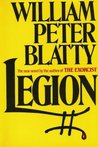
LegionLegion by William Peter Blatty
My rating: 4 of 5 stars

In 1983, twelve years after The Exorcist, William Peter Blatty wrote Legion, a sequel of sorts that switches focus away from Regan MacNeil to the rumpled, philosophical and schmaltz-loving police detective William Kinderman as he investigates a series of gruesome murders in Georgetown. The novel presents the possibility that the supposedly deceased serial killer known as The Gemini Killer (modeled after the real-life Zodiac killer) has somehow started murdering again. As Kinderman investigates he begins to see signs that tie the new killings to the events surrounding the exorcism of Regan more than a decade earlier.

Kinderman is a character Blatty obviously loves writing about and it shows throughout Legion. The detective goes from long ruminations on the nature of evil to complaining about a live carp his mother-in-law is keeping in his bathtub (she likes her fish fresh). As the body count rises and Kinderman heads into the psych ward of a hospital looking for leads, things turn increasingly dark before coming to a head when it seems no one is truly safe from the killer or killers. Blatty has characters fighting to determine what is real and what isn’t as the demonic influence strengthens. Although I never found the novel especially scary, it is unnerving and the suspense toward the end is well-executed (pardon the pun). The prose often has a lyrical, dream-like quality to it, most obviously when Kinderman or others muse about life, the universe and other suitably cosmic topics.

Legion manages to retain many of the same strengths The Exorcist had while standing apart as something more than just a sequel. If you’ve read The Exorcist and enjoyed the character of Kinderman, Legion is easy to recommend.

View all my reviews

Book review: Futuristic Violence and Fancy Suits

Futuristic Violence and Fancy SuitsFuturistic Violence and Fancy Suits by David Wong
My rating: 3 of 5 stars

I’m actually having a difficult time articulating my opinion of Futuristic Violence and Fancy Suits. On the positive side, David Wong (aka Jason Pargin) continues his breezy, effortlessly sarcastic way of writing that for me is the equivalent of a belly rub for a dog. Okay, that analogy was a little labored. Let me try again. I like the way Wong writes. His characters are smart and funny, the situations he puts them in are equally silly and dangerous and somehow all the gonzo stuff he throws together manages to work.

In this novel he shifts to third person to tell the story of Zoey Ashe, a young woman in the near(ish) future who inherits the estate of a father she never saw or liked much, along with technology that can turn an ordinary person into an unstoppable force of destruction (ie. a supervillain). The setting is a designed city in the Utah desert called Tabula Ra$a, a largely lawless place peopled by dozens of millionaires and those who work for, prey on and gawk at them.

So far, so zany. My first stumbling block is Zoey. She’s presented as tough and independent, but also makes some very (unbelievably) stupid decisions, usually in service to moving the plot forward. I really dislike characters doing things solely to keep the plot rolling. King was right–story is good, plot is bad. Wong does this a number of times throughout, using coincidences, slip-ups and kooky hijinks to make sure the plot continues from A to B to C.

On the other hand, the novel is less about the clever machinations of the characters and more reveling in the excesses of this future world that takes the smartphone/always-connected thing to its ludicrous conclusion, where everyone has a video camera, a live feed and the insatiable need to draw an audience, whether through quirky or homicidal means.

Tone is another issue here. As the title promises, there is violence aplenty and much of it is graphic. While many of the characters are cartoonish, some are genuinely repugnant in their actions (even as they are simultaneously ridiculous in presentation). The main villain, Molech, is a self-obsessed diva who brutalizes Zoey repeatedly, all of it depicted in vivid detail. It feels a bit at odds with the sillier parts of the story, but maybe it’s just edgy and I have insufficient hipness left to appreciate it, given that I am mere years away from wearing suspenders and inexplicably hiking my pants up to my nipples (which is to say, getting older). None of this was enough to keep me from wanting to see how it all turned out, but it did lessen the experience a bit. Maybe I just don’t like reading (in detail) about terrible physical violence being inflicted on people.

The big finale also felt a bit thrown together and was anti-climactic, but wasn’t actually bad. I mean, we’re talking barely registering on the It-o-meter for bad endings. Still, it could have been better.

If you liked Wong’s two previous novels, you’ll almost certainly like Futuristic Violence and Fancy Suits. In the end it’s a goofy, gory, gross ride whose strengths overcome its weaknesses. It’s not as good as This Book is Full of Spiders but it’s still a fun read, with more than a few laughs tucked in among the copious flying bullets, severed heads and talking toilets.

View all my reviews

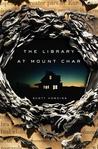
Book review: The Library at Mount Char

The Library at Mount CharThe Library at Mount Char by Scott Hawkins
My rating: 4 of 5 stars

I don’t read a lot of fantasy because I prefer my absurd story scenarios to be horror-flavored but The Library at Mount Char had been recommended and has surfaced on a few “Best of 2015” lists so I figured, what the heck, it’s not like it was going to be elves and dwarves arguing with each other.

Instead, The Library at Mount Char tells the story of how an ancient uber-being who may or may not be human has fended off his enemies for thousands of years (maybe longer) while maintaining The Library, a collection of books, scrolls and bric a brac that essentially allows him to rule and shape our universe. He is aided by twelves children he kidnaps at the beginning of the story, using them as apprentices, with each studying a different discipline. One of them is Carolyn, the protagonist, and the story that unfolds deals mainly with her plotting to usurp her “Father” and also how she learns to become human again, sort of, after turning into an emotionless monster for several decades due to aforementioned plotting.

There’s always a goofy plumber/thief named Steve she conscripts for various tasks and an ex-military man named Earwin who is pretty much your typical possibly-crazy-but-smart ex-military guy.

Several times when explaining the various impossible things happening, Carolyn tells Steve “It’s not magic” but it’s magic. Some lip service is paid to “seventh dimensions” and such but if you’re expecting plausible, scientific explanations for everything, you won’t find them here–nor should you, despite the overall realistic tone the story takes.

What you will find is a generally light, sometimes funny and often gruesome tale of long-brewing revenge, world-destroying (rather than building) wrapped up in a modern fantasy shell with a little life lesson tucked in at the end.

And talking lions. And deer. And zombies. And people who love baking brownies.

The general inhumanity of the children (who are in their thirties for most of the story) means you won’t particularly identify with or feel empathy for them, but Steve the plumber serves as a reference point to the reader, a likable doofus who gets in way over his head.

I liked The Library at Mount Char overall, though at times I felt author Scott Hawkins might have committed more fully to a specific tone, as the story swings a bit uneasily at times from Very Serious High Stakes Stuff to irreverence and silliness. But that’s more a personal preference on my part more than it is a significant failing of the book.

As I mentioned up top, I don’t read a lot of fantasy so I have no idea how The Library at Mount Char compares to similar work. It’s a well-written and tightly-plotted novel, though, and taken on its own, I enjoyed the journey of Steve and Carolyn through the woods and bombs and gunfire and weird other dimensional places.

View all my reviews

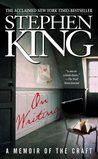
Book review: On Writing

On Writing: A Memoir of the CraftOn Writing: A Memoir of the Craft by Stephen King
My rating: 5 of 5 stars

This time I took notes.

With a few weeks to go before I dive into my seventh National Novel Writing Month competition, I cast about for an inspirational book to read, to get me pumped up while I flail about for an idea for my novel. Getting pumped up reduces the chance of injury when flailing about, you see.

This is the third time I’ve read On Writing and perhaps surprisingly–given how often King’s books come out in revised editions–the text remains unchanged from the book’s original publication in 2000. This is not a complaint, mind you, as my five-star rating will attest.

What is it about On Writing that makes it work so well? Is it the best book to cover the nuts and bolts of writing? No. Is it the best autobiography of a writer? No. Is the best book to offer inspiration and advice to new writers? No.

But what it does so well is cover everything King sets out to tackle, which is all of the above. King fuses together a solid how-to book on writing with solid (if common sense) advice and tosses in a dramatic curriculum vitae in which the author’s life at one point actually hangs by a thread. More than anything, King has written an entertaining volume that appeals far beyond his usual horror milieu.

If you want his tips in super-condensed form, here they are (remember, this time I took notes):

– read a lot (he claims he is a slow reader and reads 70-90 books a year)
– write a lot (he writes 2,000 words seven days a week but suggests 1,000 words six days a week)
– don’t watch a lot of TV
– passive voice is the worst thing ever
– adverbs come a close second
– cut out unnecessary words (King is admittedly not so great on this score)
– story is important, plot not so much
– write what you know but do so as broadly and inclusively as possible
– research when needed but remember where backstory goes (in the back)
– write what interests you, not what you think will sell or what you think people want
– write two drafts and a polish (the polish may be a third draft)
– take 2-3 days off writing when done with the first draft
– don’t revisit your writing until at least six weeks later
– don’t have others critique or offer feedback on your work until after the second draft (it’s not ready till then)

Don’t let my list dissuade you from reading On Writing, though. As I said above, this is pretty common sense advice, but King makes the list entertaining as hell, maybe even a little magical.

View all my reviews

Book review: Dreamcatcher

DreamcatcherDreamcatcher by Stephen King
My rating: 3 of 5 stars

Going in, I knew a few things about this novel:

– a lot of it took place in or around snowy woods
– they made a big budget movie of it
– something something shit weasels
– it is regarded as perhaps not Stephen King’s finest hour

Having now read the book I can confirm all four of the above are accurate. That said, lesser King is never truly awful and the ending of Dreamcatcher is still a lot better than It or a half dozen of his other novels.

If you’ve never read the book, imagine Alien taking place on Earth but with way more farting. We’re talking apocalyptic levels of farting here, all in the name (and really ripe stench) of otherworldly being proliferation.

Four high school buddies, along with one of King’s favorite archetypes, the magical mentally challenged man, form a kind of psychic bond and then find themselves in the middle of what turns out to be a clumsy alien invasion. They puzzle and struggle and flee and fight as the military moves in to seal off an area of Maine known as the Jefferson Tract. Said military is led by a man named Kurtz. Here King eats his cake and has it, too, directly drawing comparisons to Colonel Kurtz from Apocalypse Now, playing the “Is he crazy or just acting crazy?” card before making it clear that this Kurtz is pretty much like the other one.

This was the first book King wrote after being hit and nearly killed by a van in 1999 and he transposes the physical anguish of his injuries and subsequent recovery onto one of the main characters here. As an application of writing what you know, the pain and suffering is understandably authentic. The characters are vivid and colorful, as one expects in a King novel, but the story suffers from horror elements that are more cartoonish than chilling (the aforementioned shit weasels, alien thingies that explode from people’s butts after a gestation period, preceded by bouts of extreme flatulence) and science fiction aspects that teeter on the line between deliberately hokey and plausible. It’s an odd combination that is carried along primarily by King’s strengths with character.

I would probably say this one is a safe pass for people not set on being King completists. It’s not outright bad but is brought down by the uneven tone and sillier elements. If you want to read King, there are a lot of other books of his to recommend over Dreamcatcher.

View all my reviews

Book review: From a Buick 8

From a Buick 8From a Buick 8 by Stephen King
My rating: 4 of 5 stars

I think Stephen King may write faster than I can read. From a Buick 8 is another of his novels that I did not read upon release and have gone back to years later, in the hope that I can eventually catch up to his output.

I’m undecided on the outcome of that.

From a Buick 8 is old school King as far as that goes–it’s classic horror, with a scary unknown thing at the heart of the story, and ordinary people pushed into extraordinary circumstances–but it’s well-crafted old school King.

As with Christine, a classic car is at the center of the shenanigans, this time a Buick Roadmaster abandoned at a gas station by a driver who disappears shortly after arriving. Unlike Christine, this particular vehicle is not haunted, it’s possibly from another dimension. The story focuses on Troop D of the Pennsylvania State Police, who impound the car and keep it in a shed out back of their barracks. Weird things happen in that shed, ranging from strangely diving temperatures to funky purple light shows and the appearance of things that live, briefly.

King starts the story in 1979 and flips back and forth between then and the present (2002, when the book was published), juggling the time periods effortlessly, shifting between first and third person as he does so. Hanging the story’s heart on the bereaved son of one of the officers killed in the line of duty provides the emotional core and King makes it pay out…then things get even more funky and weird when you think everything is about wrapped up.

While From a Buick 8 is not a deep or profound story, it’s a smooth, effortless ride (sorry) that expertly plays off the innate creepiness of so many toothy-grilled cars from the 1950s. Recommended for King fans and for anyone who enjoys an uncomplicated horror story.

View all my reviews

Book review: Dirk Gently’s Holistic Detective Agency

Dirk Gently's Holistic Detective Agency (Dirk Gently #1)Dirk Gently’s Holistic Detective Agency by Douglas Adams
My rating: 4 of 5 stars

I first read this book when it was originally published in paperback in 1988. That was literally half a lifetime ago, as I was 24 at the time. Over the last few years I’ve been returning to some of the books I read in my teens and 20s, to see how they resonate with me now that I am older, if not entirely wiser.

The first thing to strike me upon re-reading this book 27 years later is that I could recall nothing of the story. I mean, yes, I knew there was a detective named Dirk Gently, I knew it was a bit weird and froopy in that Hitchhiker’s Guide to the Galaxy sort of way, but I could not recall any real plot details at all, nor any of the characters. I vaguely remembered something about cats. Cats are mentioned several times, though they play no significant role in the novel. I think I just like cats and projected.

The plot is a convoluted affair that unfolds like some complicated contraption you can’t recognize until it’s finished unfolding itself. You then stand back and say, “Aha, so that’s what it is!” Despite the narrative being at turns mysterious and then more mysterious still, Adams keeps events moving along briskly and the characters are more nuanced than in Hitchhiker’s, while still apt to say clever things we could only wish to come up with in our daily conversations. Eventually the mysteries come clear–the story is a time travel/ghost/romantic comedy of sorts that follows a few very peculiar days in the life of a software engineer who can’t remove a stuck sofa from his staircase–and all ends well, given the previously unrevealed cosmic scale of the stakes at hand.

What impresses me most about the book, and this may seem an odd thing to say in context of Adams, is how mature the writing is. There are ideas on the interplay of math, science, art, philosophy, mortality and more here, handled with wit and grace and occasionally genuine pathos (the scenes of Gordon Way after his meeting with the electric monk stand out vividly in their depiction of despair and sadness). I suspect when I was 24 most of this was lost on me, as I was expecting a Hitchhiker’s retread, which Dirk Gently’s Holistic Detective Agency is very much not. Unfulfilled, my brain apparently flushed nearly all memory of the book, to better make room for all that great late 80s music and fashion. I forgot Dirk Gently’s Holistic Detective Agency but remember parachute pants.

I very much recommend this novel for those not needing their stories filled with car chases and instant gratification, or for anyone who has ever been flummoxed by seemingly immovable furniture.

View all my reviews

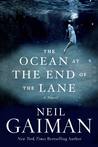
Book review: The Ocean at the End of the Lane

The Ocean at the End of the LaneThe Ocean at the End of the Lane by Neil Gaiman
My rating: 4 of 5 stars

The only problem with the short novel The Ocean at the End of the Lane is just that–it’s short. The ending almost feels abrupt and though it comes at the end of an act, the story overall feels like it could serve as the opening to a longer tale.

But in a way it’s better by being so short. Rather than feeling slight, Gaiman’s story of a young boy inadvertently tangling himself between worlds in early 1970s Sussex feels neat and proper. In the author’s notes Gaiman recalls that he read the story aloud as he wrote it and how it benefited from this. You can see the evidence in the sturdy and somewhat melancholic narration of the protagonist, struggling to deal with situations seven year olds regularly have trouble with–parents, younger sisters, getting picked on at school–let alone having to grapple with the more supernatural elements that swirl in and around the matriarchal Hempstock farm where the titular “ocean” is situated.

By turns amusing, terrifying and nostalgic, The Ocean at the End of the Lane is Gaiman in fine form. Anyone who enjoys his work will not go wrong here.

View all my reviews

Book review: Ghosts: Recent Hauntings

Ghosts: Recent HauntingsGhosts: Recent Hauntings by Paula Guran
My rating: 4 of 5 stars

Ghosts: Recent Hauntings is one of the better horror collections I’ve read in the past few years. The stories are, true to the title, all relatively recent in terms of previous publication, and while editor Paula Guran confesses to fudging a bit sometimes on ghosts being the subject matter, the exceptions are still consistently good stories. There’s even some local flavor in “The Castle”, set in a hotel in Vancouver’s Downtown Eastside.

The stories cover a broad range of styles and tone, from traditional tales of hauntings, like the 9/11-themed opener “There’s a Hole in the City” to the Twilight Zone-style twists of “Faces in Walls”, in which revenge is maybe not so sweet after all. Laird Barron is featured here and given that the protagonist of his “The Lagerstätte” is female, the tale of ghostly beasts is not dripping with testosterone and overripe metaphors as usual. Here the metaphors are only just slightly past ripe, and the story is tight and involving.

The worst of the bunch aren’t worth singling out because I found none of the stories to be poor or even mediocre, something I have found pretty rare when reading a set of stories from a variety of authors. Paula Guran has chosen skillfully here and struck a terrific overall balance. If you’re set on a particular type of ghost story you may find the sheer variety less satisfying but if you’re ready to meet insane djinns, soldiers that hanker for closure or perhaps something more sinister long after being felled in battle, ghosts that are in turn friendly, vicious, mystifying and sometimes maybe not ghosts but something far worst, then Ghosts: Recent Hauntings will leave you pleasingly spooked.

Recommended.

View all my reviews

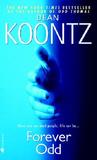
Book review: Forever Odd

Forever Odd (Odd Thomas, #2)Forever Odd by Dean Koontz

My rating: 3 of 5 stars

I generally don’t like committing to a series but Odd Thomas is the kind I like. No epic story spanning ten 1,000 page tomes, just a series of short adventures featuring the same character that can be digested easily without consulting appendices to keep track of everything.

I would give Forever Odd 3.5 stars if Goodreads believed in fractions and the only reason it doesn’t rate higher is because it is an overall less ambitious outing with Odd Thomas that strips away much of the mystery and suspense of the debut novel in favor of a kidnapping orchestrated by a crazy and unpleasant woman. It’s interesting but not as rich or compelling.

The strength of the story is again the way Koontz utterly inhabits the character of Odd, taking full advantage of the first person narrative to take us on Odd’s journey into a gutted casino hotel in the desert where he confronts both the kidnappers and the tragic events of the first novel, emerging broken but not beaten (and conveniently setting up the third novel).

The plot is nothing special, starting with a kidnapping, an unnecessary murder (Koontz’s recurring theme in the series seems to be “life is awful and tragic and you will probably die horribly”) and quickly settles into an extended set piece that pits Odd against the villains. The villains are by turns vile, obnoxious, cruel and at times seemingly indestructible. Odd relies on a combination of skill, supernatural smarts and plain luck to get through.

While the book is short I wouldn’t exactly call it breezy. As with the first, Odd’s self-deprecating humor is regularly undercut by terrible events. Somehow Koontz manages to keep things light and dark at the same time–a good trick when you think about it.

Forever Odd is, then, a successful continuation of the series, even if it is somewhat slighter than the original.

View all my reviews

Book review: Station Eleven

Station ElevenStation Eleven by Emily St. John Mandel

My rating: 4 of 5 stars

I bought Station Eleven as a daily deal and went in with no expectations.

I’m not exactly a post-apocalypse aficionado but very much enjoyed this vignette-style book that begins on the eve of a deadly flu that kills most of the world’s population, then jumps back and forth over the next twenty years, covering its aftermath primarily through the lives of The Traveling Symphony, a group that has banded together to travel around the Great Lakes area, performing Shakespeare and classical music to the small communities that arise after society’s collapse.

While there is a main thread to follow in the story’s present day, the author frequently jumps into the past (including the pre-flu era), yet the narrative never gets bogged down or confusing. Instead, Emily St. John Mandel carefully assembles the characters, their intertwined lives, hopes and ideas as a tapestry where everything is connected in some way, the titular comic Station Eleven, created by a character who succumbs to the flu in a delirium while on a beach in Malaysia, being the main linking device. The link is both literal–it goes from its creator to her ex-husband, an actor, then to a child who grows up to be a member of The Traveling Symphony–and metaphorical, as its science fiction tale depicts a split among people living on an artificial moon whose environmental systems have malfunctioned. It’s perhaps not a deep metaphor, but it is effective.

There is violence and madness in the post-collapse world but rather than being a grim depiction of a possible future, we are presented with the notion that some–maybe even most–want to do more than merely survive. A career therapist constructs a “museum of civilization” at an airport, gathering the detritus of our modern lives now rendered useless–iPhones, laptops, credit cards–to remember what humans had achieved. The Traveling Symphony, in its caravan of gutted motor vehicles, now drawn by horses, bears a quote on one of the wagons from Star Trek: Voyager of all things: “Survival is insufficient.” It is these three words that best exemplify the drive of the characters, the need to not merely manage in the post-plague world, but to keep art alive, to nurture the mind and spirit as human civilization re-shapes and mends itself.

It’s a hopeful message and Station Eleven is ultimately a hopeful story. Recommended.

View all my reviews