I think Stephen King may write faster than I can read. From a Buick 8 is another of his novels that I did not read upon release and have gone back to years later, in the hope that I can eventually catch up to his output.
I’m undecided on the outcome of that.
From a Buick 8 is old school King as far as that goes–it’s classic horror, with a scary unknown thing at the heart of the story, and ordinary people pushed into extraordinary circumstances–but it’s well-crafted old school King.
As with Christine, a classic car is at the center of the shenanigans, this time a Buick Roadmaster abandoned at a gas station by a driver who disappears shortly after arriving. Unlike Christine, this particular vehicle is not haunted, it’s possibly from another dimension. The story focuses on Troop D of the Pennsylvania State Police, who impound the car and keep it in a shed out back of their barracks. Weird things happen in that shed, ranging from strangely diving temperatures to funky purple light shows and the appearance of things that live, briefly.
King starts the story in 1979 and flips back and forth between then and the present (2002, when the book was published), juggling the time periods effortlessly, shifting between first and third person as he does so. Hanging the story’s heart on the bereaved son of one of the officers killed in the line of duty provides the emotional core and King makes it pay out…then things get even more funky and weird when you think everything is about wrapped up.
While From a Buick 8 is not a deep or profound story, it’s a smooth, effortless ride (sorry) that expertly plays off the innate creepiness of so many toothy-grilled cars from the 1950s. Recommended for King fans and for anyone who enjoys an uncomplicated horror story.
I first read this book when it was originally published in paperback in 1988. That was literally half a lifetime ago, as I was 24 at the time. Over the last few years I’ve been returning to some of the books I read in my teens and 20s, to see how they resonate with me now that I am older, if not entirely wiser.
The first thing to strike me upon re-reading this book 27 years later is that I could recall nothing of the story. I mean, yes, I knew there was a detective named Dirk Gently, I knew it was a bit weird and froopy in that Hitchhiker’s Guide to the Galaxy sort of way, but I could not recall any real plot details at all, nor any of the characters. I vaguely remembered something about cats. Cats are mentioned several times, though they play no significant role in the novel. I think I just like cats and projected.
The plot is a convoluted affair that unfolds like some complicated contraption you can’t recognize until it’s finished unfolding itself. You then stand back and say, “Aha, so that’s what it is!” Despite the narrative being at turns mysterious and then more mysterious still, Adams keeps events moving along briskly and the characters are more nuanced than in Hitchhiker’s, while still apt to say clever things we could only wish to come up with in our daily conversations. Eventually the mysteries come clear–the story is a time travel/ghost/romantic comedy of sorts that follows a few very peculiar days in the life of a software engineer who can’t remove a stuck sofa from his staircase–and all ends well, given the previously unrevealed cosmic scale of the stakes at hand.
What impresses me most about the book, and this may seem an odd thing to say in context of Adams, is how mature the writing is. There are ideas on the interplay of math, science, art, philosophy, mortality and more here, handled with wit and grace and occasionally genuine pathos (the scenes of Gordon Way after his meeting with the electric monk stand out vividly in their depiction of despair and sadness). I suspect when I was 24 most of this was lost on me, as I was expecting a Hitchhiker’s retread, which Dirk Gently’s Holistic Detective Agency is very much not. Unfulfilled, my brain apparently flushed nearly all memory of the book, to better make room for all that great late 80s music and fashion. I forgot Dirk Gently’s Holistic Detective Agency but remember parachute pants.
I very much recommend this novel for those not needing their stories filled with car chases and instant gratification, or for anyone who has ever been flummoxed by seemingly immovable furniture.
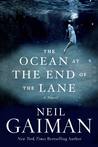
The only problem with the short novel The Ocean at the End of the Lane is just that–it’s short. The ending almost feels abrupt and though it comes at the end of an act, the story overall feels like it could serve as the opening to a longer tale.
But in a way it’s better by being so short. Rather than feeling slight, Gaiman’s story of a young boy inadvertently tangling himself between worlds in early 1970s Sussex feels neat and proper. In the author’s notes Gaiman recalls that he read the story aloud as he wrote it and how it benefited from this. You can see the evidence in the sturdy and somewhat melancholic narration of the protagonist, struggling to deal with situations seven year olds regularly have trouble with–parents, younger sisters, getting picked on at school–let alone having to grapple with the more supernatural elements that swirl in and around the matriarchal Hempstock farm where the titular “ocean” is situated.
By turns amusing, terrifying and nostalgic, The Ocean at the End of the Lane is Gaiman in fine form. Anyone who enjoys his work will not go wrong here.
Ghosts: Recent Hauntings is one of the better horror collections I’ve read in the past few years. The stories are, true to the title, all relatively recent in terms of previous publication, and while editor Paula Guran confesses to fudging a bit sometimes on ghosts being the subject matter, the exceptions are still consistently good stories. There’s even some local flavor in “The Castle”, set in a hotel in Vancouver’s Downtown Eastside.
The stories cover a broad range of styles and tone, from traditional tales of hauntings, like the 9/11-themed opener “There’s a Hole in the City” to the Twilight Zone-style twists of “Faces in Walls”, in which revenge is maybe not so sweet after all. Laird Barron is featured here and given that the protagonist of his “The Lagerstätte” is female, the tale of ghostly beasts is not dripping with testosterone and overripe metaphors as usual. Here the metaphors are only just slightly past ripe, and the story is tight and involving.
The worst of the bunch aren’t worth singling out because I found none of the stories to be poor or even mediocre, something I have found pretty rare when reading a set of stories from a variety of authors. Paula Guran has chosen skillfully here and struck a terrific overall balance. If you’re set on a particular type of ghost story you may find the sheer variety less satisfying but if you’re ready to meet insane djinns, soldiers that hanker for closure or perhaps something more sinister long after being felled in battle, ghosts that are in turn friendly, vicious, mystifying and sometimes maybe not ghosts but something far worst, then Ghosts: Recent Hauntings will leave you pleasingly spooked.
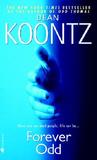
I generally don’t like committing to a series but Odd Thomas is the kind I like. No epic story spanning ten 1,000 page tomes, just a series of short adventures featuring the same character that can be digested easily without consulting appendices to keep track of everything.
I would give Forever Odd 3.5 stars if Goodreads believed in fractions and the only reason it doesn’t rate higher is because it is an overall less ambitious outing with Odd Thomas that strips away much of the mystery and suspense of the debut novel in favor of a kidnapping orchestrated by a crazy and unpleasant woman. It’s interesting but not as rich or compelling.
The strength of the story is again the way Koontz utterly inhabits the character of Odd, taking full advantage of the first person narrative to take us on Odd’s journey into a gutted casino hotel in the desert where he confronts both the kidnappers and the tragic events of the first novel, emerging broken but not beaten (and conveniently setting up the third novel).
The plot is nothing special, starting with a kidnapping, an unnecessary murder (Koontz’s recurring theme in the series seems to be “life is awful and tragic and you will probably die horribly”) and quickly settles into an extended set piece that pits Odd against the villains. The villains are by turns vile, obnoxious, cruel and at times seemingly indestructible. Odd relies on a combination of skill, supernatural smarts and plain luck to get through.
While the book is short I wouldn’t exactly call it breezy. As with the first, Odd’s self-deprecating humor is regularly undercut by terrible events. Somehow Koontz manages to keep things light and dark at the same time–a good trick when you think about it.
Forever Odd is, then, a successful continuation of the series, even if it is somewhat slighter than the original.
I bought Station Eleven as a daily deal and went in with no expectations.
I’m not exactly a post-apocalypse aficionado but very much enjoyed this vignette-style book that begins on the eve of a deadly flu that kills most of the world’s population, then jumps back and forth over the next twenty years, covering its aftermath primarily through the lives of The Traveling Symphony, a group that has banded together to travel around the Great Lakes area, performing Shakespeare and classical music to the small communities that arise after society’s collapse.
While there is a main thread to follow in the story’s present day, the author frequently jumps into the past (including the pre-flu era), yet the narrative never gets bogged down or confusing. Instead, Emily St. John Mandel carefully assembles the characters, their intertwined lives, hopes and ideas as a tapestry where everything is connected in some way, the titular comic Station Eleven, created by a character who succumbs to the flu in a delirium while on a beach in Malaysia, being the main linking device. The link is both literal–it goes from its creator to her ex-husband, an actor, then to a child who grows up to be a member of The Traveling Symphony–and metaphorical, as its science fiction tale depicts a split among people living on an artificial moon whose environmental systems have malfunctioned. It’s perhaps not a deep metaphor, but it is effective.
There is violence and madness in the post-collapse world but rather than being a grim depiction of a possible future, we are presented with the notion that some–maybe even most–want to do more than merely survive. A career therapist constructs a “museum of civilization” at an airport, gathering the detritus of our modern lives now rendered useless–iPhones, laptops, credit cards–to remember what humans had achieved. The Traveling Symphony, in its caravan of gutted motor vehicles, now drawn by horses, bears a quote on one of the wagons from Star Trek: Voyager of all things: “Survival is insufficient.” It is these three words that best exemplify the drive of the characters, the need to not merely manage in the post-plague world, but to keep art alive, to nurture the mind and spirit as human civilization re-shapes and mends itself.
It’s a hopeful message and Station Eleven is ultimately a hopeful story. Recommended.
The Store may be the worst horror novel I’ve ever read. When I try to think of something positive to say about it the two things that come to mind are 1) it was easy to read (more on this shortly) and 2) it didn’t set my hair on fire. That’s about it.
I’ve never read any books by the prolific Bentley Little (24 novels published since 1990) but he’s a two-time Bram Stoker winner, his novels get consistently good ratings on the usual sites (3.86/5 for The Store on Goodreads) and the premise of The Store intrigued me, so I decided to finally check out his work (there’s a little shopping joke in there if you look, ho ho).
But what could have been a sly take on people turning into obedient sheep beholden to a mega-retailer, with a supernatural twist thrown in, is instead a preposterous and laughably melodramatic story.
Suspension of disbelief can be tricky in horror stories and even more so in horror novels where the author must maintain a book-length narrative alongside the usual supernatural hijinks. The essential problem with The Store is that it’s not believable. It feels like something written by an unsophisticated teenager trying to tell a scary story. The characters are stereotypes, often acting in irrational ways in order to further the plot and the writing is not merely plain, it’s simple to the point of being banal. In The Store, a luxuriously-appointed living room would be described thusly:
The living room was luxuriously appointed, with fancy chandeliers and fancy carpeting. The sofa had big soft cushions like the kind you would find in a five star hotel.
Instead of describing how something is creepy, Little will just say it’s creepy. That doesn’t make something creepy (or scary or sinister or whatever). An example is below. (Warning: creepy!)
That was it exactly. There was something artificial here. Clean and wholesome, yes. But not in a good way. In a creepy way, an unnatural way.
The adults and teenagers all talk using the same speech patterns, “playful” insults and slang. The story repeatedly has scenes set in city council meetings. It’s as exciting as it sounds.
As a reward to those who push through to the end, the story jumps the shark about three-quarters of the way in. The stalwart protagonist Bill the technical writer is subjected to treatment that is probably meant to shock or disgust the reader but instead it’s ludicrous, eye-rolling stuff. The story concludes with a gross “twist” ending that is left unresolved and adds nothing. The characters cry a lot. You may cry if you read The Store. Don’t. There are many horror novels far better than this one.
It does many things right and kept me interested and reading through to the end to find out what happened next, and yet it still ended up as somewhat unsatisfying. It’s still a good story and if you like horror and aren’t squeamish, it may be worth checking out.
The rest of this review has major spoilers, so skip if you are spoiler-averse.
On the plus side, The Ruins moves at a brisk pace, the prose is lean and direct and there is an inexorable sense of moving forward, of events heading toward a definite conclusion. The characters are varied without lapsing into stereotypes and behave much in the way that you might expect people in their early 20s would–with adult care and thought, but always with the undercurrent of their not-distant childhood running beneath, sometimes erupting in emotional outbursts and petulant actions. Basically these people aren’t shy about yelling and fighting with each other.
The story is a variation on people-trapped-in-a-hostile/haunted-environment. In this case it is the area surrounding the titular ruins. My first pet peeve is that there really aren’t any ruins at all. There’s a mineshaft at the top of a hill and that’s about it. But “The Ruins” sounds a lot cooler than “Mineshaft” so there you go.
We follow what ends up being six people, two couples, and two other young men, one Greek and the other German. The German, Mathias, convinces everyone to join him to find his brother, who is with a group of archaelogists at the ruins, located about 11 miles away from the Mexican town of Coba. And so the group of twenty-somethings leaves behind lazing about on tropical beaches to venture into the jungle.
Things start going sideways when one of them backs into some seemingly innocuous vines. This causes the Mayans of a nearby village to freak out and, using bows and pistols, they force the group up the hill. It eventually becomes clear that the vines are very bad and the Mayans, having salted the earth, are determined to not allow anyone who contacts them to leave the ruins. Well, the hill with the mineshaft.
Over the next few days things deteriorate rapidly. The Greek breaks his back falling down the mineshaft, the vines worm their way into one of the men, the vines actively plot and move against them. Several times the vines literally laugh at the group, mocking their fate. How would you feel being laughed at by a plant? And then when you say “I’m out of here” there’s some Mayan standing there ready to fill you full of arrows. You’d probably feel a bit bummed out.
The group struggles to maintain hope as they ration their meager supplies and wait for potential rescue but the story strongly and repeatedly makes it clear that they are doomed. And they are. Spoiler: everyone dies.
Now, some people may have a problem with sentient, evil plants that can plot, mimic human voices, manufacture scents and smells as traps and generally carry on in ways that are unlike any plant you are likely to come across. And really, it’s quite silly. But if you buy in–and author Scott Smith offers no explanation for the vines, which actually helps with this–you can focus on how well the story plays out.
Watching the group struggle with the vines, the elements, and each other, is interesting and for the most part believable, but I think Smith tips his hand too early, leeching the story of suspense when it seems obvious everyone will die. And when everyone does, you start looking for the big picture, the commentary on society or whatever and it’s not really there. The takeaway I got is “if you’re going to some ruins in a place you’ve never been before, be more prepared than these nitwits were. Also, if all the locals act spooked and tell you to stay away, you may want to listen to them.”
A few plot contrivances struck me as implausible, undercutting the reality that had been built up. Eric, the would-be teacher and manbaby, essentially flays himself with a dirty knife, yet improbably lingers on after losing what seems to be most of his blood. He also manages to accidentally stab Mathias directly in the heart. Speaking of lucky hits, when Jeff, former Eagle scout and de facto leader, decides to try breaking through the Mayans’ gauntlet, the first arrow shot at him manages to pierce straight through his neck. Apparently Mayans are uncanny archers.
Another nitpick is certain writing affectations Smith adopts and uses repeatedly. I’m usually okay with these but for some reason they starting standing out like blood-sucking vines on a patch of barren rock and became distractions. One was a beat that ended many scenes, variations of “And so they did” or “And that’s what happened.” The second and one that stood out much more, was the excessive use of “of course.” It felt like there was a sentence on every other page that ended with “of course,” such as “Amy wouldn’t actually kiss the Greek, of course” or “The Mayans would still be waiting for them at the bottom of the hill, of course” or “And that’s what happened, of course.” It started bugging me toward the end. On the one hand, it’s a convenient shorthand that gets across tone in a few words. But anything used to excess is going to be too much, of course.
Still, I liked the writing overall. As I said up top, the prose is lean and direct, Smith is economical and efficient but the writing never seems perfunctory or threadbare. He manages to take a very limiting situation and keeps it interesting and varied. The characters are at times petty and annoying, but never to the point of being genuinely unlikeable.
The Ruins, then, gets a provisional thumbs-up from me. Its premise is goofy, the story telegraphs the ending too early, but the journey to get there is still an interesting one.
Horrorstör is one of those horror stories that can be easily described in one sentence. Heck, just a phrase: a haunted Ikea knock-off. I found this book by perusing NPR’s Best Books of 2014 and couldn’t resist. I don’t know about you but I find the bewildering and deliberately maze-like design of Ikea stores scary even with the lights on.
Horrorstör leads the reader through a terrifying night where five employees of an Orsk store find themselves trapped in retail hell. Except this time it’s a little more literal. Riffing on the old ancient burial ground theme (this time a long ago prison), we find our plucky/weird/selfish heroes trying to survive a night of being locked in storage cases with names like Liripip by vengeful ghosts.
The story starts out light and funny, with Hendrix making witty observations on the retail experience. Somewhat predictably the funny stuff largely disappears once the horror starts cranking up. Apart from catalog illustrations of weirdly-named furniture that grace the start of each chapter, there is little humor to be found in the latter half of the book. This isn’t a bad thing per se, but it seems like a lot of authors who write comic horror tend to dispense with the funny once the gore starts flowing, making for an uneven tone.
Hendrix still does a nifty job in describing the horrors taking place within the cavernous confines of the Orsk store, though. You may never look at a sofa with an umlaut in its name the same way again. In fact, the liberal use of authentic-looking catalog pages and other related paraphernalia make me recommend reading this novel on a larger tablet (like the standard iPad), to better appreciate these illustrations. They’re neat and well-made additions.
If you want a short and (mostly) funny horror story, Horrorstör comes recommended.
This collection of short stories by Nathan Ballingrud could also be called Deeply Troubled Men and the Monsters They Hang Out With. Each story chronicles men who are trapped in unhappy relationships, who are spiritually lost or battling booze, drugs and shambling horrors, which are sometimes also their wives. The writing is full and ripe, like a bloated watermelon sitting on a picnic table under the furnace glare of the late August sun, ready to explode in a gout of watery pulp. Ballingrud loves similes (and metaphors) the way a cat loves a mouse. Both are sought after and mauled with great enthusiasm.
Do you like a little humor sprinkled about to lighten the mood of otherwise grim, dark stories? You will find none here. These stories may vary slightly in tone but they are all very, very serious. Whether it’s a boy becoming a vampire or a man running from a werewolf, these tales are relentlessly bleak. Do you want sympathetic characters? That’s also difficult to find. Most of the men are detached, emotionally distant/stunted, often the source of their own troubles, with the horror elements used to highlight how terrible and flawed they are (“Wild Acre”, the aforementioned werewolf story, is a good example of this, as the werewolf amounts to little more than window dressing for a story about a troubled man and his ongoing financial and marital problems, made worse because, well, werewolf).
The closing story and one exclusive to this collection, “The Good Husband” can be read as darkly humorous, given the increasingly ludicrous turns the story takes. Perhaps I wasn’t correctly seeing the earnestness of the prose as very dry sarcasm. It didn’t help that the characters felt somewhat unreal throughout (more understandable with the wife, with her being dead/not quite dead). Still a great premise, though.
There is no denying Ballingrud’s skill at creating evocative imagery (if sometimes going a bit further than needed) but after awhile I began to weary of reading about these very flawed, troubled, yet strangely uninteresting people. Maybe not caring about them makes ME the monster. Twist ending!
Also, if Ballingrud ever teamed up with Laird Barron, they should totally bill themselves as The Brothers Grim.
I picked up this book (well, it was an ebook, so the picking up was virtual) for three reasons:
1. It was on sale. Cheap is always a price I like.
2. I’ve loved these sorts of nutty topics (out of body experiences, telepathy, Bigfoot, ghosts, Bigfoot ghosts with telepathy, etc.) since I was a kid.
3. It seemed like good background material for a novel I’m writing that coincidentally embraces the subject of death and near-death experiences.
Journalist Patricia Pearson draws from a range of studies and personal accounts stretching back decades to dig into the near death experience (NDE) and other related phenomenon. The deaths of her sister and father serve as a framing device for the book and Pearson is up front about how their deaths and oddities around the deaths helped develop her interest in and shape her point of view on the subject.
Despite the title of the book, Pearson paints NDEs as more of a spiritual awakening rather than a religious experience. Indeed, more people have apparently turned away from religion after having an NDE while at the same time becoming more spiritual. Throughout the various studies and research Pearson shows how little science has been able to quantify what happens when someone comes close to dying and recovers or just plain dies. In the main the affected individuals seem to traverse into another realm or reality, out of their bodies, often meeting other people they know who are already dead, and for the most part the experiences are positive, even joyful. As you may suspect, conducting experiments around people who have just escaped death is a bit tricky, as scientists, smart and diligent as they may be, cannot hang around intersections indefinitely waiting for near-fatal traffic accidents to occur. Well, they could, but probably not with funding from a university.
My biggest issue with the book is its relative shapelessness. Pearson writes well and has put in a lot of research on the subject (the bibliography and notes are extensive), the tone remains respectful and she never makes declarative statements one way or the other (“The Buddhists are right, if you screw up in your post-life you come back as a dung beetle!”), but the book has no sense of progression. She documents the subject and then the book ends. Maybe I’m trying too hard to impose a narrative structure on something that doesn’t necessarily need one.
In any case, if you have any interest in the subject matter–and yes, most NDEs center around being surrounded by glowing light, a tremendous sense of love and no fear of death–this is a sober and serious look at it.
I’d probably give this book 3.5 stars but Goodreads (where this review originates) doesn’t allow half stars, so I’m giving it four, since I lean more toward that than three.
This 1987 novel is dated politically (set in 1996 but not foreseeing the collapse of the Soviet Union) and technologically (it predates the Internet so a lot of data in the story is gathered and stored on fancy optical disks) but otherwise feels fairly fresh nearly thirty years later.
The plot is a downer–mysterious aliens arrive to destroy Earth–and the resolution, such as it is, is a bit abrupt because the story continues in the 1993 follow-up, Anvil of Stars. But The Forge of God is more about the journey than the destination, as Bear unfolds what begins as a galactic mystery and ends with humanity reduced to a murmur in the great vastness of space.
The story almost feels like two different tales stitched together. There’s the initial mystery and scientific investigation–a moon of Jupiter disappears and months later strange artificial rock formations appear in Death Valley and other spots around the world. The leading characters are geologists and there is much speculation before an alien appears out of one of the formations with a dire warning that Earth is doomed, destined to be torn apart by a fun bunch described as “planet eaters.” The latter part of the story chronicles the months leading up to what appears to be the end of the world as we know it (and no one feels fine), with a plan by the mysterious but apparently beneficent warning aliens to cobble together the remnants of the world in order to create some aspect of it elsewhere.
These two halves also stand apart with distinct tones. The first half is filled with politics, scientific theorizing, investigation and generally lots of “big picture” stuff, while the second half zooms in on some of the characters and becomes more personal, following them as they grapple with a seemingly sealed fate. Bear does a good job transitioning from the big picture to a more intimate one, capturing the despair–and faint hope–as the last days of the story (and possibly the planet) play out.
If you like a good doomsday scenario supported by credible science, a chilling answer to the Fermi paradox, and have always wanted geologists to be the leads in a novel, The Forge of God comes recommended. My only regret is I didn’t research ahead of time to find out it was part of (an admittedly very short) series, so I know feel obligated to read the sequel, to find out how it all turns out (until the inevitable sequel after that one).

 From a Buick 8 by Stephen King