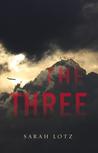
While not a direct sequel to Lotz’s previous novel The Three, Day Four does take place in the same timeline, one where the mysterious crash of four airliners on the same day and the decidedly weird doings of the three (or was it four?) child survivors leads to talk of the Apocalypse being on its way and the election of a deeply religious President in the U.S., one who oversees an extremely conservative federal government that seems to be doomsday preppers writ large. And official.
Day Four references the plane crashes, survivors and spookier stuff while sidestepping talk of the political landscape. The main story is largely self-contained, though, so reading The Three is not a prerequisite.
One might glibly describe Day Four as The Love Boat from Hell–and you would actually not be far off. As the story begins, the first three days of a cruise on The Beautiful Dreamer, of the fictitious Foveros Cruise Line, encounters nothing out of the ordinary after leaving Miami. On the fourth day it runs into mechanical problems. Then virus problems, rapist/murder problems, why-isn’t-anyone-coming-to-help problems and finally, possible ghost and maybe worse-than-that problems.
Lotz does an excellent job of ramping up the tension as conditions on the ship deteriorate, switching between a large cast of characters with the same ease she demonstrated in The Three. The crew of the ship is split into cabals and cliques, divided along lines of rank as well as ethnicity, each group typically speaking in their native tongue to better exclude others from the conversation. Even with the cruise running optimally it’s clear a lot of the people on board are never going to get along. And there are enough skeletons to fill a walk-in closet.
The passengers are a quirky mix of gossip bloggers, psychics, tourists and suicides-in-waiting. As things go sideways (literally, as the days without rescue go on) clashes among the passengers and crew increase. The power goes out. Toilets stop working. Ghosts start working.
To say more would be to enter into major spoiler territory but suffice to say the ending seems very much to set up another book, though whether it will follow the characters of Day Four or not is unclear (though I lean toward no). What is clear is that the people that inhabit this alternate present-day timeline are likely in for a bumpy few years.
If you approach Day Four on its own, the references to The Three may feel a bit oblique and the ending may be less satisfying but I still feel it works well on its own. As a companion to The Three, Lotz has crafted a nightmare cruise that neatly sets up even worse things to come. Recommended.
Sorry, had to get the inevitable and terrible pun out of the way.
11/22/63 is one of King’s best post-accident (post-1999) works, a long and adventurous novel that jumps feet-first into the time travel paradox. As expected, giving much thought to the logistics of time travel only reveals the gaps and flaws common to this particular sub-genre of science fiction. King knows this, too, and steers clear of trying to provide plausible scientific reasoning, leaving it up to the butterfly effect and what the main character of school teacher Jake Epping calls “harmonics.”
Saving Kennedy is a favorite time-travel trope, probably the most popular after killing Hitler, and King neatly lays out the scenario where Epping goes back to September 1958 and adapts to living for five years in an era before he was born, all the while tracking his prey, Lee Harvey Oswald. Along the way Epping falls in love with both the past and another school teacher, the tough if clumsy Sadie Dunhill.
Typically, King does a terrific job in fleshing out the many characters, while the sounds and sights of late 50s and early 60s America feel authentic. The story sprawls but never drags as Epping faces obstacle after obstacle while moving closer to his target. As the repeated refrain goes, the past is obdurate and doesn’t want to be changed.
To say more would venture into spoiler territory and although the book has what amounts to two endings, both are fine. There are no giant spiders here. 😛
Unlike King’s horror fare, 11/22/63 has broader appeal, to fans of time travel stories, to those who enjoy the whole “fish out of water” thing and finally, to anyone who enjoys watching characters whose actions and complexities drive the action, rather than the other way around.
This is a funny, nerdy book that answers some very silly science questions with actual science. There’s also a lot of math, including numbers that are so big you probably don’t want to think much about them. I hate math (or rather, it seems math hates me) but enjoyed the book all the same. Don’t let any math aversion turn you away.
Randall Munroe is the author of XKCD, a stick figure comic that also features a lot of math (and science and technology and stuff). In What If? he answers questions like “What would happen if every person on Earth jumped up and down at the same time?” (answer: not much of anything) As with XKCD, the writing is brainy but accessible and the tone remains light, as one might expect when answering something like “What would happen if you tried to hit a baseball pitched at 90% the speed of light?” (answer: basically you get the equivalent of a nuclear bomb and would not advance to first base as first base would be vaporized along with everything else in the park)
The questions are regularly interspersed with just-a-little-too-weird “I’m not going to answer that” examples. I can only imagine how many of these types of questions Munroe has received.
The book contains a lot of illustrations to go with the scientific theory, all done in Munroe’s stick figure style. He occasionally teases more complex drawings, suggesting he is not just a one-stick pony, as it were.
What If? is one of those books that’s just plain fun to read. If you think you might enjoy some random answers to random and weird science questions, jump in.
One caution, though. Due to the large number of illustrations, this is a book you may find reads better on a tablet vs. an ereader. The images are black and white, though, so most modern ereaders should handle them decently.
I saw Deadpool last night. I knew just enough about the character and movie to properly calibrate my expectations (vulgar, gory over-the-top violence, irreverent) and was pleased to find the movie was, in its own vulgar, gory and irreverent way, quite charming and at times pretty funny. Ryan Reynolds obviously has affection for the character/material and had a great time making the film–and it shows. As a bonus, you get to see him nude. As a special bonus, you even get to see his naughty bits. As penance for this, you see them after he has been transformed into a hideously ugly mutant.
About a quarter of the way through the movie a pair of small white lights began flashing, one on either side of the movie screen. It seemed like an alarm of some kind. Presumably they don’t have real alarms (the kind that pierce ear drums) to prevent that whole “yelling fire’ in a theater effect. I ignored it for a bit and then Nic finally said we should check it out so we went to the lobby and immediately got word that it was a fire alarm, but a false one. We returned to our seats and the lights kept flashing, which was more annoying now that we knew there was no inferno imminent.
A few minutes later a pair of employees came in and one gamely tried talking over the movie’s audio (Deadpool is not a film that employs subtlety in its audio–or any other part) and we got the gist: an apology for the alarm and an offer for a full refund or free pass.
After they left the film suddenly froze. It’s a digital projector so I’m wondering if the hard drive crashed. Would we get to see the world’s largest BSOD? No, it turned out they were setting the movie back to just before the disruption. I actually caught a piece of dialogue I had missed the first time.
When the movie ended we filed past someone who did indeed give us a pair of free passes (good until December 31, 2017, so good for the release of Episode VIII). We’ll likely use them for Zootopia, one of those anthropomorphic Disney moves that looks way better in the previews than it has any right to.
Overall, the disruption was relatively minor, didn’t detract from the experience (Deadpool is pretty much the perfect movie to experience a false fire alarm in) and we got a free movie out of it. I rate the evening 6 out of 7 Ryan Reynold’s fourth wall-breaking comments.
Another of my “on sale, looks interesting” reads, Talking to Crazy focuses on dealing with irrational (“crazy”) people, running a range from annoying co-workers to potential mass murderers. Yes, there is a chapter on dealing with people who may be thinking of getting a gun and doing some people huntin’.
Talking to Crazy is not a book for people who like lots of data, studies and stats to back up the claims and advice on offer. Goulston has many years of experience as a psychiatrist and draws on anecdotes from that experience to illustrate the strategies he lays out. He also admits that mental health can be at times a lot trickier to diagnose and treat than physical ailments and frequently cautions that some of his advise should be used with caution or not used at all without the assistance of a mental health professional.
Most of the strategies revolve around empathy–listening to the irrational person, letting them know you understand they are upset, not judging, not offering solutions (at least not immediately). Much of this is common sense but Goulston provides detailed steps and often explicit phrases or wordings to use.
The book turns increasingly darker as it moves from dealing with people you may not need to interact with (his advice on those is: don’t) to co-workers and then family. He covers how to handle those with genuine mental disorders like schizophrenia (mostly by sensibly letting mental health care workers do the heavy lifting) and ends with strategies on handling people who may be thinking of suicide (yikes) or those who may be primed to follow in the steps of the many mass murderers of late. Here he chillingly warns parents of potential killers that if they are worried about saying something lest they become a target that they are already targets before they say a single word.
It’s hard to refute the advice given, as so much of it is both common sense and comes from a solid core of providing empathy and withholding judgment. In essence, Goulston is saying that the best way to deal with irrational people is to keep yourself in check, so you don’t join in on the accusations, fear and anger. He emphasizes this by spending a section of the book with a series of exercises that force the reader to reflect and self-assess, to look for their own weaknesses and learn to manage or overcome them.
Much of the advice will be difficult for people to act on. Goulston comes across as outgoing and forthright. The timid will find it challenging to say most of the things he thinks is necessary to defuse irrational people and begin the process of turning their behavior toward the positive. But just rehearsing the steps alone may help bolster someone’s confidence and push them that much closer to trying.
Talking to Crazy is written in a highly accessible style and the heavy use of anecdotes gives the book the feel of a conversation, rather than a checklist of things to do. I fortunately don’t have to deal with anyone I’d flat-out call irrational, so I’m unlikely to use the advice anytime soon. The advice is solid and presented well, though. I would have preferred more data to back up the strategies but this is a more of a nitpick. Talking to Crazy is not a data-driven book and the advice remains useful and at times thought-provoking all the same.
In 2015 I read 36 books and one short story. Actually, I read a lot of short stories but only one that was purchased standalone (“In the Tall Grass”).
I once again saved a tree by reading 100% digitally, primarily via a Kobo H20 ereader, an iPad mini (which unceremoniously died midway through the year) and my iPad Air (which did not unceremoniously die but is used primarily for reading in bed, as it’s a bit too big for me to enjoy carrying around for book reading). The iPad reading was done via the Marvin ereader app. Kobo and Amazon’s Kindle apps are both seriously lacking in features vs. their ereader counterparts, possibly to drive sales of said ereaders.
I reviewed the majority of books on Goodreads and the reviews break down as follows on their one to four star scale (Goodreads does not allow half stars):
Five stars: 1
Four stars: 15
Three stars: 8
Two stars: 2
One star: 1
For the most part I enjoyed the books I read last year, with 23 of 27 reviewed netting at least three stars. Even the pair of two-star novels (Swan Song and The Gate at Lake Drive) both had their strengths and I don’t regret reading them.
The five-star was a re-read, Stephen King’s On Writing. As I wrote in my review, it’s the seamless fusion of writing primer and memoir that lifts this book from being very good to great.
The one-star review is for The Store, Bentley Little’s semi-satirical take on a Walmart-like store chain that takes over small towns for nefarious and profitable purposes. I’d never read Little before and have no idea how representative The Store is of his style, but it left me unwilling to investigate any of his numerous other The _____ books. The utter banality and formulaic writing made this the most eye-rolling read of 2015 (Swan Song would be the runner-up, see my review for a few examples).
I’ve settled into a bit of a pattern with my book-reading over the past few years, with my selections falling into these groups:
a couple of Stephen King novels, typically a mix of a current title and an older one or two I haven’t read. I read five this year, so I went a bit King-crazy. I have no regrets. I say that even having read Dreamcatcher.
a couple of science fiction, fantasy or horror classics dating back to the 19th or early-to-mid 20th centuries. Only two this year: Lord of the Flies and Alice Through the Looking Glass.
a smattering of current novels or books spanning my usual interests: science fiction, horror, weird stuff (UFOs, etc.). This was the bulk of my reading.
books by established authors that were on sale. These are usually old or lesser-known titles, like Arthur C. Clarke’s (excellent) The City and the Stars, an outrageously ambitious first novel.
a handful of books by new authors (or at least new to me) that were on sale, typically published by small presses or self-published. I’m always hoping that I’ll find a new author to follow but usually end up either disappointed or ambivalent. The best of these was probably Sarah Lotz’s The Three.
a few re-reads. I re-read Dirk Gently’s Holistic Detective Agency again and did not regret it.
And now here are a few of my 2015 Reading Awards:
Favorite book of 2015: Station Eleven (Emily St. John Mandel) Favorite re-read of 2015: On Writing (Stephen King) Most depressing book of 2015: Idiot America (Charles P. Pierce) Best Stephen King book I read in 2015 (not counting On Writing): From a Buick 8 (yes, you heard me–the story is simple but is strangely charming) Most disappointing classic: Swan Song (Robert McCammon). I don’t understand why this book is rated so highly. It’s not bad, it’s just very average. I would say I’m a picky reader but I love enough junk to know that’s not true. The “Well, that was…interesting” Award: Given the Circumstances (Brad Vance). I figured it was time to read a gay romance. For the first half of the book the two main characters dance around each other (they are massive/studly NFL and MLB players, of course) then when they finally have sex it’s rendered in enough detail to qualify as a medical dissertation. It felt weird (that’s what he said). It was essentially story story story EXPLICIT HARDCORE SEX story story EXPLICIT HARDCORE SEX story story EXPLICIT HARDCORE SEX story fin. Maybe all romances are written this way and I never knew because I’d never read any. Now I know and well, it was interesting.
I suspect many if not most people who first encounter Twenty Thousand Leagues Under the Sea think the title refers to how deep the Nautilus dives. Going by the conservative measure of a league being four km, that would equal 80,000 km and put the Nautilus in outer space, which is indeed a long way down.
But even when considered correctly as distance traveled, twenty thousand leagues is a lot of ocean to cover. And in Jules Verne’s classic novel, the protagonist and narrator Pierre Aronnax provides an episodic recollection of the many months he and two others spend as captors aboard the submarine Nautilus, held there by the mysterious and perhaps mad Captain Nemo.
Perhaps the most remarkable aspect of this nearly 150 year old novel is how well the science holds up. Unlike his more fanciful efforts such as Journey to the Center of the Earth, Twenty Thousand Leagues Under the Sea depicts an eerily realistic electric-powered submarine. The story is a curious blend of exploration and travelogue, with odd dashes of humor mixed in with bursts of action or violence. More harrowing than the squid attack made famous in the 1954 Disney film is the depiction of the Nautilus becoming trapped under ice while in the Antarctic, with the crew struggling to break the vessel free before their supply of oxygen runs out. You may never want to step foot in a submarine if afforded the opportunity.
Despite the occasional action, most of the story is presented in a deliberate fashion that may feel slow or even ponderous to those accustomed to our information-overload culture. This is a tale to be savored for the sights, sounds and other sensations presented. The arc of Nemo would no doubt be handled more forcefully in a modern telling, as he begins and ends as an enigma here, but other than the “I hit my head and suddenly it was all over” ending (perhaps due to the novel originally being a magazine serial), I enjoyed the more leisurely pace. Considering the dual facts that the novel relies so much on science and was published in 1870, it is all the more amazing how sturdy it still stands.
For anyone interested in the history of science fiction, Twenty Thousand Leagues Under the Sea is an essential read.
Blackout uses the same broad theme as Stephen King’s novella “The Mist,” replacing the titular fog with an all-encompassing darkness than envelops a small town, all the better to unleash alien horrors on its citizenry. While the story moves swiftly, it never quite clicked for me. It’s a fast and easy read but I felt indifferent to the fates of the various characters.
The writing is for the most part solid, but unremarkable. Passages like the following, where the main character state the obvious, are not uncommon:
And being a science teacher, I knew that if the sun did not rise day after day after day, there would be no photosynthesis. The plants and trees would no longer process carbon dioxide and release breathable oxygen.
One of my pet peeves–characters doing dumb things to advance the plot–is also in play here, though to his credit, Curran at least has the main character own up to his behavior:
I don’t honestly think it was the cable’s doing, but some weird self-hypnotic thing that made me reach out and touch it. There’s no good explanation for any of it. None at all. The self-destructive urge we all feel from time to time just became so strong, and I was so weak, that I just went with it. I touched the cable.
(The cables are bad, as you may have guessed.)
If you feel the need for a bleak, hopeless tale–that’s not a spoiler, as the first line of the story admits as much–you could do worse than Blackout, but I found it curiously joyless.
The symmetry of the three stars I’m giving The Three is unintentional. If Goodreads supported half stars it would be 3.5. I quite enjoyed this tale of potential apocalypse but a few issues keep me from giving it a slightly higher rating. That shouldn’t discourage anyone from reading it if they find the premise interesting and enjoy the epistolary format.
The Three chronicles how three children survive three separate plane crashes, all on the same day, leading to speculation ranging from “it’s just a coincidence” to aliens to how the children are the four horsemen of the apocalypse and are ushering in the end times. It is the last theory that takes hold most firmly, particularly in the U.S. and especially among Christian evangelicals and their right wing political allies.
The book uses the epistolary format, framing it largely as an account written by an American journalist (From Crash to Conspiracy) who includes news reports, interviews, chat logs, flight recording transcripts and more to piece together the aftermath of the crashes, the fate of the child survivors and the rapidly deteriorating political landscape as people get swept up in Rapture fever.
Apart from a few lapses where author Sarah Lotz has Americans using British slang, the various reports, interviews and chats are handled quite well, with characters emerging naturally through their own words. The narrative builds slowly as each chapter adds more pieces to the puzzle, though some may be frustrated by the ambiguous ending. I discovered afterward that Lotz has a book out that is apparently the follow-up to The Three, which may partly explain why things aren’t neatly wrapped-up by the end, though to give Lotz credit, the ambiguity feels more like a deliberate stylistic choice–and one that I feel works.
Having said that, I miss the art of telling a story in a single book. Sometimes I just want a good tale, not thousands of pages of world building spread across multiple volumes. Oh well, The Three still works well as a standalone novel, letting the reader decide on their own terrible-things-will-almost certainly-be happening ending.
While I found the characterizations compelling and convincing, the rapidly-shifting geopolitical environment never struck me as particularly credible. The idea that the U.S. could so quickly change into what amounts to a fundamentalist theocracy simply because of the improbability of three plane crashes on the same day with a single child surviving each doesn’t feel plausible. Perhaps even more ludicrous is the idea that China, Japan and the Koreas would form an alliance.
These events are important to underpinning the overall story and in the end never struck me as even being that necessary.
Still, the accounts of those around the survivors are vivid, funny and often harrowing. This book may forever convince anyone feeling a little down to stay far away from spooky Japanese forests.
Recommended. Unless you’re looking for something to read while passing through an airport.
The alternate title for this collection of short stories could be Old, Dead or Dying.
That said, Bazaar of Bad Dreams is not quite as grim as you’d expect for a bunch of tales that largely center around death in its various forms, both real and unreal. As King gets older it’s clear his mind is turning more and more to the twin topics of old age and death and he presents visions of each that are at times hopeful and, unsurprisingly at others, horrifying.
I had read a number of these stories before as many appeared previously in magazines or other formats (like the formerly Kindle-exclusive “Ur”, which I ironically read on a Kobo ereader) but King explains that many have been revised or polished further. Writers love tinkering with their stories.
There are no duds here, though if pressed I’d say the two poems are the weakest points of the collection. King writes poetry the way I do, less as poetry and more as differently-formatted prose. There’s no real meter or rhythm to be found, no clever or trenchant word choices, just old-fashioned stories told through a framework of structured prose. But even the poems have their merits.
Highlights for me include “Mile 81”, featuring yet another of King’s sinister car-like things. It’s a good ol’ goofy horror romp. “Ur” marries modern tech (the ereader, which may already be going the way of the CD if the big publishers have their way) to the classic “try to stop terrible future event” trope and does so in fine style.
“Bad Little Kid” has the feel of a dark Twilight Zone episode–one rated M for language. The titular bad little kid has an enthusiastically vulgar vocabulary.
In the intro to “Blockade Billy” King implores the reader to have a look, even though it’s a story about baseball, noting that it’s still a King story. King’s absolute love of the game gives the tale a richly authentic feel as he carefully builds on the “all is not what it seems” of the title character.
A lot of these stories don’t score high on originality but King’s typically deft hand with characterization propels them past such trivial concerns. He even has a few good endings (not a giant spider in sight).
There is a pleasing variety of styles here, ranging from the light “Drunken Fireworks” to the melancholy “Summer Thunder” and with a number of stories drawing specific inspiration from other authors. For fans of King, this collection is a no-brainer. For someone looking for stories that tackle the subjects of aging, loss and death, both with and without supernatural elements, Bazaar of Bad Dreams is still a very good choice.
NOTE: This review contains spoilers. If you are spoiler-averse, skip this review. If you want a short take, here it is: there are better post-apocalypse books out there.
I bought the paperback of Swan Song when it first came out in 1987 after reading and enjoying McCammon’s science fiction/horror romp Stinger. For some reason I never got around to reading Swan Song, but nearly three decades later I finally got the ebook and jumped in. Unlike 1987 I did so with more trepidation, as I’d recently read McCammon’s short story collection Blue World, which I found rather uneven.
Swan Song is like a cartoon version of a post-apocalypse world. Or maybe it’s more a fantasy dreamed up by a high school kid extended to epic length. Either way, the book has most of the right ingredients but doesn’t know how to combine them effectively.
Set in the present day (at the time the mid-80s), Swan Song begins with political tensions ramping up and then someone–it’s purposely obfuscated who–starts launching nuclear attacks, and before you can say drop, roll and cover, the entire world has been blasted by nukes and the survivors are faced with years of nuclear winter.
As with most epic tales, the story chronicles different groups of survivors who ultimately converge and confront each other, to determine if good or evil will triumph. The characters range from pro wrestlers to ex-military, to religious fanatics and ex-military haunted by the ghosts of war. So far so good, yes?
Yes, more or less. The first part of the story chronicles the immediate aftermath of the nuclear attacks, with survivors scrabbling through destroyed cities, collapsed shelters and hellish landscapes filled with destruction and littered with corpses. This is all in service of laying the groundwork for the rest of the story, which jumps ahead seven years and picks up on all the characters’ lives as they slowly begin to converge for the final battle.
But before that seven year jump happens, the reader is tipped off to the sledgehammer subtlety to come. As the missiles fly at the novel’s beginning, the president is on a plane flying high above the nukes. As he tries to activate launch codes from a briefcase, the fiery apocalypse below spits up a bus filled with corpses that disables the plane and causes it to crash. This is Emmerich-level disaster here, presented straight-faced and without irony. The president later shows up as a crazy hermit who wants to destroy the world.
The premise of Swan Song is broadly similar to The Stand, perhaps the best-known post-apocalypse novel, and while there are similarities–a devastated world, supernatural elements, the meeting of good and evil to determine the future of the world–King focuses on the struggle to rebuild civilization while McCammon depicts a world where people turn savage and fight relentlessly and without remorse. Swan Song is filled with long, vividly-detailed battle scenes. There are a lot of really nasty people here–usually also insane because that’s what nukes do to you, I guess–and it’s all relentlessly grim.
I’m not saying this is a bad approach. In fact, it could have been compelling, but the problem is McCammon’s writing is so clunky. I keep trying to think of a better way to describe it, but that’s the word I keep coming back to. A lot of the prose here is fine, if unremarkable. McCammon keeps things moving, even if the story feels too long, but so much of the execution comes off as, well, clunky.
Here’s an example featuring the ex-military man, Colonel James Macklin, as he heads back into his Airstream trailer, which serves as the command post for the budding army he’s assembling:
He turned back toward the trailer. Sheila Fontana was standing in the doorway, and suddenly Macklin realized that all this excitement had given him an erection. It was a good erection, too. It promised to stay around awhile. He walked up the carved staircase with its banister of demon faces, entered the trailer and shut the door.
This is just bad. No one should ever use the phrase “it was a good erection” outside a clinical test report or soft porn. Mercifully, McCammon declines to depict the actual sex acts. The banister of demon faces is made by a crazy person, by the way. Did I mention there are a lot of crazy people in Swan Song?
Oh, and the military force that Macklin is assembling is called the Army of Excellence. Yes. Maybe Army of Total Awesomeness was already taken.
The titular character of Swan, who has the ability to rekindle life in plants and trees, rejects the advances of a potential paramour:
All she could think to say was, “Don’t bother me again!” Instantly she felt a pang of pain that sliced her open from head to toe.
That is one serious pang of pain. Fortunately, she magically stitches back together so the story can continue.
One last example, which is something that regularly pulled me out of the story. Analogies are dangerous things. I try to avoid them because they are almost always terrible and best used if played for laughs.
For a few seconds bullets had been whizzing past as thick as flies at a garbage men’s convention.
This is terrible writing. It doesn’t even make sense as an analogy. In a way I can’t really blame McCammon. An editor should have cut this. Given the length of the book, maybe the editor didn’t cut anything.
Another big issue with the story is the depiction of the big bad guy, given various names and identities throughout, such as Friend. Yes, when asked his name in one of the final scenes, he says, “You can call me Friend” and that is literally how he is referred to for the rest of the book by the author. Friend. Friend is not very friendly, and has a few spooky tricks up his sleeve. He can change his appearance, moulding his face to look like others, or sometimes he just gets all silly and puts on a face full of mouths if the mood strikes him. He also changes the colour of his eyes a lot, for no apparent reason. Maybe it’s a nervous tic. He sends out fly-like things from his mouth that act as drones, allowing him to spy on others. He can make his hands catch on fire.
With this bag of tricks he should be fairly intimidating, but his character comes off as flat and without menace, even as he goes about doing Bad Guy things. Why? Because McCammon, perhaps in trying to be coy and not come right out and say he’s THE DEVIL, instead creates a character who acts like a temperamental teen, who wants to bring about the end of humanity, but never offers a compelling reason for this (other than his juvenile cries of “It’s my party!”) and at the end of the story he just kind of goes away. Maybe there was going to be a sequel? Maybe something did get cut? He’s a one-dimensional villain who doesn’t really do anything. It’s actually kind of baffling. Maybe McCammon was saying the real bad guys are us. His depiction of most humans post-apocalypse is not exactly flattering, after all.
I wanted to like Swan Song, but the writing and many of the characterizations left me underwhelmed. I’d rate this one as a major disappointment.
Hey, there’s a new Star Wars movie out. You may have heard about it, possibly.
Released twelve days ago, Star Wars: The Force Awakens has already made over $600 million domestically. Even taking into account ticket price inflation, that’s an impressive figure. Ten years after Lucas wrapped up his prequel trilogy with Episode III: Revenge of the Sith, there’s apparently quite an appetite for more Star Wars movies.
I’m not going to ramble on since the Internet is already stuffed to the gills with reviews of the movie, but I will offer a few of my own thoughts.
I saw the original Star Wars when I was 12 years old. It was magical and awesome. I’d never seen a movie like it before. When Return of the Jedi came out in 1983 I paid to see it four times, something I’d never done before and have never done again since. I loved Star Wars and its flaws and imperfections didn’t bother me in the slightest, even as I acknowledged them.
When Lucas decided to make Episodes I-III I was excited. I’d have preferred Episodes VII-IX since we already knew Anakin Skywalker became Darth Vader, but still, new Star Wars!
As it turned out, whatever Lucas captured for the original three movies largely eluded him for the prequels, which were flat, poorly-directed, bloated with overly busy effects, featured embarrassing fan service and had one of the worst movie romances ever.
The biggest criticism I might level at The Force Awakens is that it largely uses the template of the first movie, swapping in new characters for the same general roles. But this is a minor nit, because it is done well and serves as a way to relaunch the movie series, not just for people who didn’t grow up with the original trilogy, but especially for those who did.
I suspected J.J. Abrams would be a better fit for Star Wars than Star Trek and he is. Reining in his excesses, he ably directs a cast that is diverse, smart and appealing. The script is rather sharp for a Star Wars film. The whole thing moves relentlessly, but finds the right places to breathe before picking up the action again. The fan service is tolerable–in stark contrast to what Abrams did in Star Trek–and Harrison Ford, who plays a surprisingly large part in the film, perfectly recaptures the character of Han Solo. And BB-8 is adorable.
Really, the major achievement here–apart from the stellar work done by the young cast that will carry the series forward–is that this feels like a Star Wars film in a way the prequels never really did. It’s ironic that it took people other than Lucas to rediscover and recapture what made the original trilogy work so well.
Now I just have to wait impatiently for Episode VIII.

 Day Four by Sarah Lotz