I’ve seen references to sleep tracking via smartwatches being about 80% accurate, best at sleep start/stop times and kind of sketchy on the rest. This is sometimes presented in the context of, “Would you trust a heart rate monitor that was only 80% accurate?” The answer, sensibly, is no.
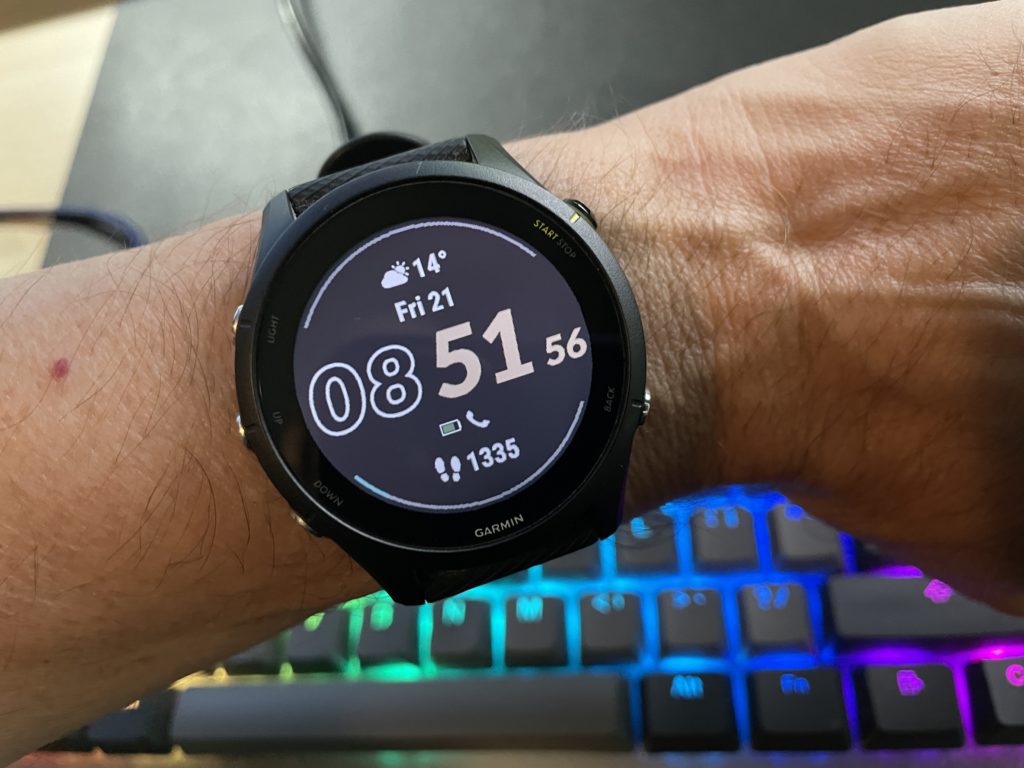
And so it is with my Garmin Forerunner 255. When I bought it two years ago, it replaced a Series 5 Apple Watch on my wrist. I lost a lot of smartwatch functionality–I can now see messages, but can’t reply on watch. Nearly all of my iPhone’s ecosystem is cut off from it. It mainly tracks steps, heart rate and my workouts–mostly runs.
I accepted the trade-offs and don’t miss the things it doesn’t do. For running, I prefer it over the Apple Watch, because the screen isn’t touch and it operates just as well in the rain as it does when it’s sunny. The interface is controlled by buttons, which can be easily pressed when wearing gloves. It’s functional and works.
Because the battery life is so good (I charge it when I jump in the shower–this is all it needs to stay topped up), I use it for sleep tracking.
Two nights ago, it gushed about how great my sleep was and gave me a score of 83/100 (Good). Last night it did the opposite, giving me a score of 60/100, which is only 1% above “Poor”. It said stress was high, I was restless and awake a lot. I just generally had a lousy sleep.
Except when I woke this morning, I didn’t feel I’d had a lousy sleep. I felt good. I felt rested.
Was my watch lying to me or was I lying to myself? Maybe both my watch and my body/mind were engaged in some fibbing? I have no way to know for sure, short of taking a scientifically sound sleep test.
But it did remind me of times past when the sleep stats didn’t match my perceived experience and that 80% estimate of accuracy. Smart devices can be helpful, but they can misdirect to where they cause stress that would not otherwise exist. I’m more mindful of that now than I was two years ago when I got the watch, so “bad” sleep nights that don’t feel bad to me don’t get me down, they just make me go, “Hmm.” And most of the time the watch’s report matches my experience, so I don’t think much about it at all.
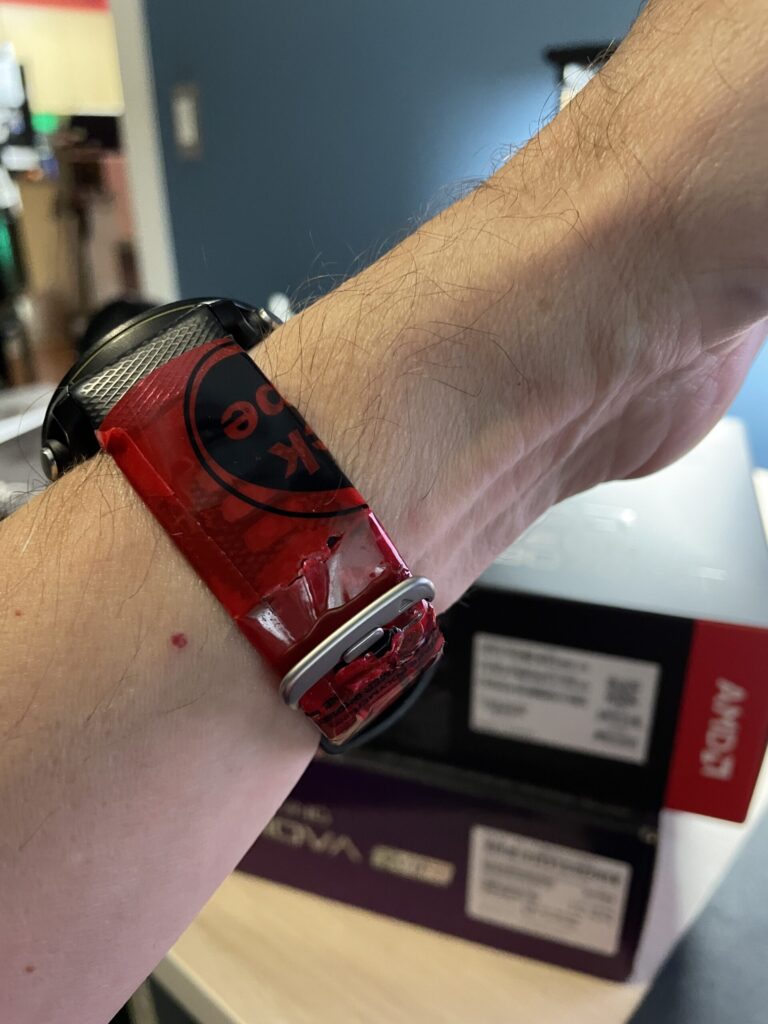
Ironically, part of the reasoning for the low sleep score was the watch’s claim of yesterday being stressful. In the morning, the band snapped in two and I couldn’t find anywhere local that sells replacement bands. I ended up grudgingly ordering a knock-off band from Amazon, then used a bunch of gorilla tape to put the original band back together (for now). So if there was stress yesterday, it was the watch that caused it. 😛
Bottom line: Don’t let a smart device dictate your mood or life. Think of them as what they are–imperfect advisors.