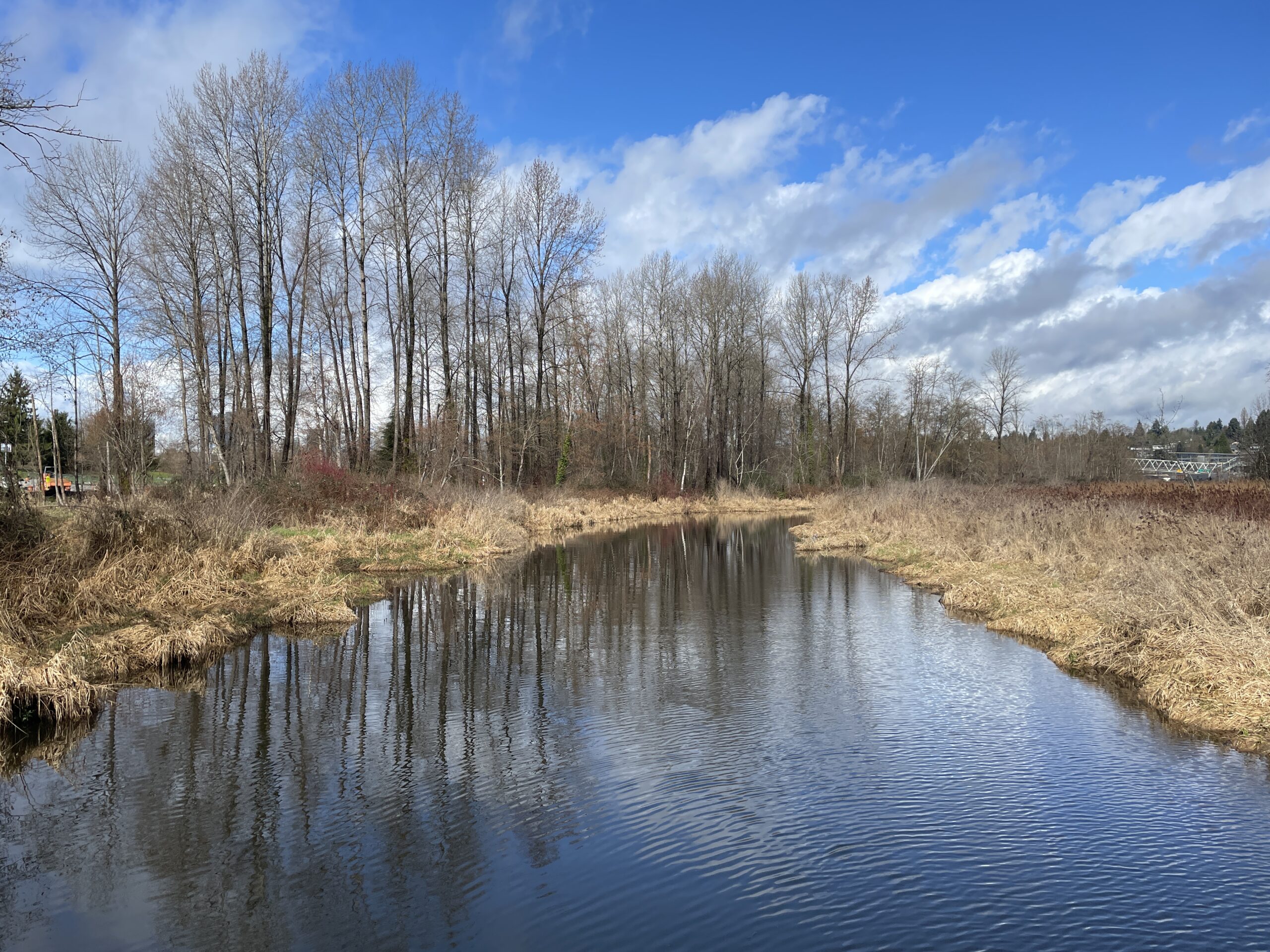
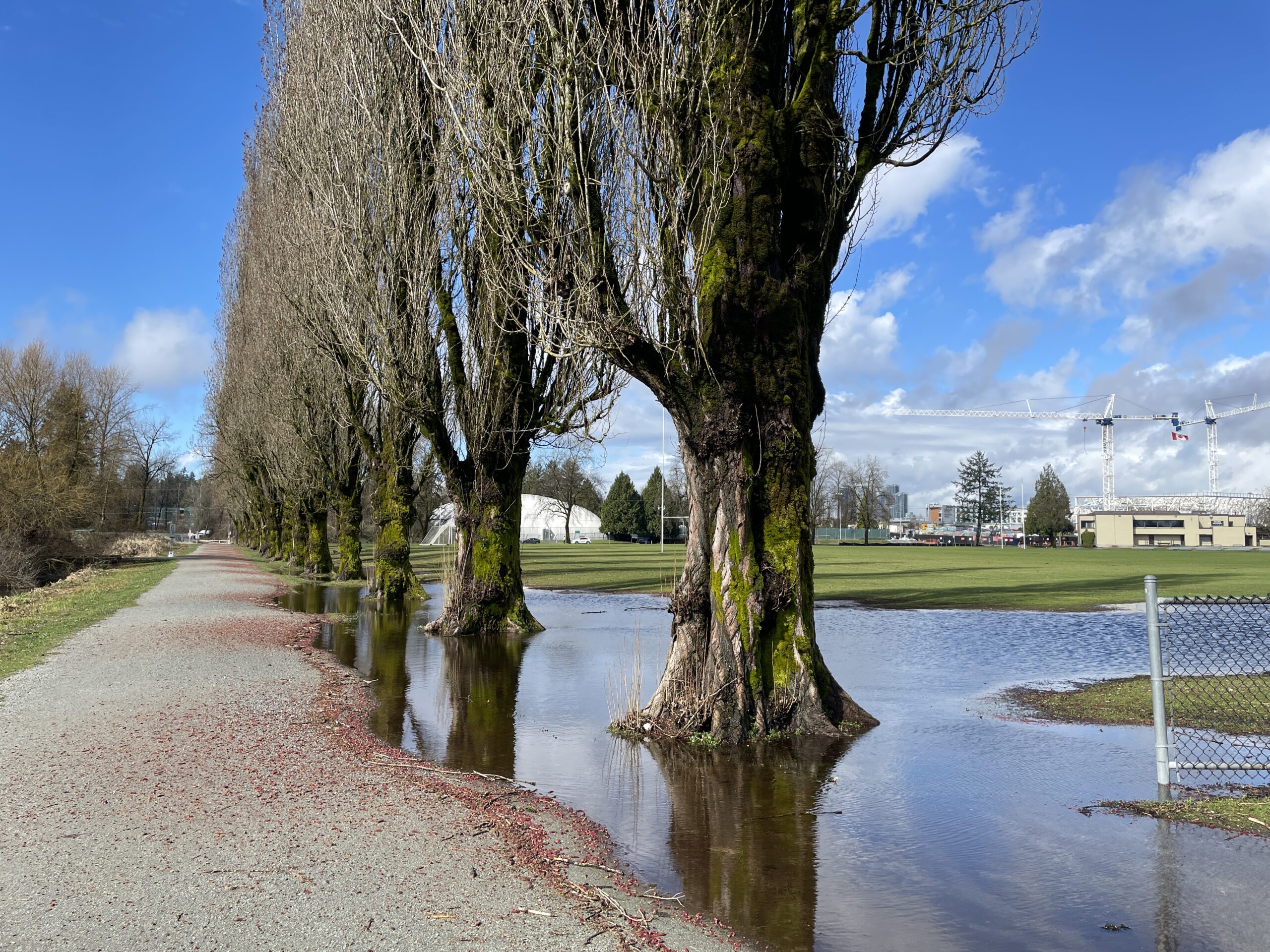
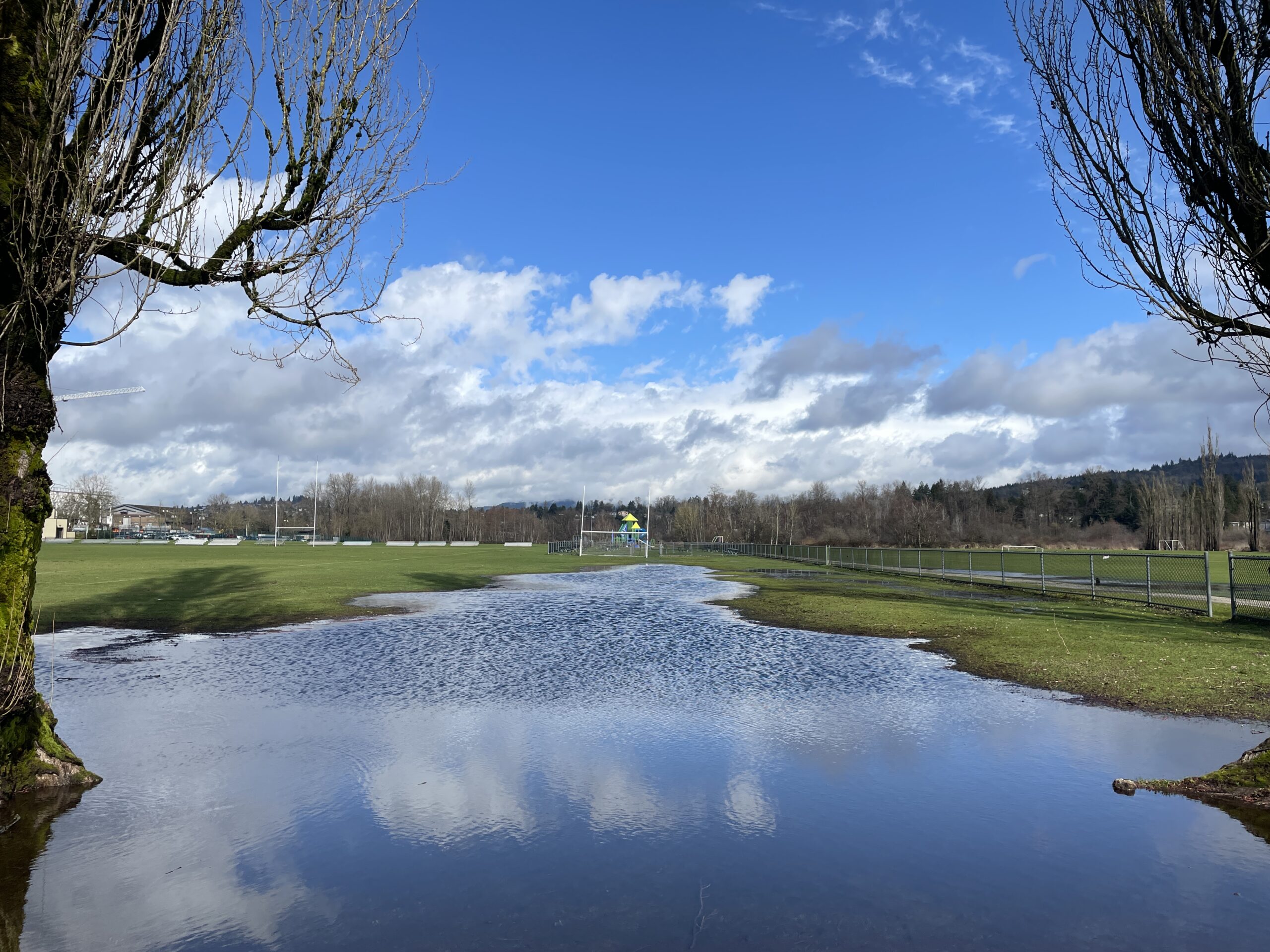
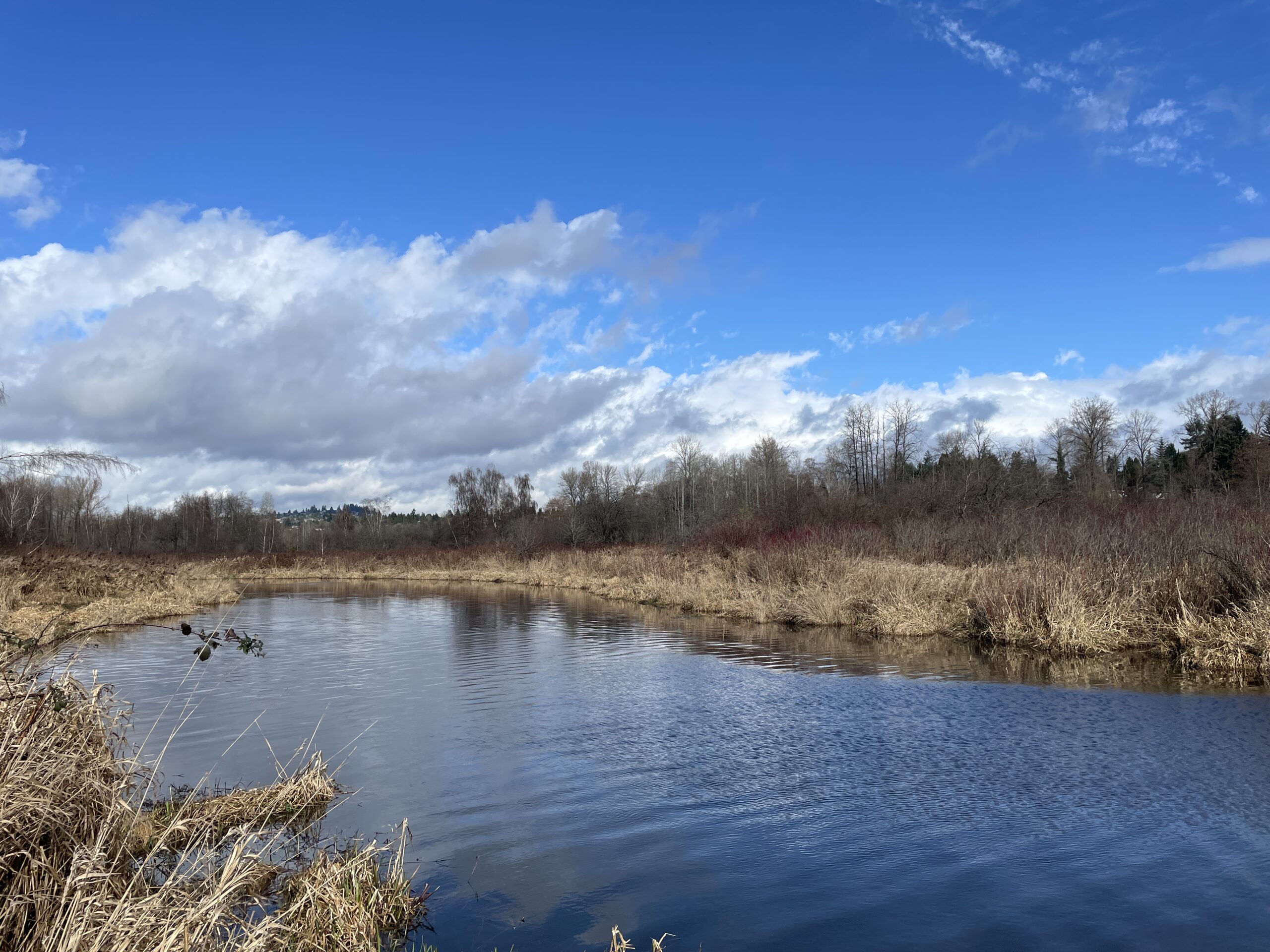
Where: Terra Nova, Richmond Nature House (Richmond), Burnaby Lake (Burnaby)
Weather: Sunny, 4-7°C
It was windy and kind of chilly, but also sunny. Hooray for the sun.
Terra Nova
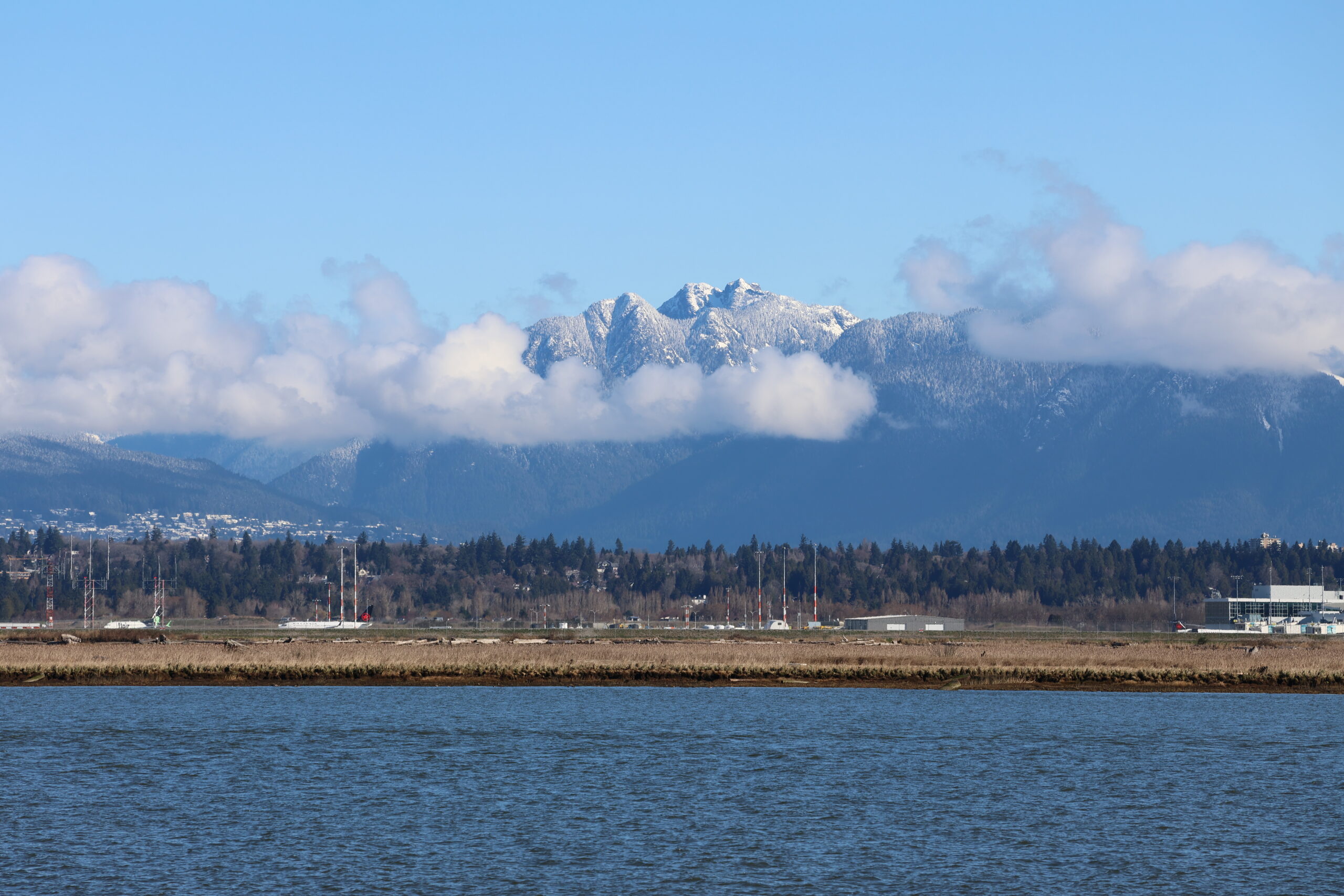
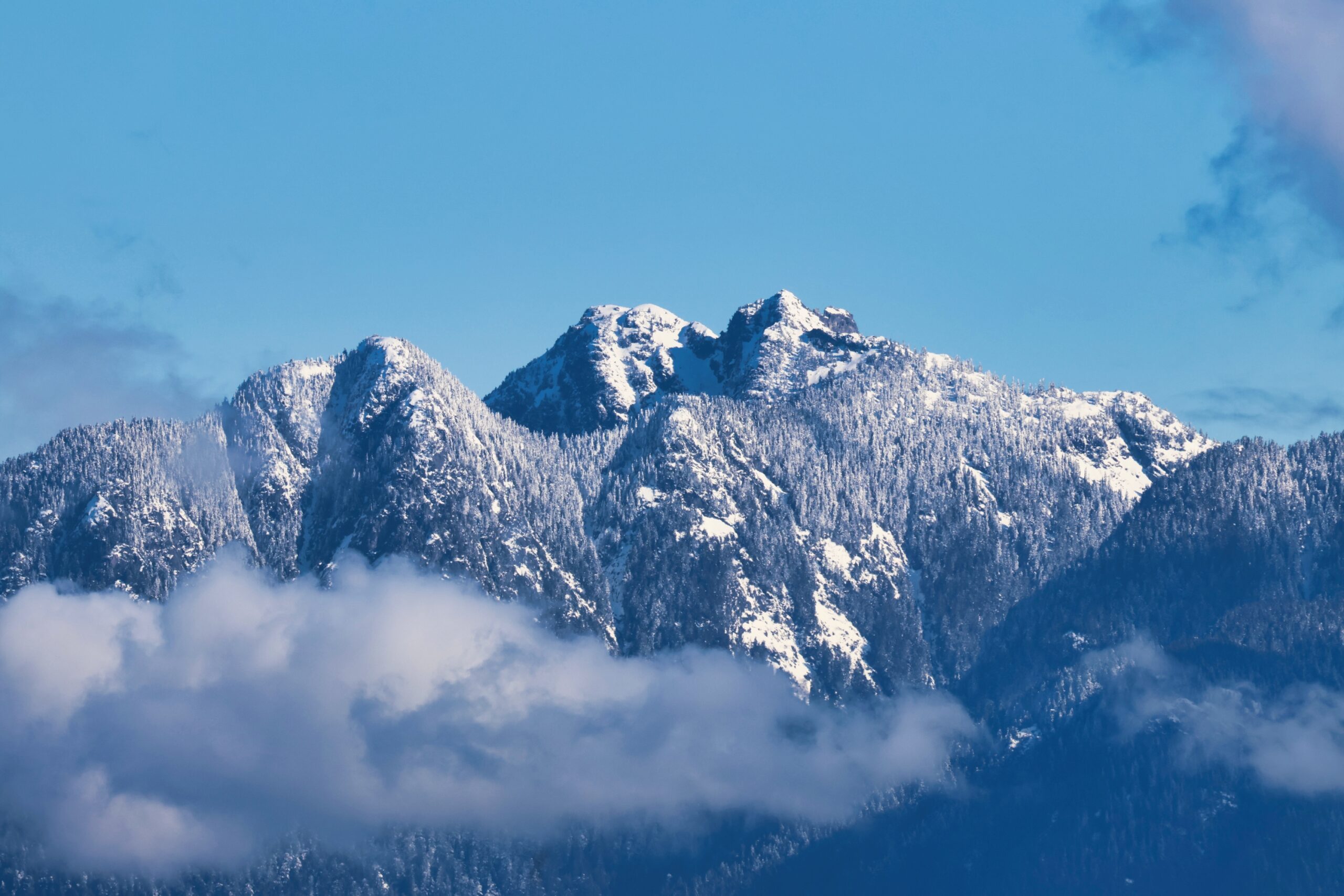
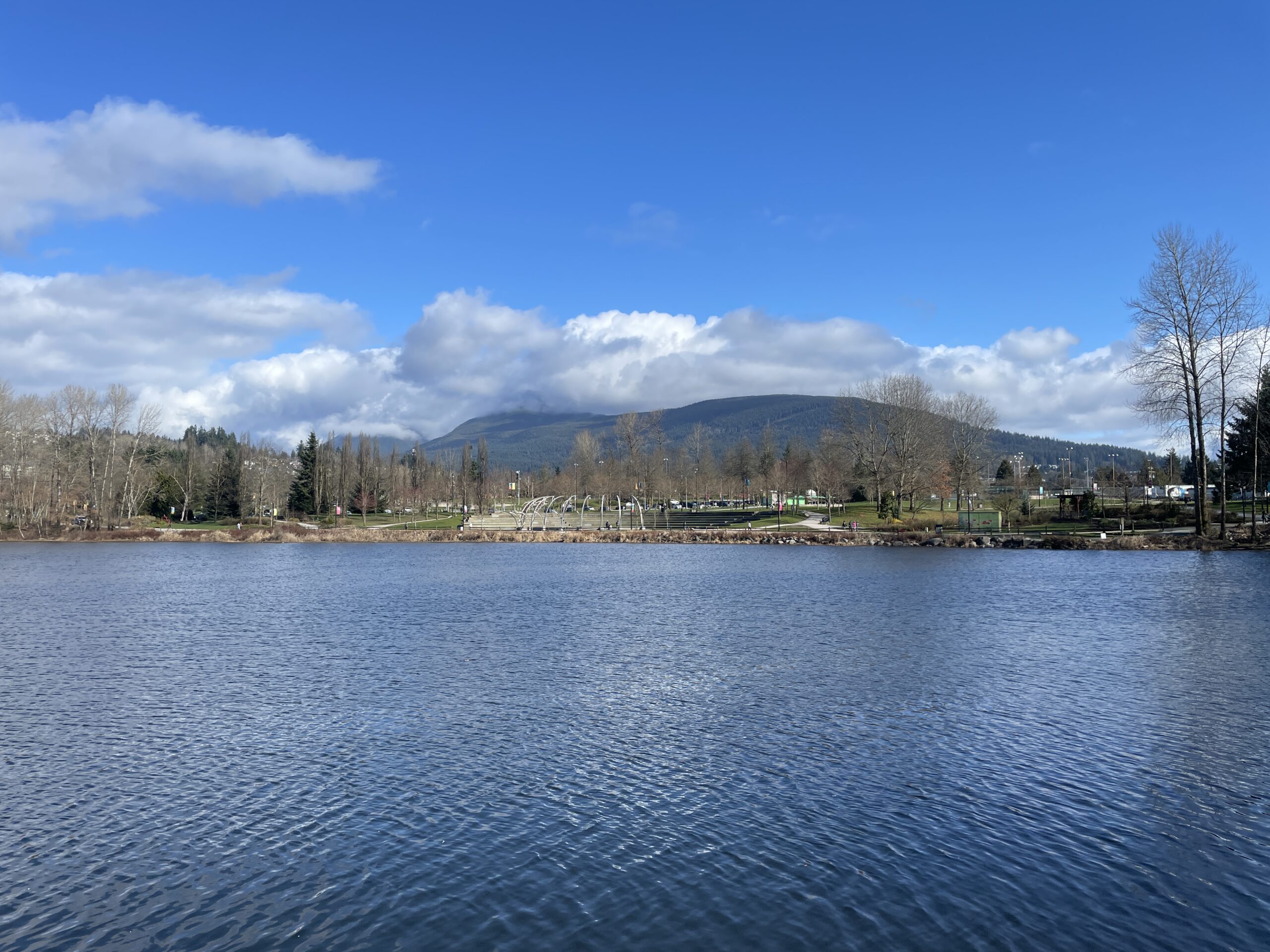
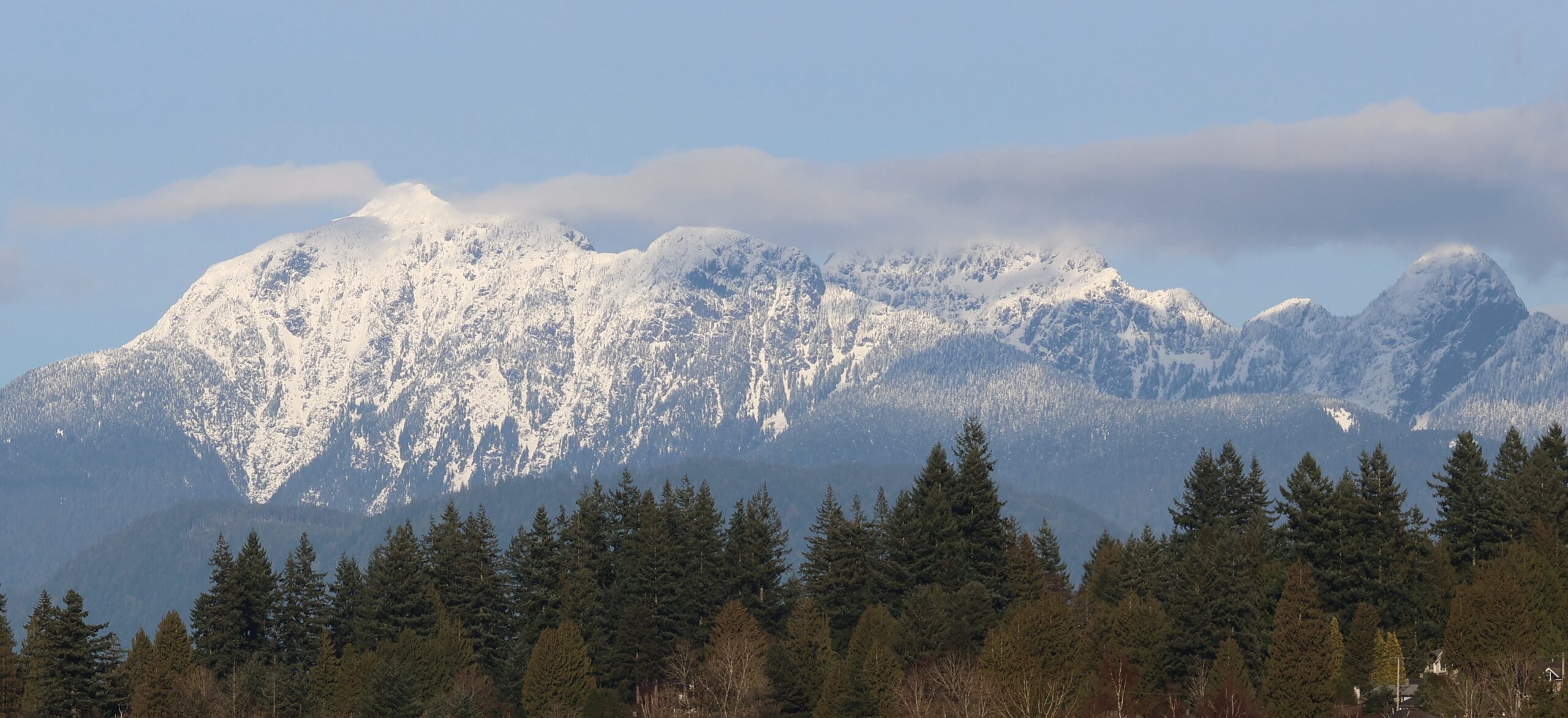
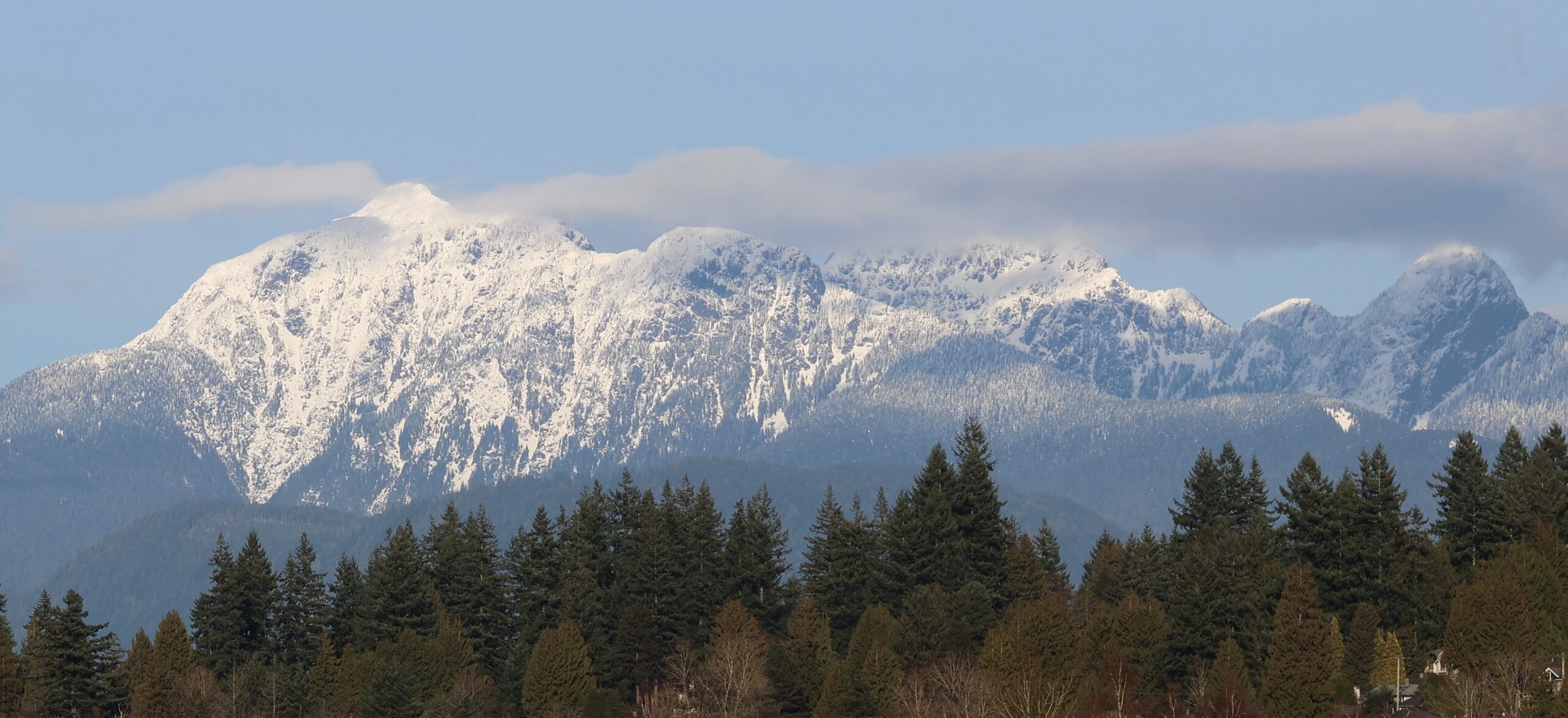
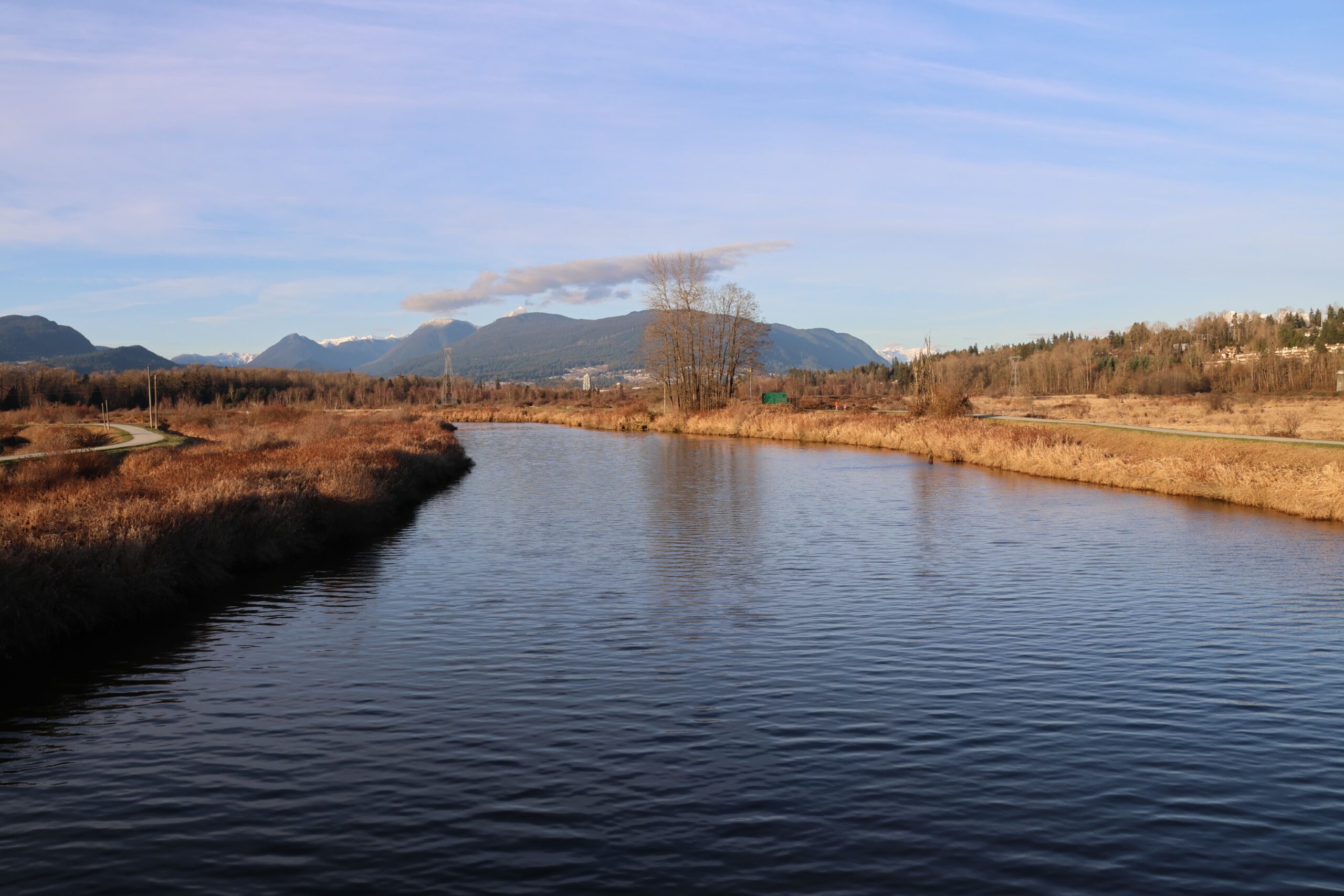
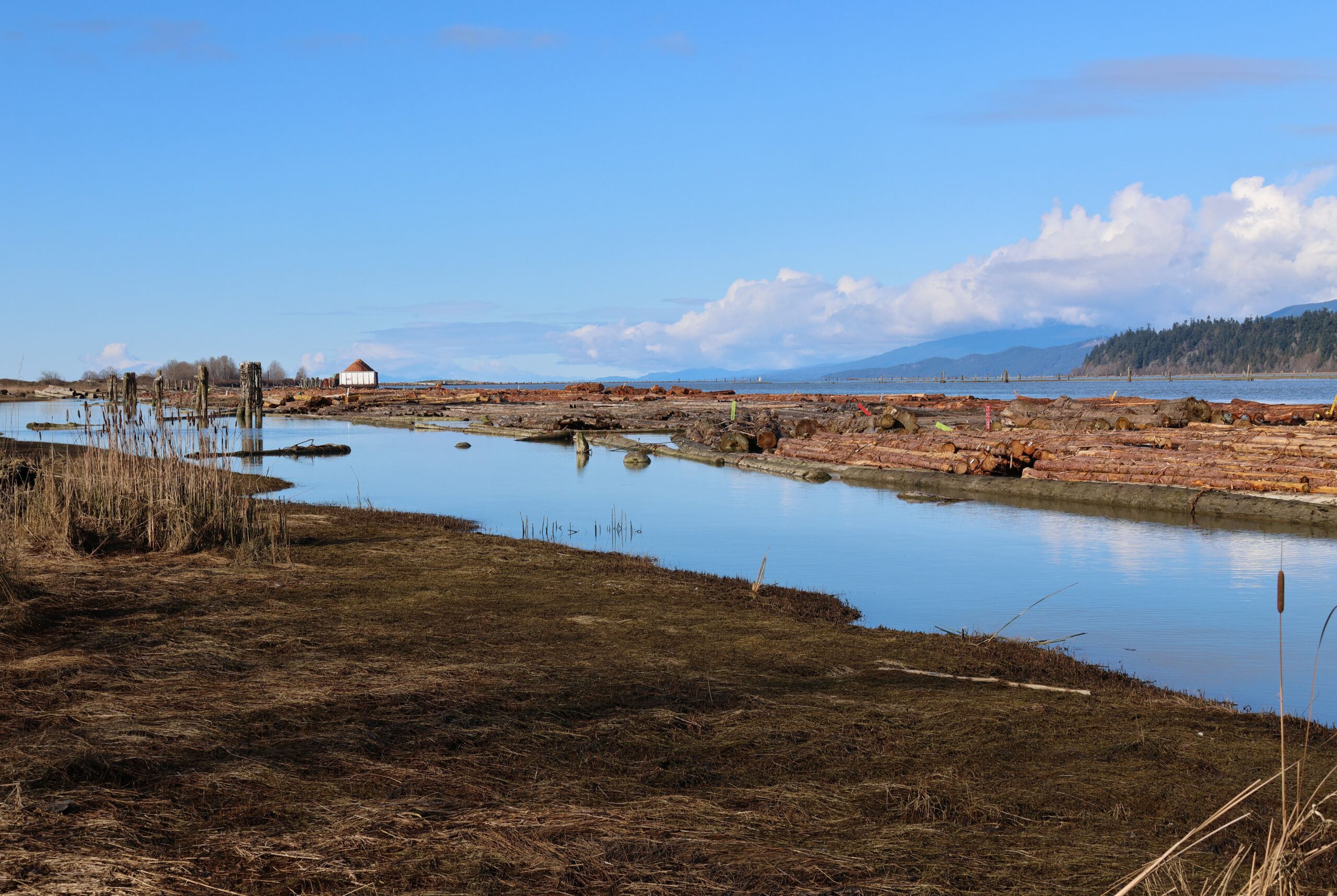
Looking toward the coastal mountains at Tera Nova.
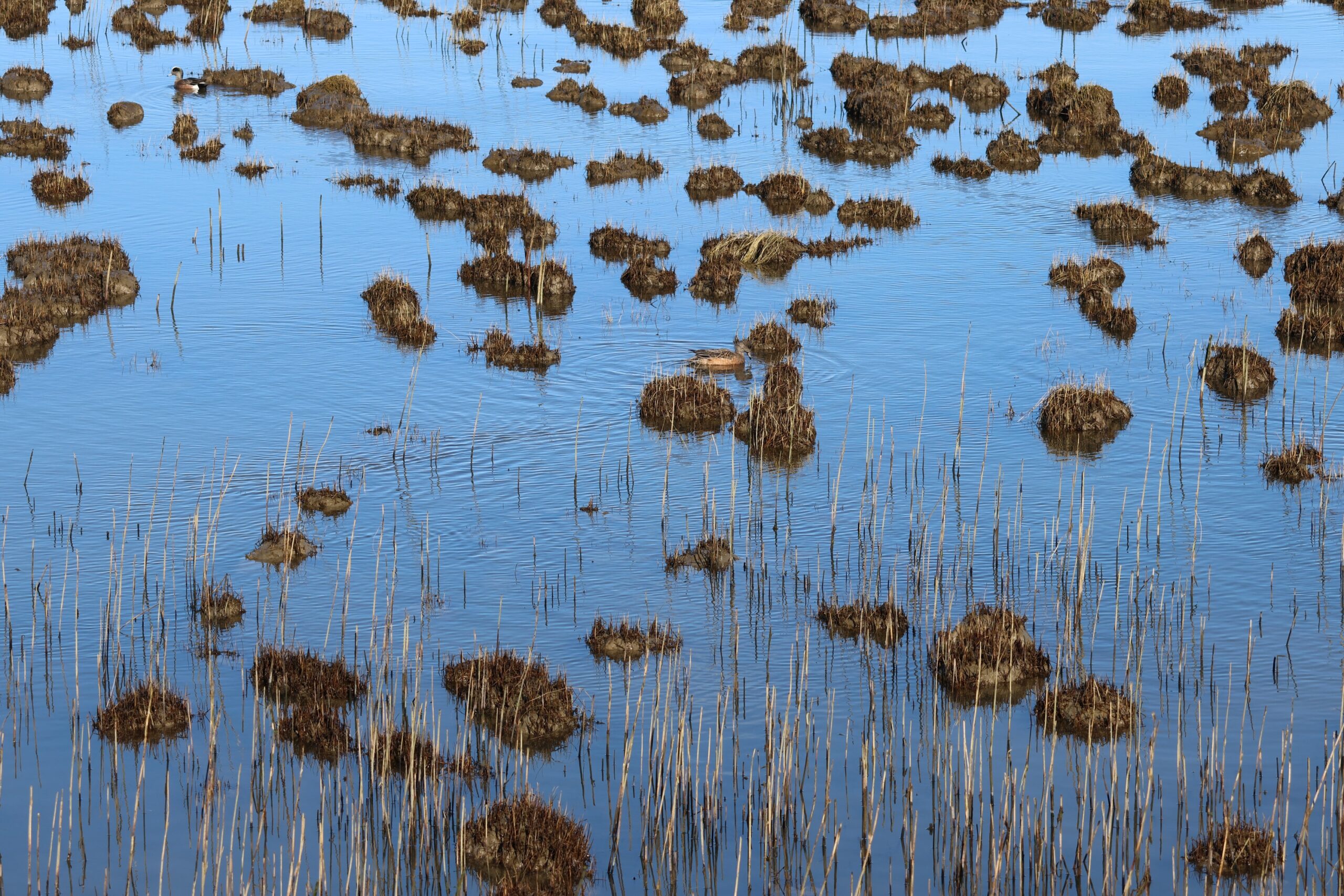
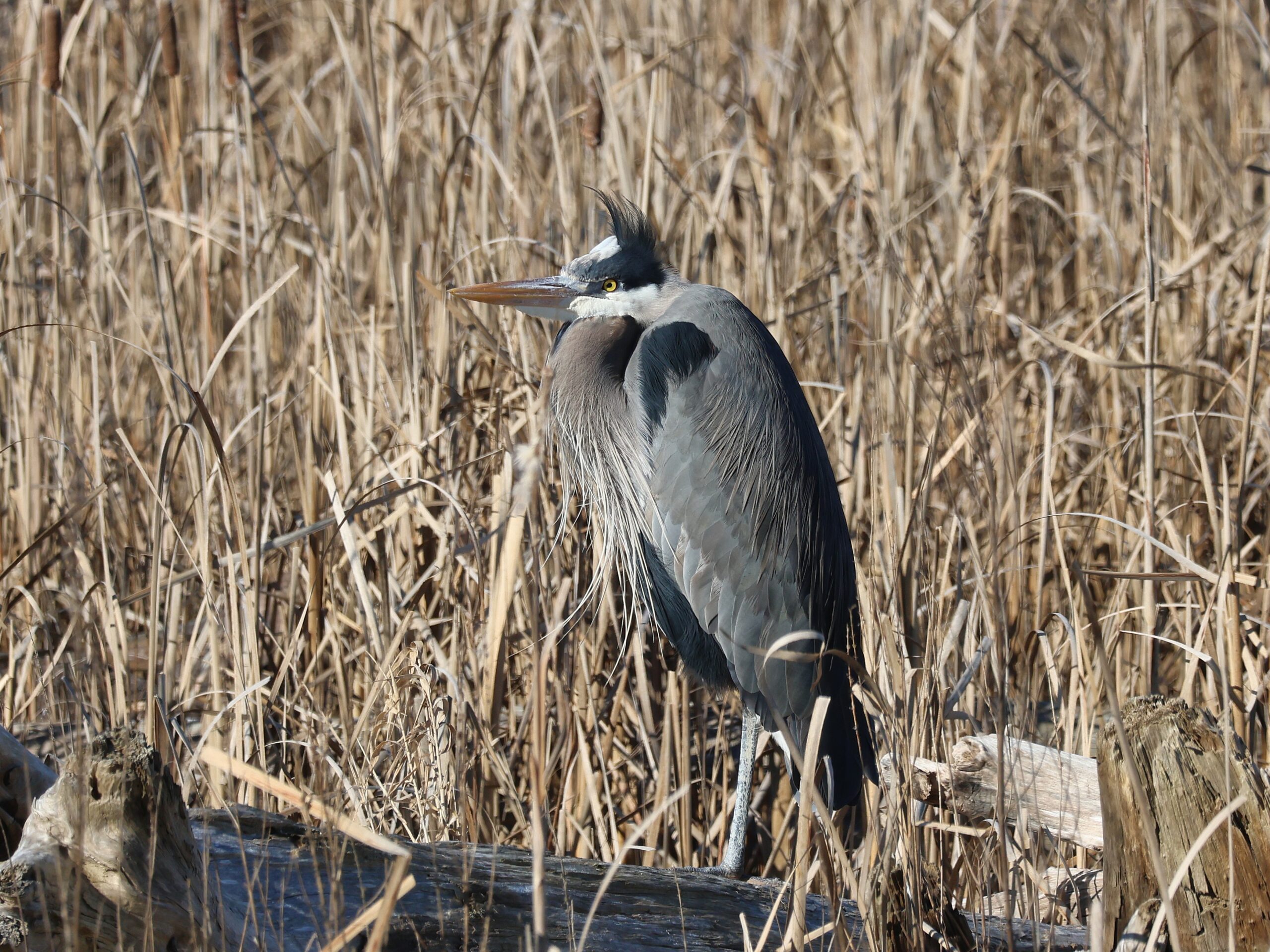
We started at Terra Nova, where it initially reported 4C but “feels like 0”, which seemed accurate. Some wigeons were there to greet us just offshore, noshing among the marshy outcroppings. Farther off (too far, boo) were a bunch of herons brooding in the tall grass. We also spotted a few less social ones brooding off on their own.
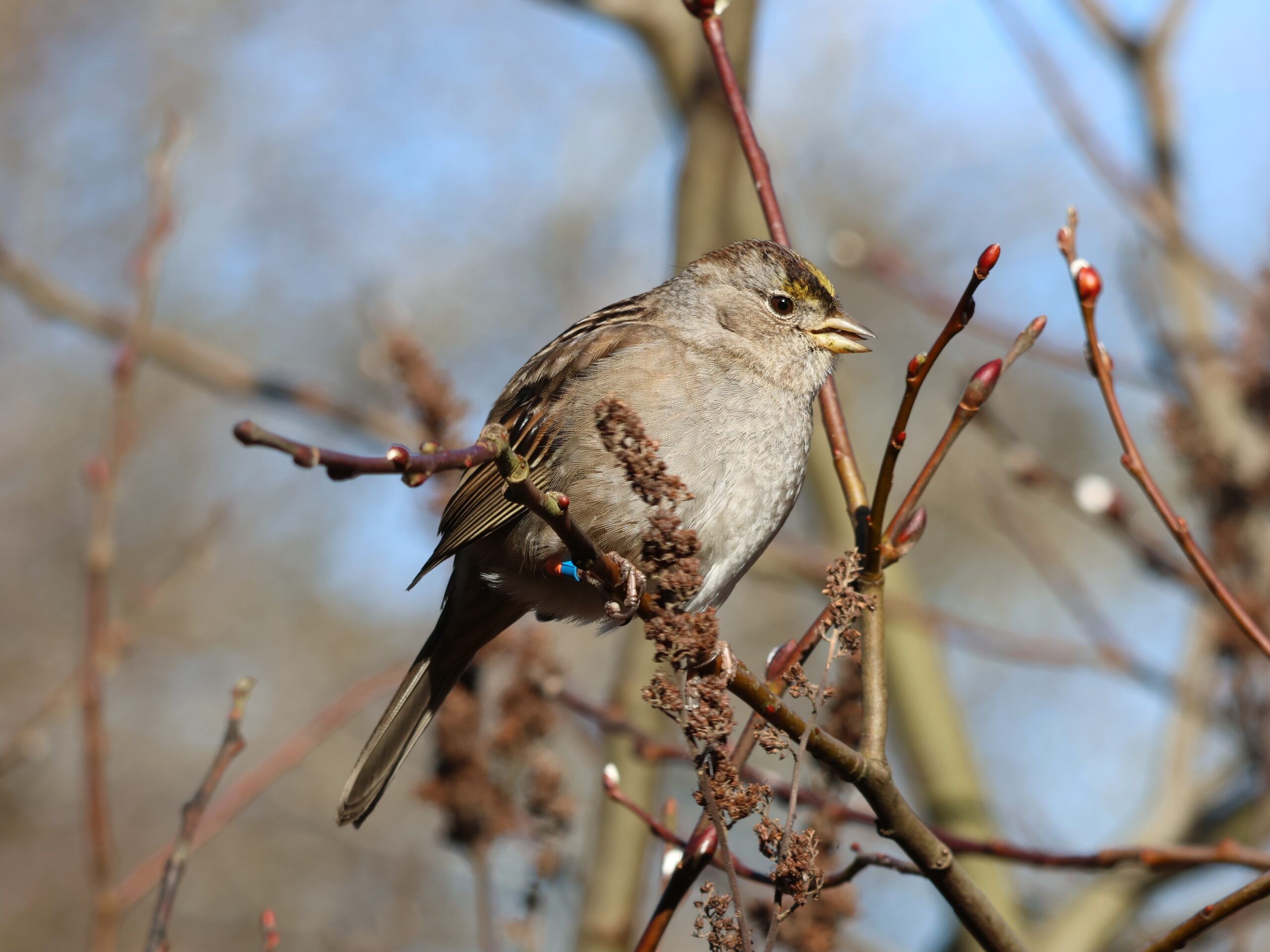
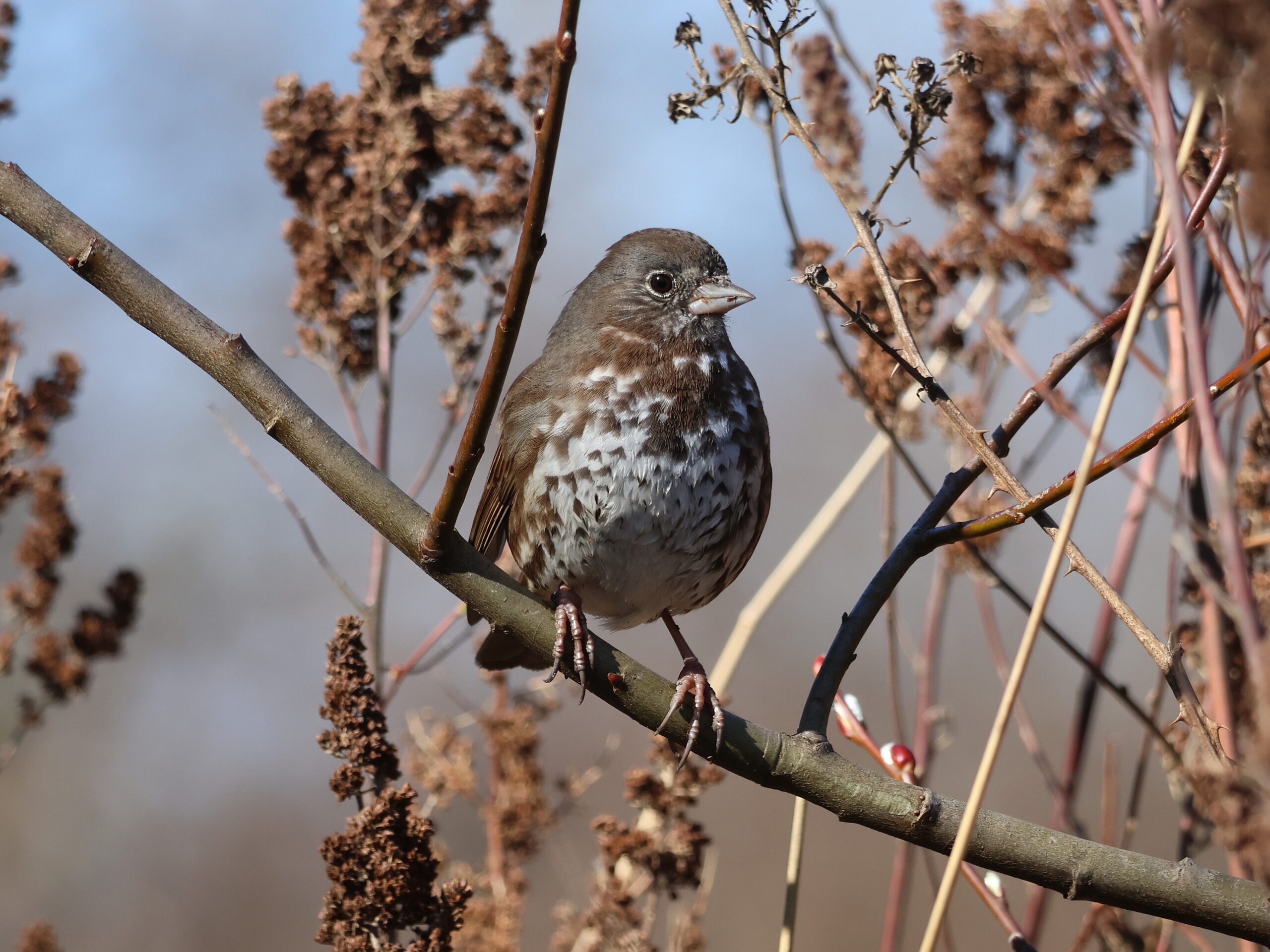
When we moved away from the water, we came across a bunch of sparrows doing the sparrow thing. We looped off into the Terra Nova Natural Area (unclear on where the Artificial Area is–maybe the parking lots?) and when we came back, someone had scattered some seed, which drew the attention of all the birds, many of which were banded or banded and sporting a radio transmitter. This is probably how the “birds aren’t real” conspiracies get started.
I, of course, shot planes.
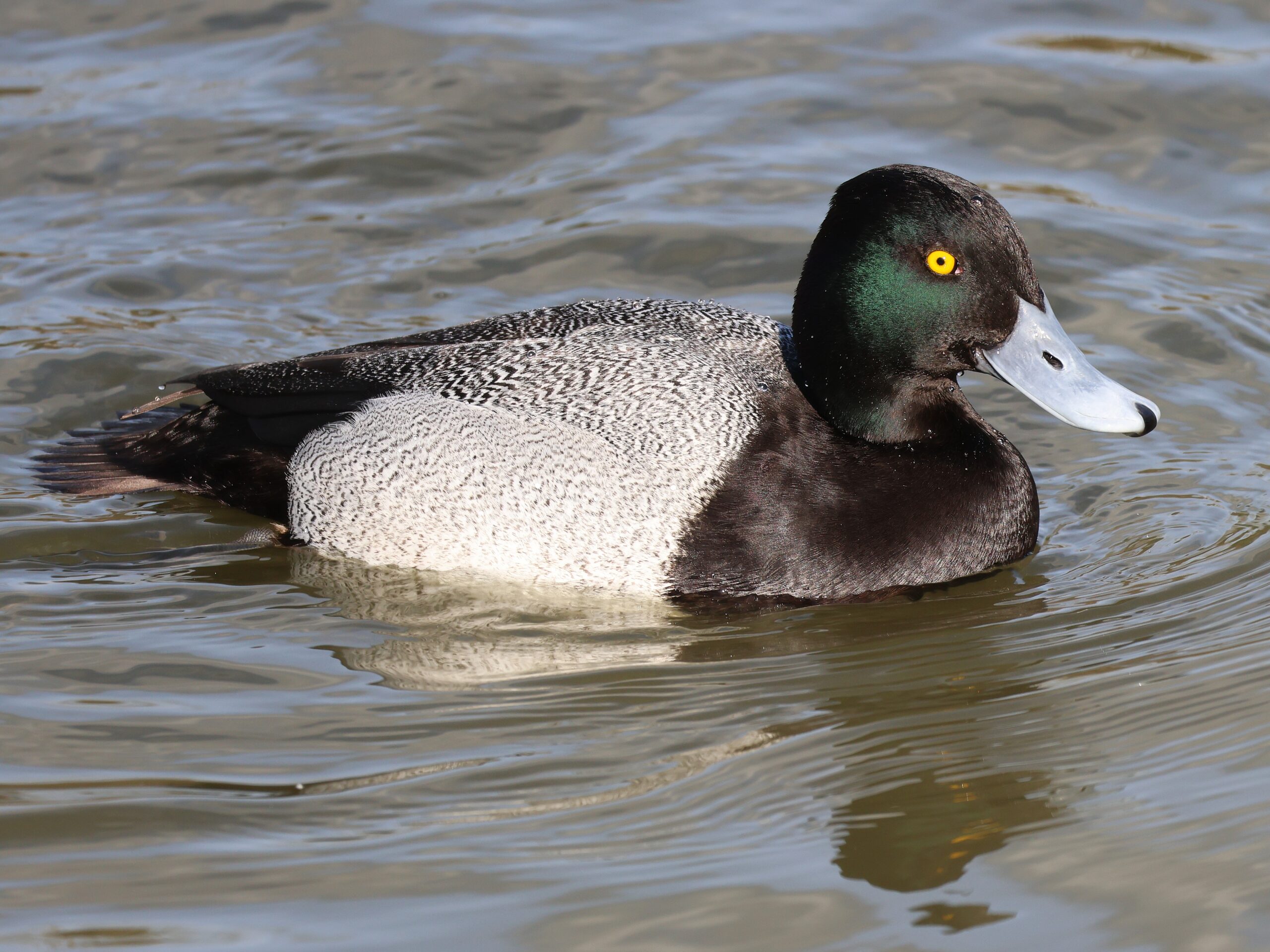
We did not see any grebes at the main pond, but we didn’t not not see them, either, if you know what I mean. There were some scaups, though.
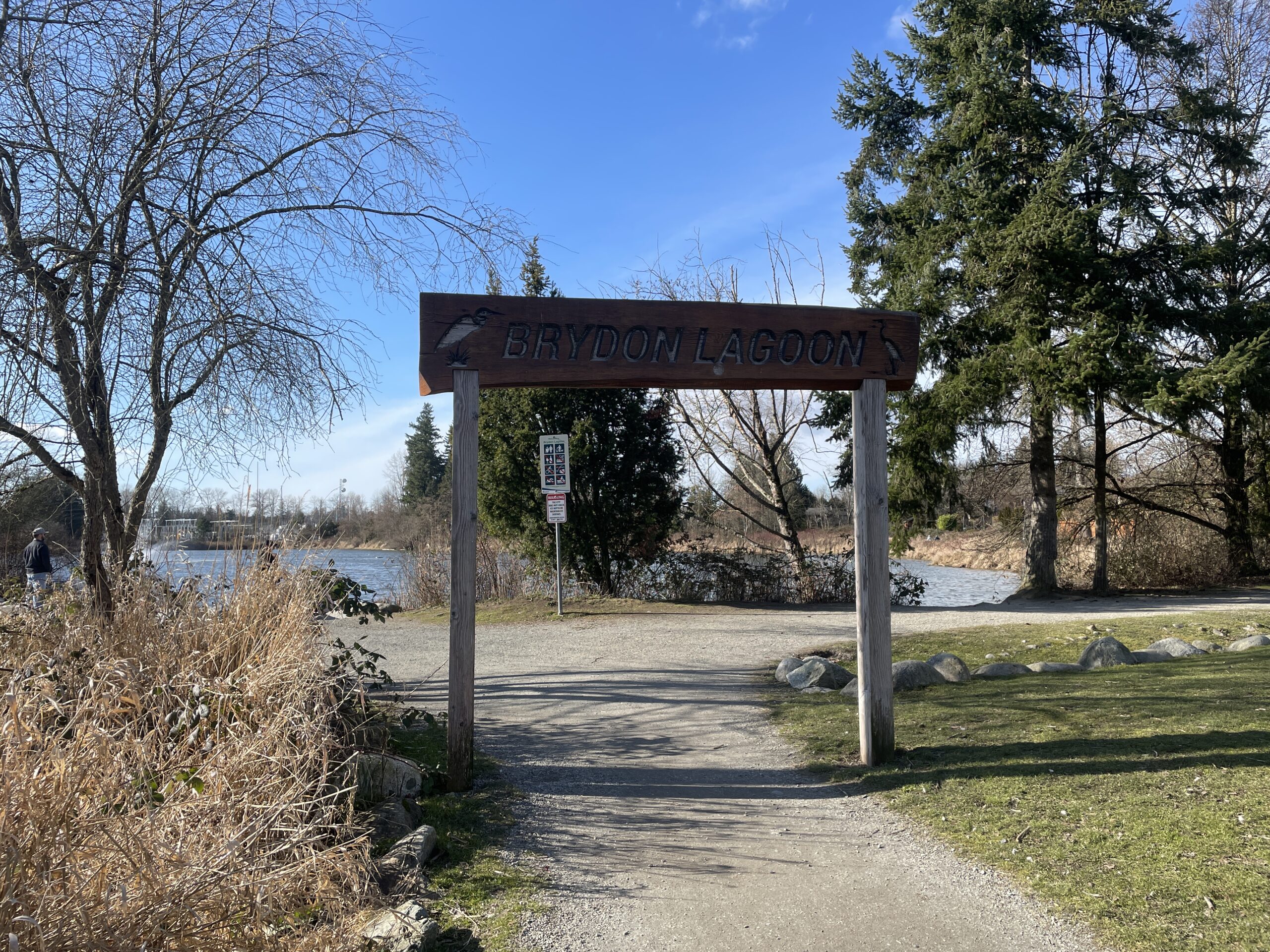
In all, Terra Nova proved to be a perhaps unexpected bounty, just as Brydon Lagoon had been a few weeks earlier.
Richmond Nature House
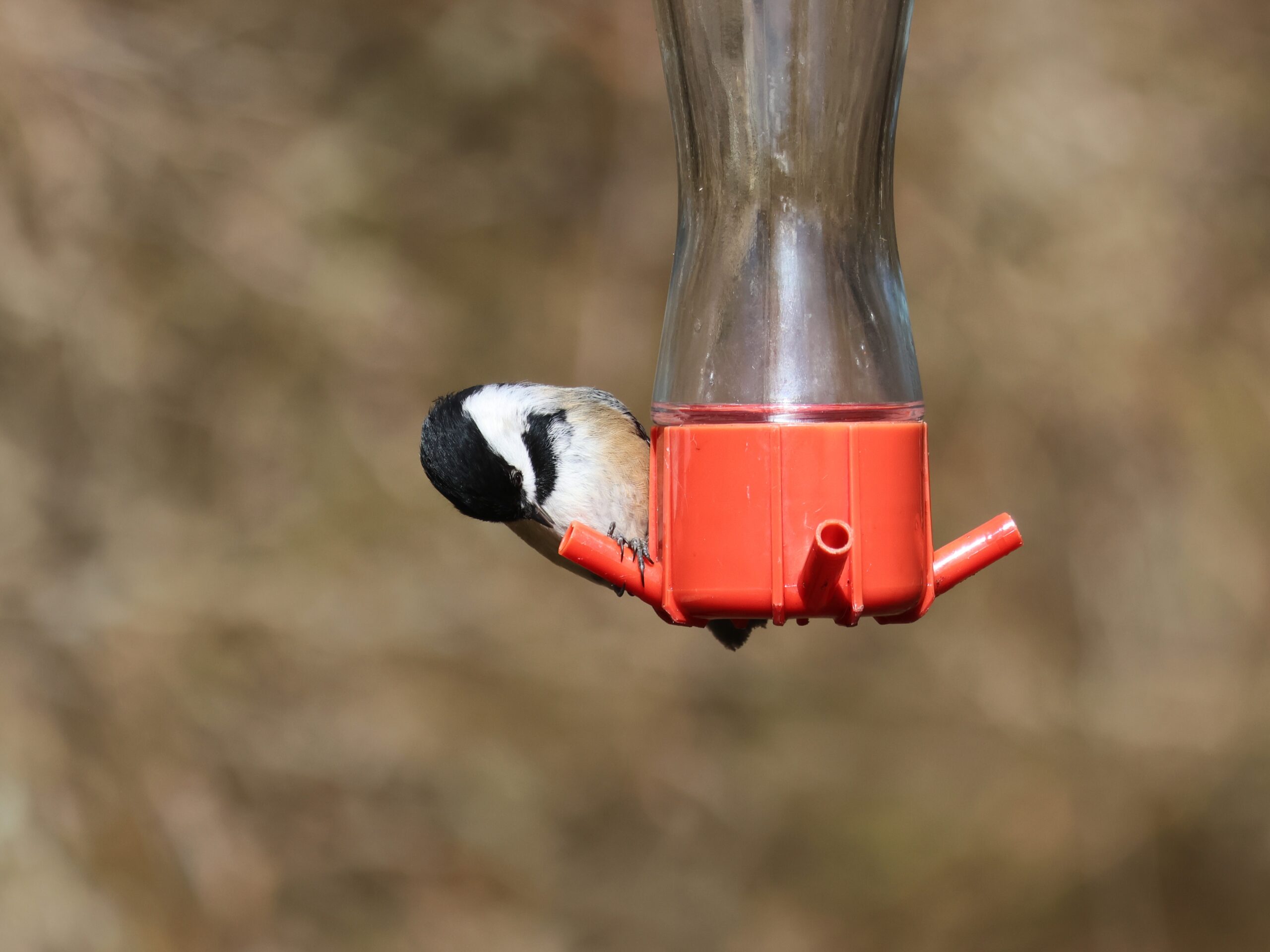
An apparently confused chickadee on a hummingbird feeder at Richmond Nature House.
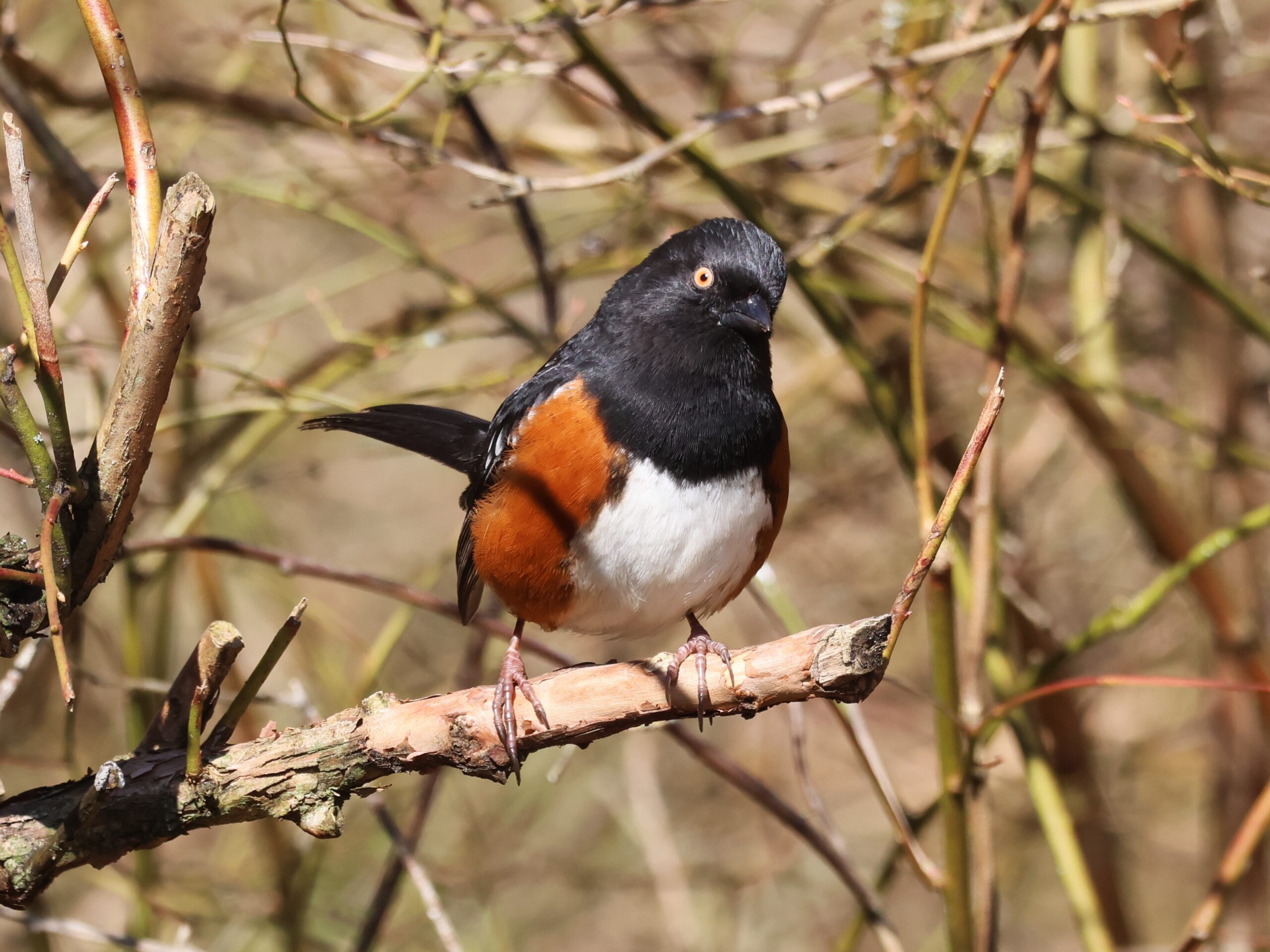
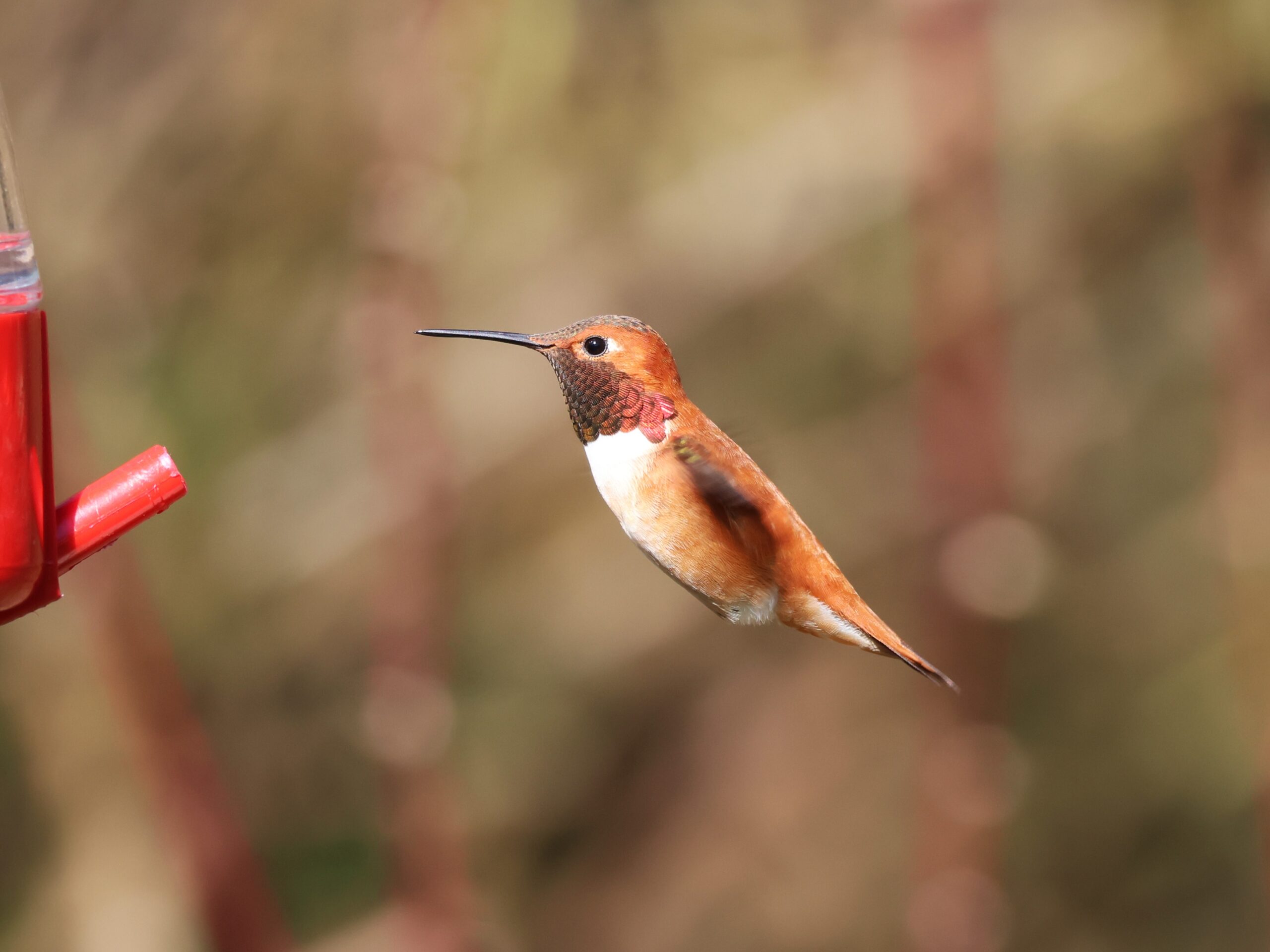
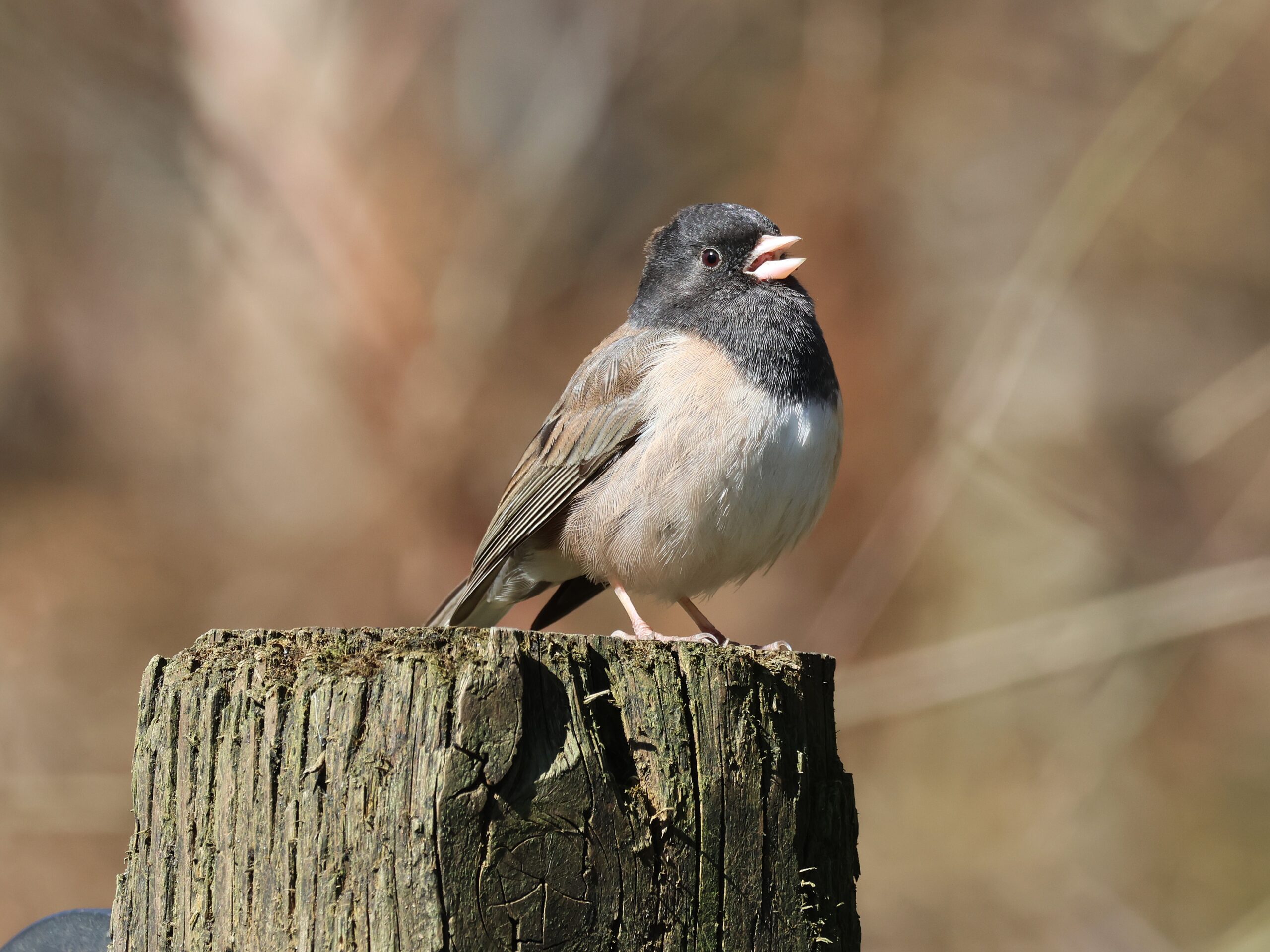
We went to the Richmond Nature House next, unsure what to expect. Would there be seed in the feeders, and also possibly birds? The answer was yes to both. However, only a few feeders were filled (including the nectar feeders), so while there were birds, they weren’t ravaging the area like we usually see. Instead, we saw a small but nice collection of juncos, chickadees, hummingbirds, and towhees. And we saw our first Rufous Hummingbirds of the season, who may look even more “I’ll stab you” than Anna’s Hummingbirds (which we also saw).
Piper Spit, Burnaby Lake
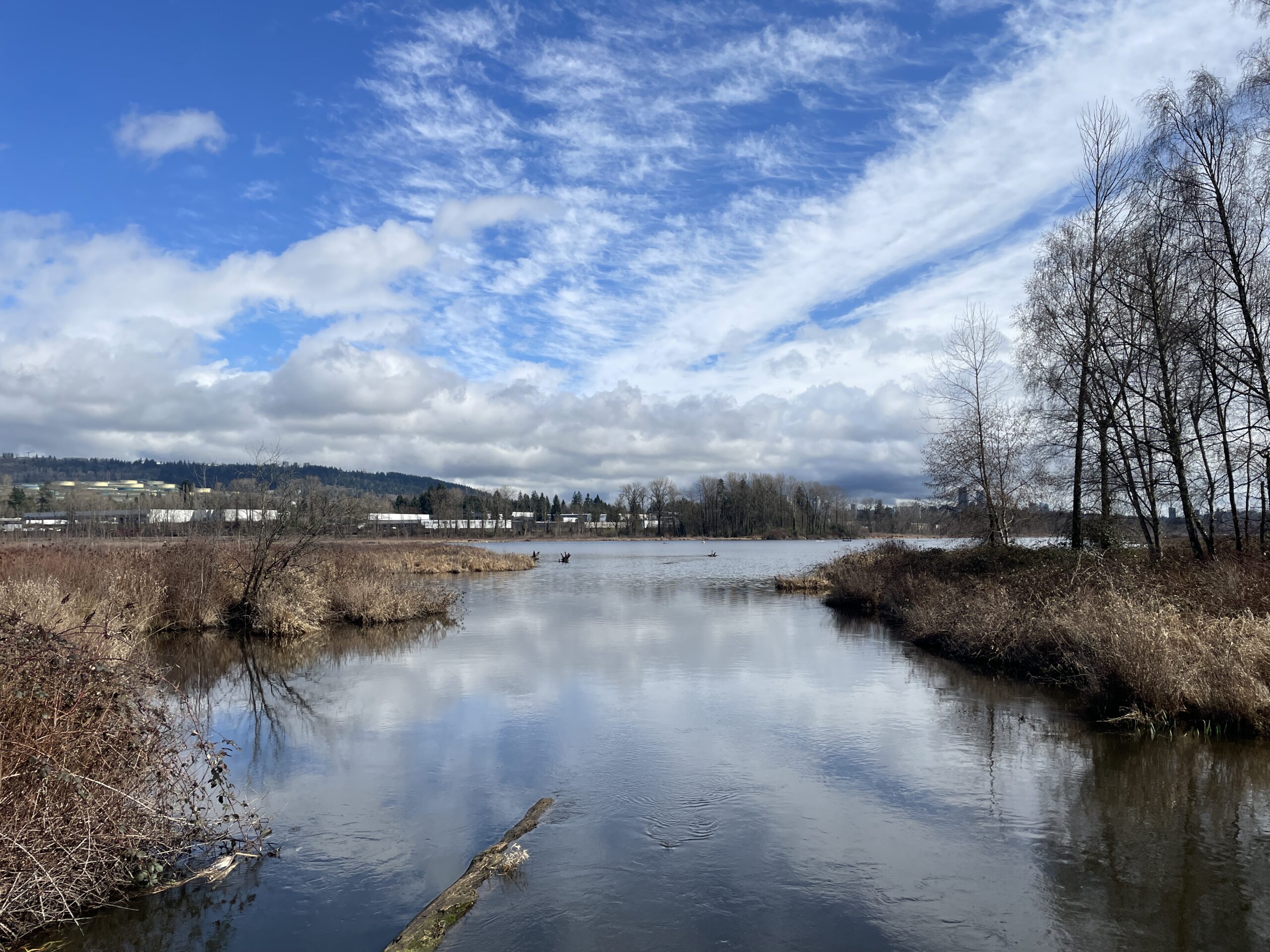
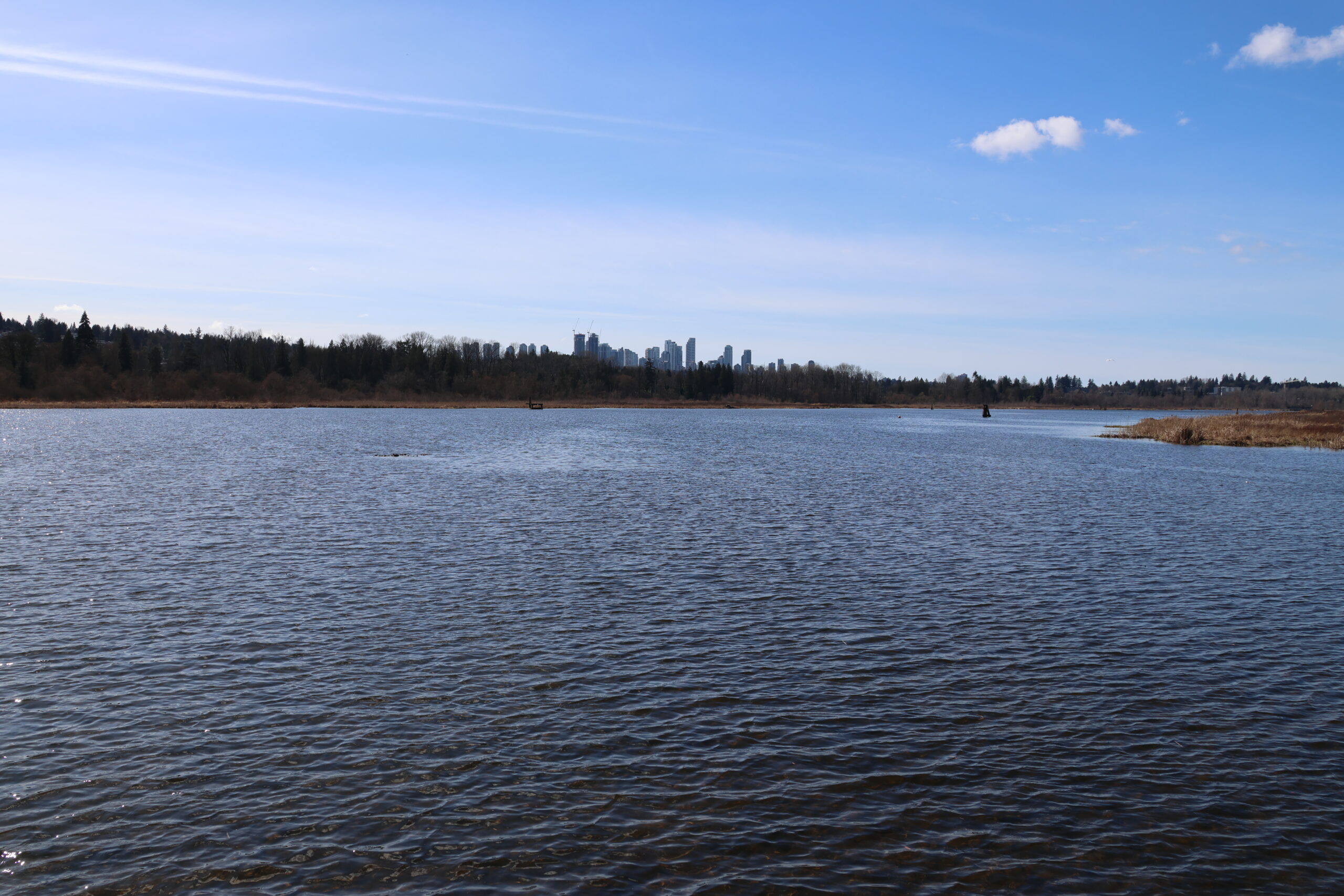
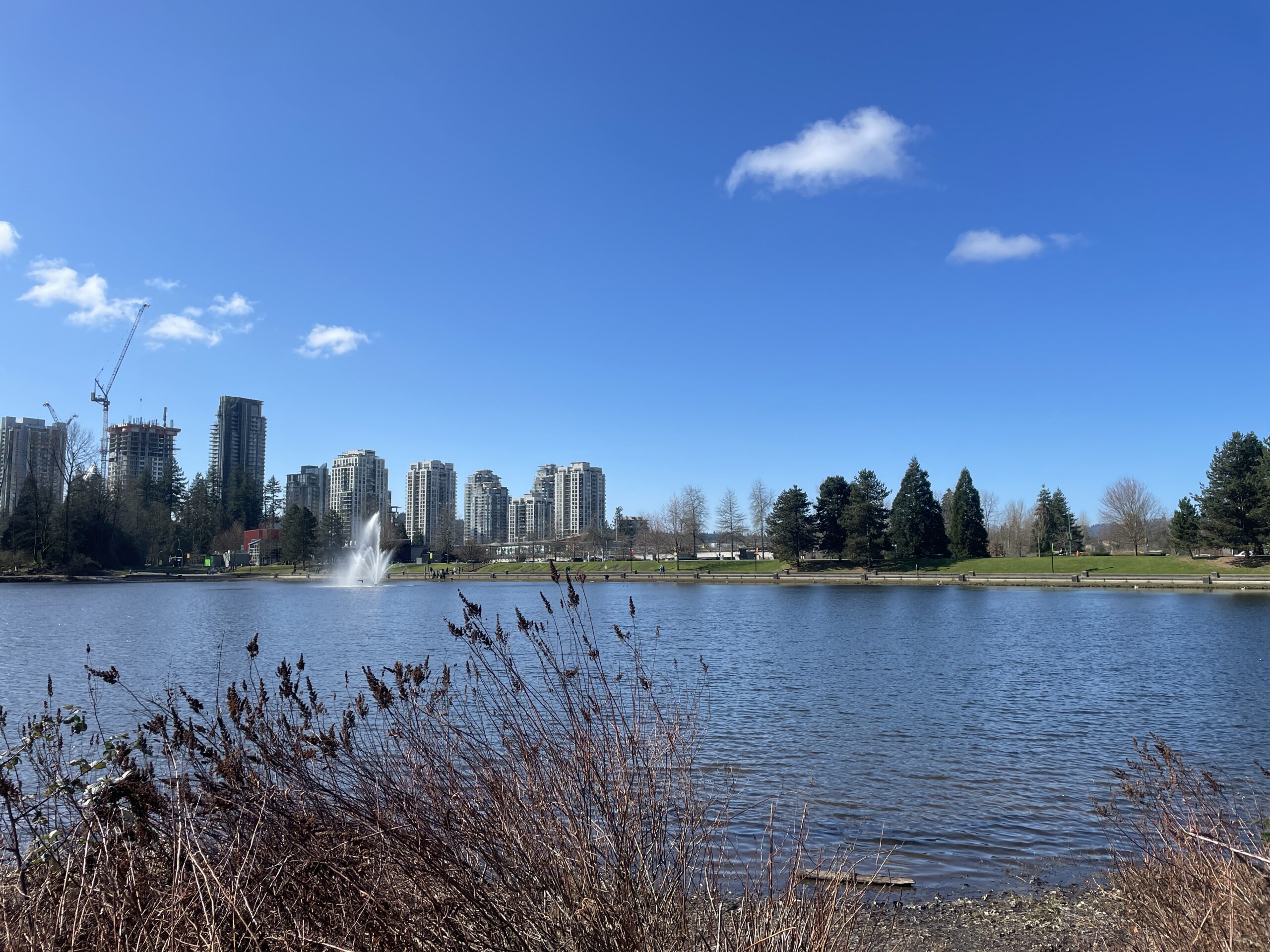
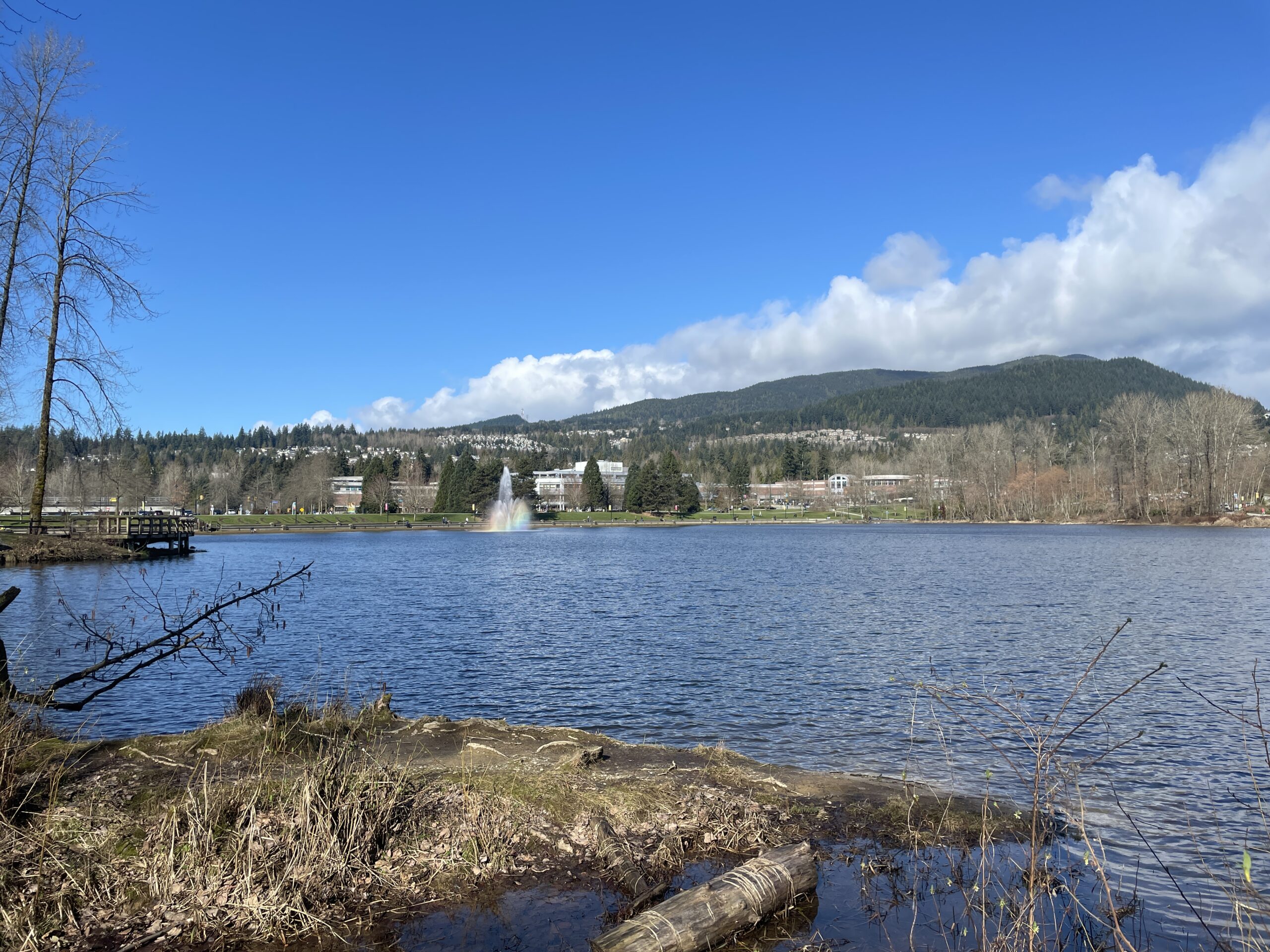
Burnaby Lake rippling in the wind. Not shown: Goose terror.
We wrapped at Piper Spit and there were so many people feeding the birds (especially the blackbirds, which shamelessly pander for food) it was as if the signs said PLEASE FEED THE WILDLIFE. Alas.
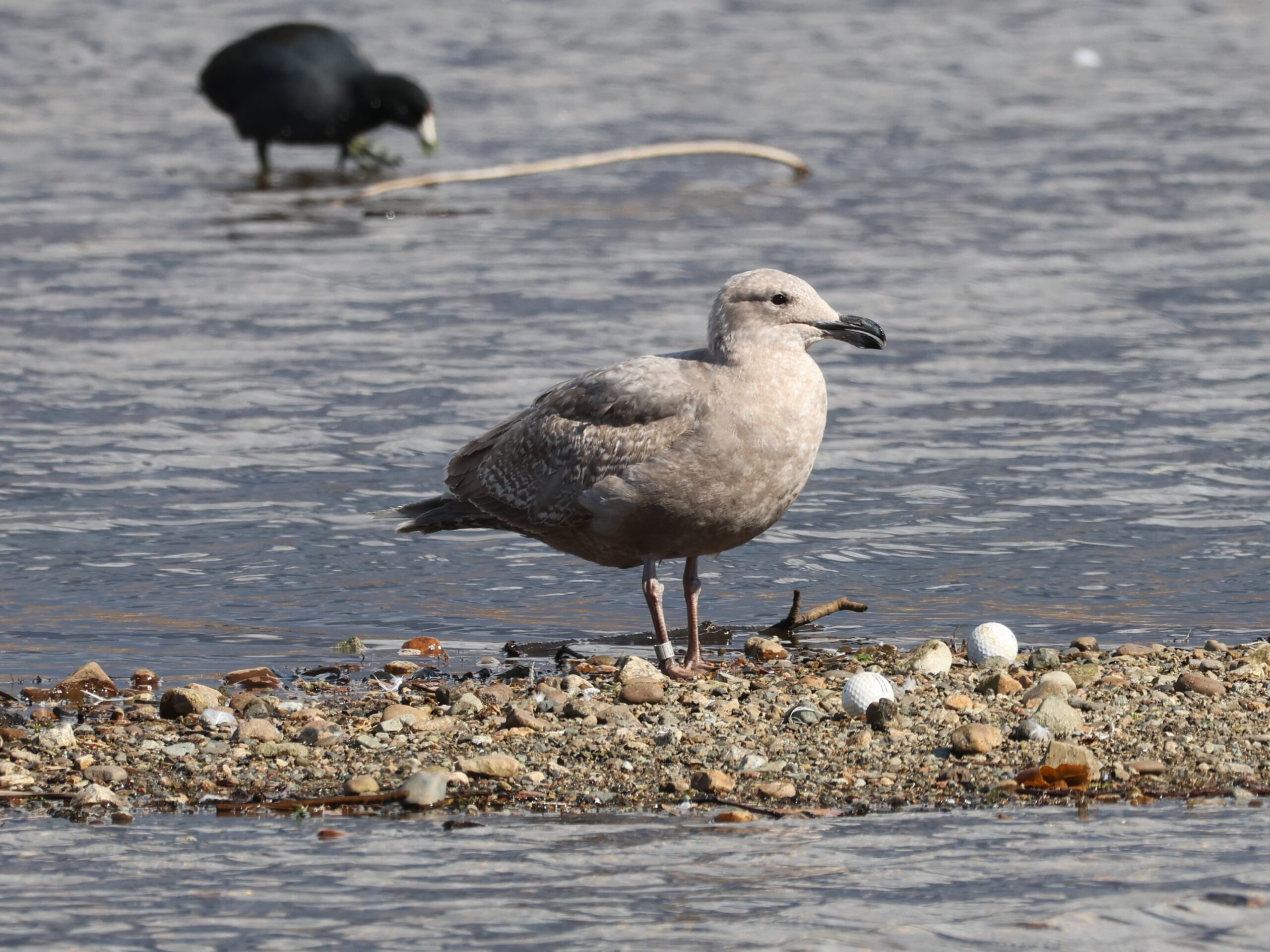
The recent rains have reduced the adjacent island into a tiny little piece of land big enough for a few gulls and their golf balls, which is what we saw there.
One gull took a golf ball out and played the seagull equivalent of golf with it, which involves flying up over the water, hovering, dropping the ball, then retrieving it and doing it again. I mean, at least it wasn’t trying to eat it.
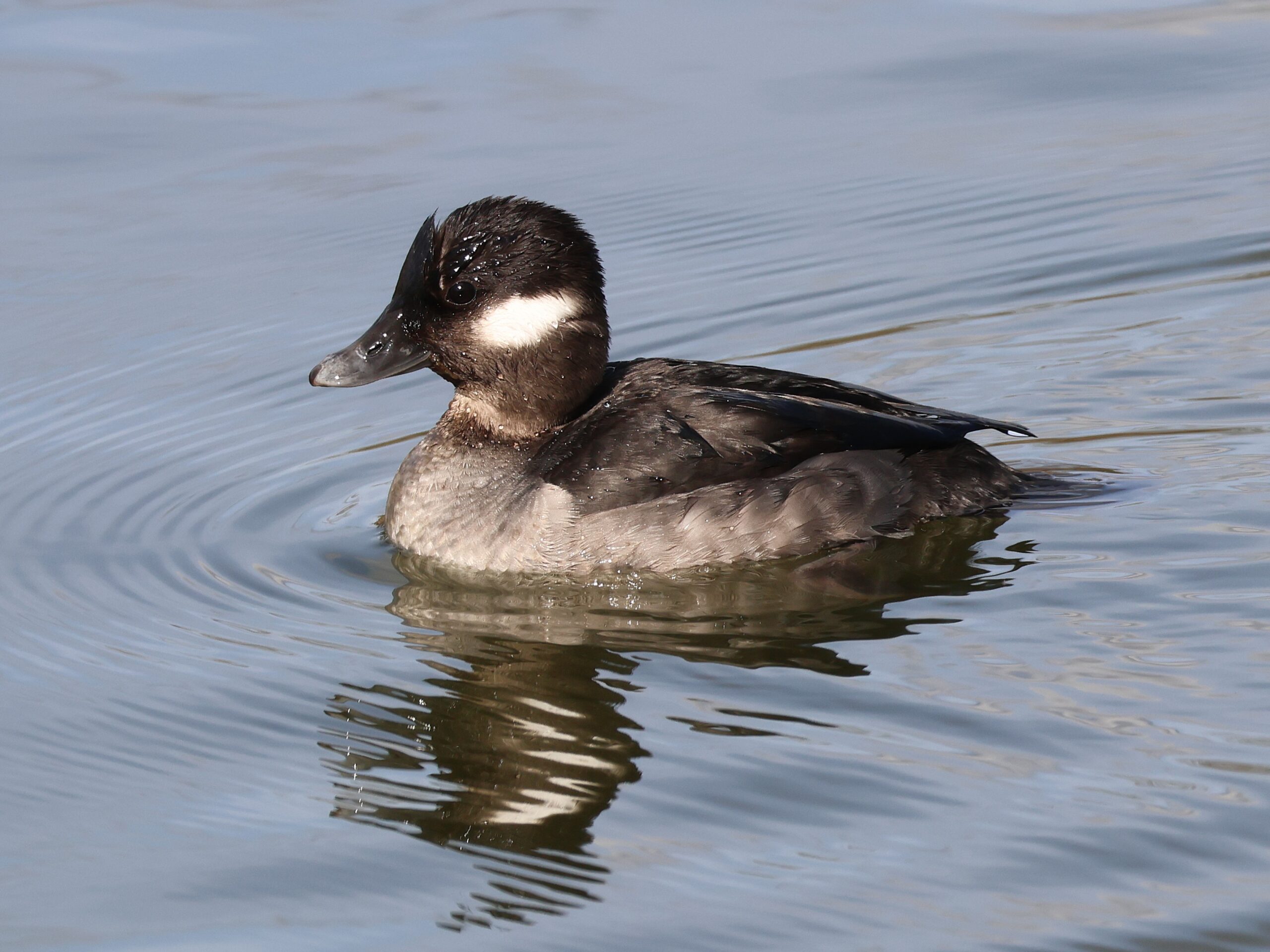
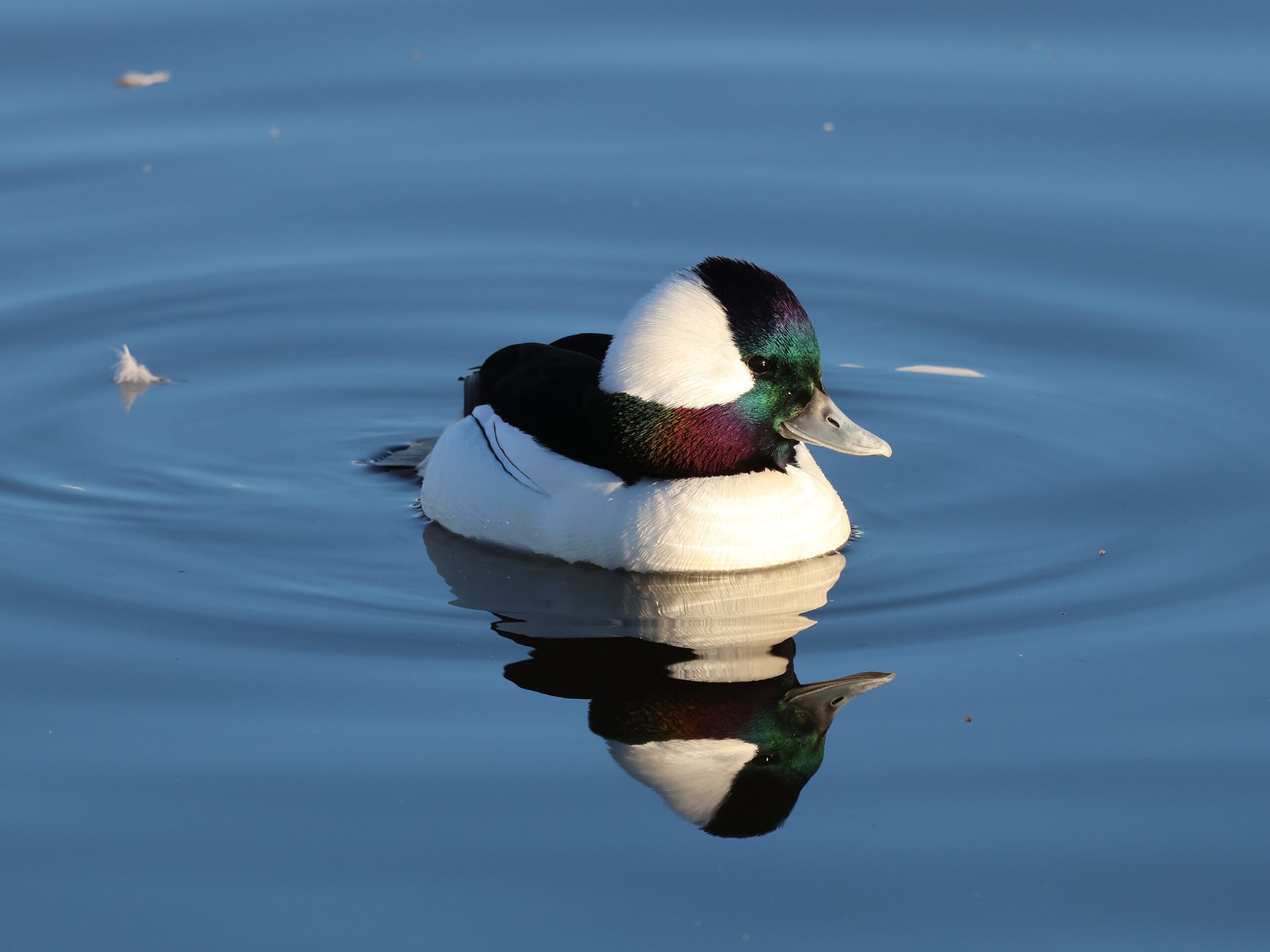
Most of the usual ducks were present, including a single adorable Bufflehead who got close enough for a few good shots before disappearing back into the Bufflehead dimension. We also saw the first sparrows of the year. I’m guessing Tree Swallows, but they were too far away to positively identify. The water level was too high for shorebirds, so the Dowitcher count was, sadly, zero.
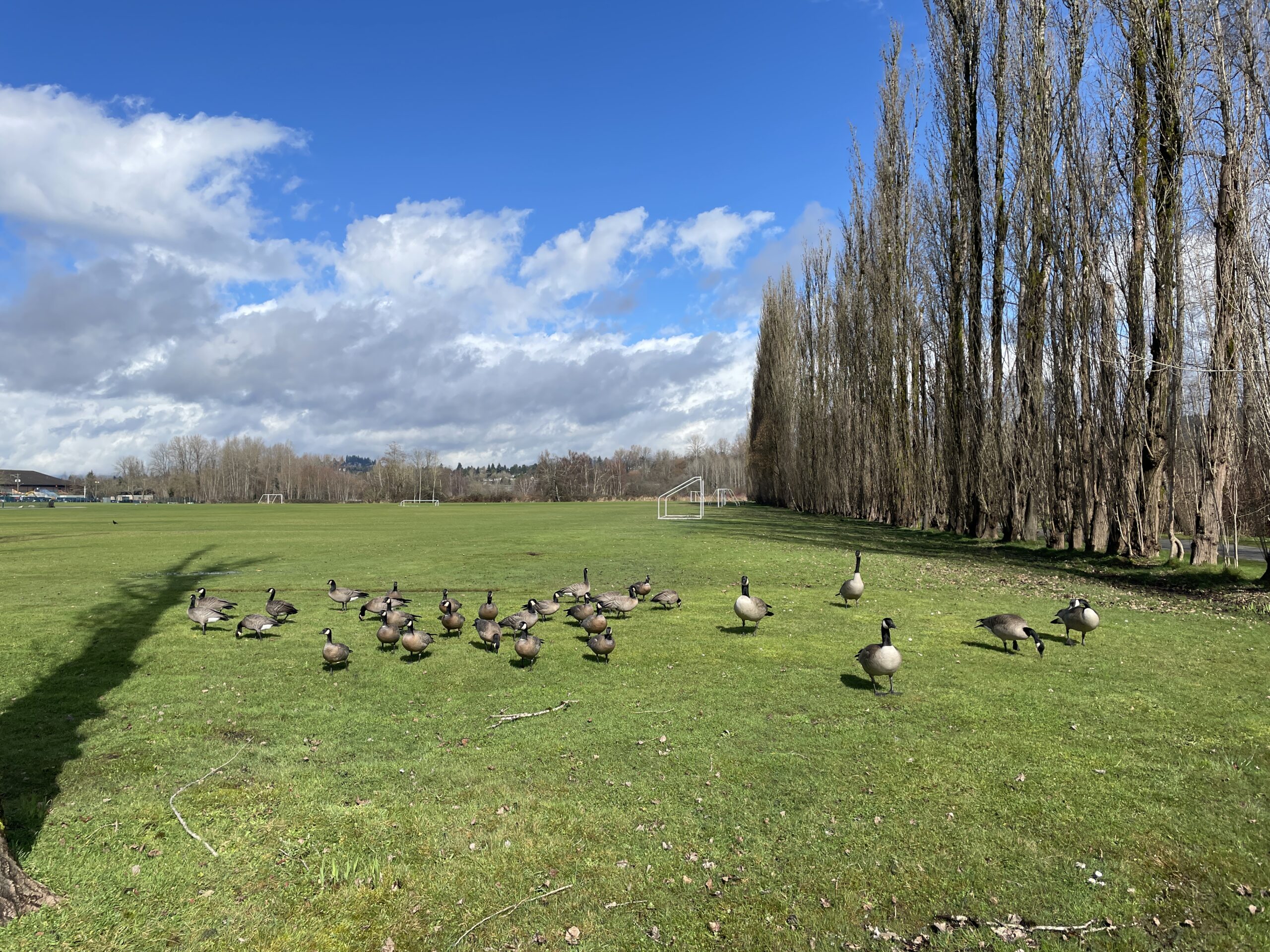
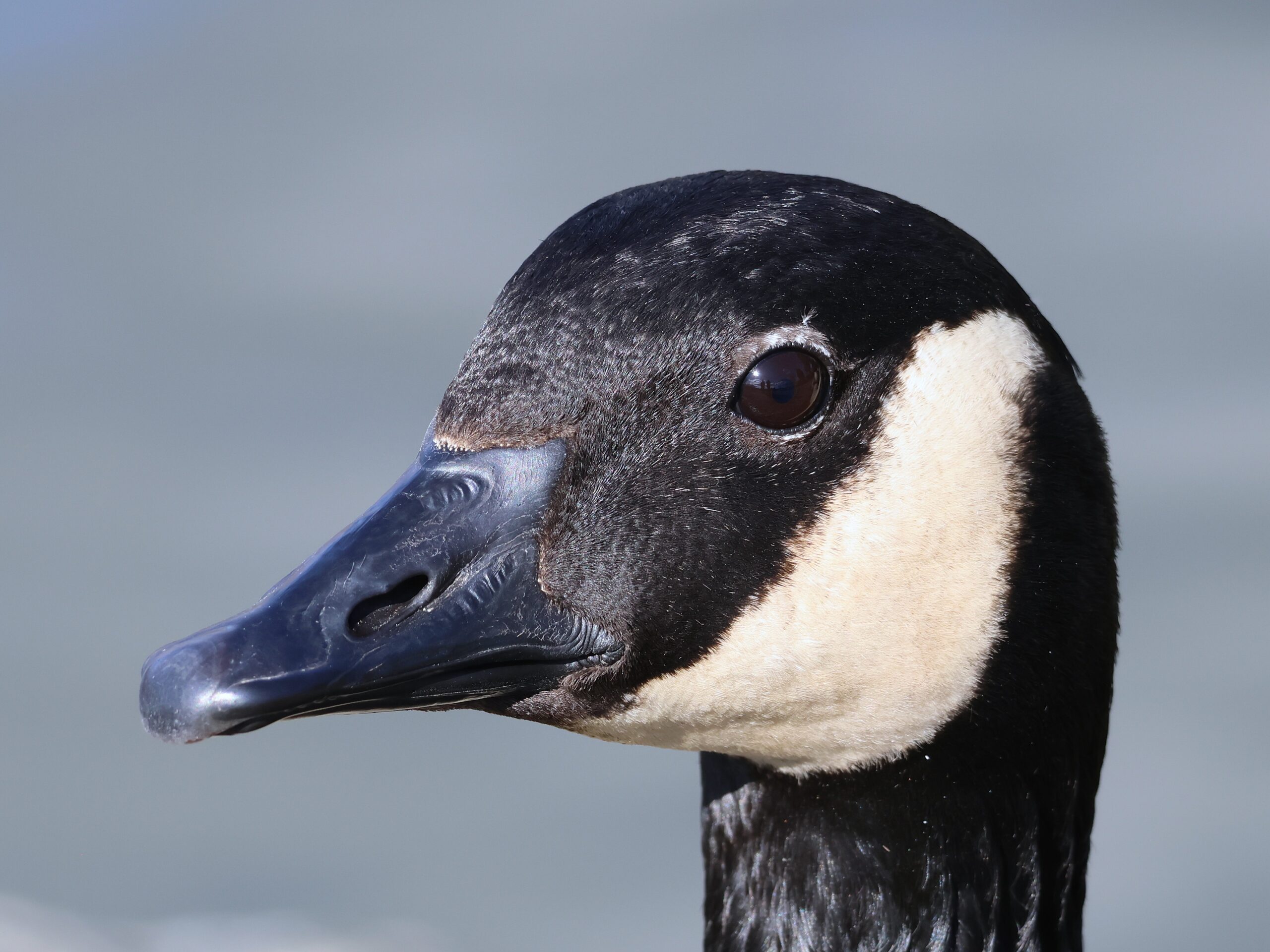
Making up for that (?) were plenty of Canada Geese, and they were engaged in all kinds of goose shenanigans, some of which we captured in loving/terrifying detail.
The coots were downright ordinary in comparison.
With the sun out and a lot of close-range targets, I got much better shots than last week, so I am pleased.
Maybe next time we’ll finally return to Reifel. It could happen!
The Shots
Shot with a Canon EOS R7 with 18-150 mm kit lens and 100-400 mm telephoto.
Coastal mountains seen from Terra Nova
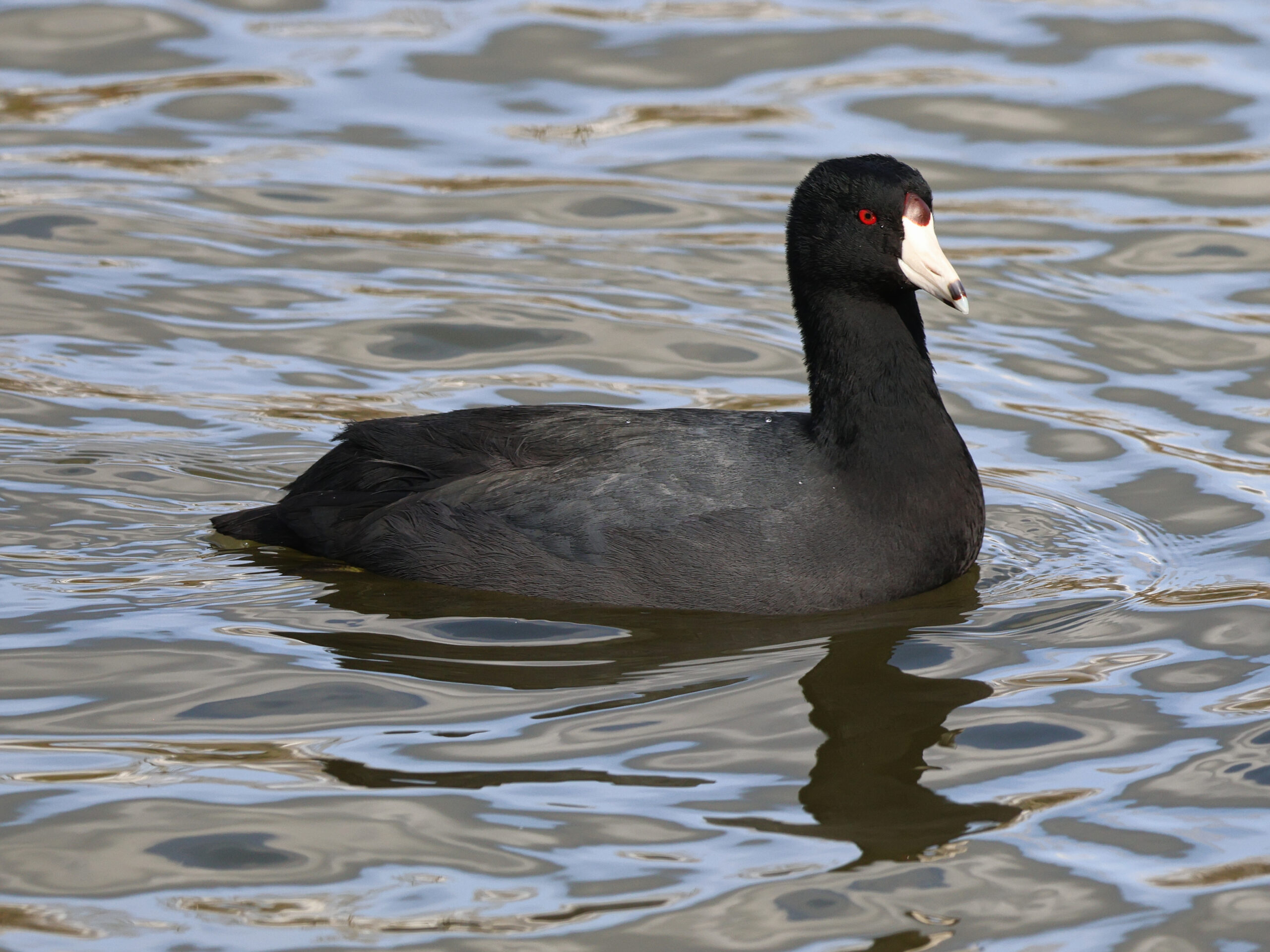
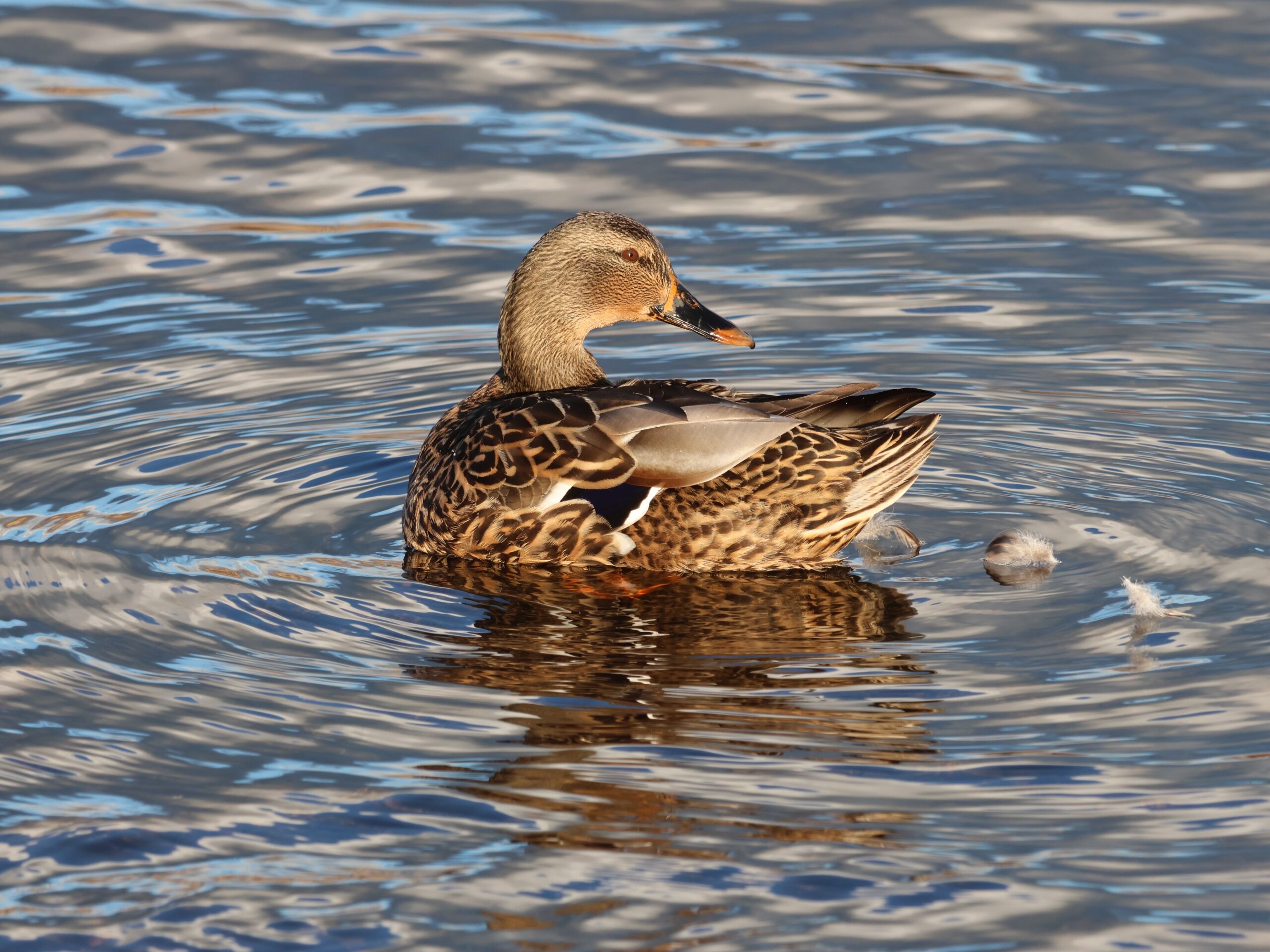
An American Wigeon swims through marshy outcroppings off Terra Nova
Where: Burnaby Lake, Deer Lake (Burnaby)
Weather: Cloudy, some light rain, 11°C
In which we learn a battery charged is better in the hand than in the charger.
Burnaby Lake
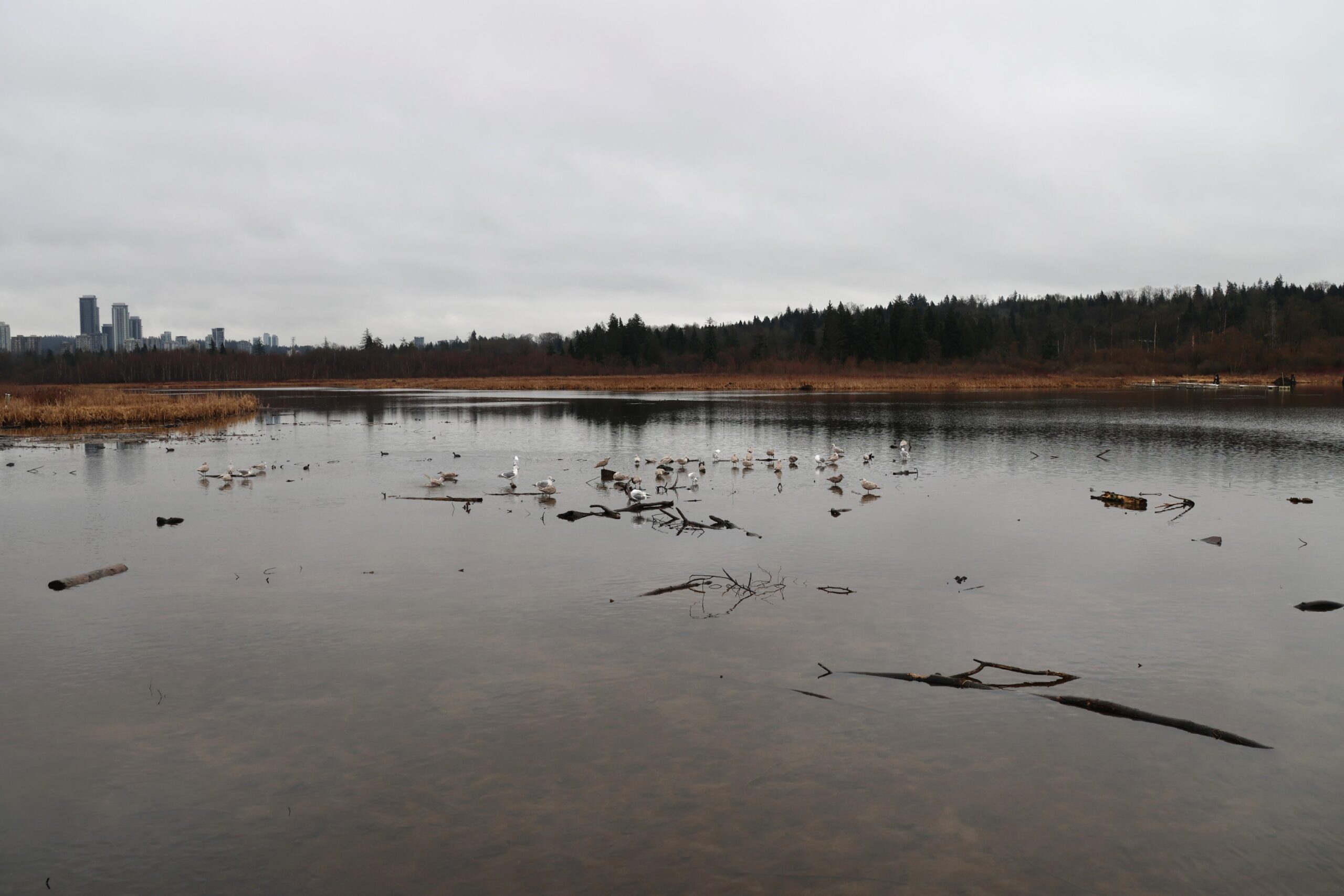
The gulls were unperturbed by the drizzly conditions on the lake.
The original forecast was looking quite damp, so we opted for a later start of 11 am and headed to Piper Spit. Even though there was a light drizzle, the parking lot there was strangely full, so perhaps some event was taking place. The pier itself was mostly left to just us for the majority of time we were there and the weather ranged from cloudy to a steady light rain with drizzle in-between. Not ideal, but workable. You can see the raindrops in some of our shots, which is a nice effect.
I didn’t notice any dowitchers, but the water around Piper Spit might be a bit too high from recent rains. Most of the others were present, with random coots basically everywhere. There was Gull Town and Pigeon Place, but Crowville was underrepresented (we later found them on the sports fields). The weather may make for challenging shooting, but we didn’t get any snow this winter, so I’m willing to tolerate some drizzle.
I once again tried to shoot some gulls in flight, with mostly mediocre results. I can usually nail at least one butt shot, though.
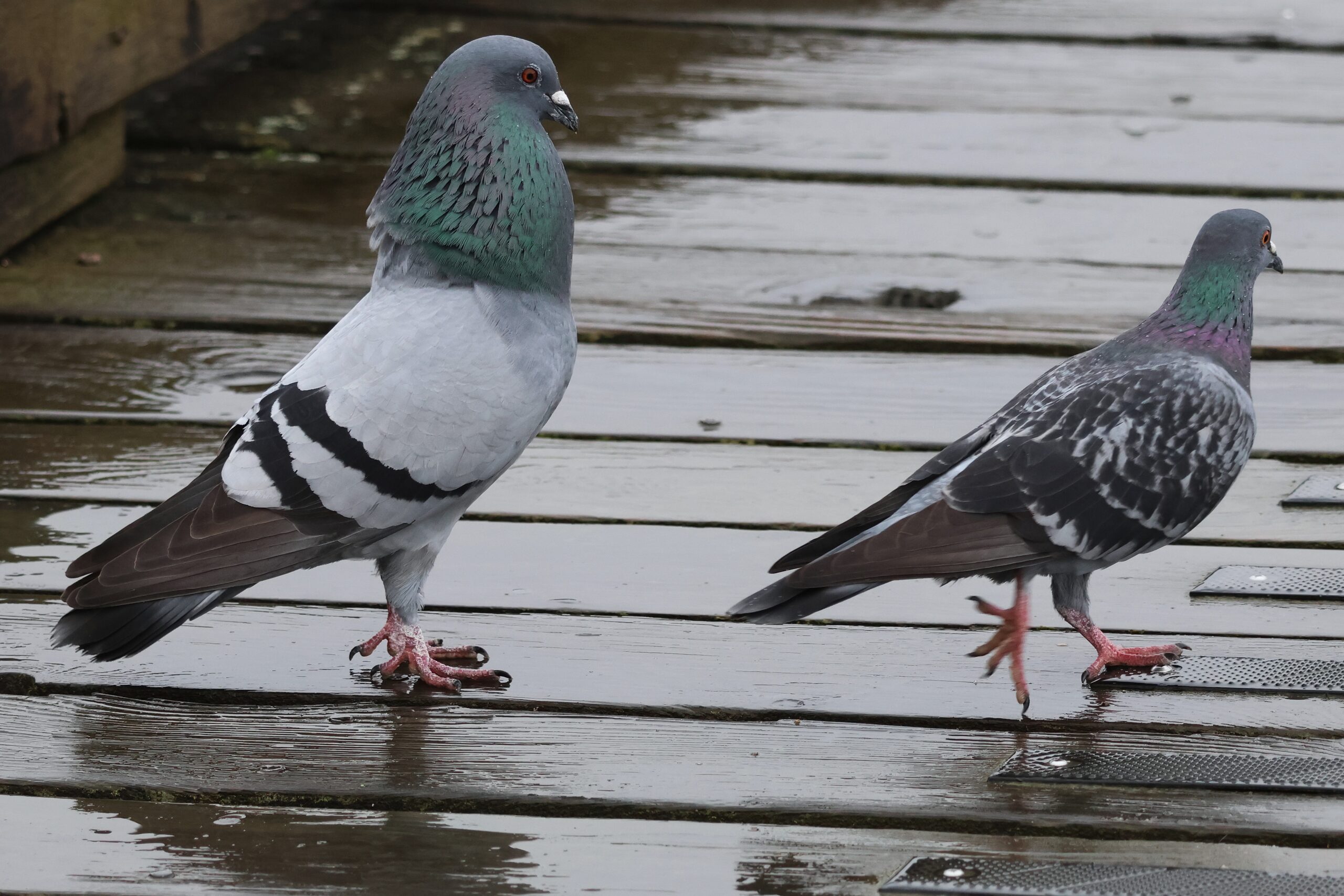
And it’s that that time of year, because one pigeon was macking on another big time. The other pigeon was, as usual, utterly unimpressed.
In all, a better than expected start.
Deer Lake
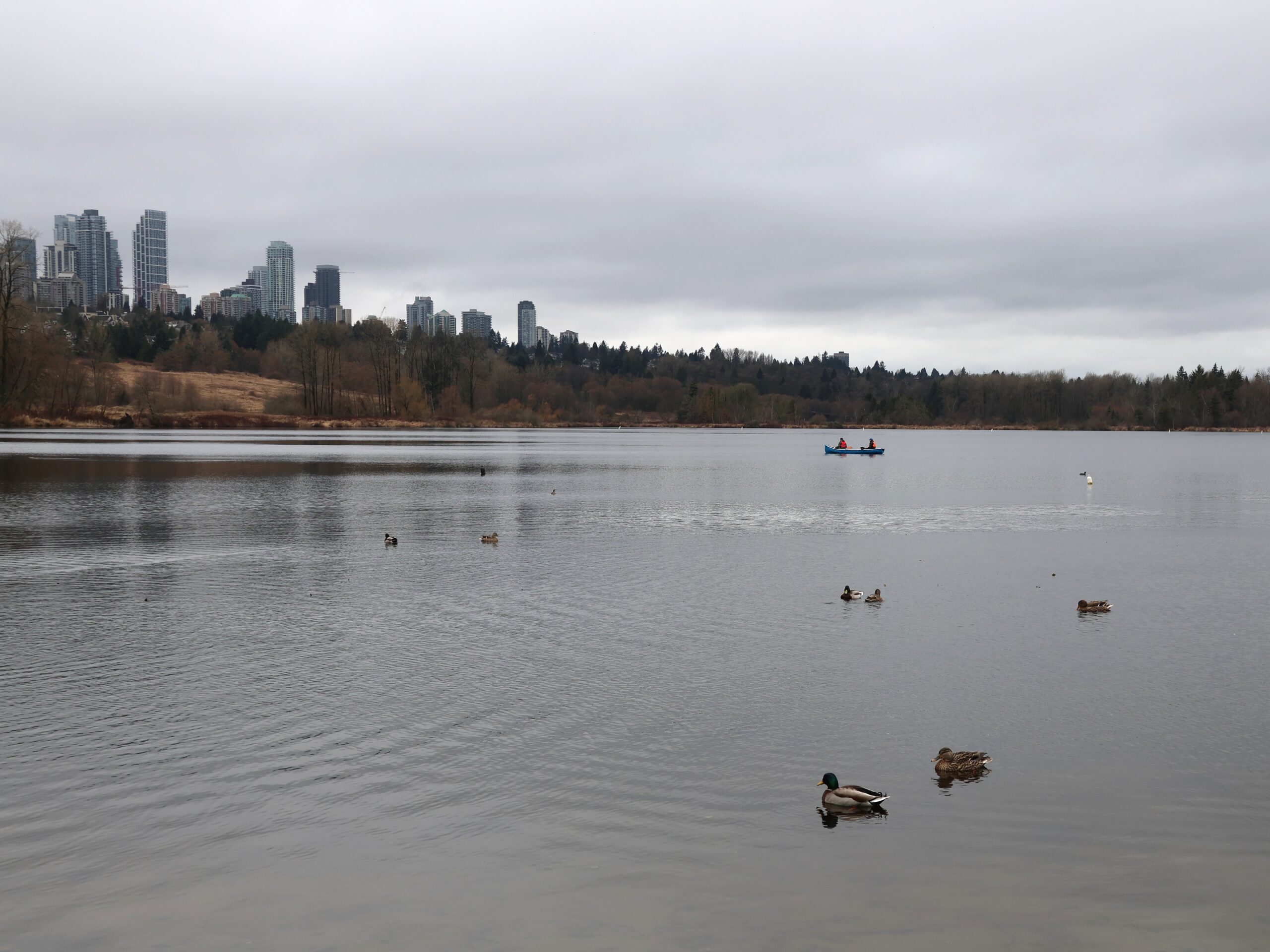
Various ducks and some human paddlers on Deer Lake, Metrotown in the background.
After lunch, the weather improved to merely cloudy, so we remained dry going forward and the light got a bit better.
Deer Lake was better than expected, with copious coots cavorting and cackling up close on the main beach. Several small children were present and I thought they might chase the coots, as little kids are wont to do, but the coots chased them like the aquatic terror chickens they are. One had some weird feather business going on with a wing but didn’t seem particularly fussed by it.
There were also a few geese present and remember me saying it’s that time of year? Perhaps this is why the geese were going berserk and doing the cobra thing with their necks and showing off their hideous giant, barbed tongues. It’s just love. There was a lot of love on display.
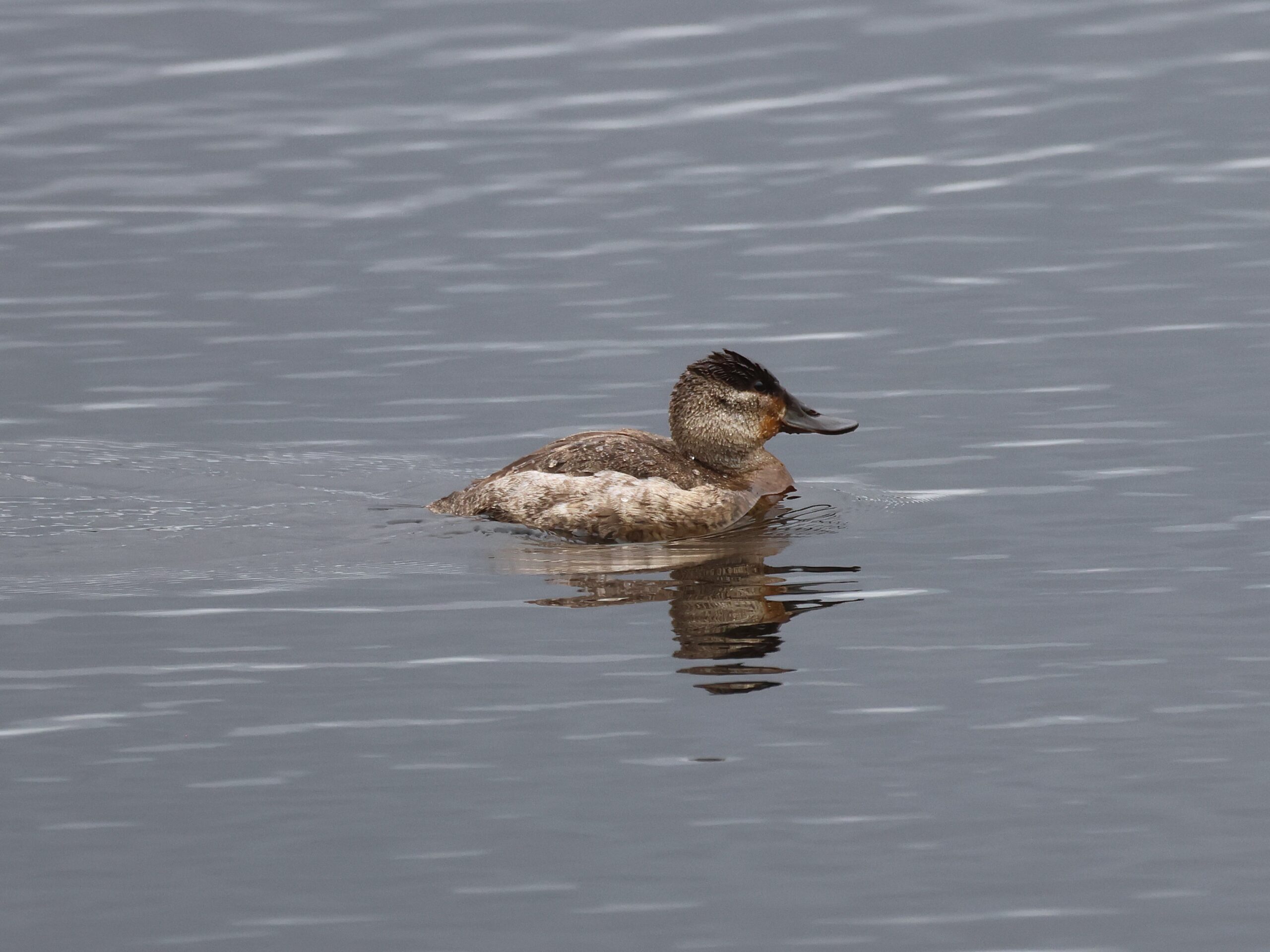
And we saw a rare Ruddy Duck. I checked and I’ve logged it twice before in Merlin, but it’s been long enough that I don’t recall the last time I saw one. They have a mottled brown texture with slightly big honkers. It was just close enough to get decent shots.
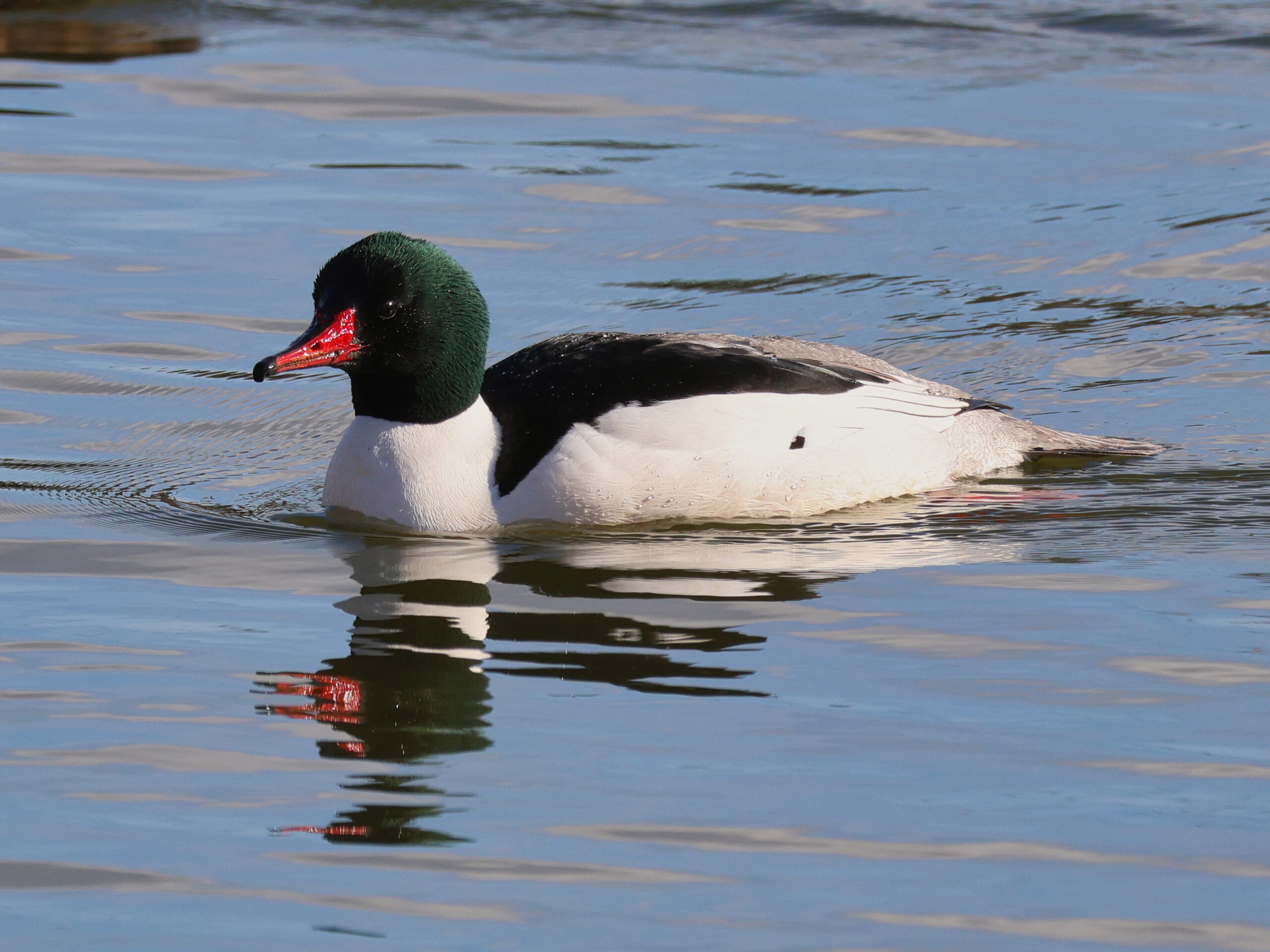
There were also buffleheads, mergansers and others on the lake, but most were generally too far out to get good shots. We also saw one canoe being paddled about (by people, not birds).
The wind would pick up on occasion (though it was very mild) and this afforded some great bad hair day shots of a Great Blue Heron.
And of course, the lake itself provided some scenery, though maybe due to its compact size, it doesn’t shoot as well as Burnaby Lake (IMO).
And speaking of, we ended by returning to the western end of Burnaby Lake, and travelled from the bridge at Still Creek to the rowing pavilion and back. While we technically saw a lot of birds, this was mainly due to one of them being a very large group of Cackling Geese that flew in and landed on the sports fields to nom on the grass. Even though I took a lot of shots, I wasn’t really happy with any of them. It was also apparently “Bring Your Bike” day at Burnaby Lake (bikes are not allowed) because I don’t think I’ve ever seen so many bikes in such a short span. Curse them all (but gently, some were little kids).
We also saw some Common Mergansers at the rowing pavilion, but they were a little too far out, especially for Nic’s Pixel phone.
Yes, at this point Nic was using his phone because after the battery in his camera died, he went to swap it out with a fresh one, but the fresh one turned out to be sitting safely nuzzled in its charger back at his apartment. I think the lesson here is for Nic to just hide away secret caches of charged batteries everywhere he goes to shoot birds.
Overall, a better outing than expected, given the potential for The Rains. Next week: Reifel! Haha, just kidding. I give it a 50/50 chance it will be open by the end of the month, and that’s assuming they don’t accidentally sink the bridge during the repairs. We shall see.
The Shots
Shot with a Canon EOS R7 with 18-150 mm kit lens and 100-400 mm telephoto.
A gallery to come, perhaps, but here’s a sampler for now.
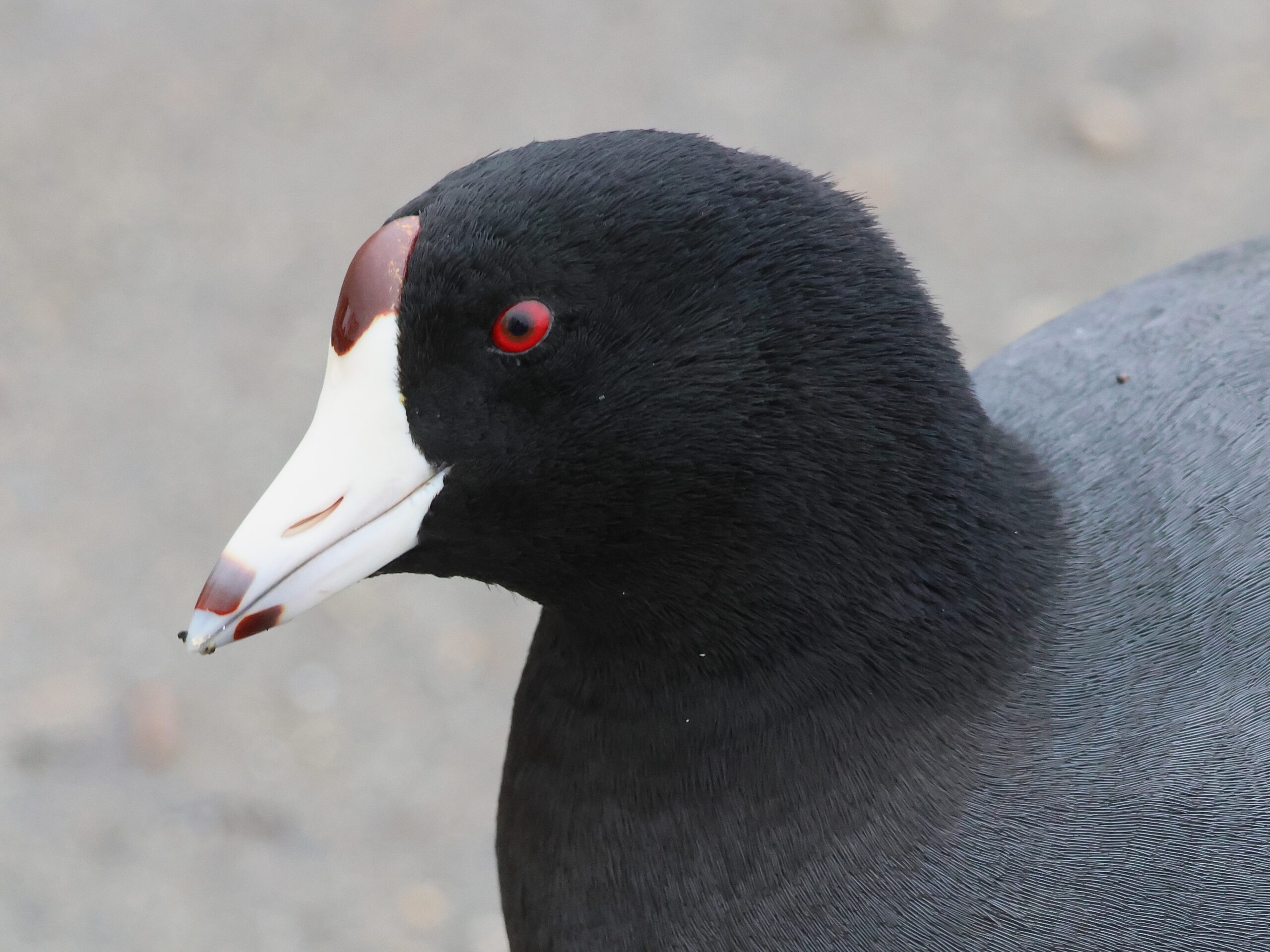
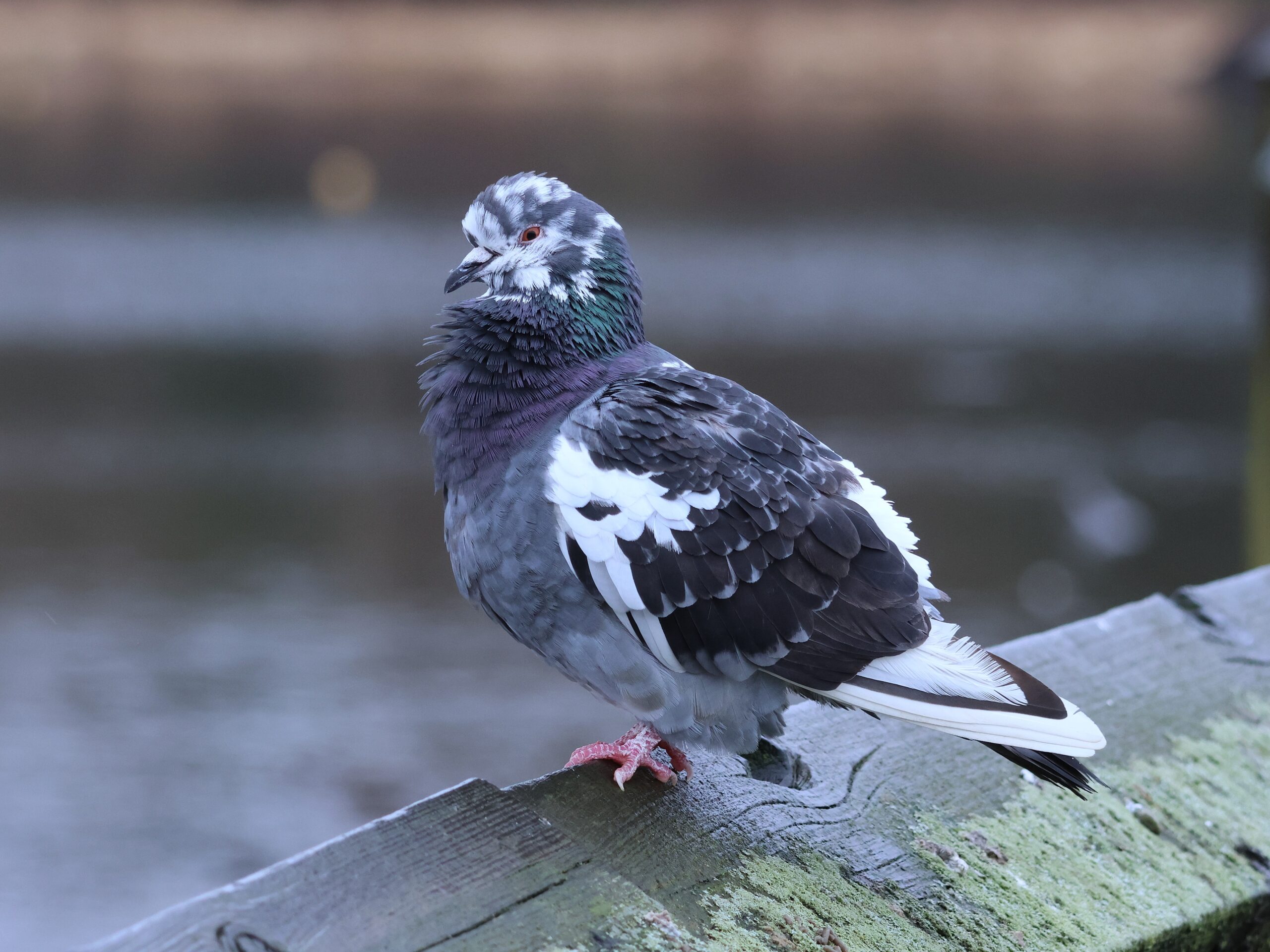
Coot close-up.A ruffly Rock Pigeon.“Hey baby, check me out. Hey…where are you going? Baby…”A rare Ruddy Duck spotted at Deer Lake. We did not see any deer.
I meant to post these shots earlier, but then disabled my PC by accident. But here they are now, once again using FooGallery’s kitschy Polaroid theme, because it just feels right for these.
All shot on my iPhone 12, which may not work well as a phone anymore, but still takes perfectly cromulent photos.
Where: Surrey Bend Regional Park (Surrey), Brydon Lagoon (Langley), Tlahutum Regional Park (Coquitlam)
Weather: Sunny, 9-10°C
With Reifel still weeks/months/eons away from re-opening, we decided to revisit a few places we hadn’t been to in some time, with some very mixed results.
The weather was consistently sunny and mild all day, which was a nice way to wrap up February.
Surrey Bend Regional Park
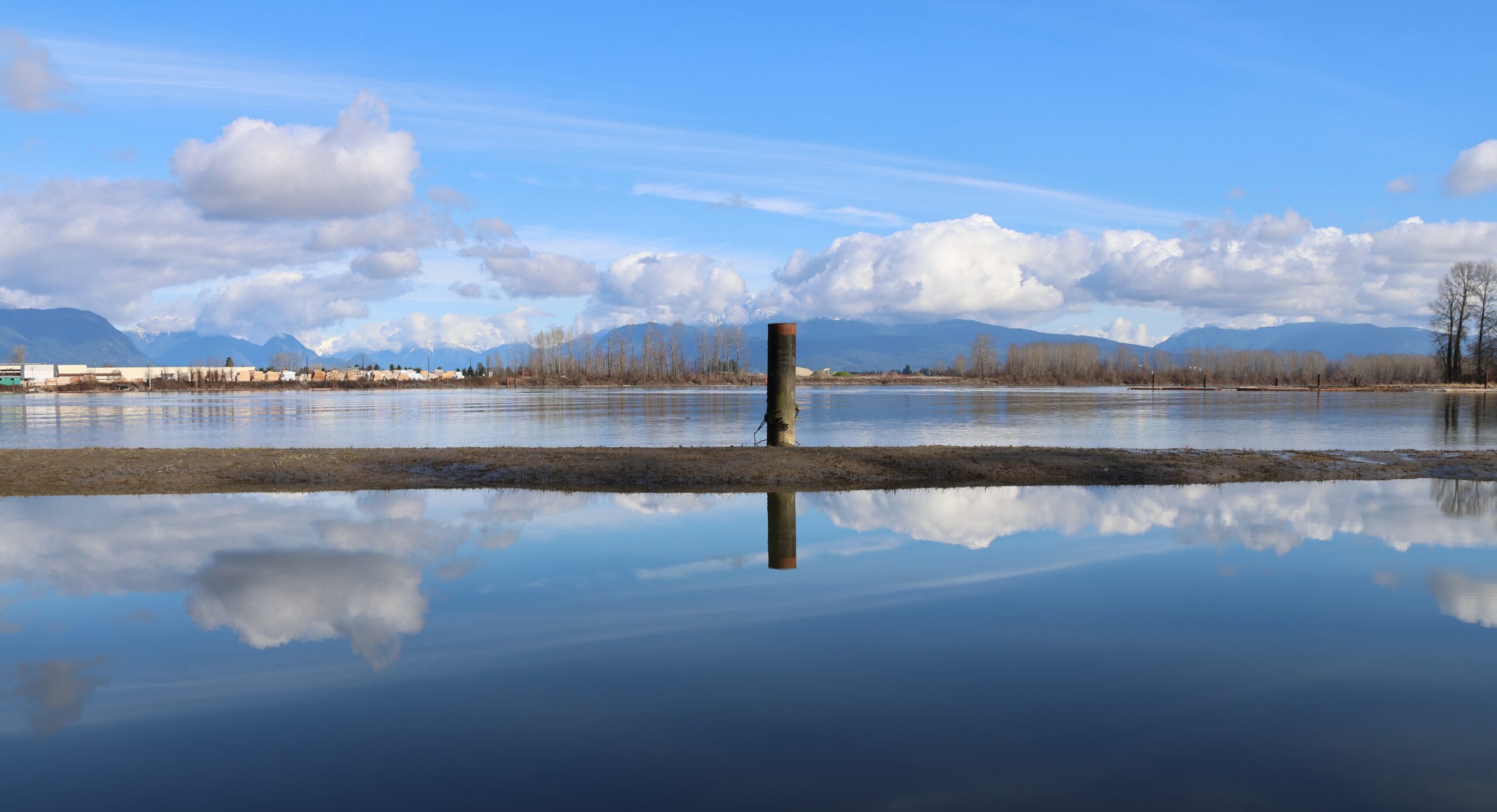
A lone piling on the Fraser River (it’s watery!)
I remembered this place having nice views of the river, but not a lot of birds, at least not the kind willing to show themselves.
Both memories were accurate. We heard and fleetingly saw a few birds, but I did not catch any photos of them. The river scenery was indeed nice, but I think this particular park is best left to the dog walkers and families enjoying barbecues in the picnic area, as the birding is rather…minimalist.
The sign at the entrance includes the phrase that also doubles as the title of this post. There is no denying the Fraser River is watery. There was quite a bit of it.
Brydon Lagoon
Visible in the background: The lagoon and large NO FUN sign.
This was an unexpected jackpot, with not only virtually every waterfowl we normally see in the Lower Mainland represented, but also a decent supply of songbirds and a couple of raptors thrown in for good measure.
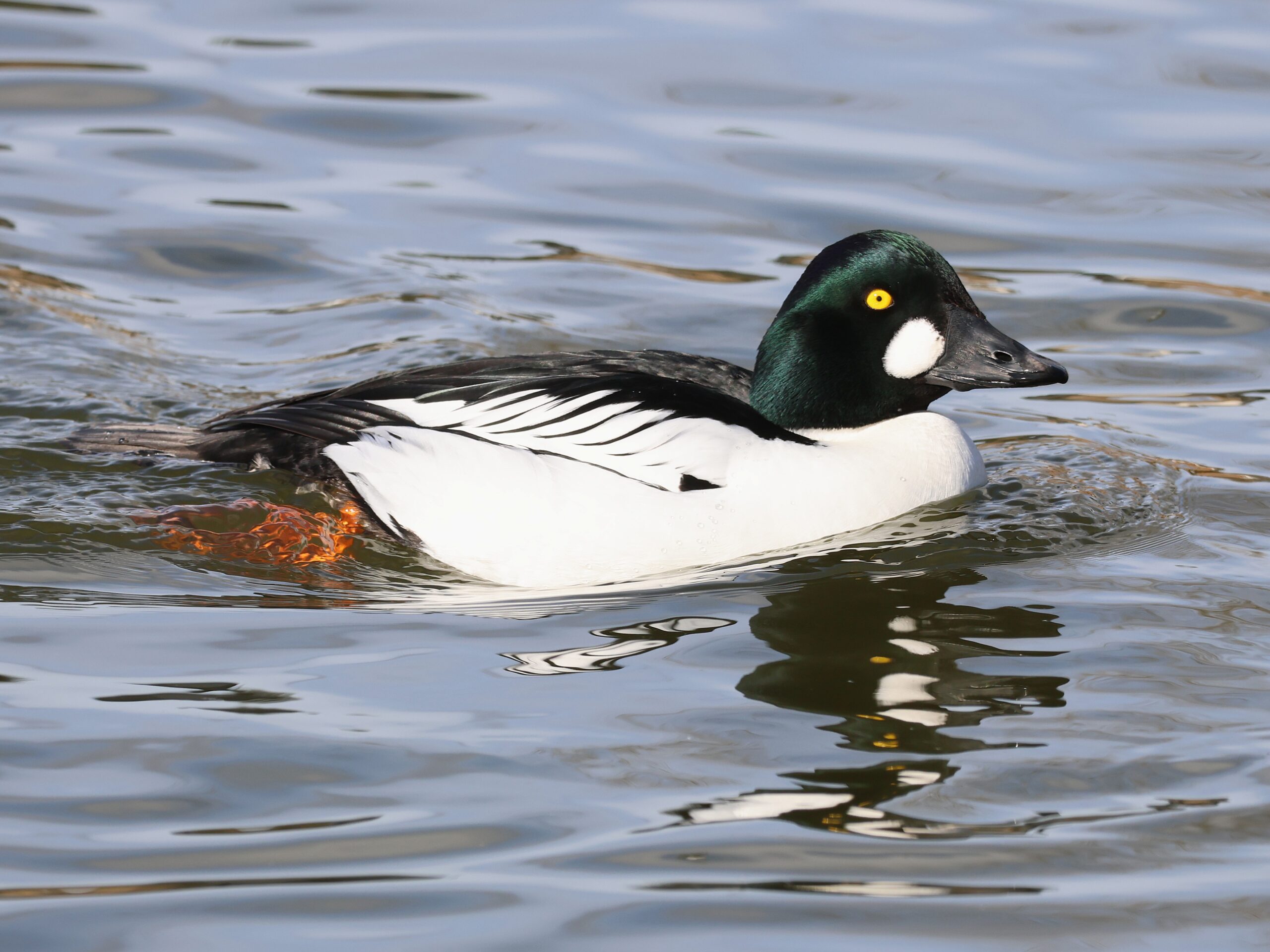
The waterfowl ranged from Buffleheads to Common Mergansers and Goldeneyes, to a plethora of Mallards and a pair of Canada Geese that were not afraid to let you know when you invaded their personal space via a sudden loud honk, followed by death stare.
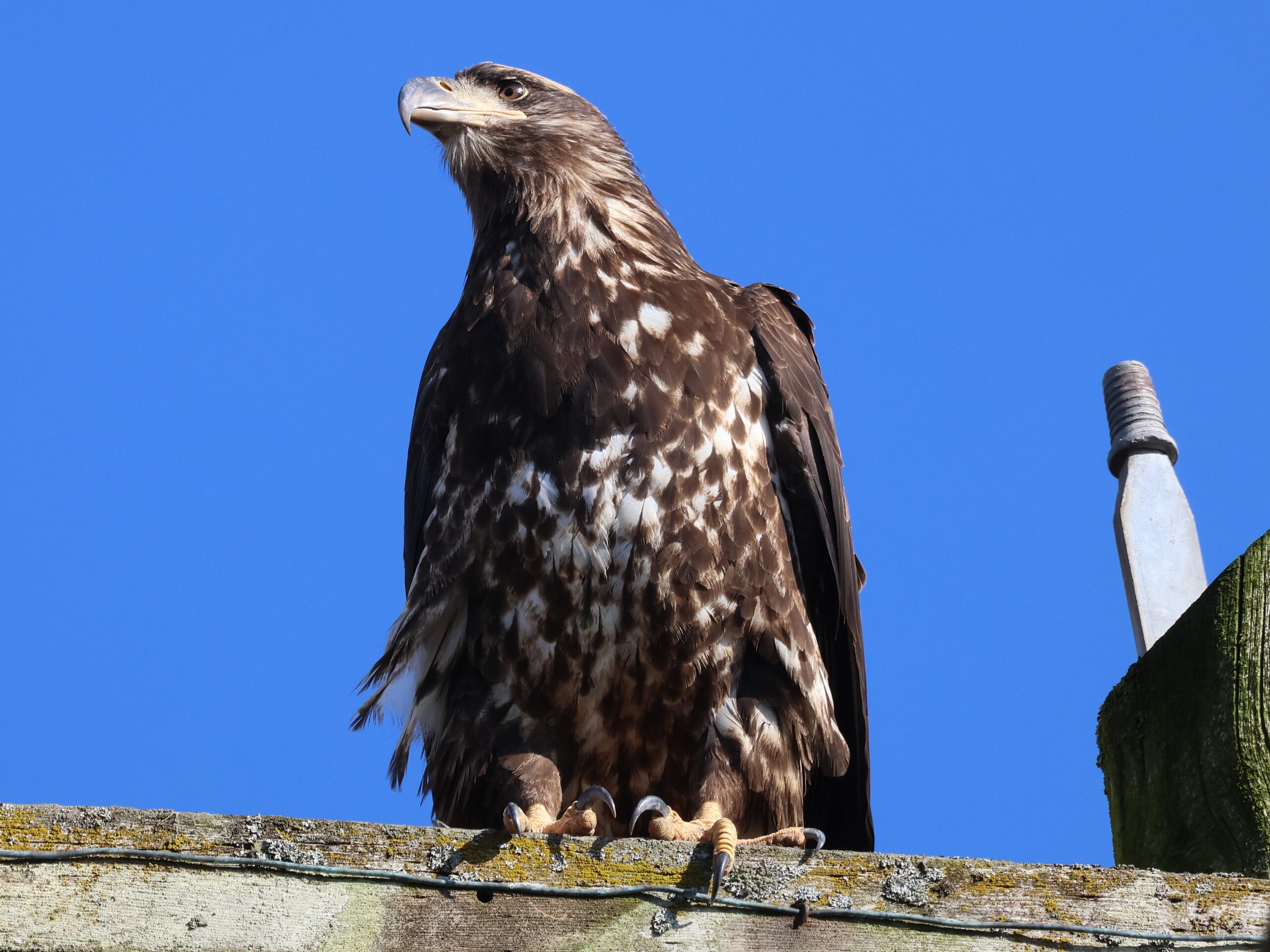
A large gathering of gulls in the central area of the lagoon (which is not really a lagoon, it’s a small lake or perhaps a pond with grand ambitions) were occasionally spooked by the appearance of a juvenile bald eagle. But then the eagle would fly off and land in a tree nearby–only to then be harassed by the same seagulls. Such is the circle of life.
A single coot was on hand, but without others, there was no coot drama to be had.
Songbirds included a few we rarely see, like a Yellow-rumped Warbler (I did not get a shot), as well as roving gangs of American Bushtits. I managed a few decent shots, which always feels like a major triumph with these spazzy little things.
We walked up a trail away from the lagoon and pondered exploring on through Hi-Knoll Park, which we did on our last visit, but elected to head elsewhere after not seeing much else away from the lagoon. Overall, though, this seems like a good sport to return to.
Tlahutum Regional Park
Mountains looming over Tlahutum.
We rounded off the afternoon at Tlahutum, but after seeing copious birds on the last visit, they seemed fewer this time, and most were farther back in the main pond, boo.
Nic suggested we go down the other trail we usually don’t take and this yielded some nice views of the mountains, the moon and while we did see some mergansers and wigeons in the waterways, it was tricky to get good shots due to angle/foliage and such.
But we got in a lot of steps, which will help boost our stamina for future birding. Yeah, that’s it.
In all, the birding was bad-great-meh, which is actually a perfectly cromulent average.
The Shots
Shot with a Canon EOS R7 with 18-150 mm kit lens and 100-400 mm telephoto.
A big boat and a baby boat
A piling out by itself on the Fraser River
American Coot cooting along
Female Bufflehead at Brydon Lagoon
Grabbing souls through its eye
A Common Merganser up close for a change
American Bushtit sitting still for 0.0001 seconds
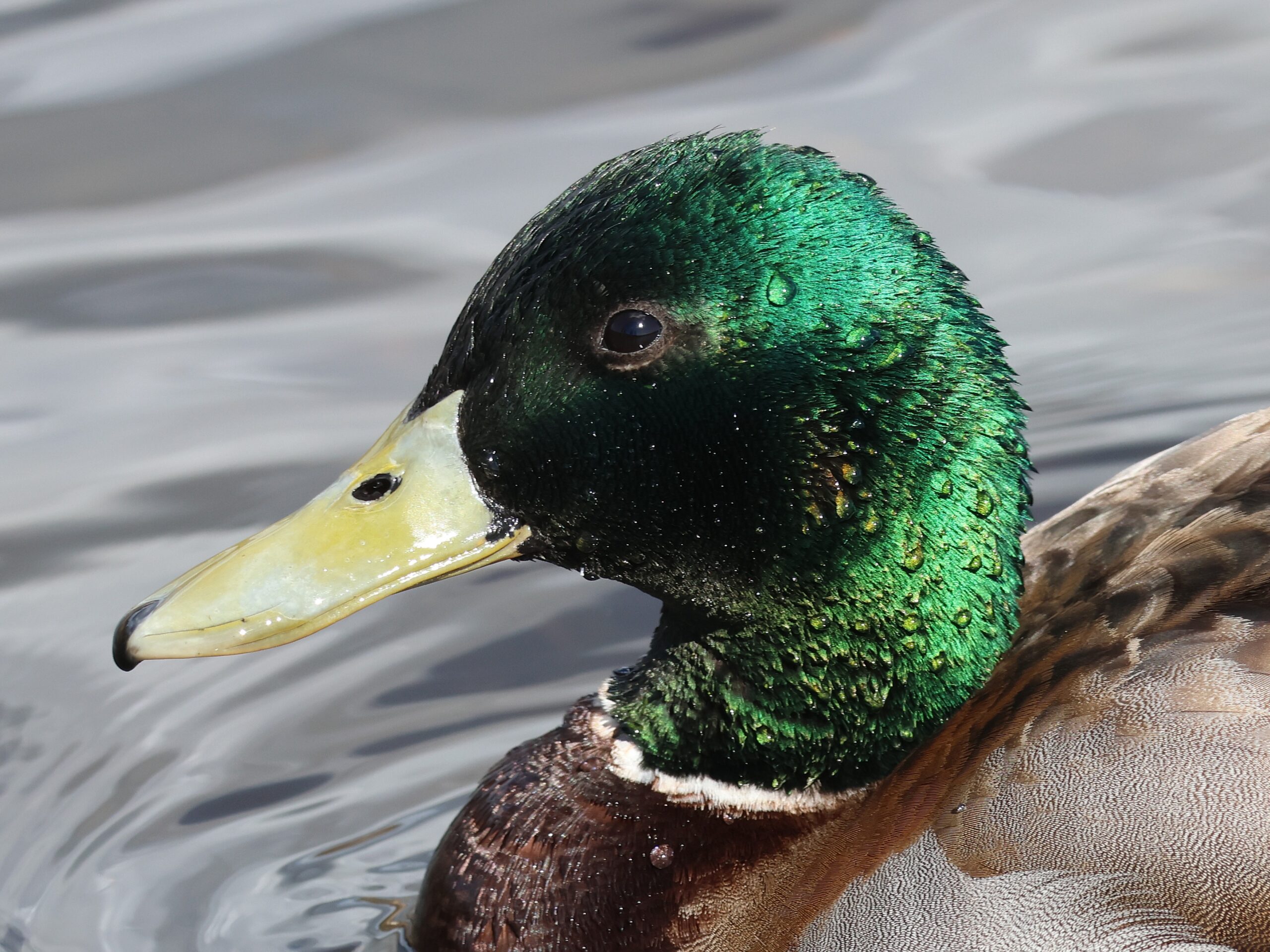
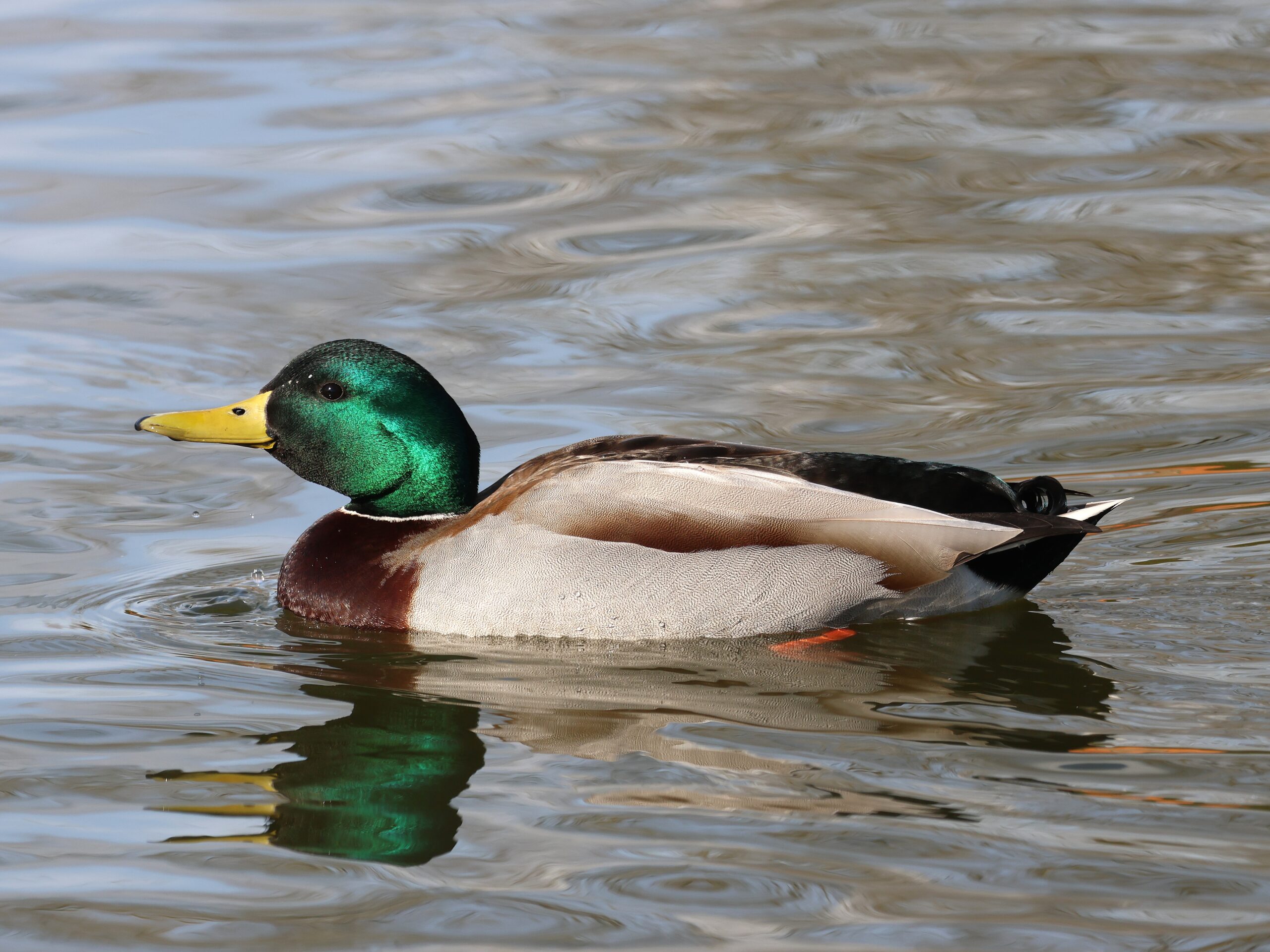
A shiny Male Mallard
So very shiny
A Common Goldeneye cruising the lagoon
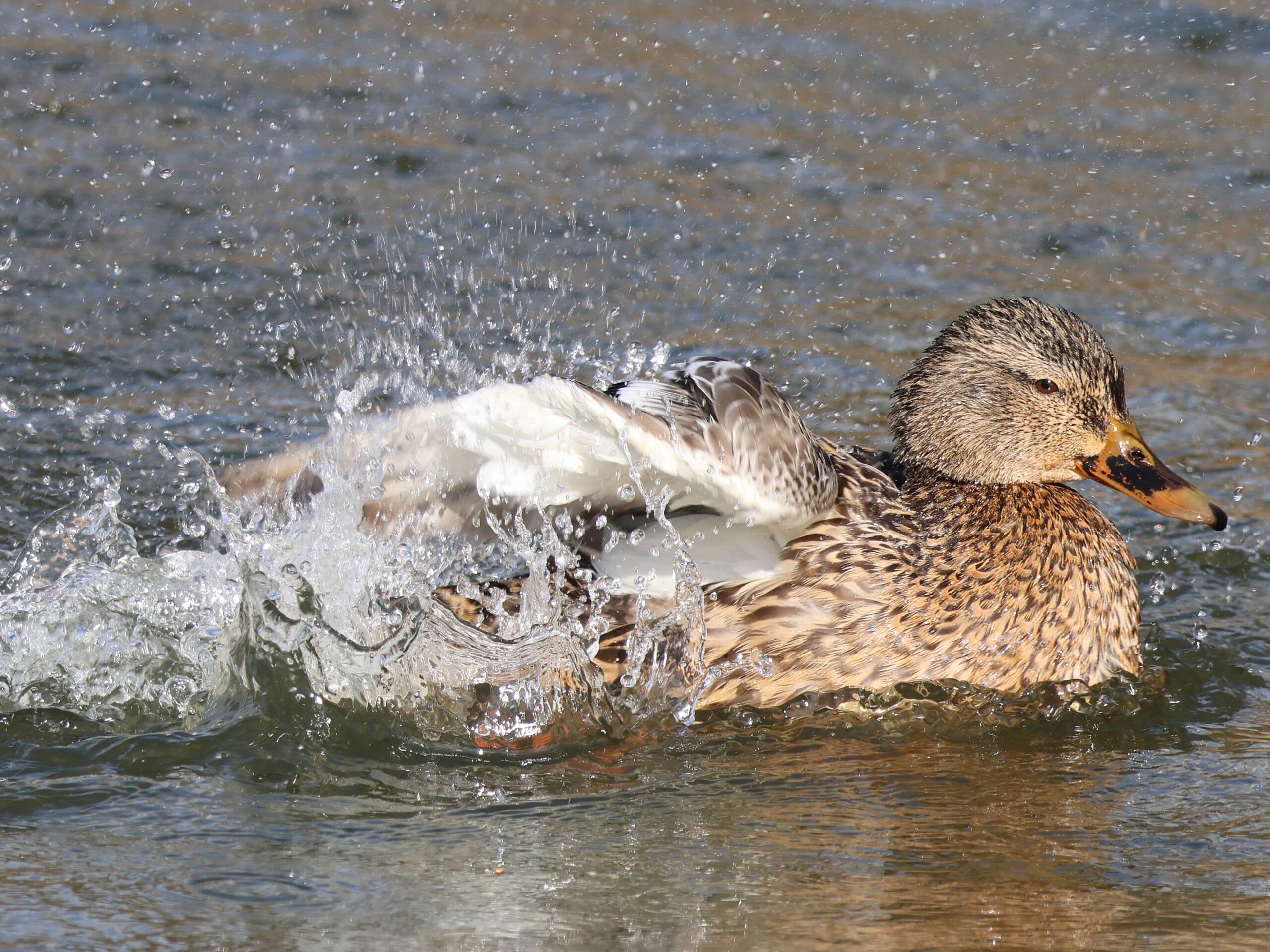
Jet-propelled Female Mallard
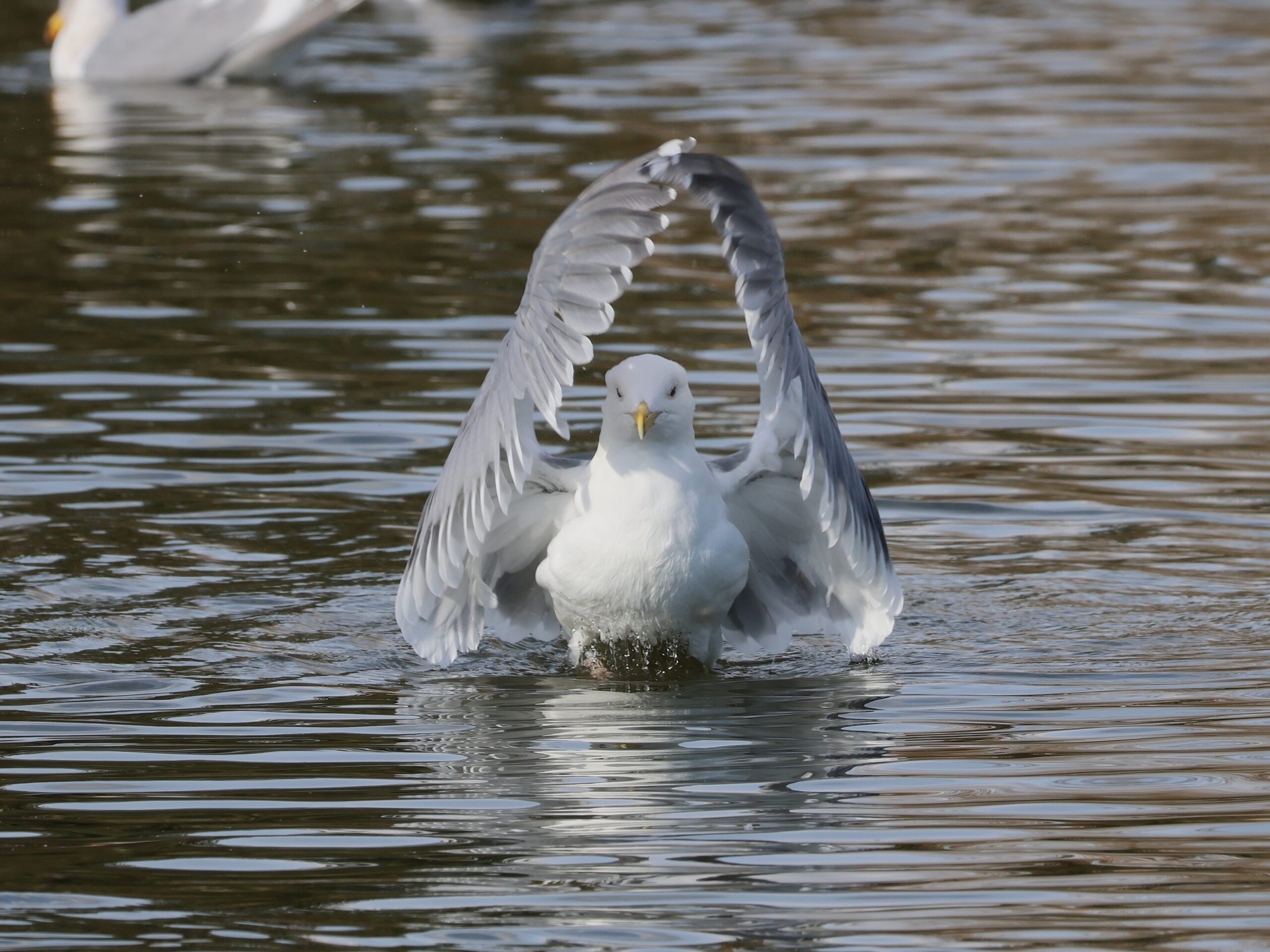
Seagull invoking strange gull ritual
Juvenile Bald Eagle sizing up the smaller birds at Brydon Lagoon
Mmm, suet
Mountains over Tlahutum
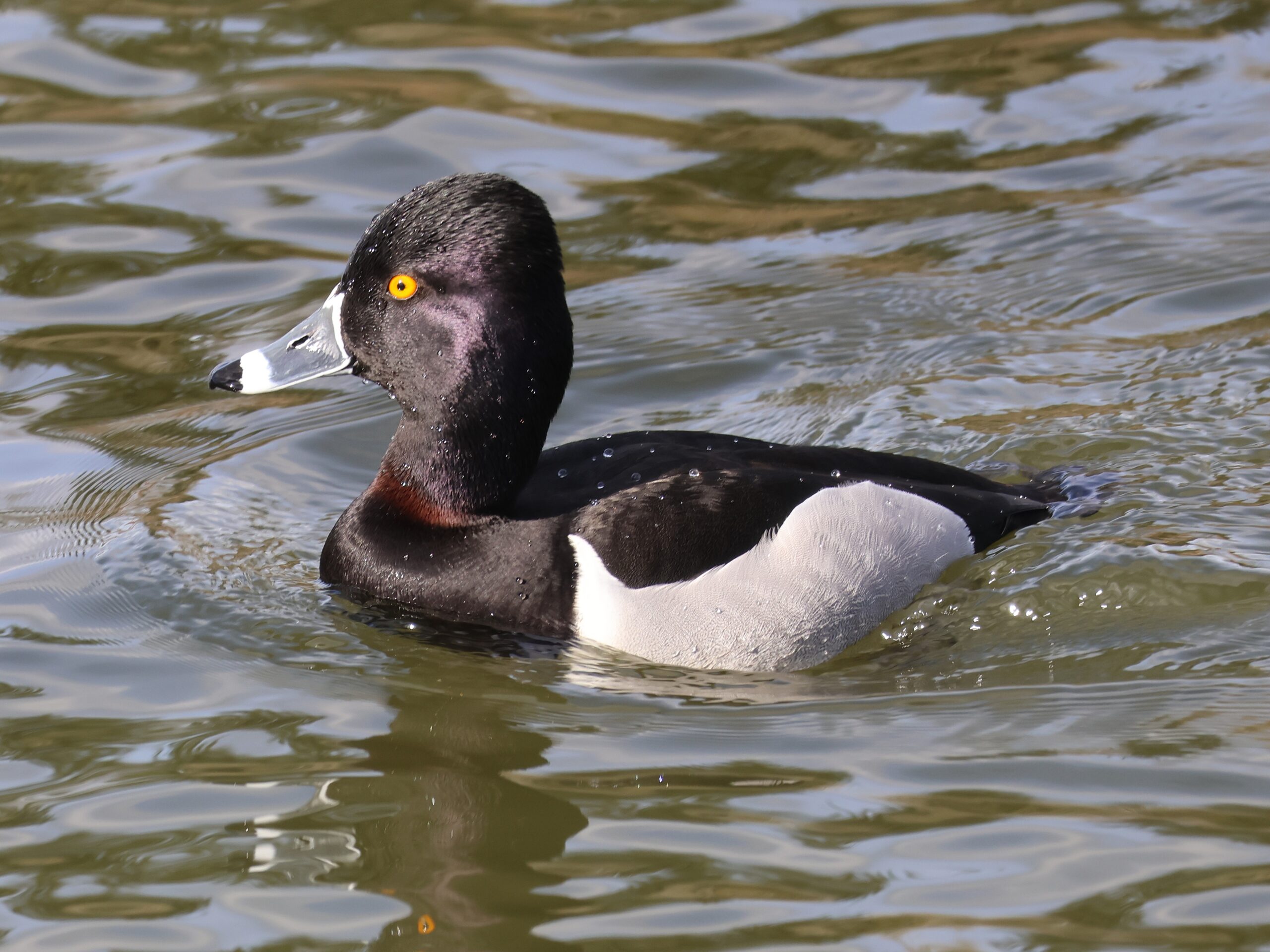
A male Ring-necked Duck
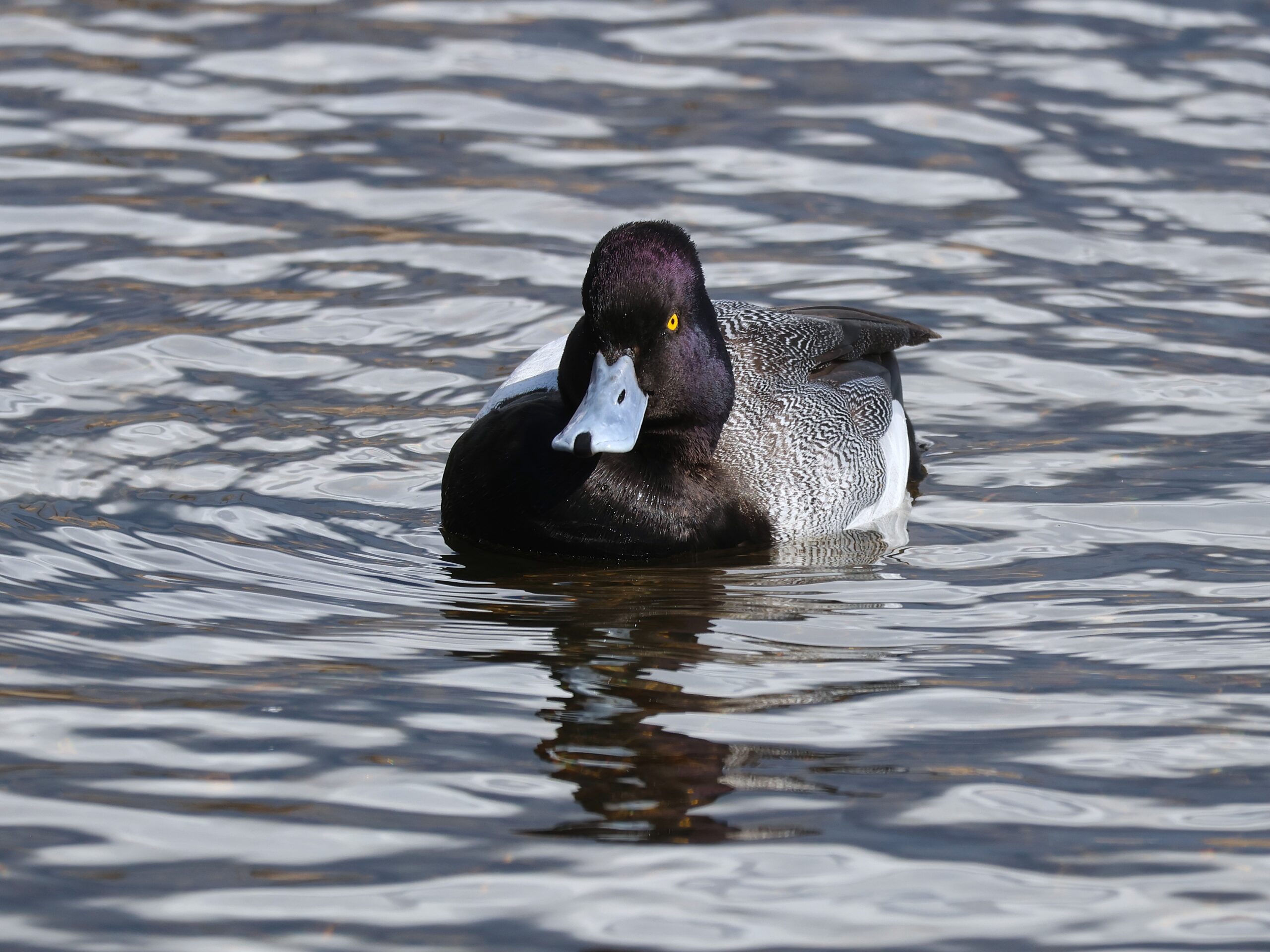
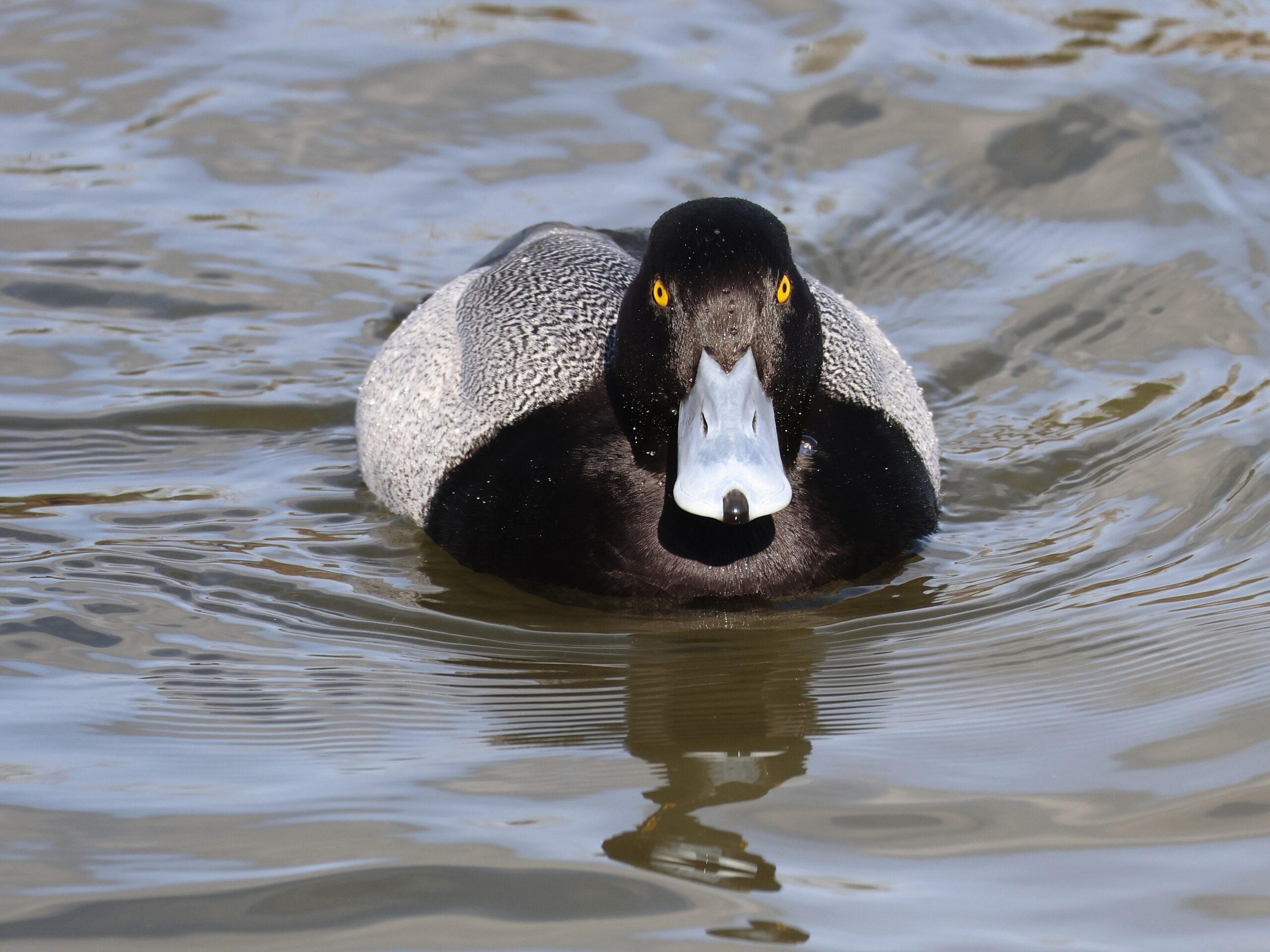
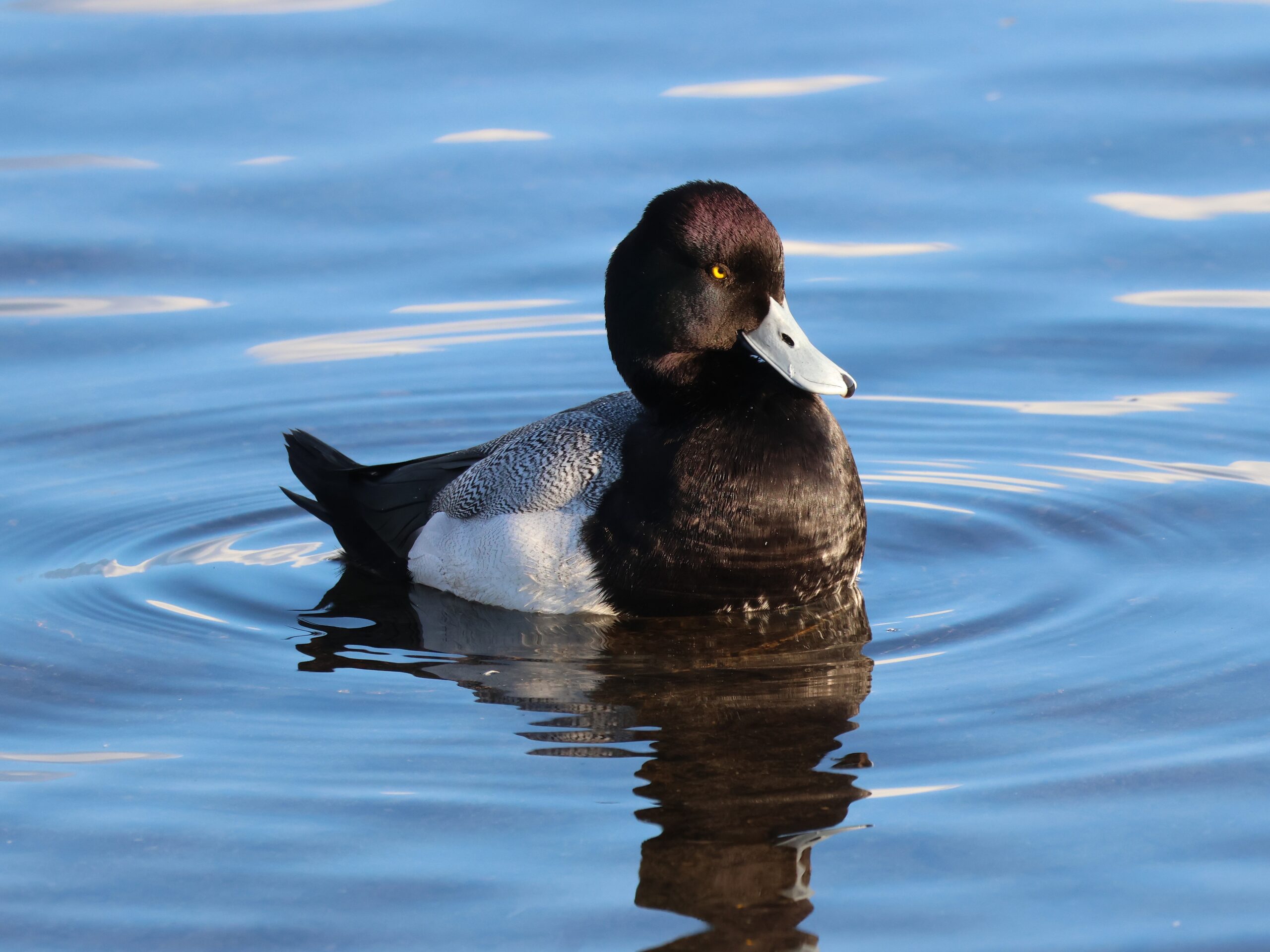
A male Scaup charging at the camera
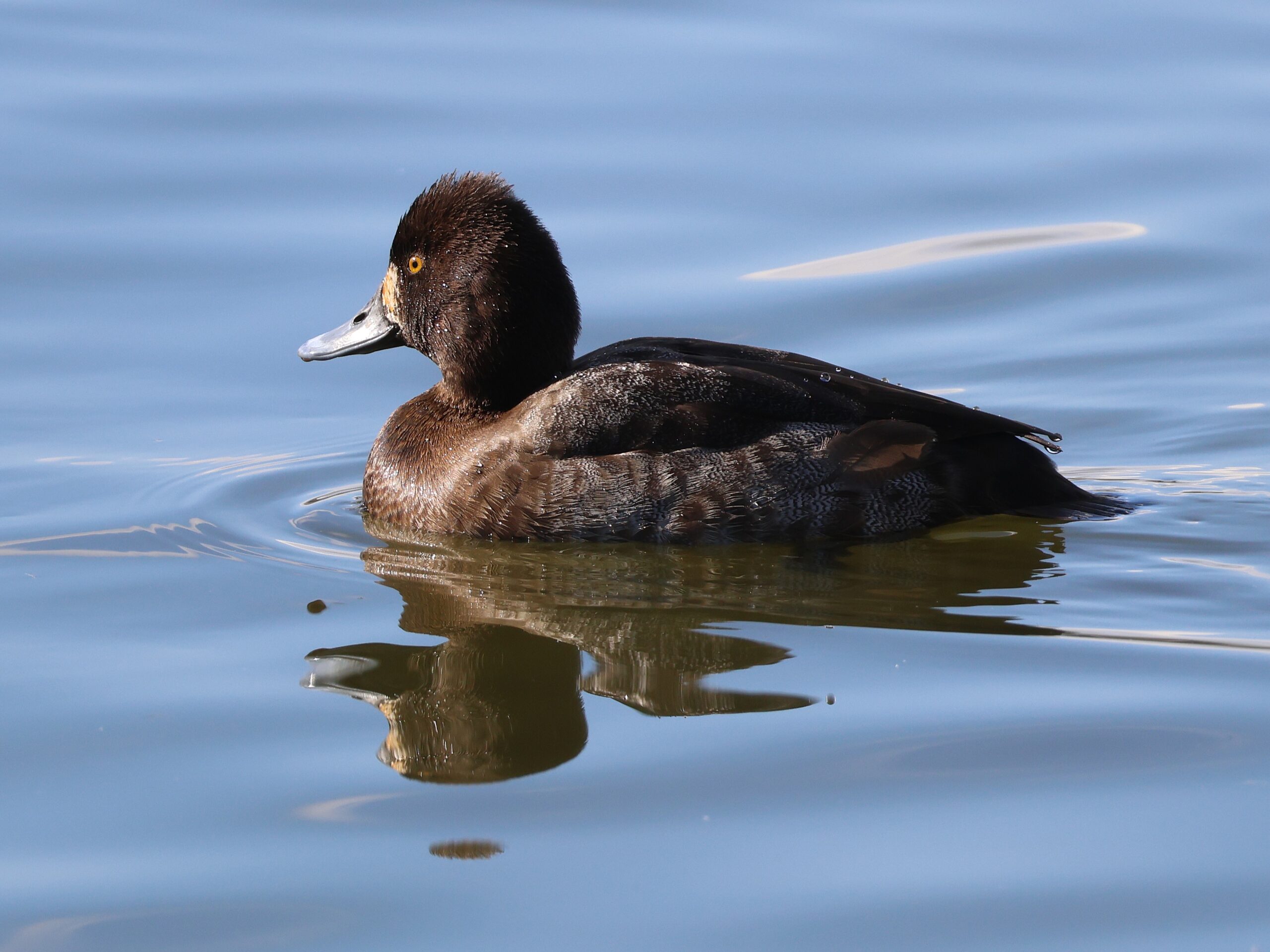
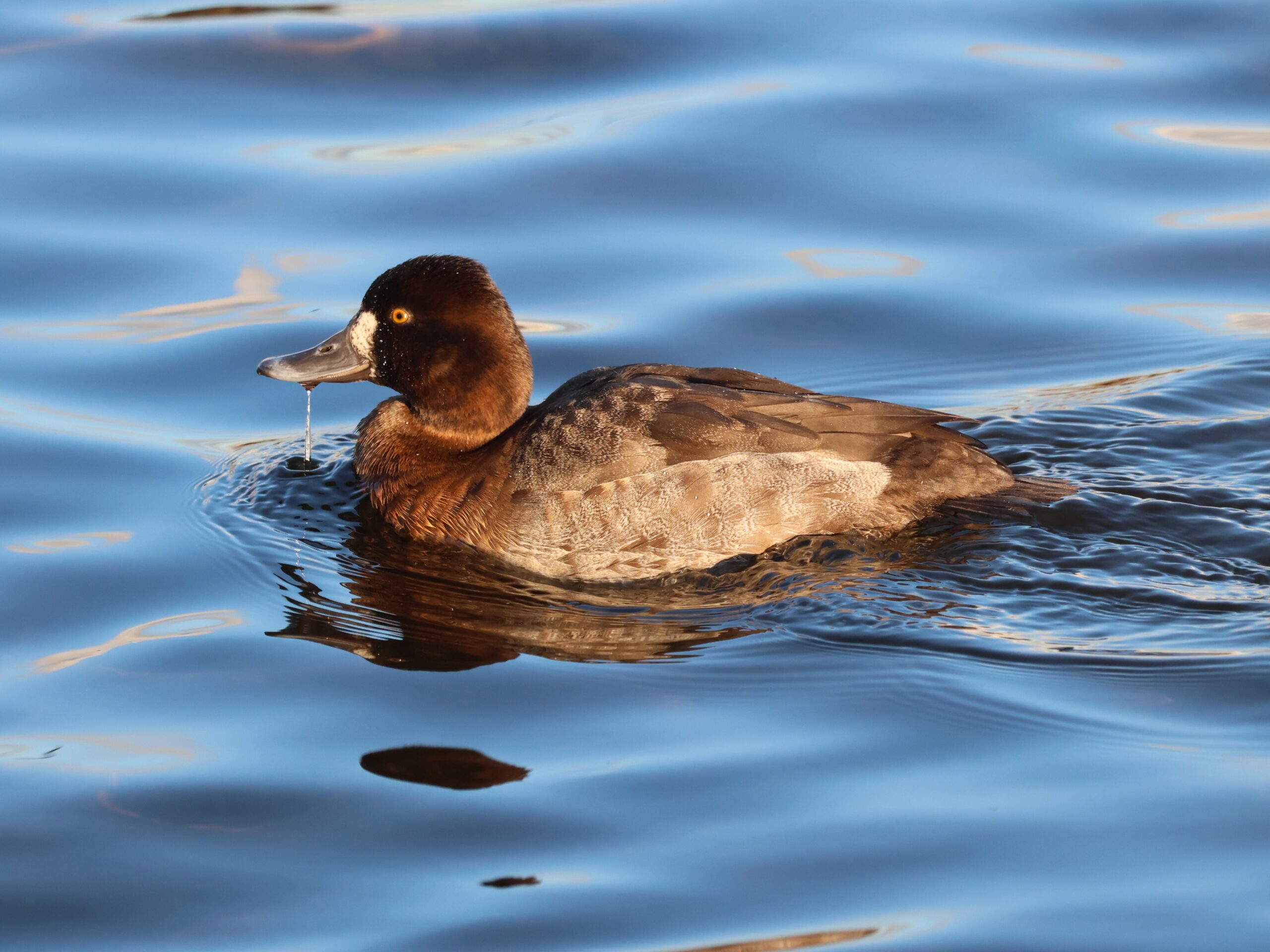
A female Scaup gently gliding along the water
Back to a male Scaup in profile
Coquitlam River as golden hour approaches
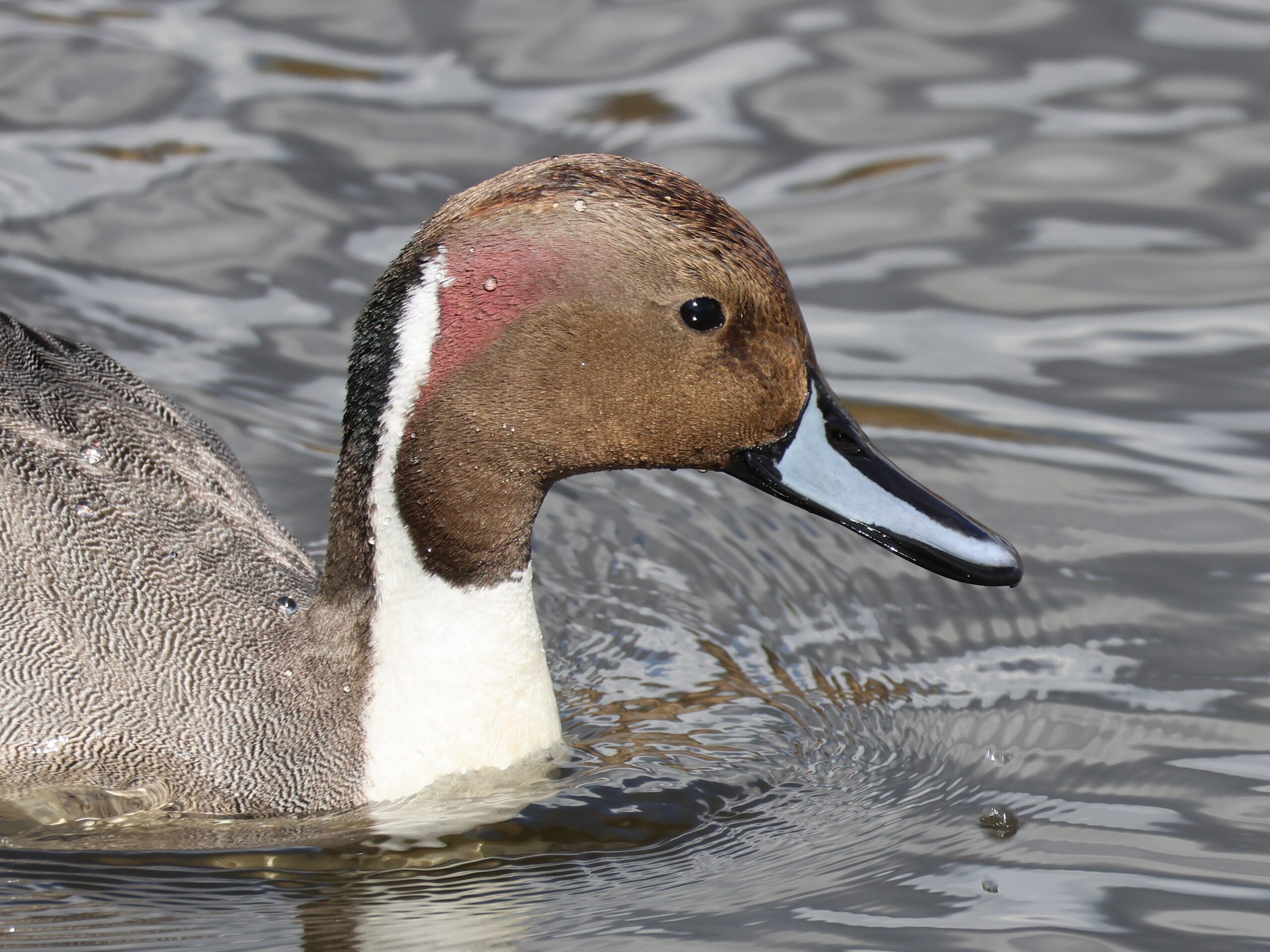
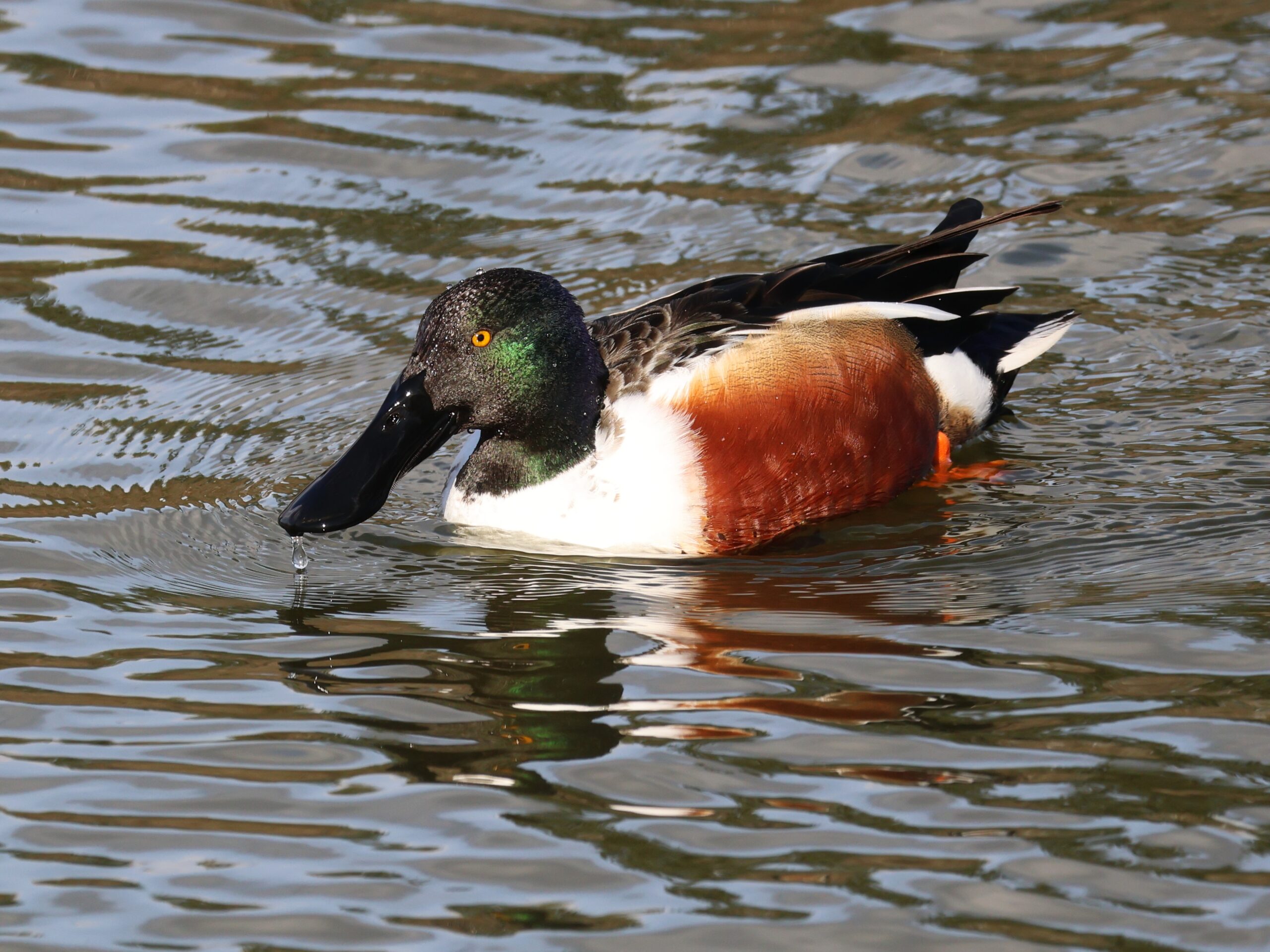
A male Northern Shoveller
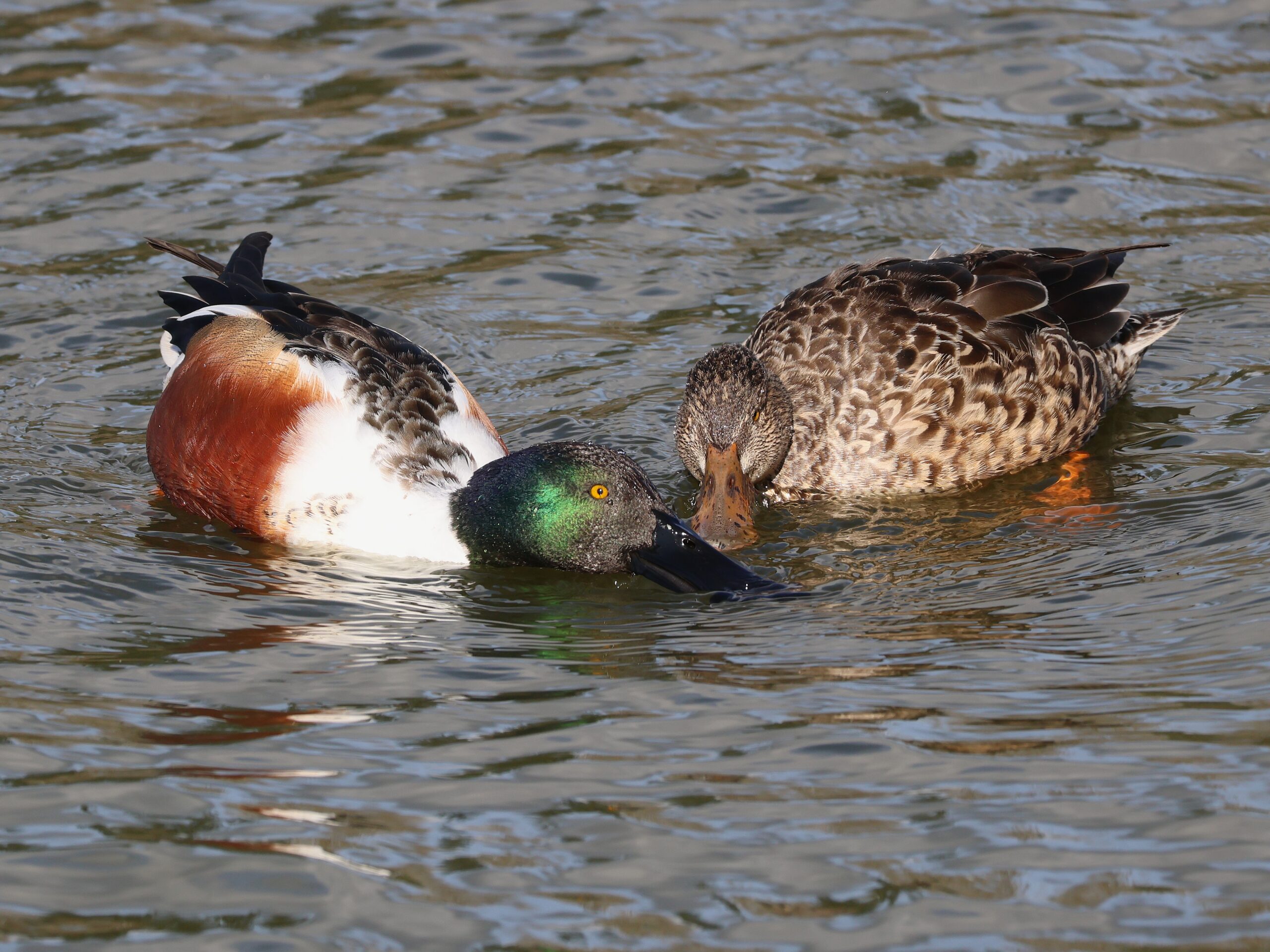
A possibly mated or soon-to-be-mated pair of Northern Shovellers shovelling together
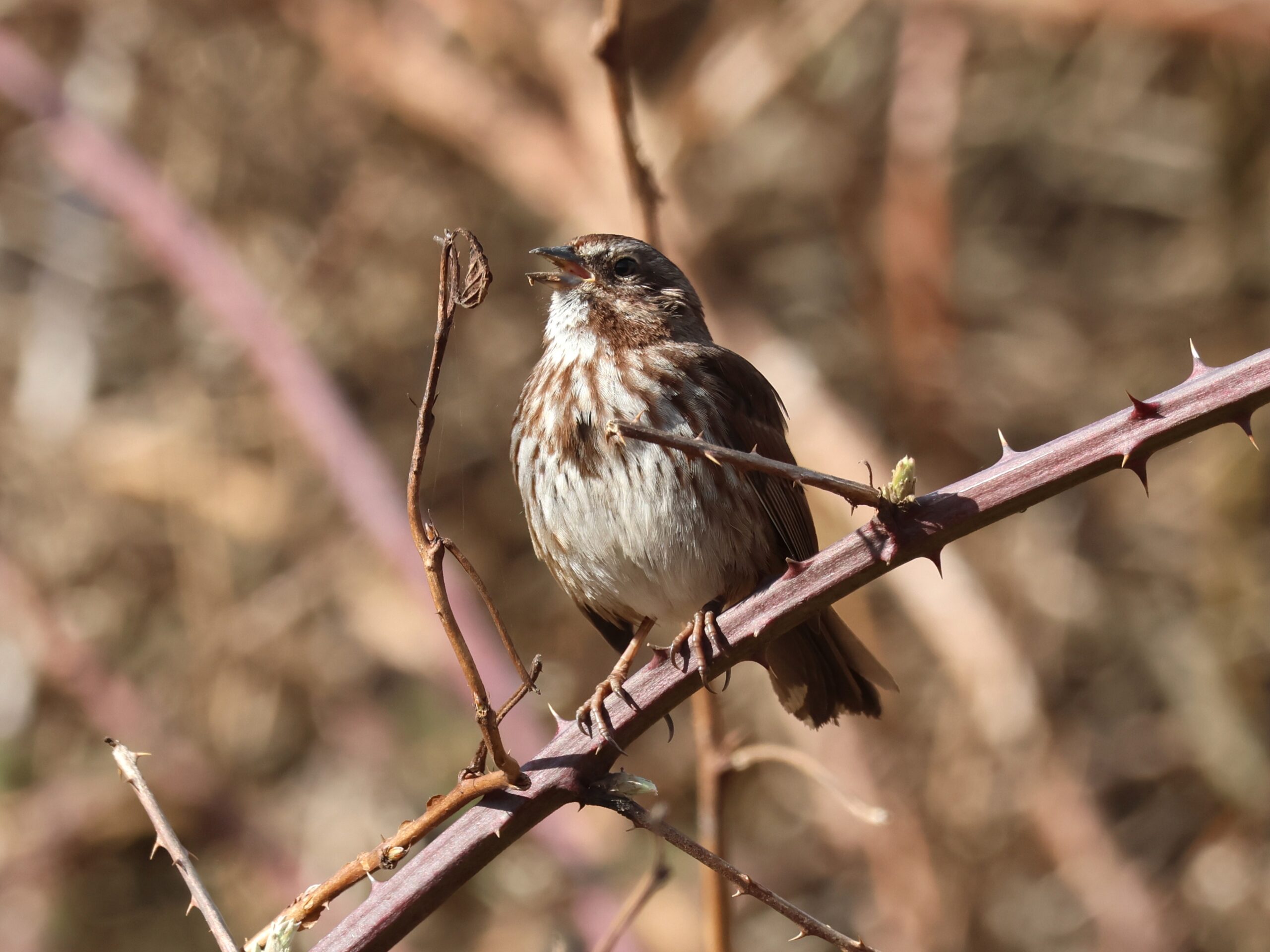
A Song Sparrow doing what they do
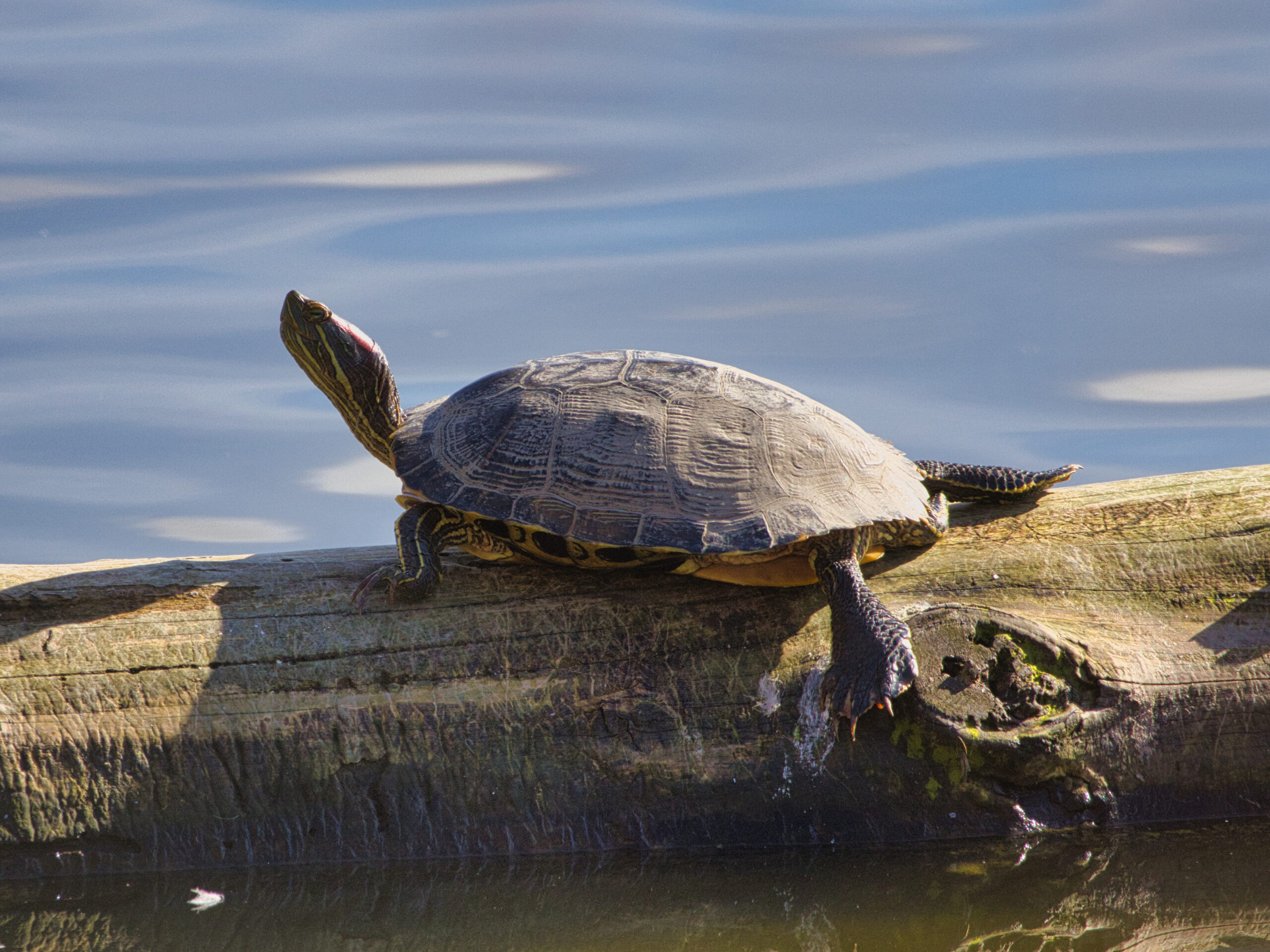
A western painted turtle, basking on the same log with some Common Mergansers (out of frame to the right)
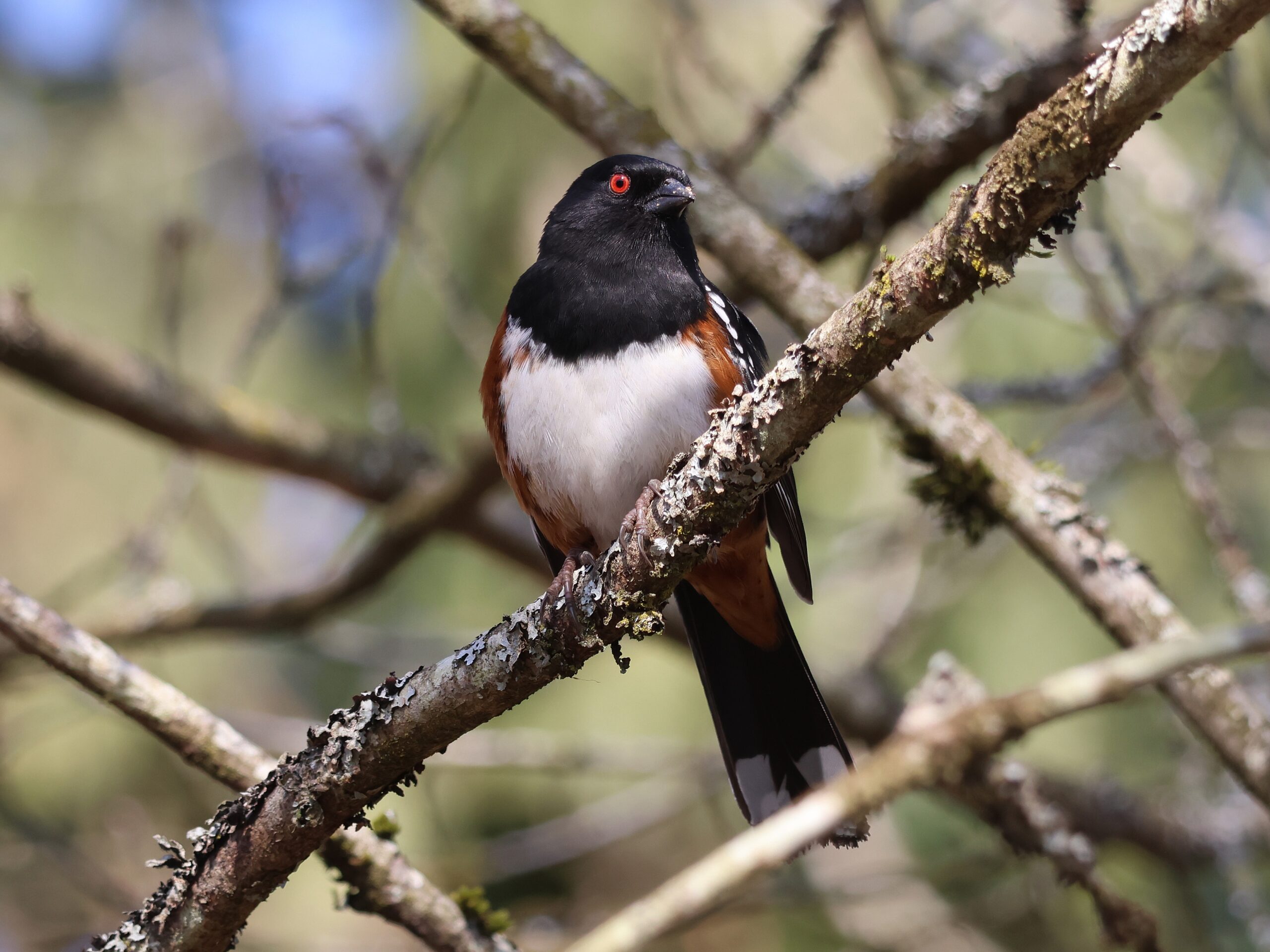
A Spotted Towhee, looking both serious and cray-cray
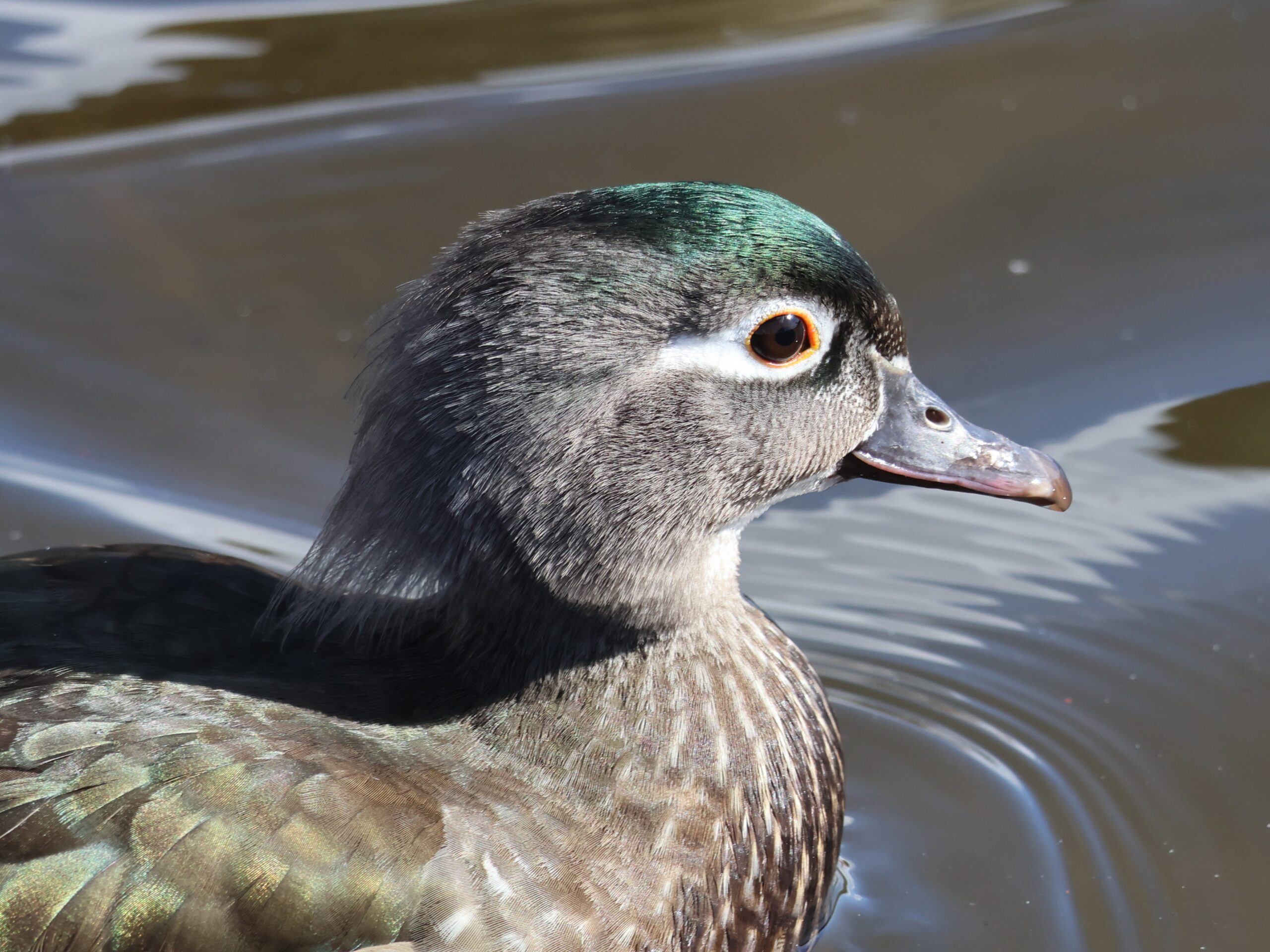
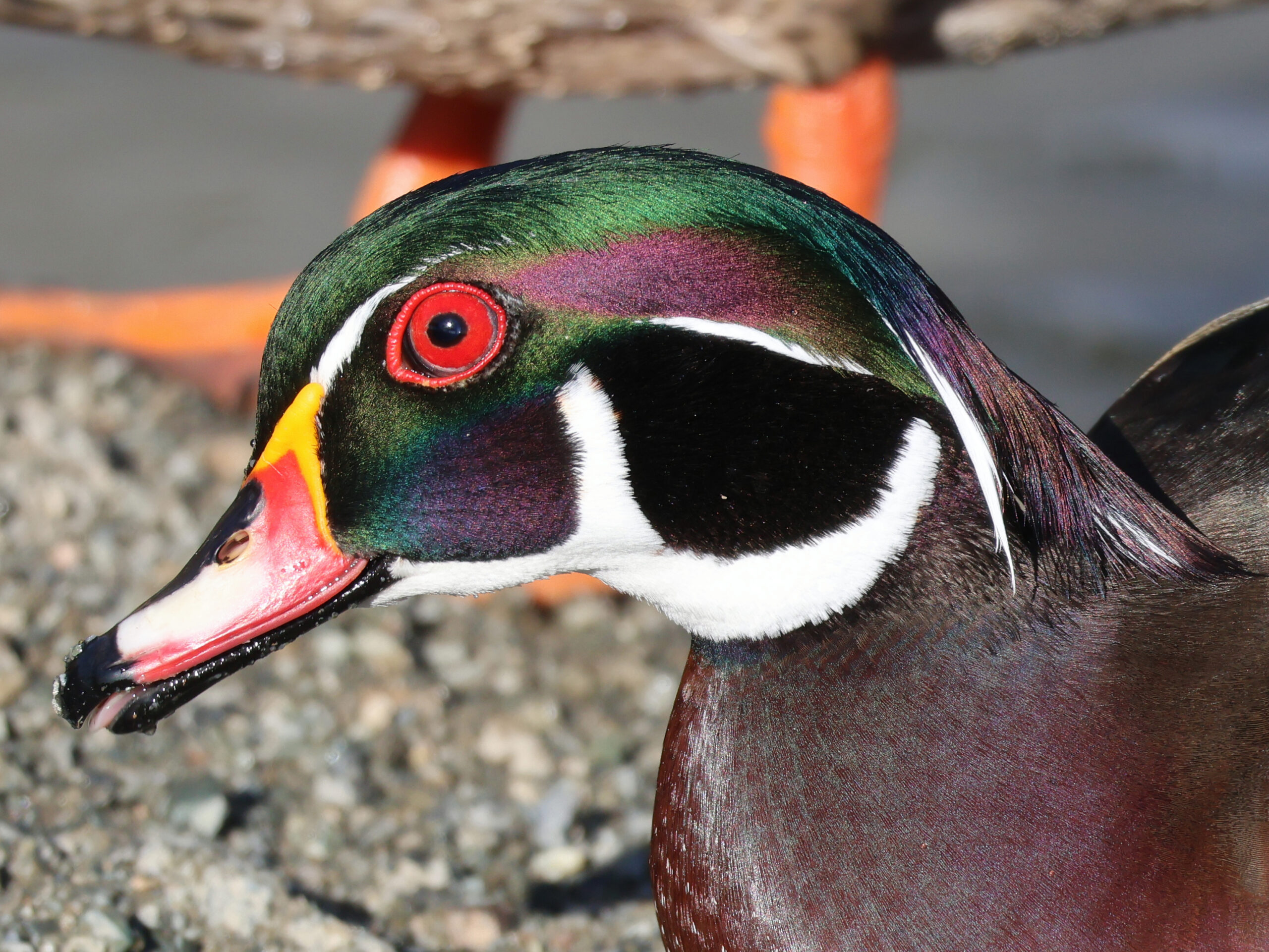
Male Wood Duck. "I'm ready for my extreme close-up."
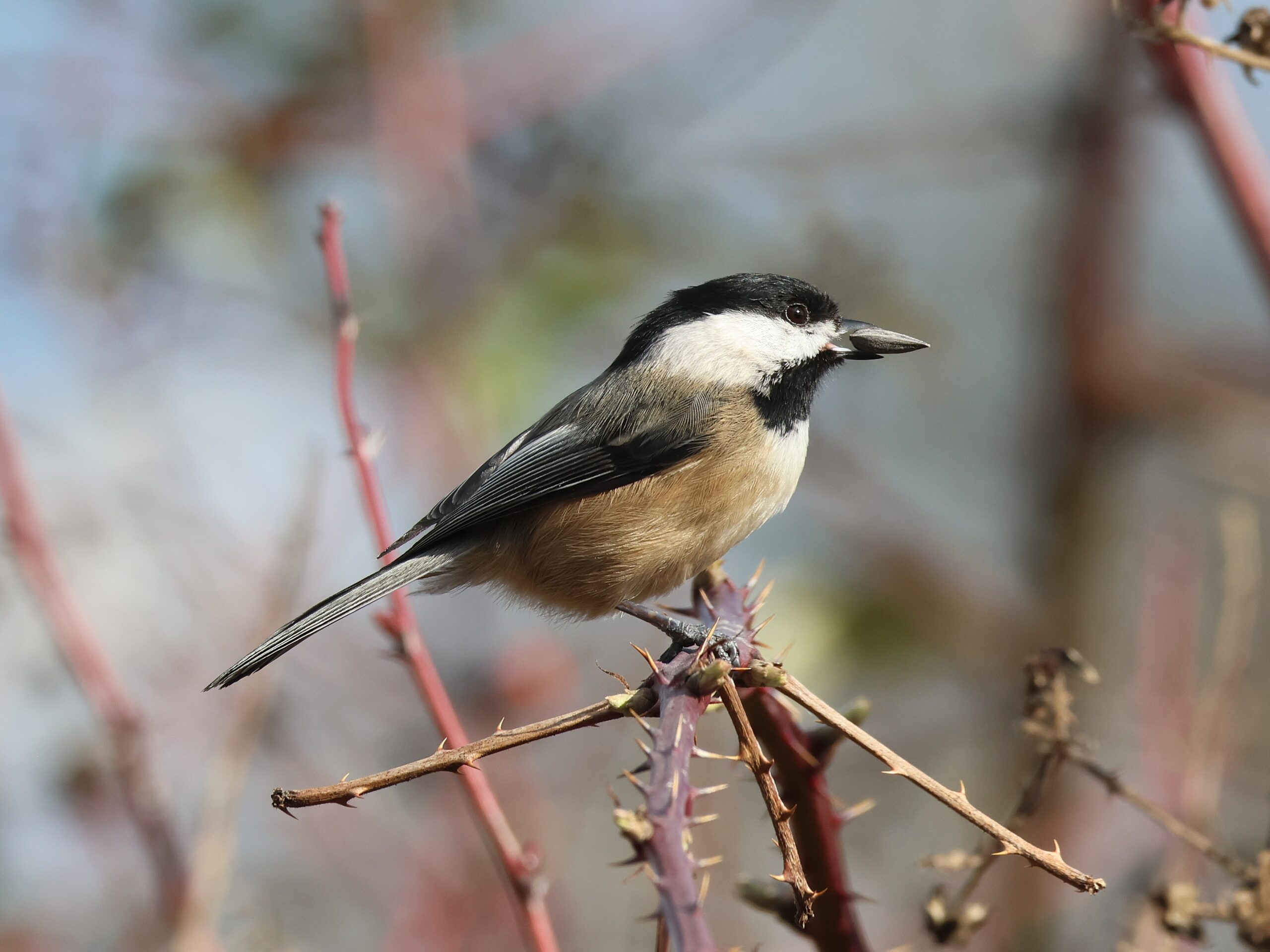
A Black-capped Chickadee nabs a sunflower seed, which would be like me running around clutching a watermelon in my teeth.
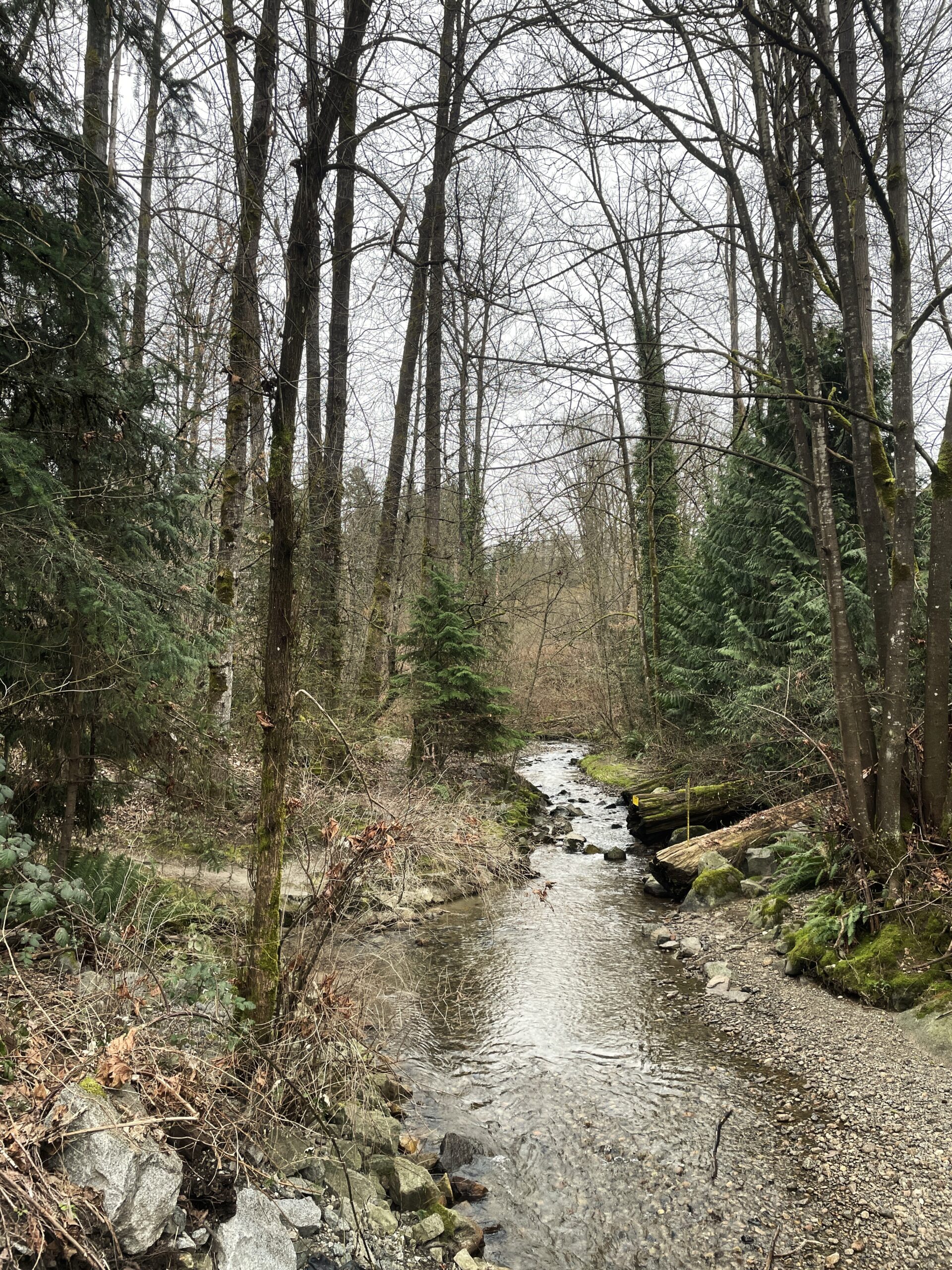
Stoney Creek, just a few steps north of the SkyTrain line:
A shopping cart under a bridge, with graffiti. I did a little post-processing to make it more dramatic. Yes, you read that right. A dramatic shopping cart.
Where: Iona Beach Regional Park, Richmond Nature House (Richmond), Burnaby Lake (Burnaby)
Weather: Sunny, 7-8°C
The forecast was better than expected, with it being sunny right from the start. Nice! The start was a bit late due to two things: waiting to suss out the weather in the early morning, and when I got downtown, we found someone had parked in front of the parking garage of Nic’s apartment building, preventing us from leaving. Nic was just about to conclude the call with the people who would come tow the car when a guy came frantically running toward us, waving an arm and apologizing. He got in the car and left immediately.
We proceeded to Iona Beach, which we haven’t been to since June of last year!
Iona Beach
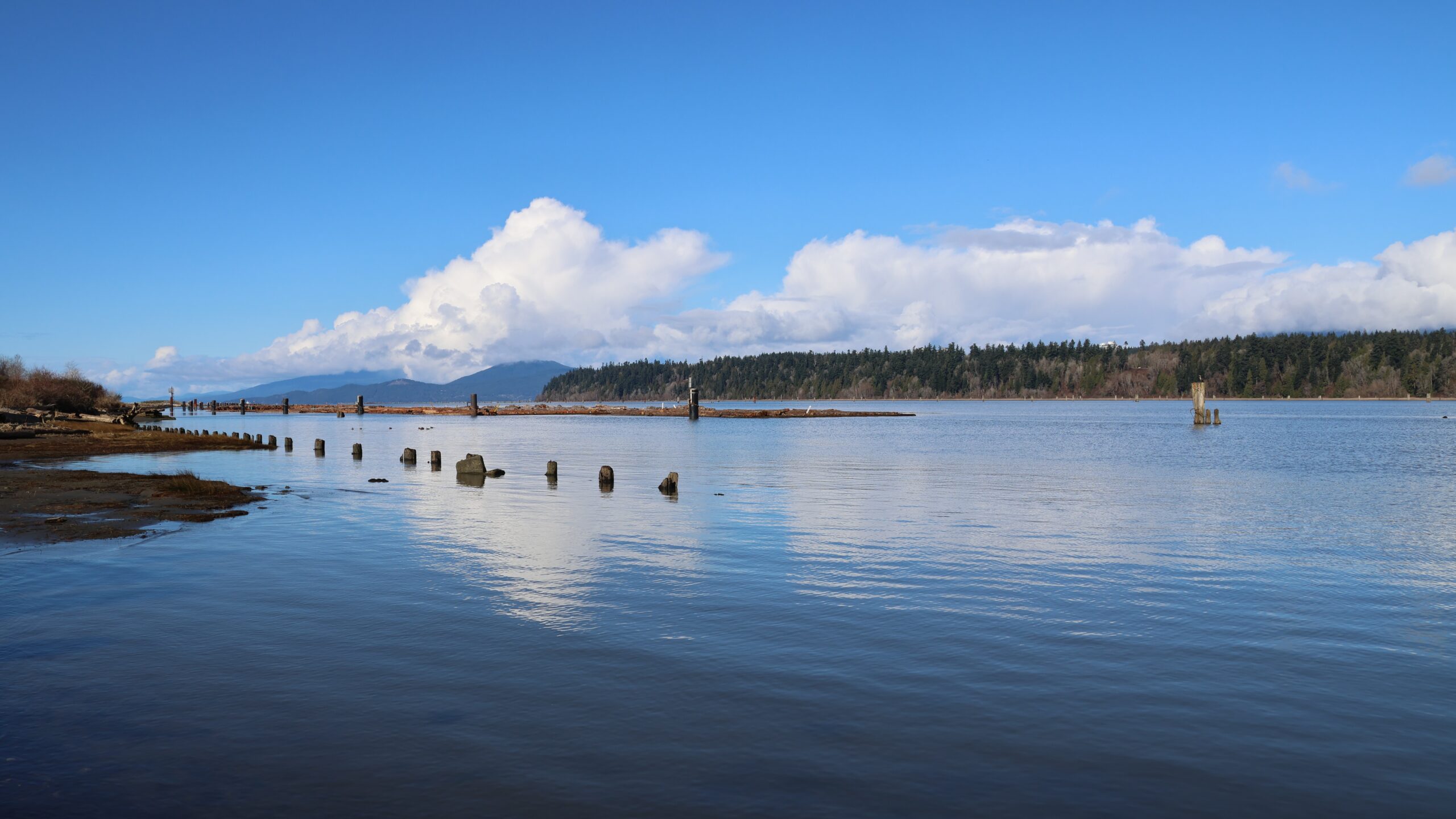
Looking across the Fraser River at Iona Beach.
The last stretch of road leading to the beach has been repaved, with new bike and pedestrian lanes added, completing the work started with the re-alignment last year of Ferguson Road. There is now full dedicated pedestrian and bike access stretching back to the airport, a huge improvement over what existed before.
We made our way through our usual loop and along the river saw a nice variety of waterfowl, including wigeons, common mergansers, a sunning cormorant and a couple of male buffleheads trying to impress a female. There was also a large congregation of gulls off in the distance. If we squinted our eyes, we could pretend they were snow geese, which we have yet to see this winter.
The main beach had a lot of ex-crabs, even more than usual. Maybe it was Crab Day.
In all, it was nice to be back at Iona Beach. I have no idea why we went over eight months between visits (as a birding duo–Nic has been more recently), but we’ll probably not wait another eight before returning.
Richmond Nature House
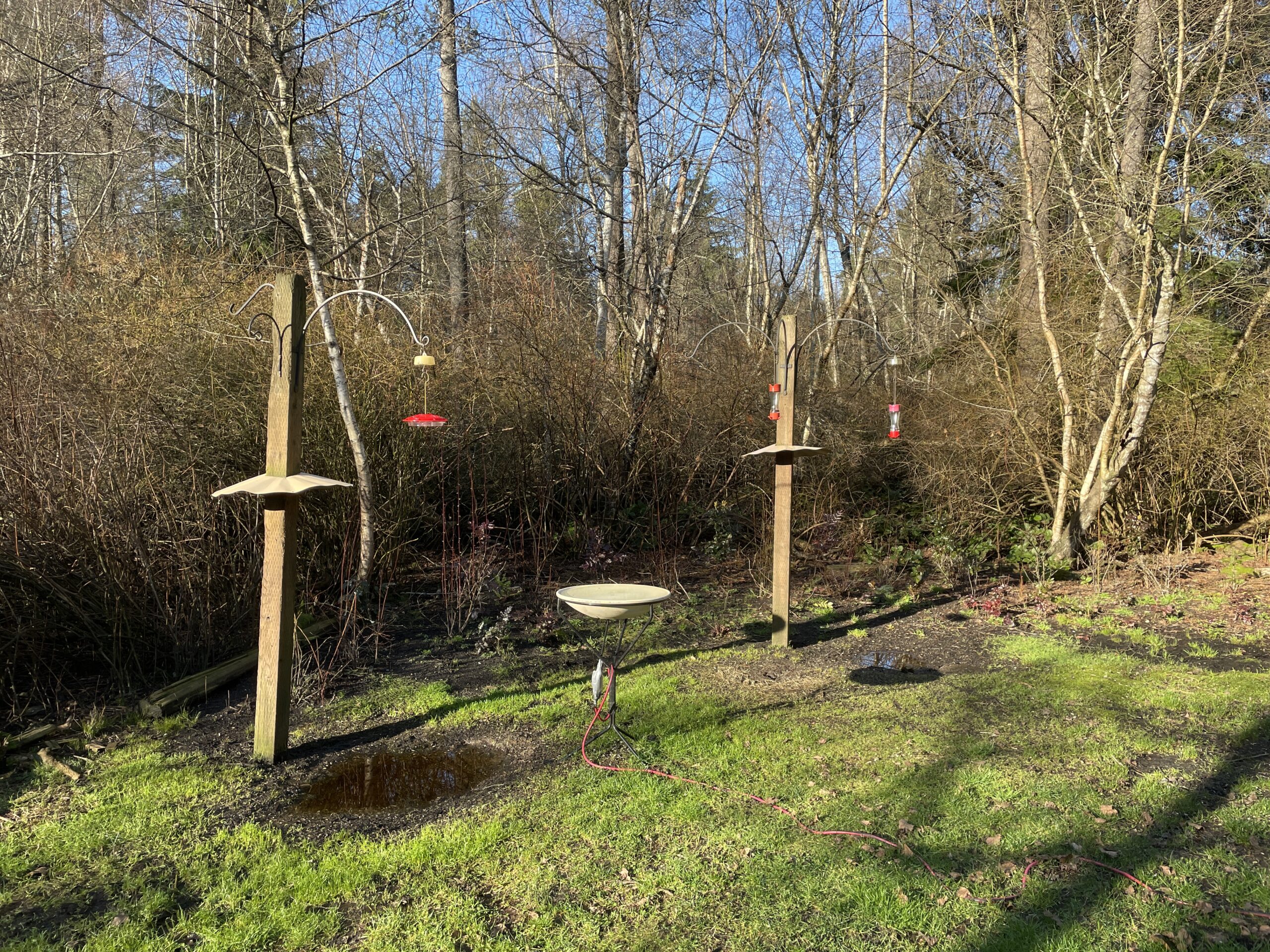
Emtpy feeders means no birds!
Nic has a new phone, a Pixel 10, and Google Maps was being rather odd, constantly telling us to make left turns. But then when it made sense to make a left turn (off Westminster Highway, to the nature house) it instead wanted us to go past it and make an illegal U-turn to get there. WTF, as the kids say.
After arriving, I joked that it would be funny if the bird feeders were empty.
The bird feeders were empty.
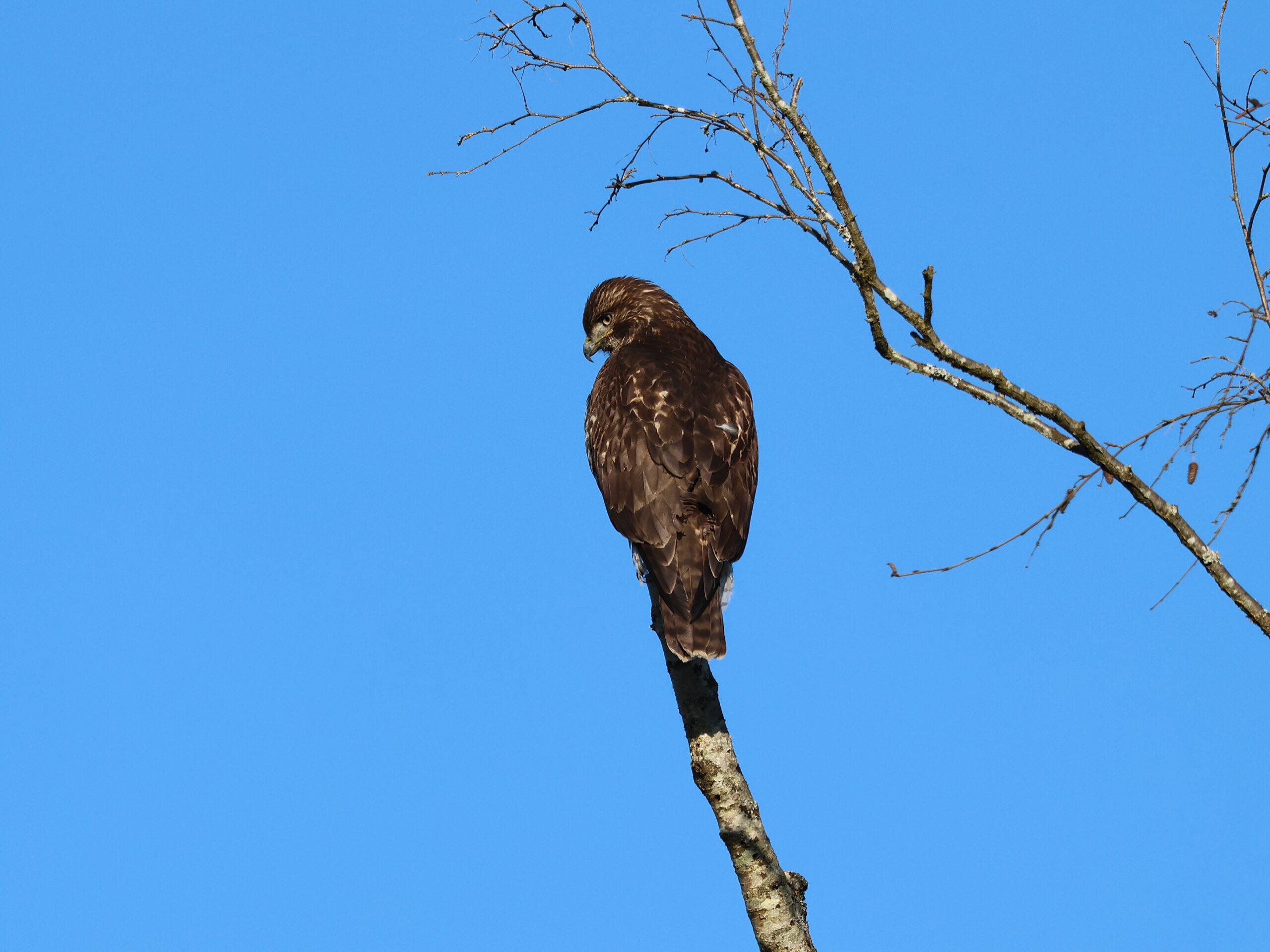
The trip wasn’t a complete bust, though, as Nic spotted an immature Red-tailed Hawk sitting up in a nearby tree. That, and an Anna’s Hummingbird that was very high up before mockingly flying away, were the only birds we saw.
Piper Spit, Burnaby Lake
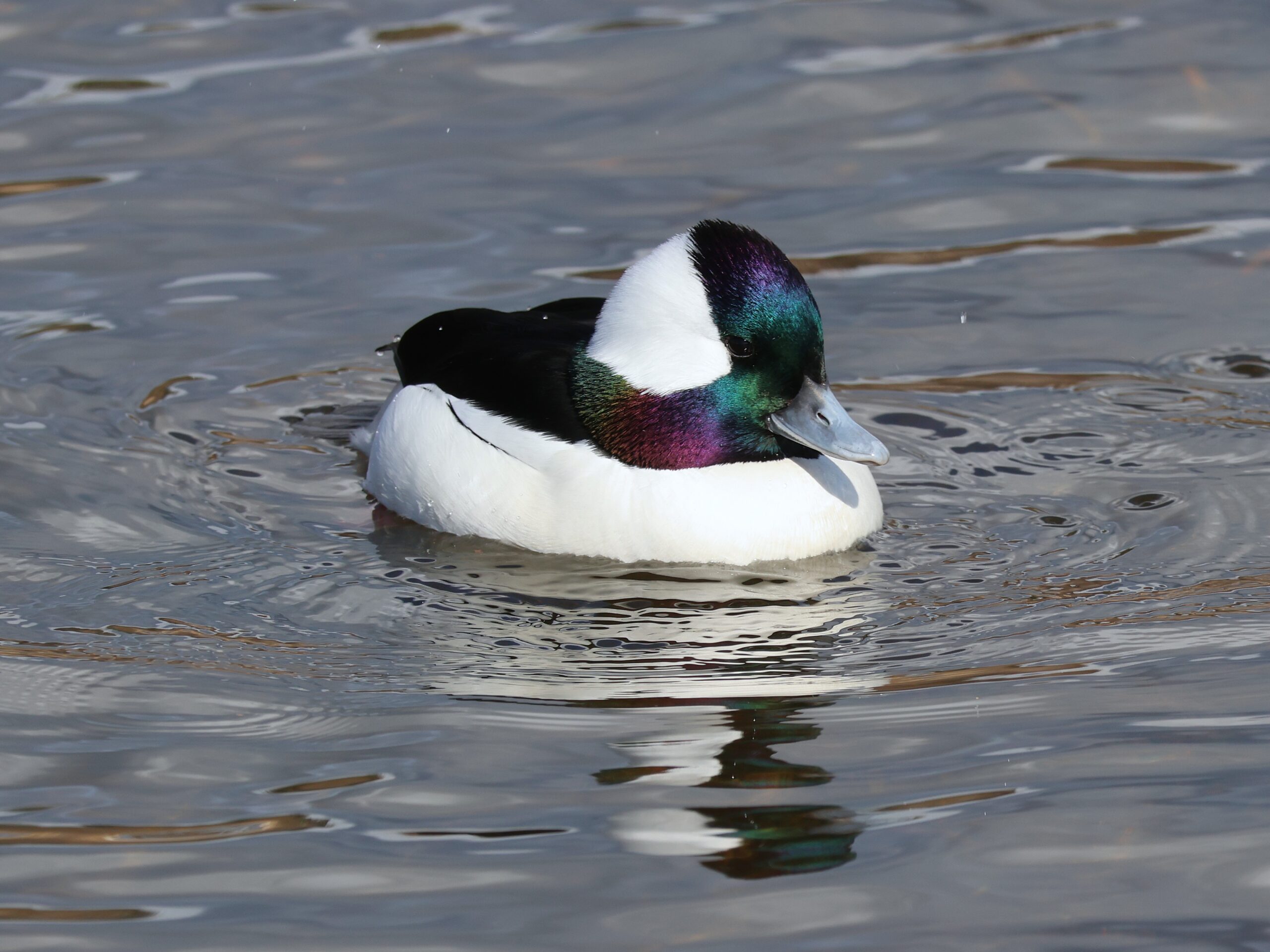
A handsome Bufflehead at Piper Spit.
Piper Spit was our last stop, with the light starting to turn golden. There were multiple people feeding the birds. I’m usually pretty chill about this, because people gonna people, but I somehow got triggered by a little girl repeatedly running (and screaming) at the ducks while the nearby adults with her just stood there, talking among themselves. I expressed my thoughts using words that could be heard in a generous perimeter, if you know what I mean (no colourful metaphors, though, except maybe a few shared with Nic as we left).
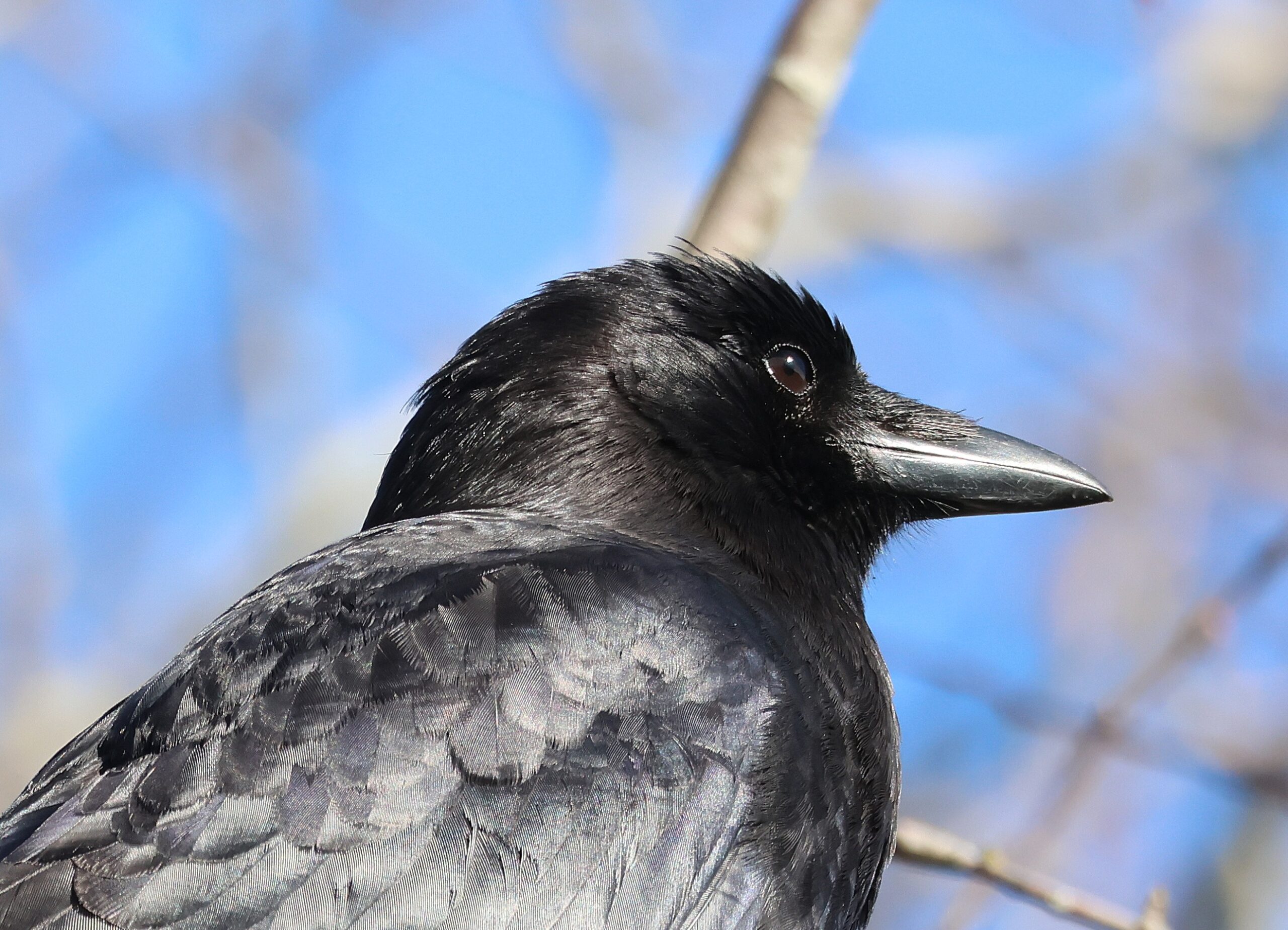
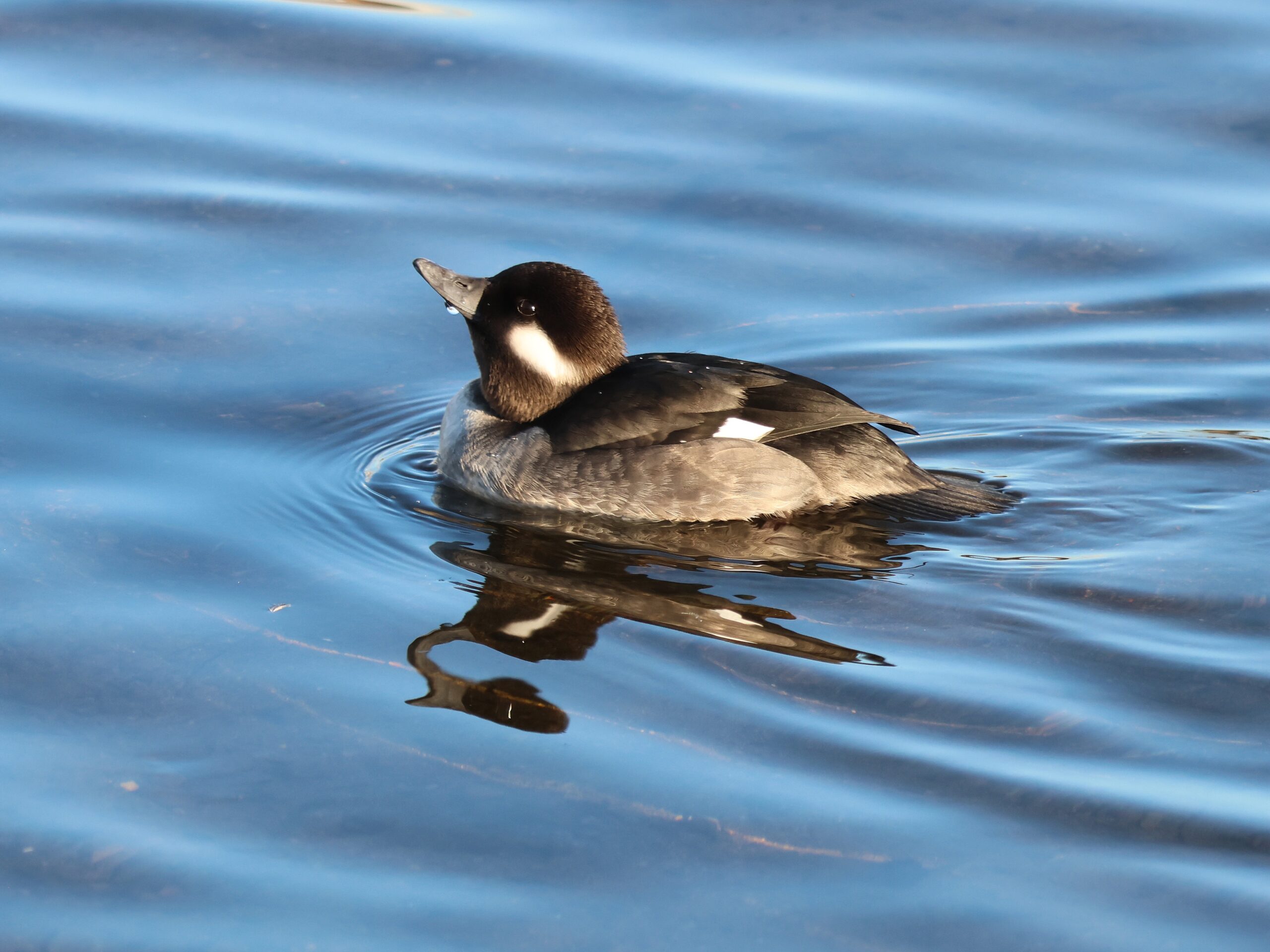
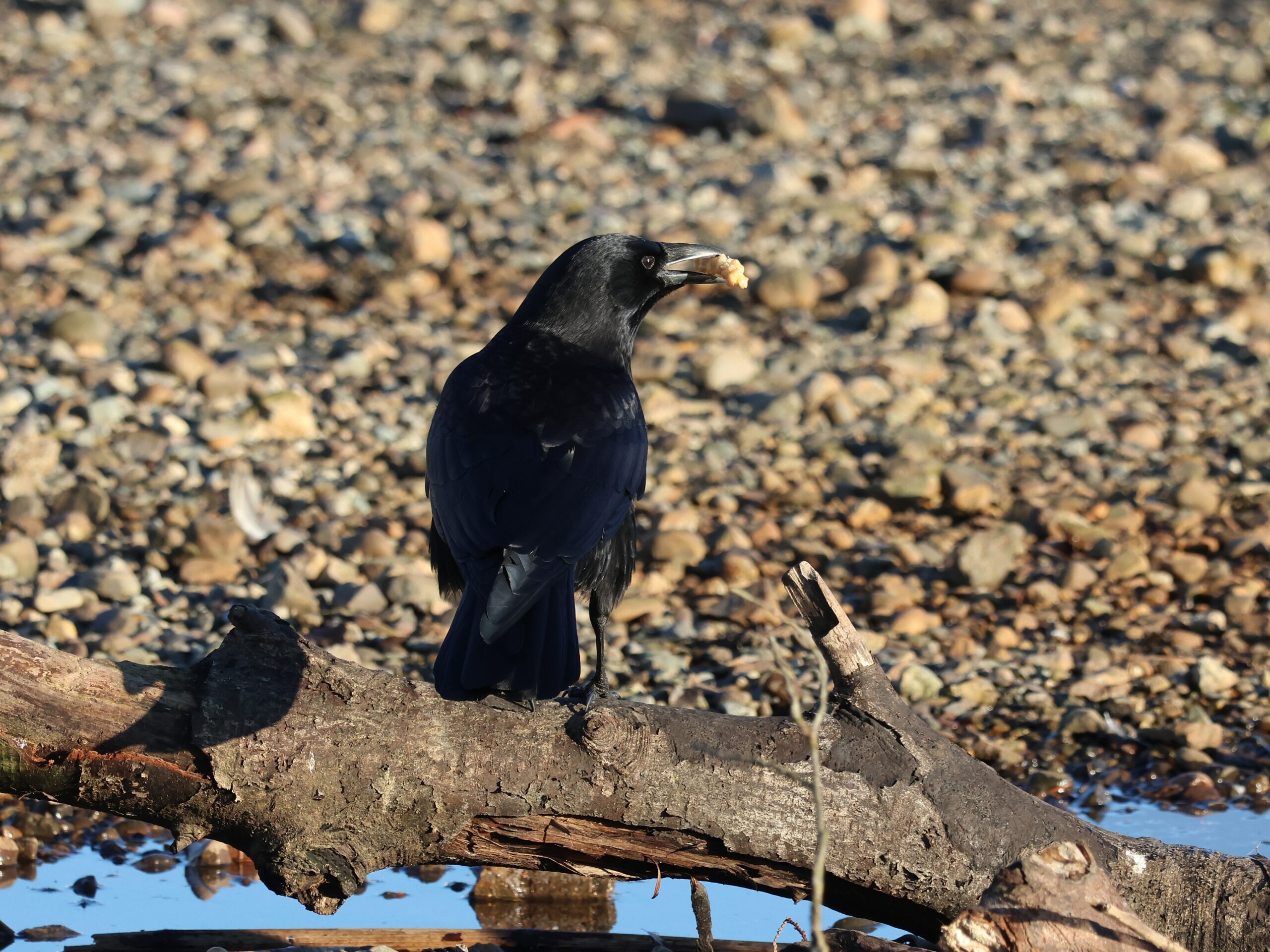
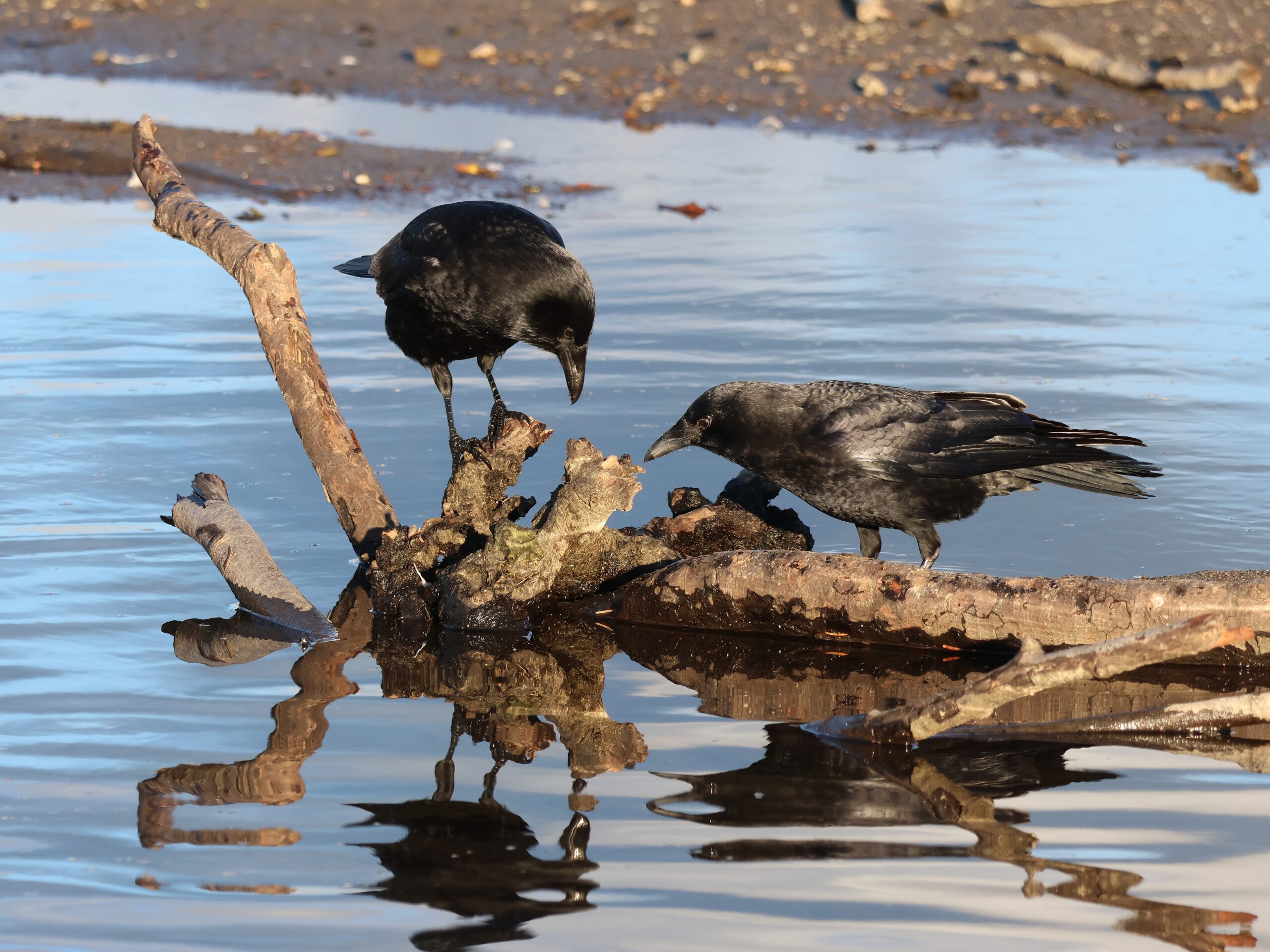
As for the (well-fed) birds, there were most of the usual gang, along with more Buffleheads, who obligingly came up close, allowing for some great shots of their fuzzy, iridescent heads. Perhaps distracted by food, I observed little drama, though one crow had what appeared to be a generous chunk of pastry in its beak that was being coveted by others.
There were a few dowitchers, but they were mostly in shadow by this time of the day. I mostly shot the Buffleheads.
Overall, a pretty good day, with the weather being much nicer than expected. We’ll get back to Reifel eventually.
The Shots
Shot with a Canon EOS R7 with 18-150 mm kit lens and 100-400 mm telephoto.
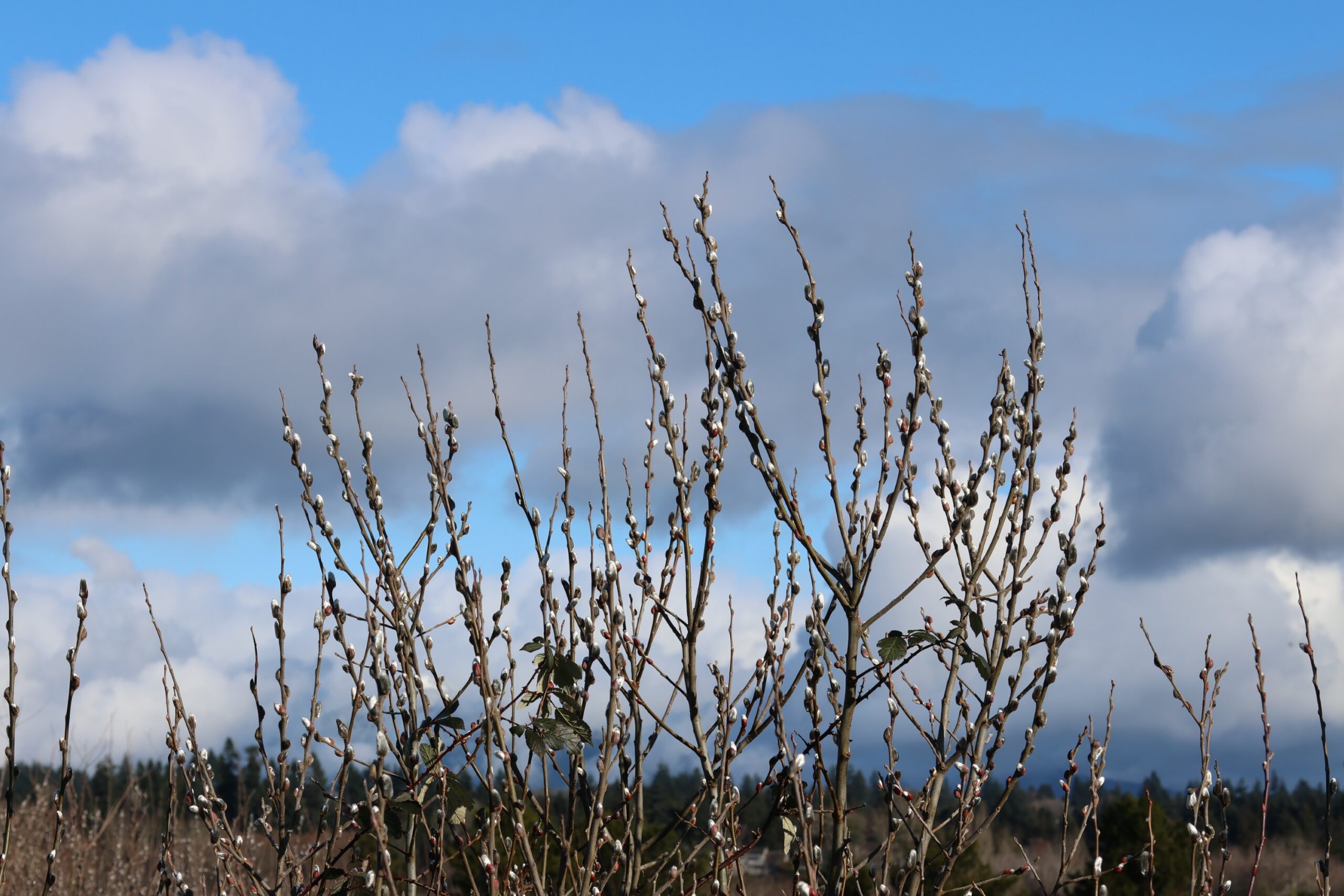
Budding willows at Iona Beach
Looking down the Fraser River
Another shot of the Fraser River, looking west
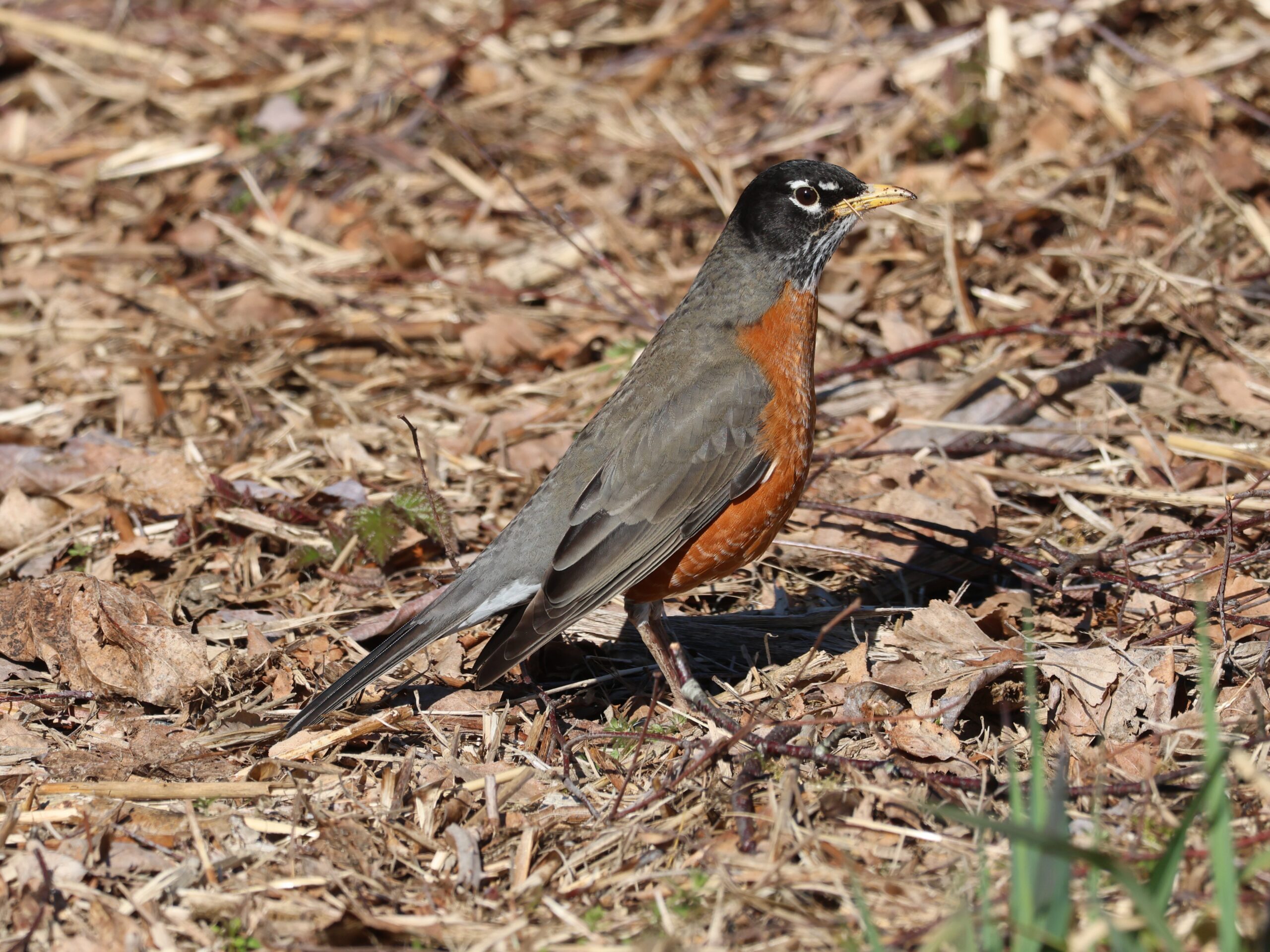
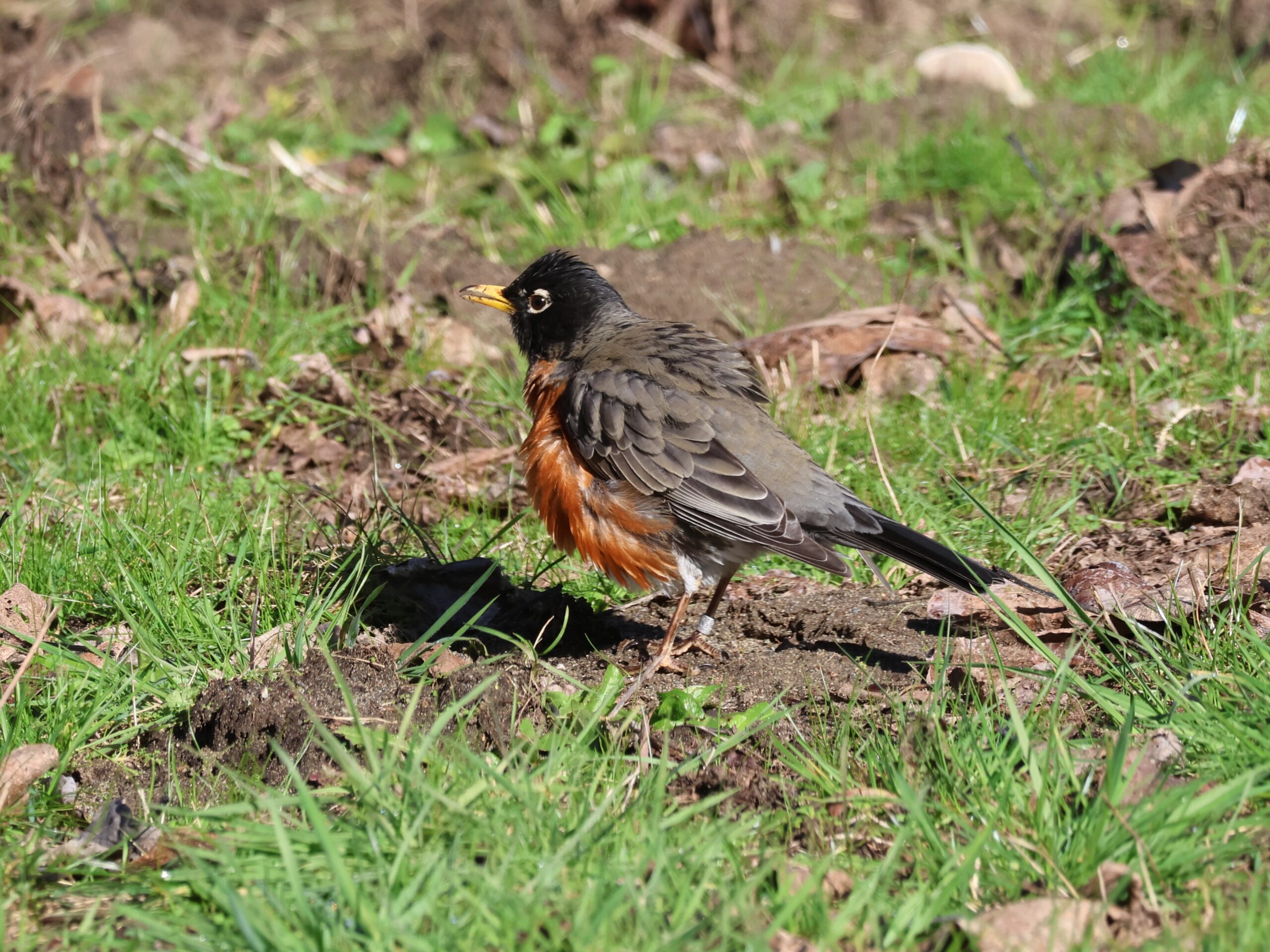
A poofed-out American Robin
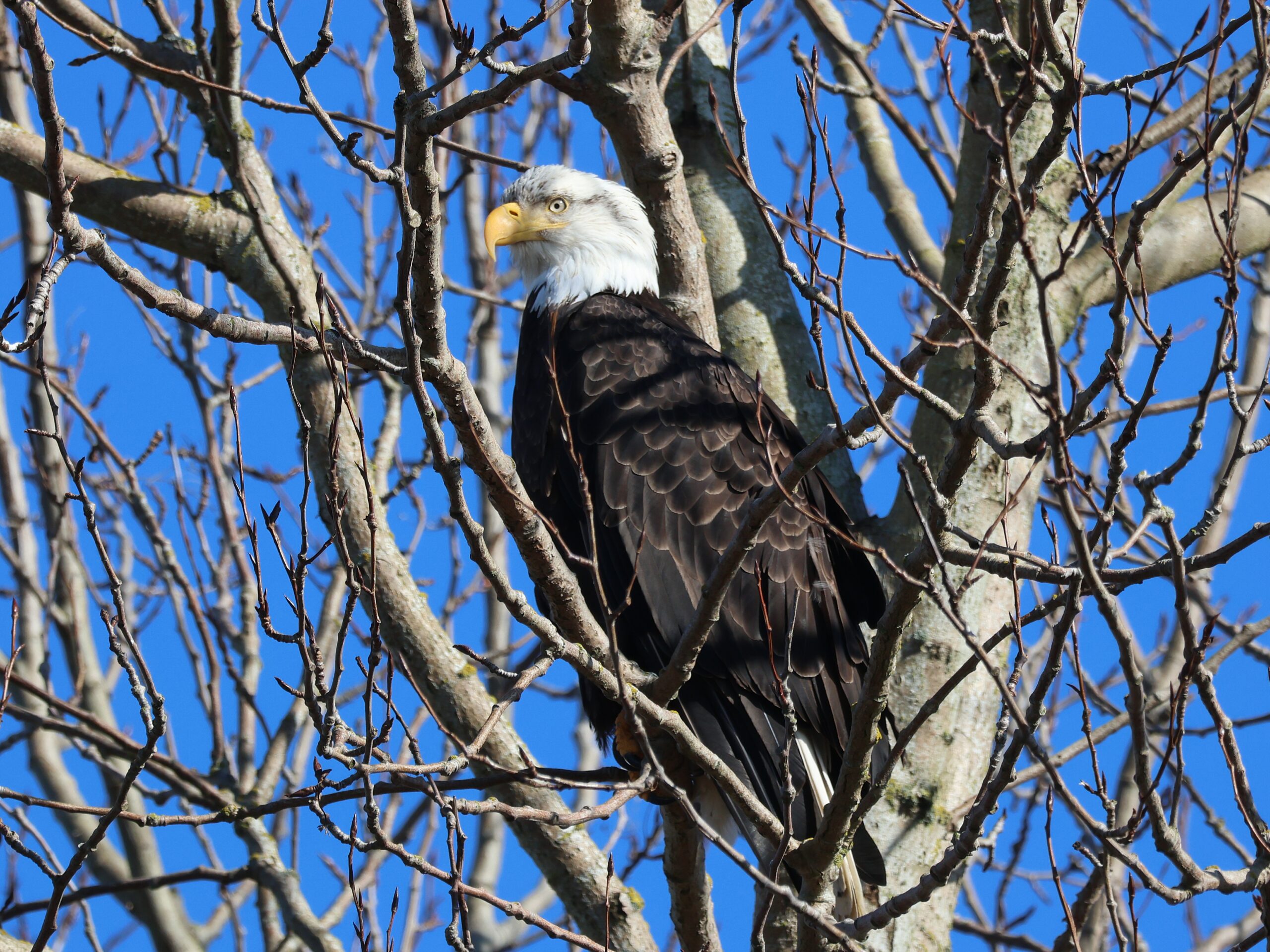
A Bald Eagle looking over the North Jetty at Iona Beach
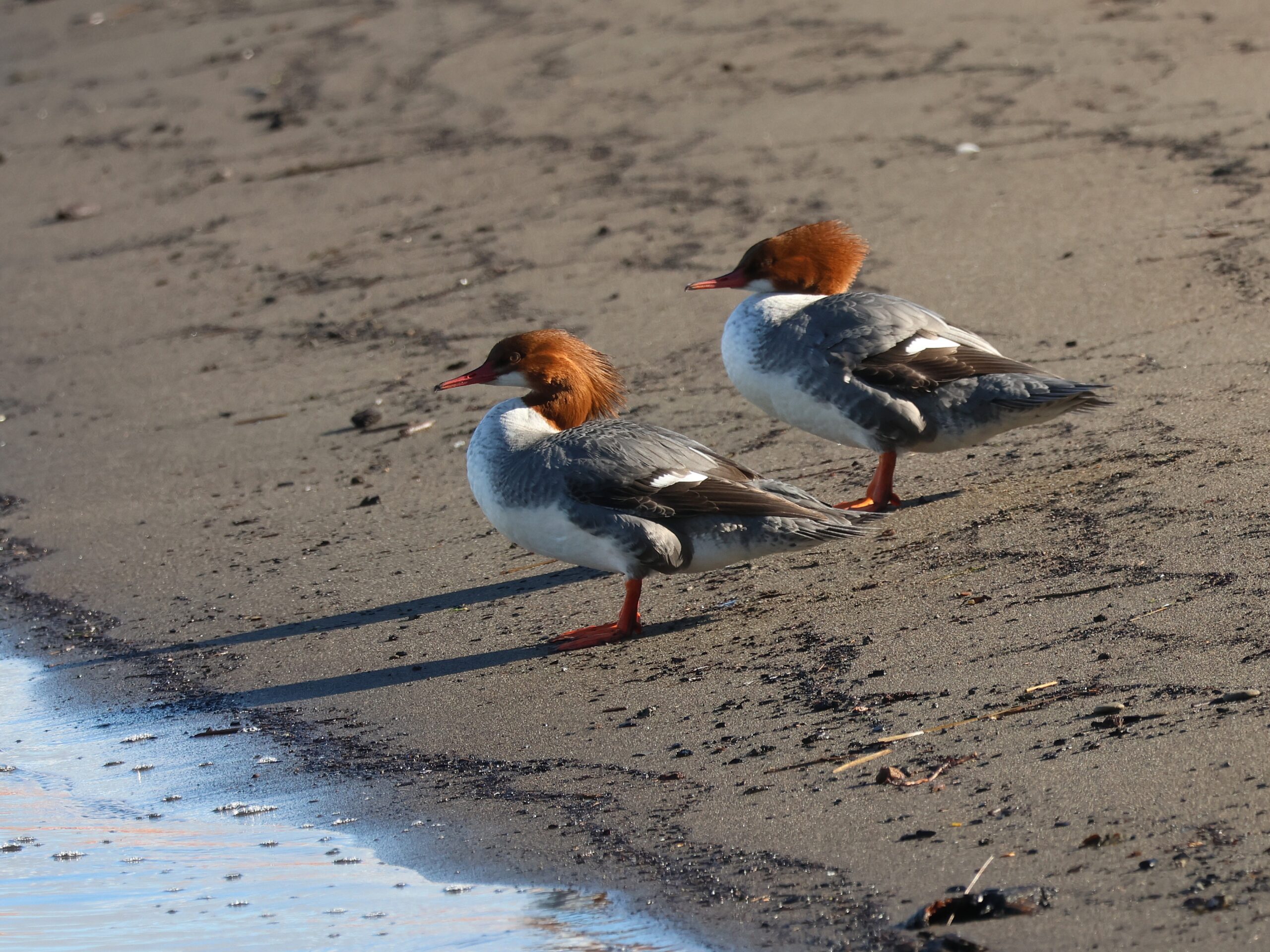
A pair of Common Mergansers on the beach
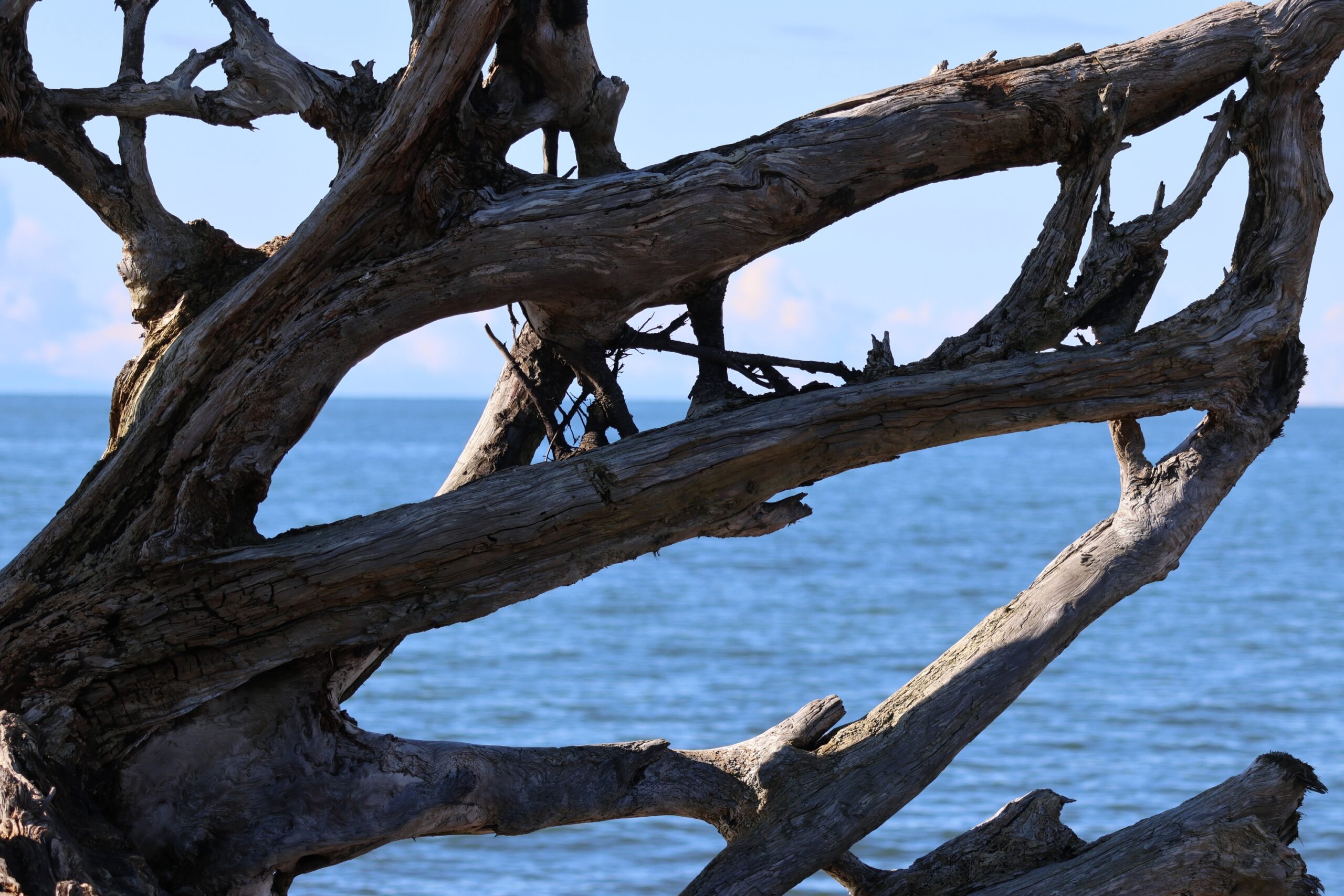
Driftwood at Iona Beach
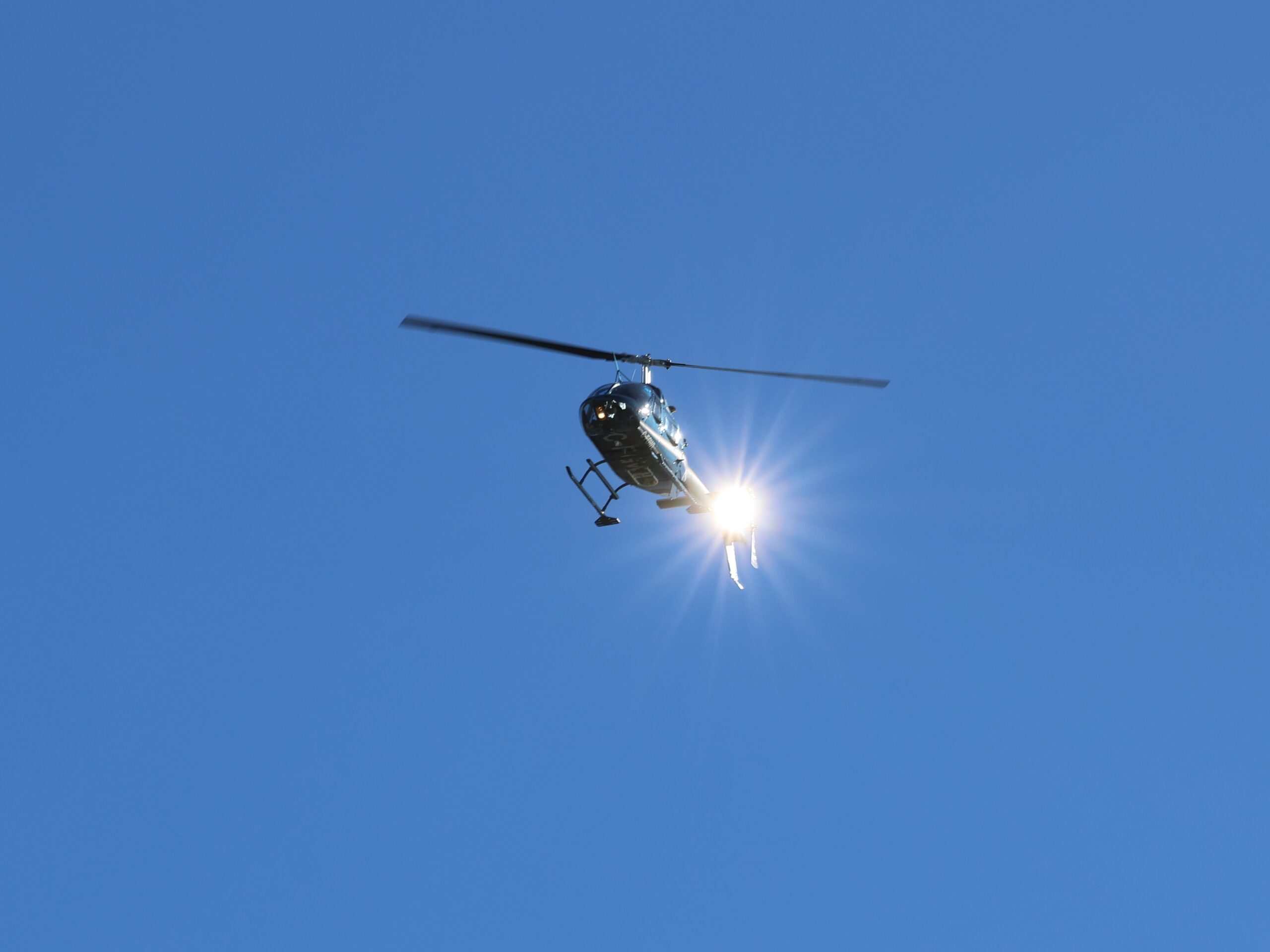
Chopper glare over Iona Beach
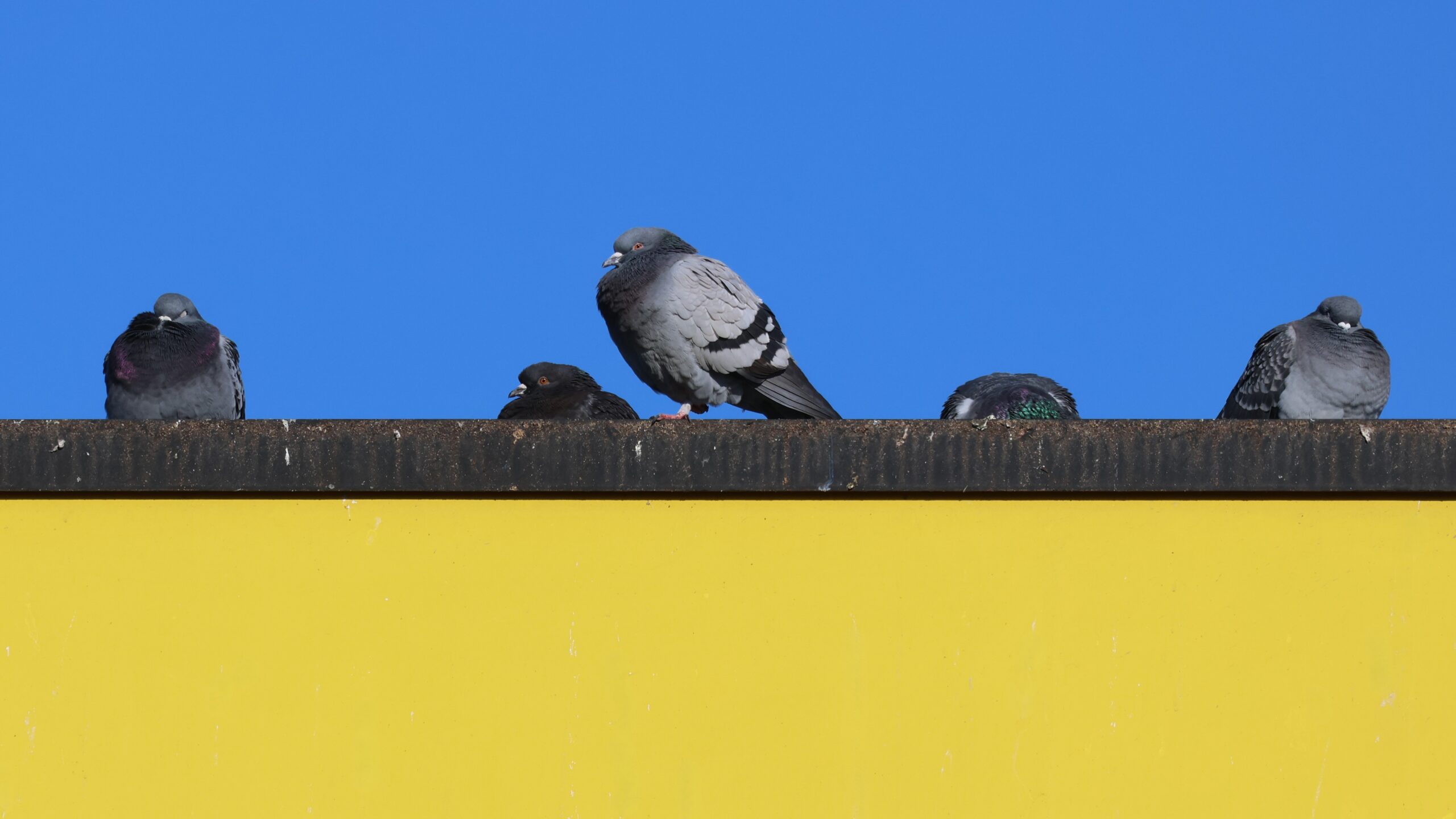
Pigeons snoozing on a sign
Empty feeders at Richmond Nature House
An immature Red-tailed Hawk, wondering where the birds went at Richmond Nature House
Female Bufflehead after taking a sip of water
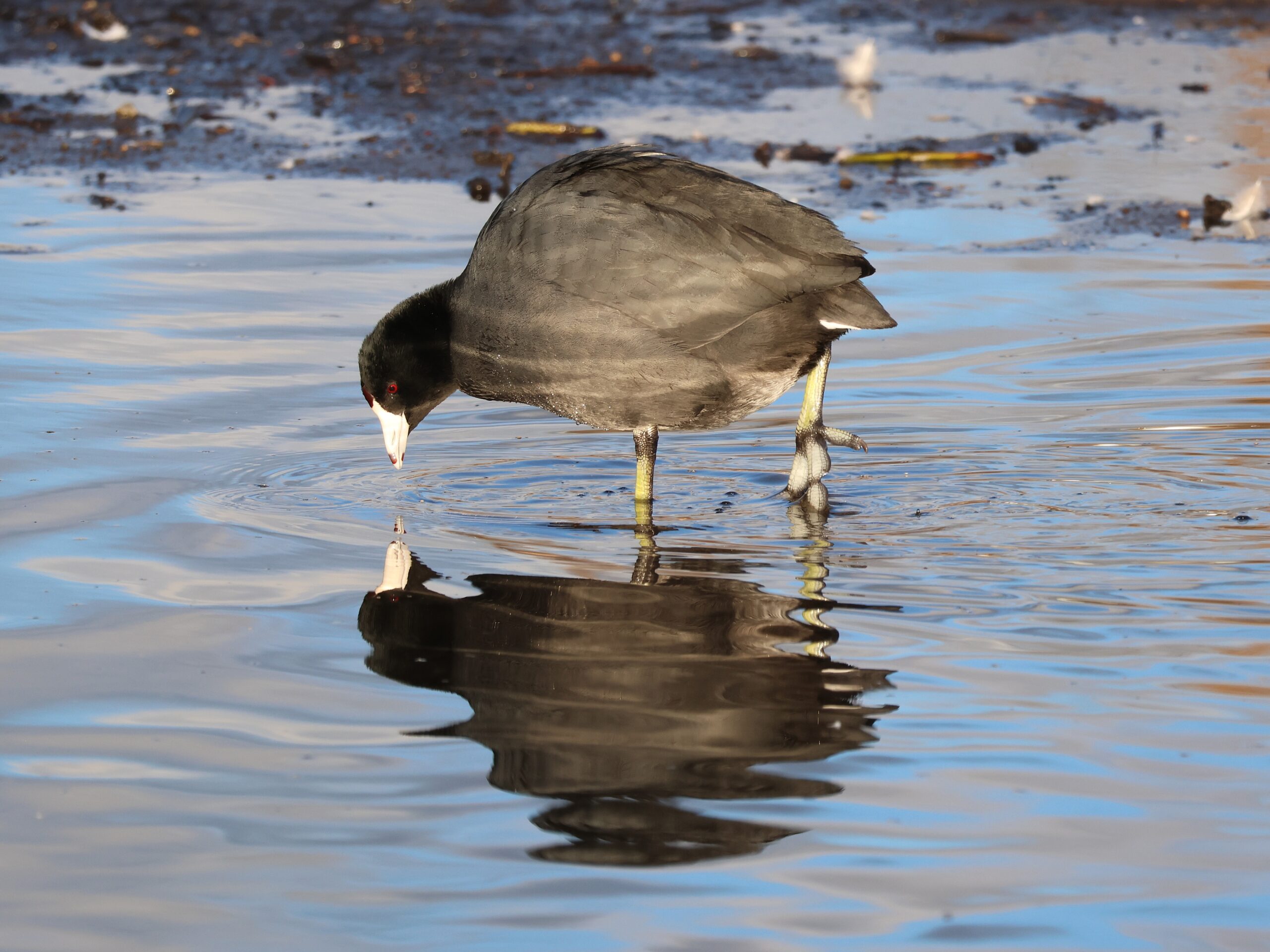
American Coot pondering itself
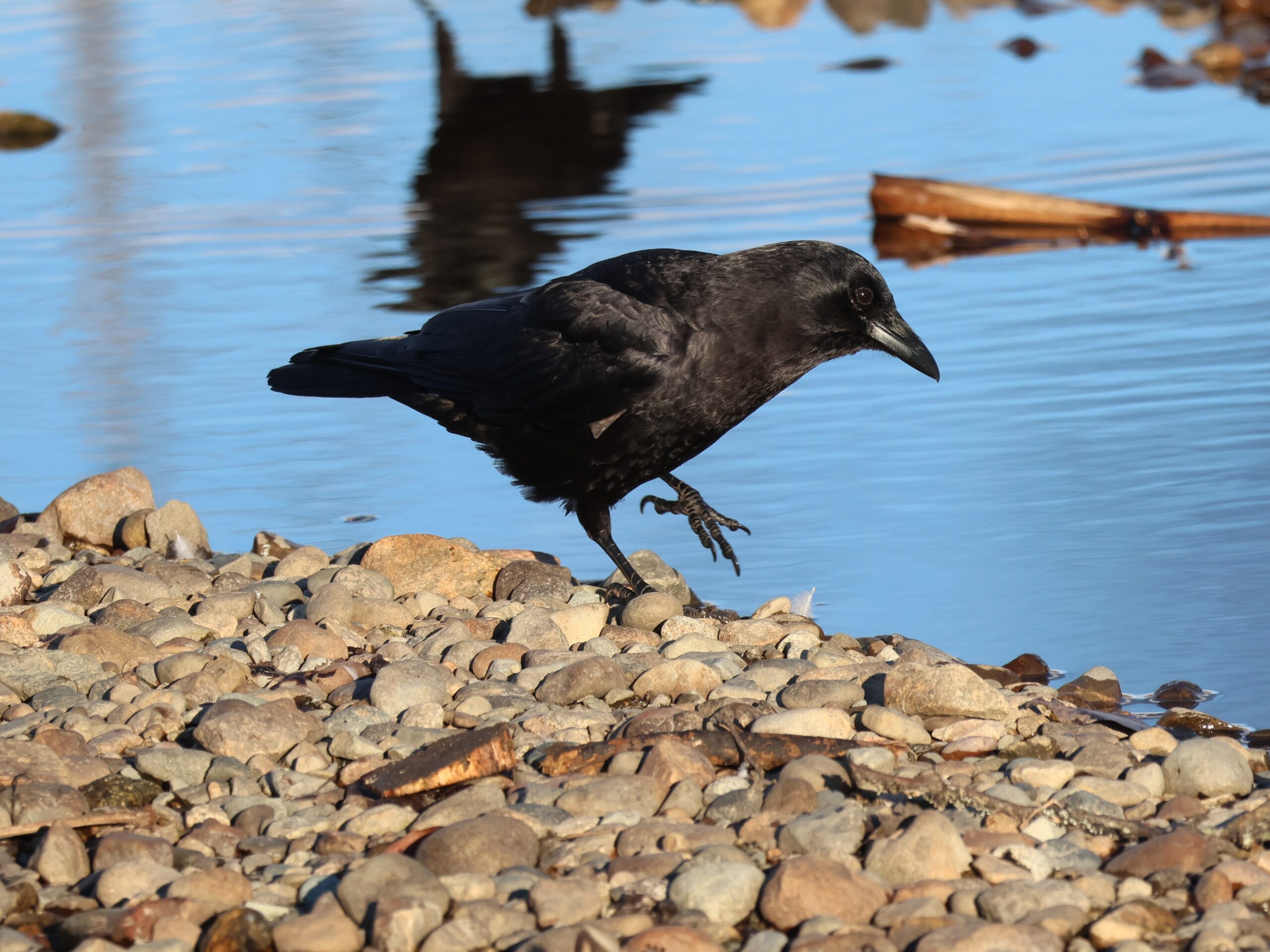
A crow in mod-step at Piper Spit
A crow, proudly displaying the pastry (?) it found
I was going to post these shots yesterday, but because I had a terrible sleep the night before, then somehow decided it was a good idea to walk 29,000+ steps the next day, I fell asleep instead.
Here they are, using FooGallery’s adorably kitschy Polaroid theme.
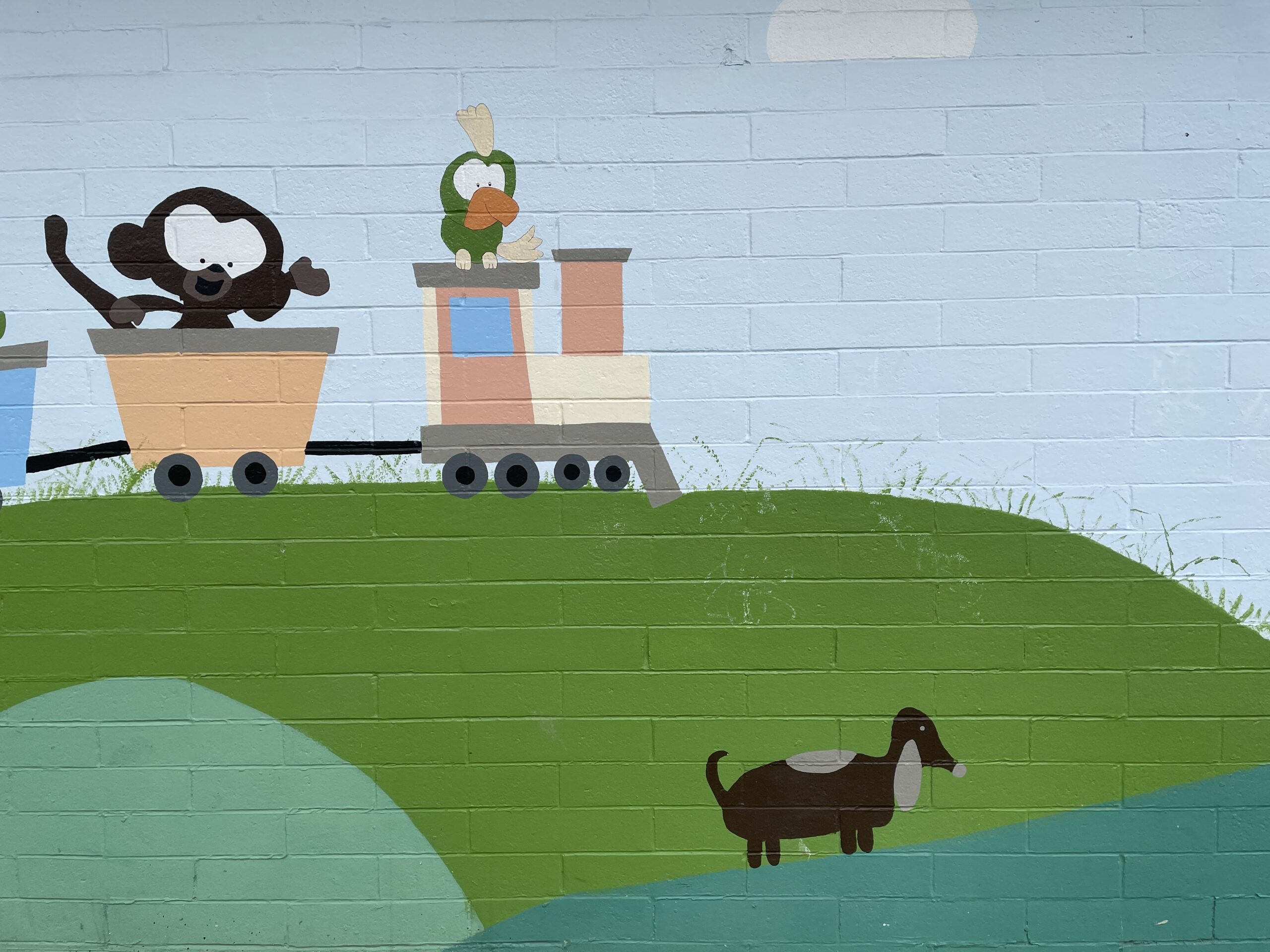
I meant to post this the other day, this is art on the side of a building housing a daycare centre. The wiener dog1Yes, I know they are Dachsunds. They will always be wiener dogs to me. looks very sad, maybe because the other animals are riding a train and it has to walk on its stubby li’l legs.