Done using the basic round brush and studio pen.
I decided to add the face kind of at the last minute. It’s happy candy corn.

#makingarteveryday

Done using the basic round brush and studio pen.
I decided to add the face kind of at the last minute. It’s happy candy corn.
#makingarteveryday
This one was weird. I had reference photos ready but just used the brush pen in Procreate to draw the rough shape of a donut, then started adding colors and using the smudge tool to lightly blend everything together. I then added sprinkles.
I realized the color of the donut was off–it almost looked uncooked. Grossbuckets. I then used alpha lock to try painting over with a more golden brown, but finding the exact shade proved difficult. I then tried playing around with all the different layer options and discovered that choosing Difference resulted in the tan-colored donut becoming a dark, more chocolate-like donut, so I fiddled a bit more and while it’s not great, it was interesting to experiment and find a way to get closer to what I wanted without starting over.
First, the dark donut:

And the yet-to-be-baked donut:

#makingarteveryday
I had shading and stuff on this originally, but I got so fed up with how it looked that I removed all of it. Then I looked at the new version and hated it more, so I brought the shading back, but simplified it, and added a thin black outline, which I had originally skipped. Art!
I did spend a lot of time playing around with alpha lock, which will help in the future.

#makingarteveryday
H.P. Lovecraft’s at the Mountains of Madness, Volume 2 by Gou Tanabe
My rating: 4 of 5 stars
The concluding volume follows Professor Dyer and Danforth as they fly out to the ancient ruins, to discover the fate of Gedney, the still-missing expedition member, and to explore the remains of a long-dead civilization.
This is where things get weird and Tanabe does a great job with the illustrations, constructing the baffling, maze-like remains of the Old Ones’ sprawling city in grand detail. Staying faithful to the story, Dyer and Danforth come across the giant albino penguins and…other things.
All visual adaptations of Lovecraft must grapple with the same dilemma–how do you illustrate things that, per the prose, will drive people mad merely be seeing them? Tanabe does this in two ways–the first is by depicting the shoggoths as so physically weird that it’s difficult to tell what they are, other than organic, immense and heading straight for you. In the second way, Tanabe allows the reader–equipped with his hundreds of illustrations of the labyrinthine ruins as background–to imagine what drives Danforth mad, with no description offered. And it works.
Highly recommended, particularly for those who have already read the story. This is a great adaptation and short of the seemingly ill-fated Guillermo Del Toro film, may be the best we will see.
View all my reviews
I made a bunch of cookies and hated them all. Then I made this one and stamped it three times and declared myself done.
I don’t like it, but I don’t hate it.

#makingarteveryday
I spent a lot of time on the ice cream scoop, using different brushes, blending and generally trying to get some decent shading/painterly look to the thing. I gave up and went with the ultra-simple cone you see below.
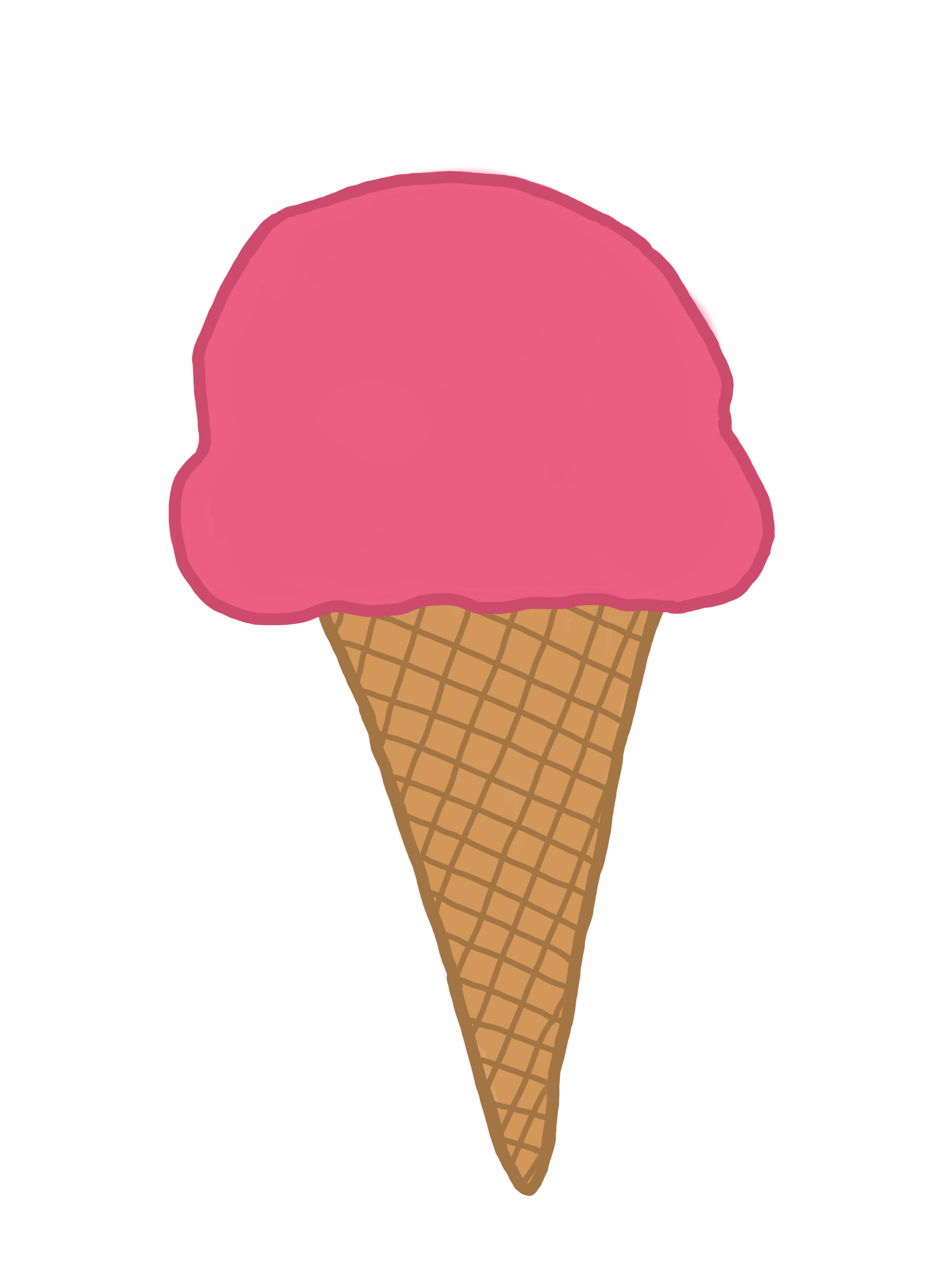
This turned out a lot different than what I was originally going for (a kind of watercolor effect) but it’s still okay.
#makingarteveryday
A day late as I was out testing my sore foot and taking pictures of demonic squirrels (demonic squirrel pics will be posted soon).
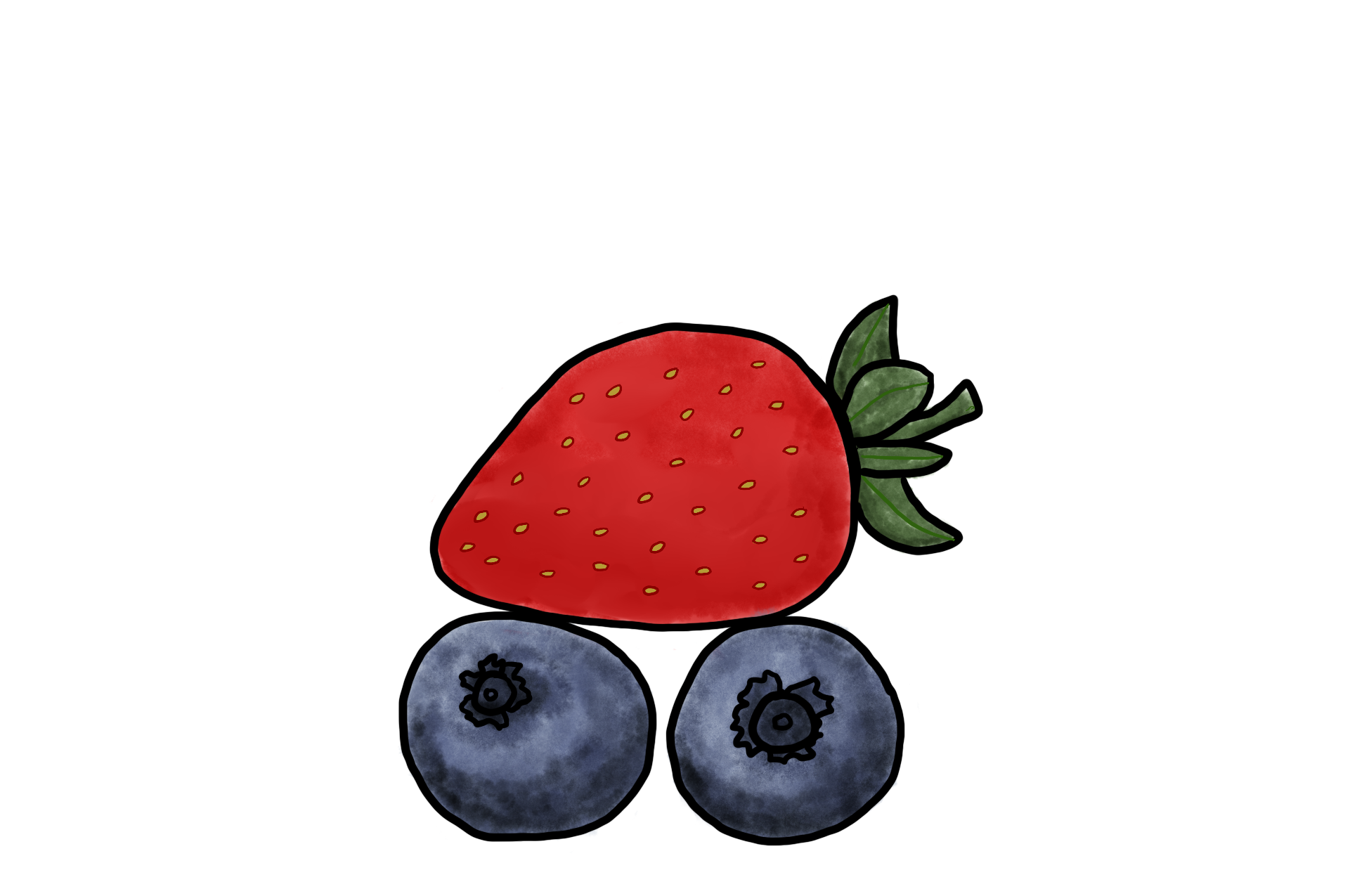
I used reference that had a lot more berries in it than what you see below, but I like the way this looks like some kind of weird fruitmobile.
I experimented with the water brush in Procreate. Looking at it now, the shading on the strawberry is a bit too subtle, but look at dem seeds.
#makingarteveryday
H.P. Lovecraft’s at the Mountains of Madness, Volume 1 by Gou Tanabe
My rating: 4 of 5 stars
This is an excellent adaptation of Lovecraft’s classic tale, with artist and writer Gou Tanabe providing exquisite black and white illustrations depicting the doomed expedition to the Antarctic, done in a realistic Manga style. Tanabe often lets the characters speak through reaction shots alone, and it works well.
This is only Volume One of two, so it ends with the discovery of what remains of Professor Lake’s camp and the promise to find out what led to its grisly end. It works well as a cliffhanger for those unfamiliar with the story, and as terrific anticipation for those like myself who are.
The depiction of the otherworldly elements, from the strange star-faced creatures to the towering Black Mountains, does an excellent job of conveying the sinister feeling of entering a realm that is both weird and brimming with malevolence.
Recommended.
View all my reviews
We Are the Ants by Shaun David Hutchinson
My rating: 3 of 5 stars
This is ostensibly a YA science fiction story about a teenage boy who is given the chance to save–or end–the world by the cryptic aliens that abduct him. But it is really about overcoming grief, mental breakdown and the angst of being a teenager.
There is a lot of angst. A lot. A copious amount.
The protagonist is Henry Denton, a young gay man attending high school in the fictional Florida coastal town of Calypso. The story begins just under a year after his boyfriend Jesse committed suicide, leaving no note and no clue as to why he ended his life. Henry is still grappling with the suicide, while also dealing with his loutish older brother and the harassment of others at high school who mock him as “Space Boy” after his brother revealed the alien abductions stories to all.
Henry’s estranged best friend Audrey and the suave but mysterious Diego Vega enter the scene to complicate matters, as does the thuggish Marcus, who alternates between telling Henry he really likes him, and beating him.
Henry also lives in a broken home, his father having abandoned the family years earlier.
Surprisingly, given this backdrop of Everything is Horrible, the fact that Henry is openly gay is treated as not a big deal, and the worst he faces are juvenile taunts from other guys.
There is drama and angst and the beats of the story are predictable–I could almost see the plot structure leap out at me at times–and by the end (minor spoiler) the “Will he press the button to save the world?” plot point is almost forgotten as the real thrust of the story–Henry’s inability to get over Jesse–takes over. This is not a bad thing, but I almost wish the alien part had either been left out altogether or worked in more deeply. It exists in this weird middle space where it just pops in every now and again to remind you it’s there, until it disappears altogether.
This might be author Hutchinson’s way of suggesting that the aliens may have been manufactured in Henry’s mind. I give him credit for leaving me unsure.
I give less credit for the length of the story. For what happens, it felt too long, with too many scenes feeling like repeats, heading toward an inevitable conclusion. And did I mention the angst?
The story is told from the perspective of Henry. Henry mentions Jesse 351 times, which works out to a mention on approximately three out of every four pages of the book. And each mention is accompanied by Jesse wondering if he was responsible for Jesse killing himself and other dark thoughts. Again, Hutchinson has done a good job in capturing the self-loathing, doubting mind of Henry, but there were times I put the book down, wanting to simply get away from the endless angst. It is poured on like so many layers of molasses. But bitter molasses.
In the end, it was almost more a relief to be done with the story. This is not a bad book, by any means, but Henry Denton is the most dour character I have ever come across in some time and while he has an arc, it feels like a significant part of it is squeezed into the very end of the story, making it not feel unearned, exactly, but still unsatisfying.
If you can plow through the angst, there is some nice stuff in here about the value of friendship and love, of being there for someone, of finding the courage to seek help when you need it, but getting to these things at times felt like a chore. This could very much be a me thing, though, so if the general outline of the plot intrigues you, know that Hutchinson writes the characters well, and peppers the story with darkly humorous examples of how the Earth could end, among other things.
Recommended–with reservations.
View all my reviews
I saw a funny reference pic and chose to use it for today’s drawing. I’m not sure it was the right choice, but it’s…something.
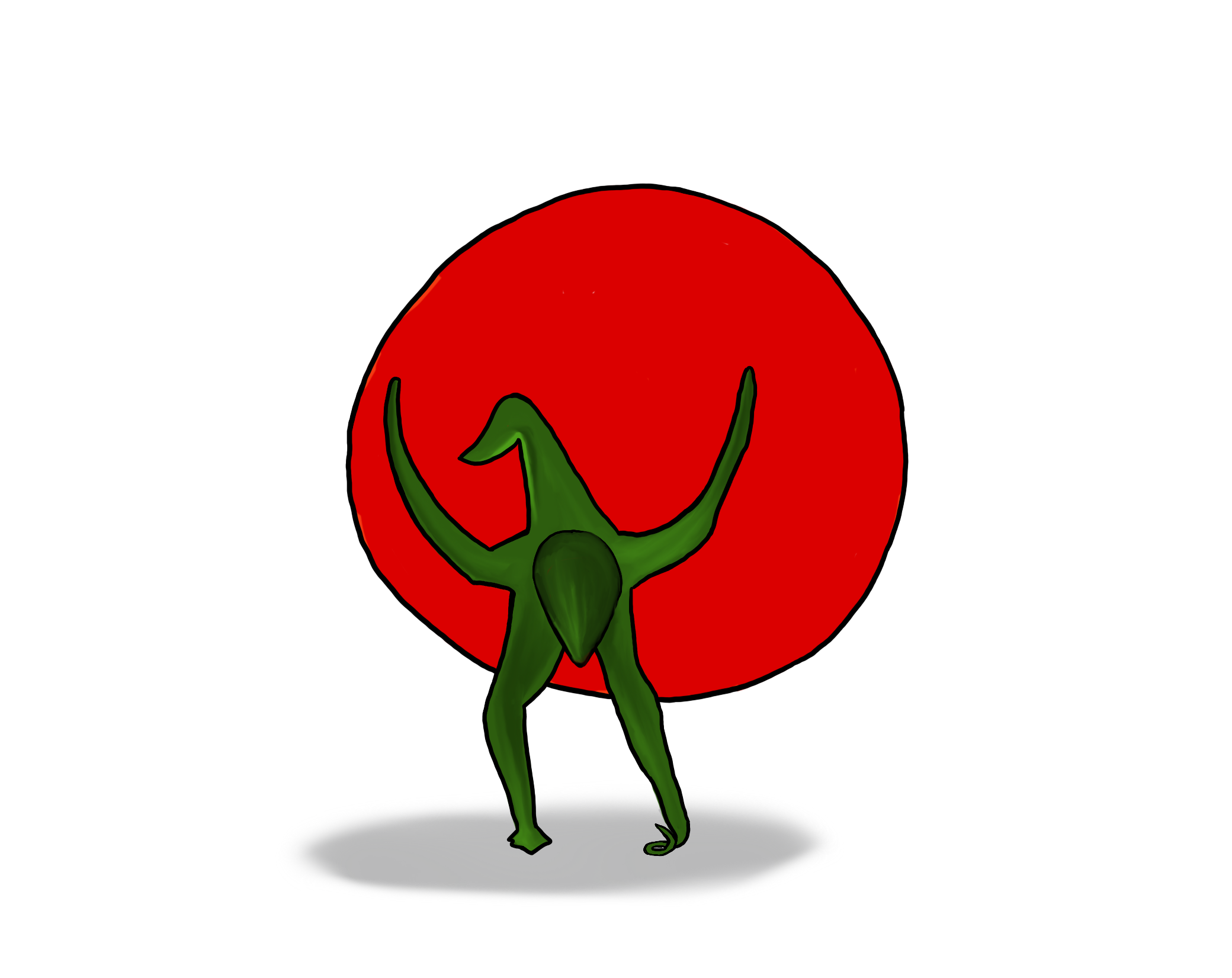
Afterward I did a more traditional tomato:

Such a tiny vegetable, such a giant pain to draw. The actual radish part was easy but once again, leaves are my nemesis. I ended up going with a pruned look and even then I had to stop before I gave the radish Don King hair.
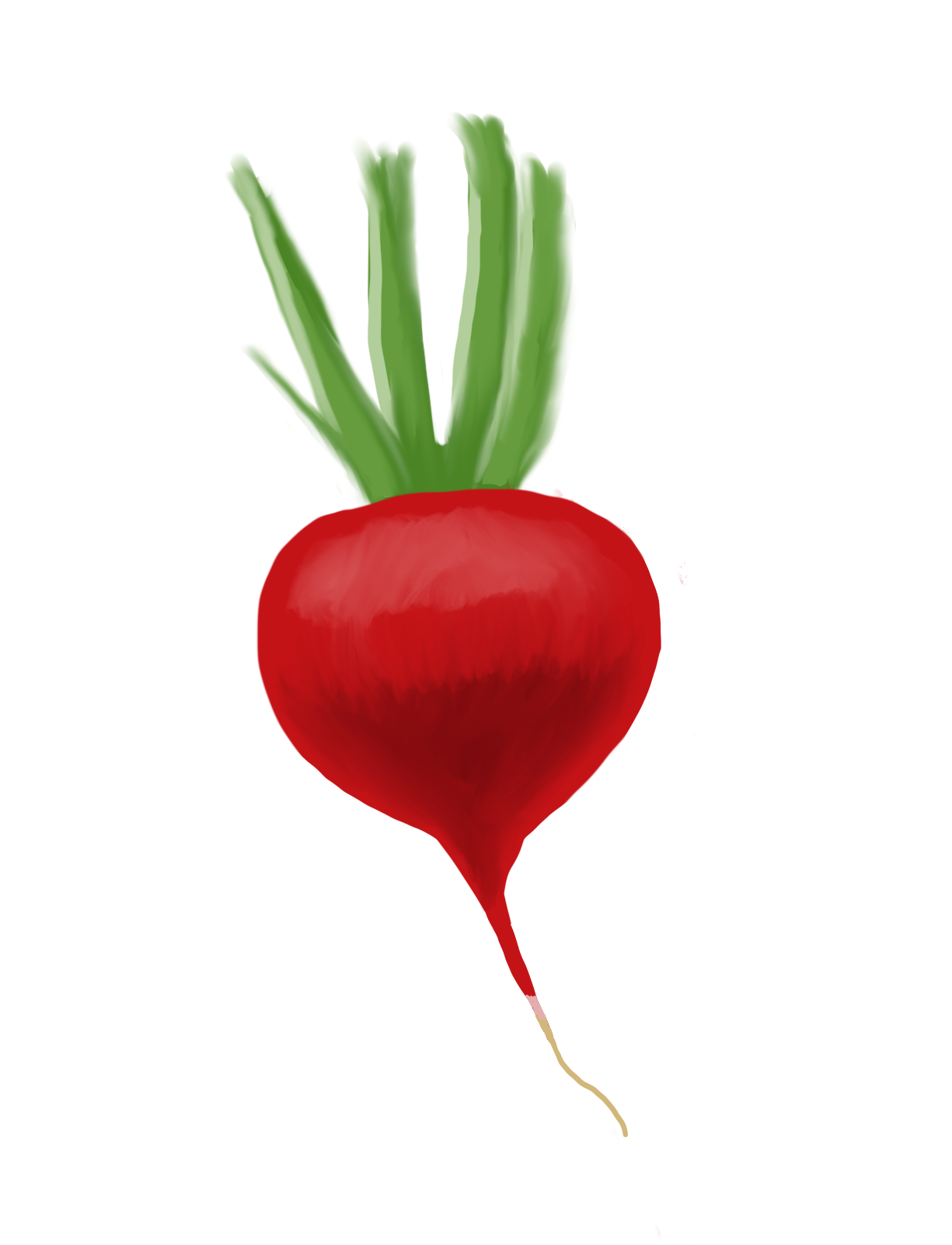
#makingarteveryday