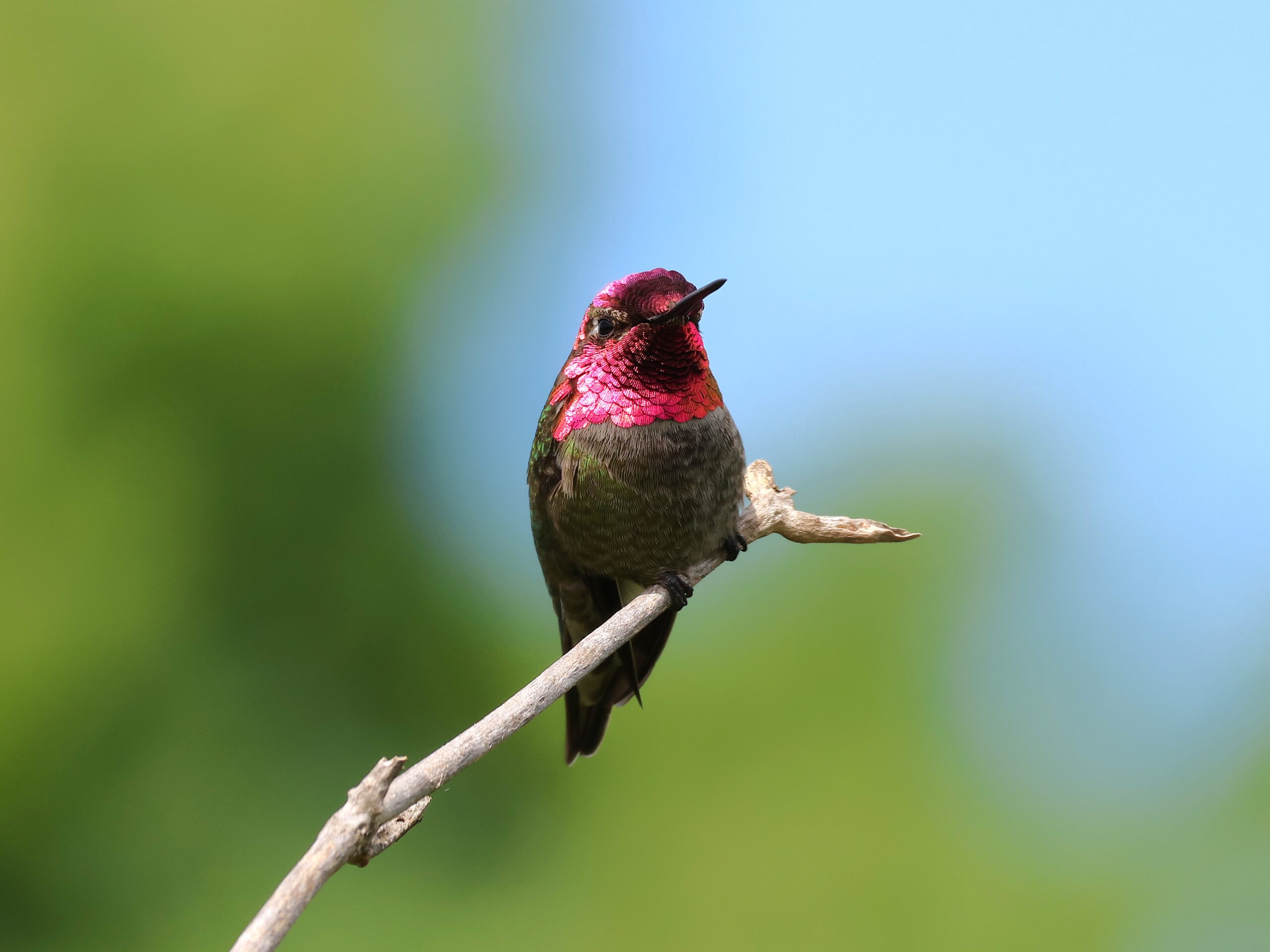
Birding, September 12, 2026: The return of (some) migrants, surprise shorebirds, plus a billion butterflies

Where: Serpentine Fen, Blackie Spit (Surrey), Piper Spit, Burnaby Lake (Burnaby), Tlahutum Regional Park (Coquitlam)
Weather: Partly sunny, 19–21°C

20,000 steps and four locations later, we wrapped up the penultimate summer birding outing for 2026 under partly sunny skies.

Serpentine Fen
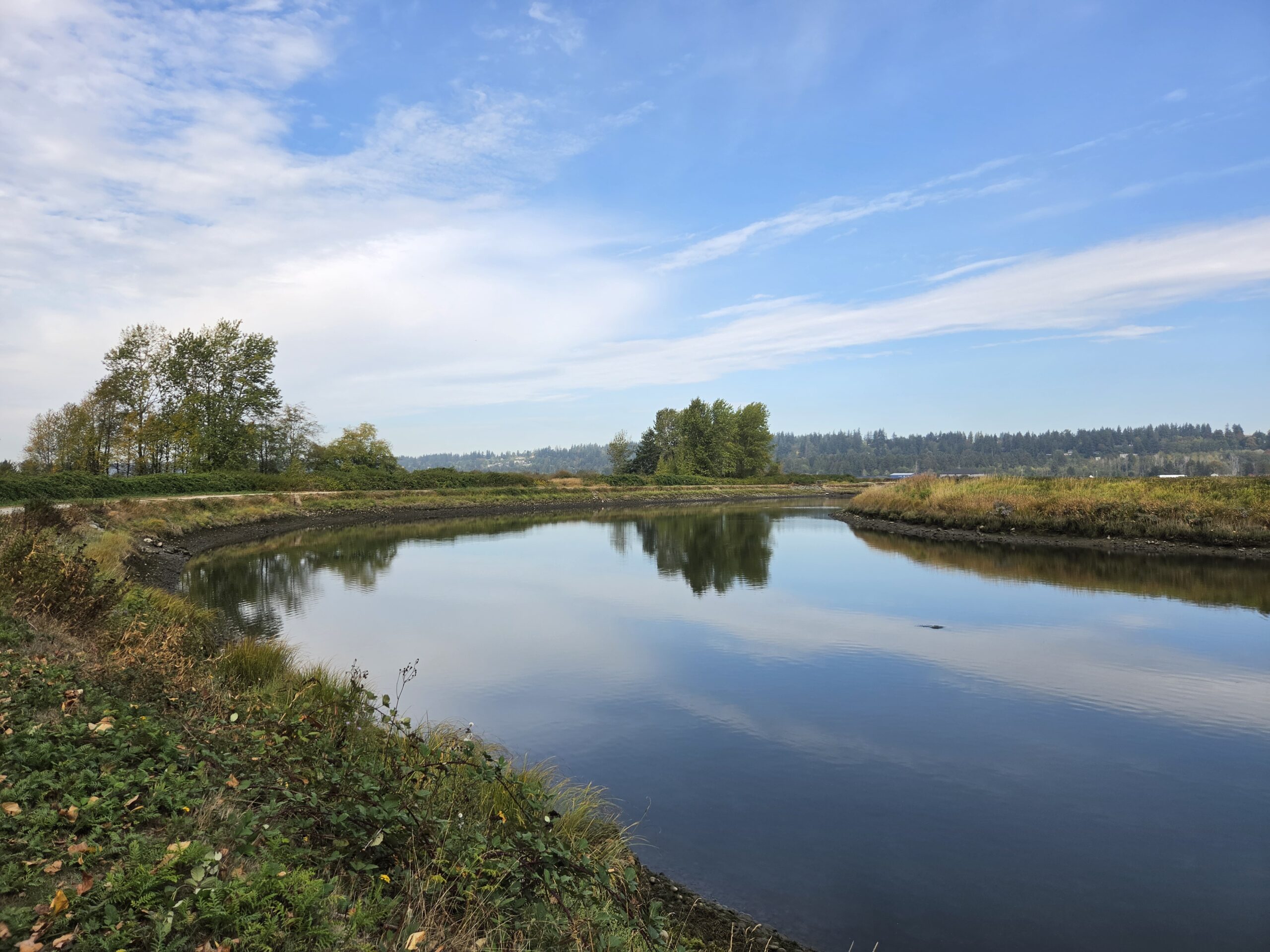
Rare instance of the Serpentine River not lined with people fishing.

First up was Serpentine Fen, which had a weirdly large number of people fishing along it, like there was a contest or something. And that contest was Insure No Waterfowl Will Hang Out Because of Everyone Fishing. Despite that, we did see some herons, and assorted seagulls over the river.

We also spotted some Yellow-rumped Warblers in a stand of trees, but my camera failed to properly focus on any of the four shots I managed, as the warblers tend to move around a lot. It was confused, I was sad.

This is the best I got, as example:
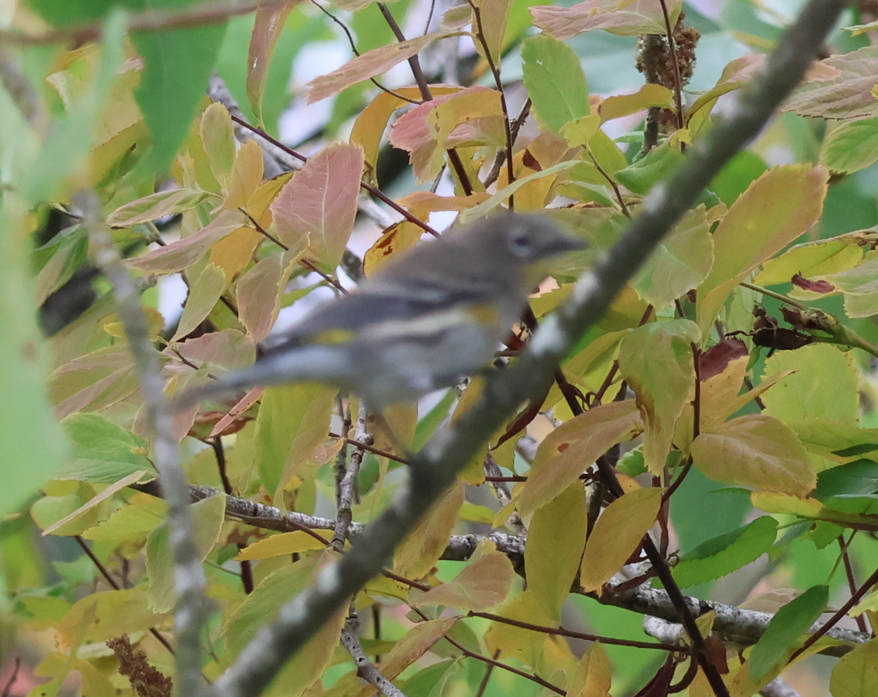
Note the branch behind in perfect focus. 😛

However, the best stuff would come later, not when we discovered they had finally patched the scarily huge hole in the floor of the second viewing tower, though that was nice to see:
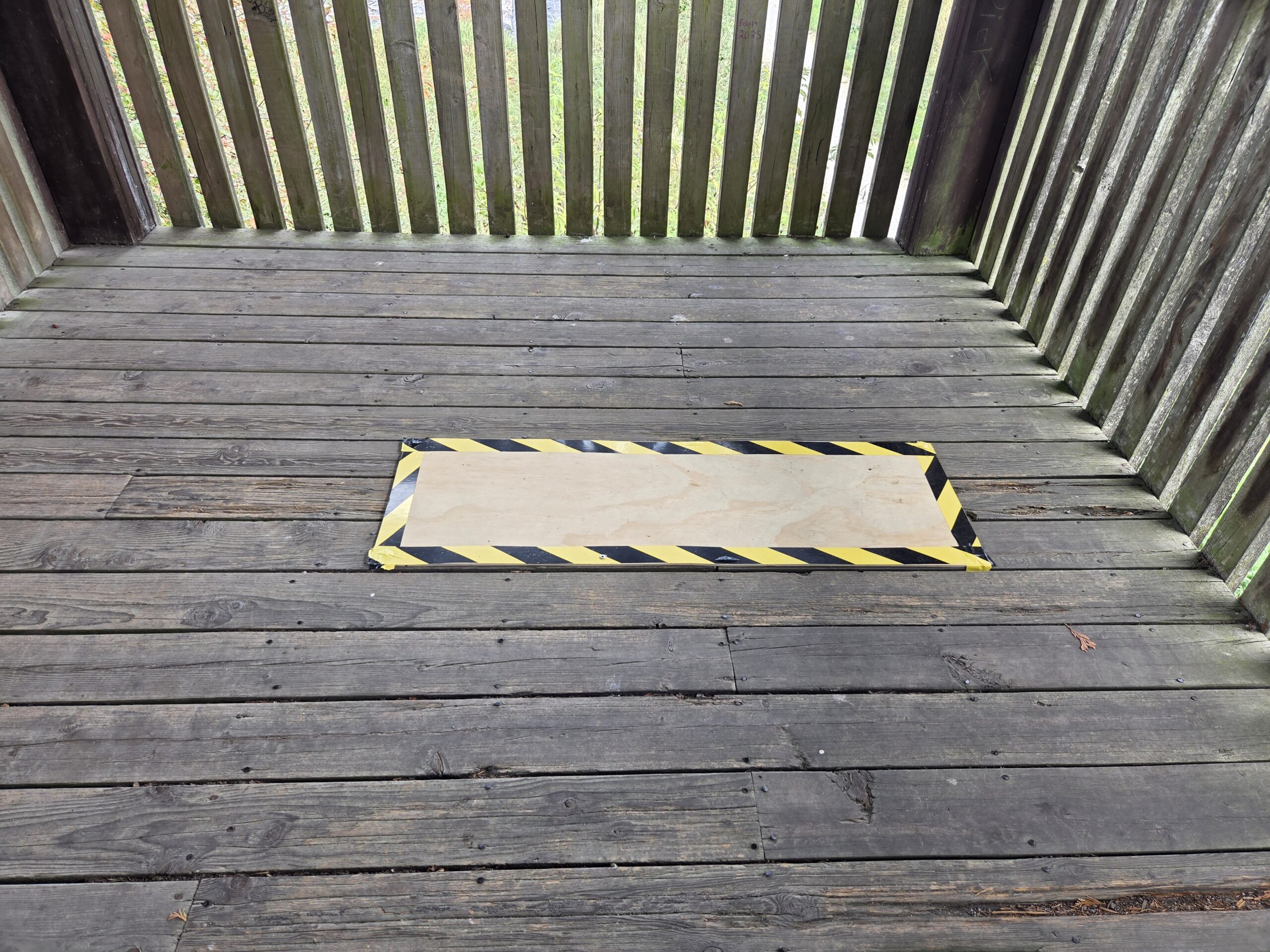
I did not test the sturdiness of the caution-taped plank.

But rather, one of the ponds that had not dried up was host to not just some Northern Shovellers, back from wherever they hide during the summer, but also multiple varieties of shorebirds capering about, both in and out of the water. Neat.

We also observed a plump spider feasting on a grasshopper caught in its web, and another one making a web using its butt spinneret. It was quite an elaborate show.

There were also the aforementioned billions of butterflies, mainly the West Coast Lady, a predominately orange butterfly that is tricksy to shoot.

In all, Serpentine Fen proved better than I expected. The abundance of fishers was still weird, though.

Blackie Spit
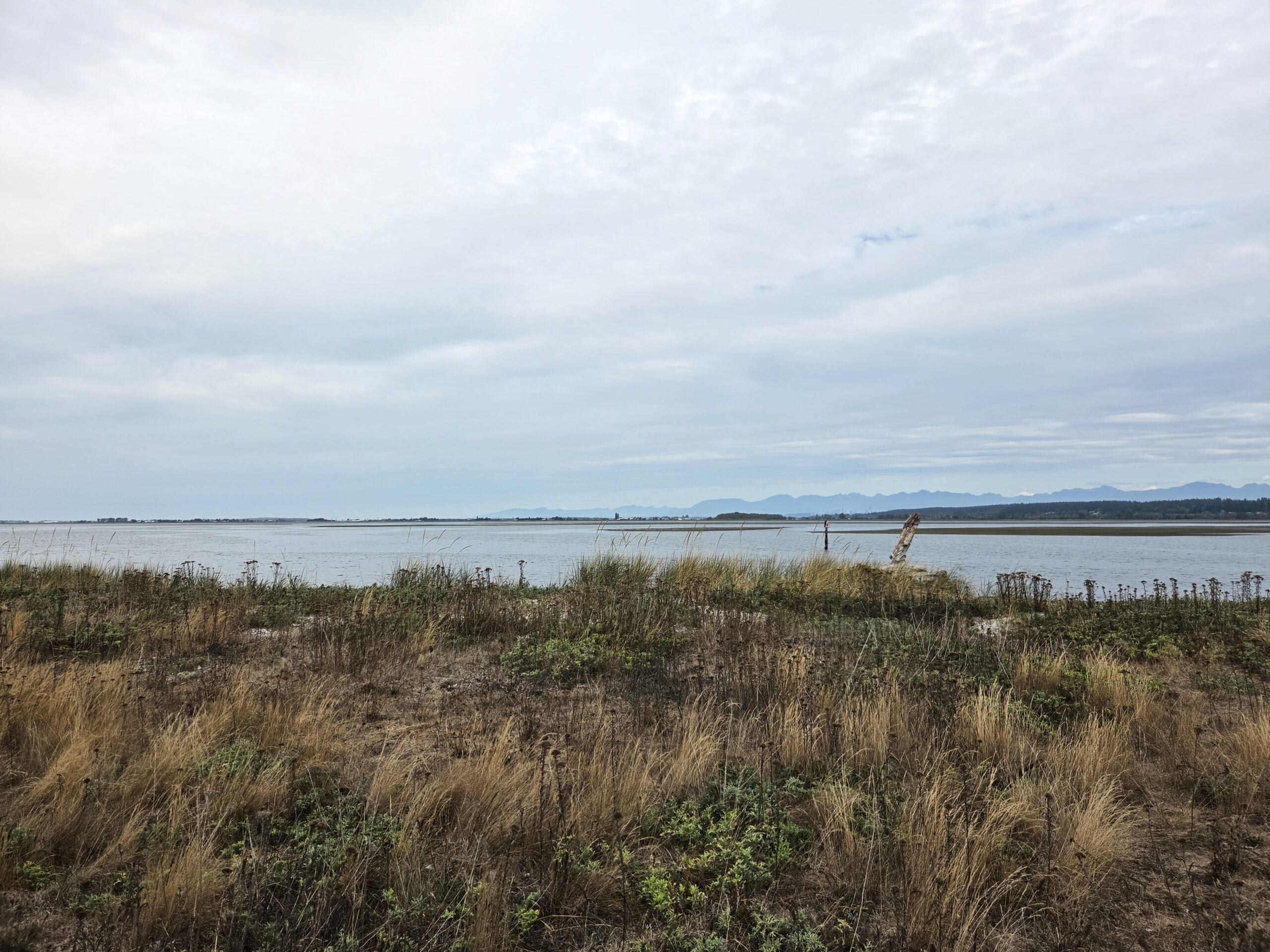
Looking north. Blackie Spit already has an early fall look to it.

With everyone fishing at Serpentine Fen, fewer people were at Blackie Spit, which made parking easier. We did not see any Savannah Sparrows, so they may be gone for the season, which will make Nic sad. Seeing some (distant) Caspian Terns helped to mollify, though.

The highlights here were Black-capped Chickadees, more shorebirds in the creek adjacent to the trail to the pump station and about 20 million Mallards, who were in such plentiful numbers there was a constant set of them flying over and landing in the water. We also caught a glimpse of a Belted Kingfisher darting overhead.

We also saw probably the last of the sad wasps, and some of the sparkly beetles previously seen at Iona Beach.

I also got a blurry shot of a Mallard pooping mod-flight, which I will share here:
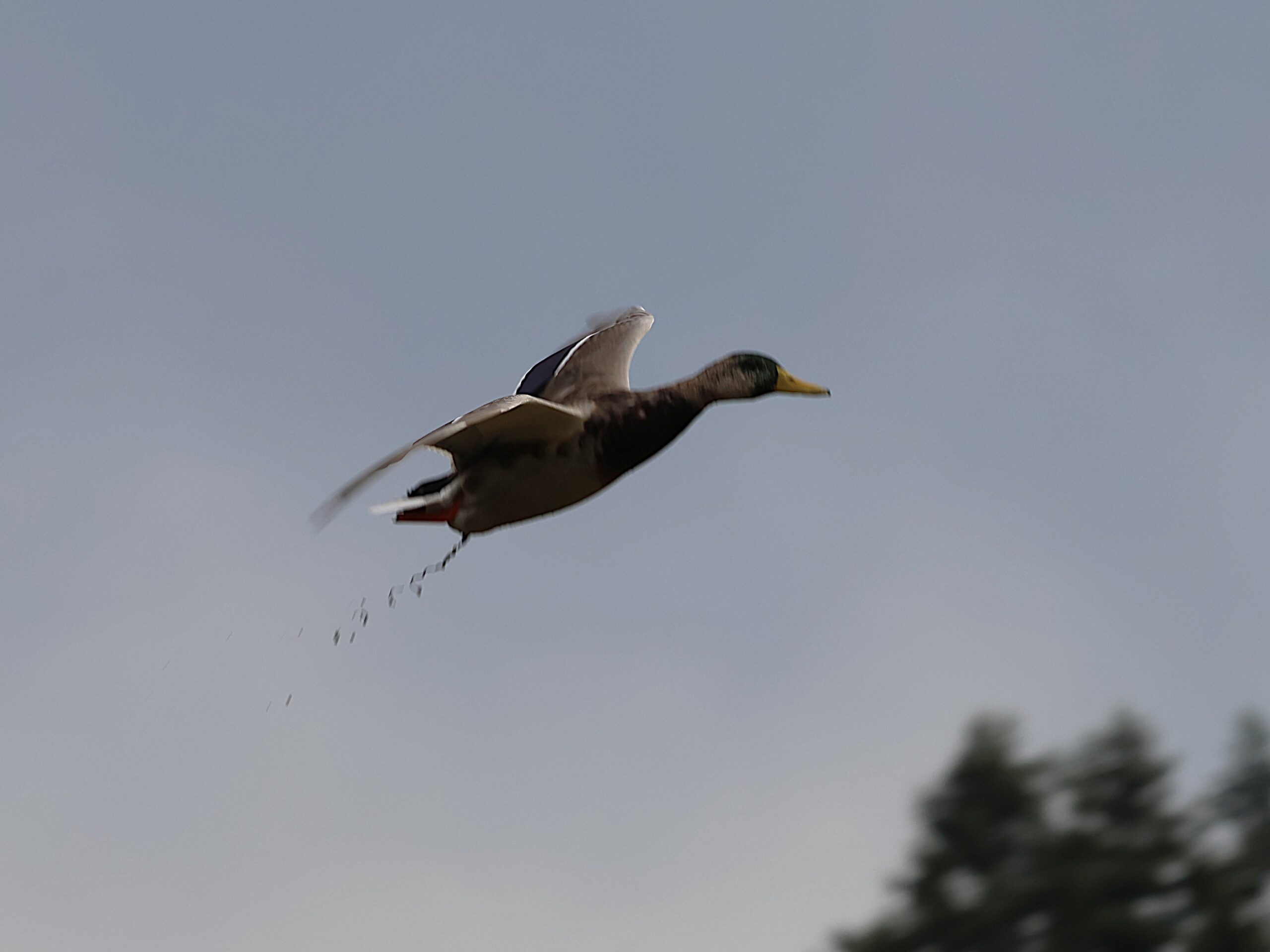
If you gotta go, you gotta go. Also remember this when a duck is flying over you.

Combined with the usual nice scenery, Blackie Spit was perfectly cromulent.

Piper Spit
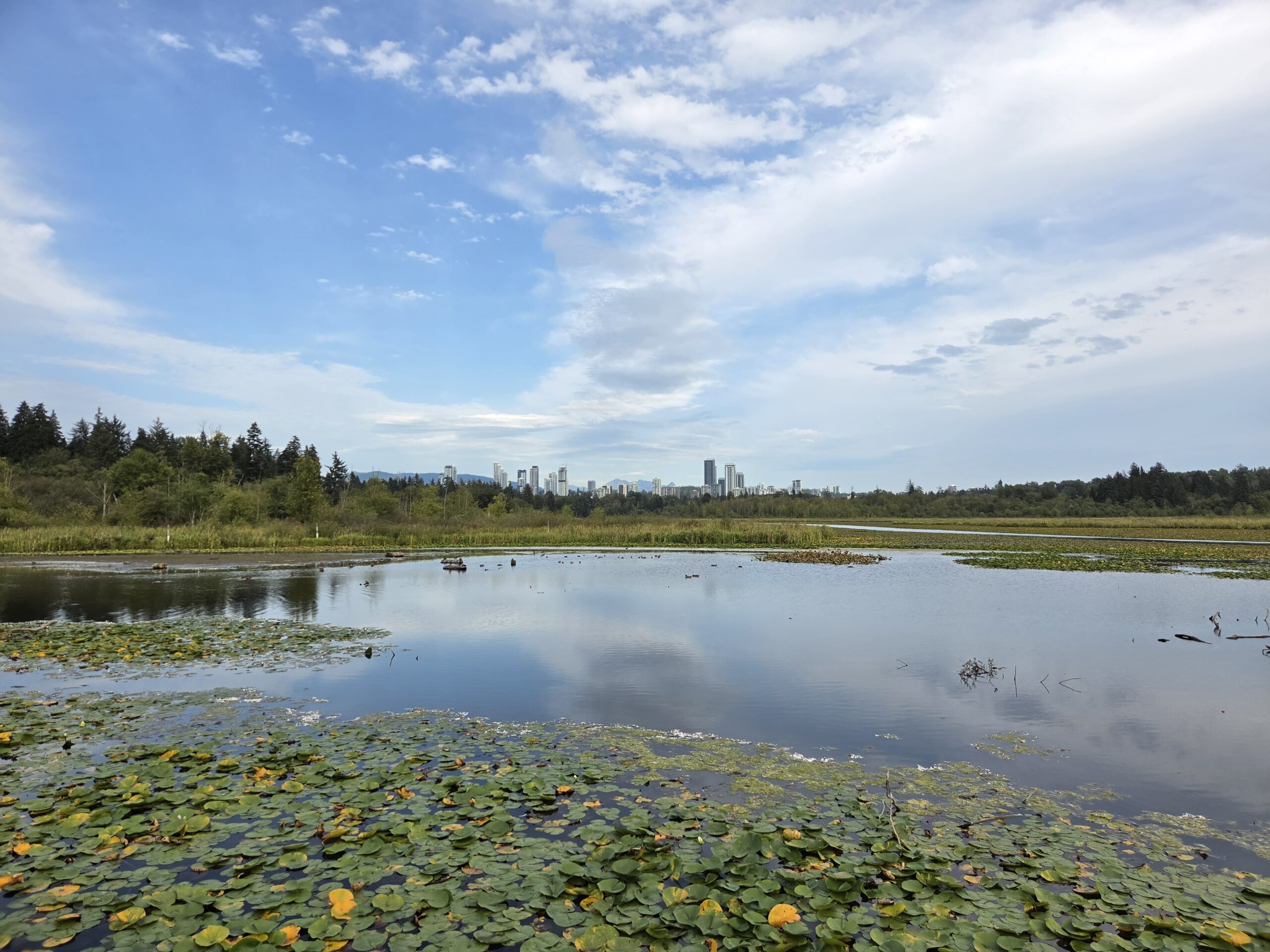
View from the pier, looking east. Not shown: Bad people feeding good birds.

But Nic was not sated, so we went to Piper Spit. And yes, there were people feeding the birds. Not just feeding them, but feeding them from a honking huge bag of seed:
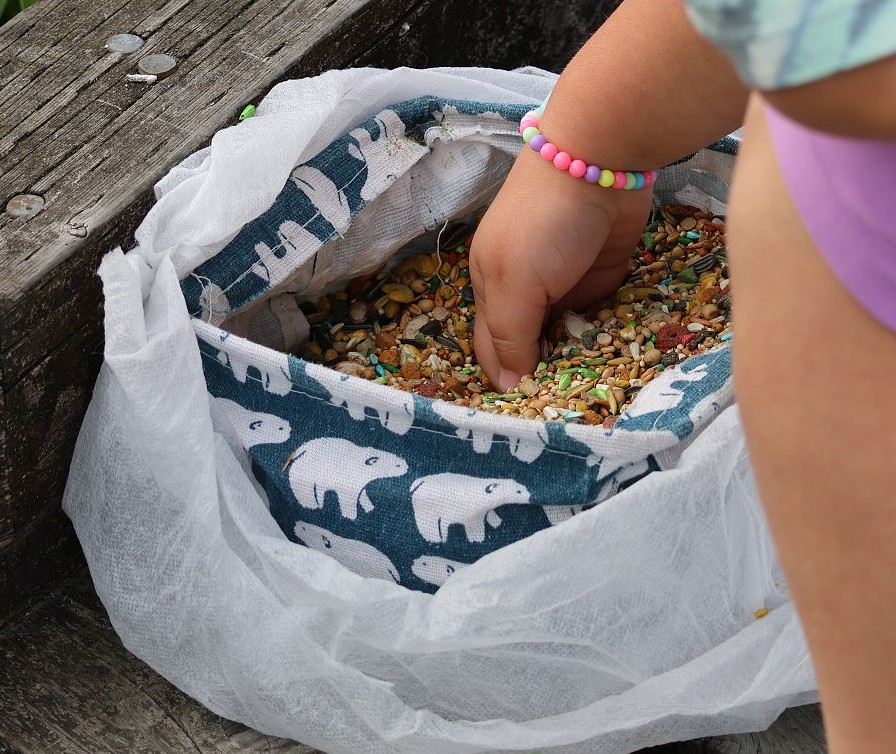
The bears means it will attract bears, too, probably.

But once we looked past the people feeding the birds, we noted the presence of Green-winged Teals, Common Mergansers and some Northern Pintails, newly arrived (or back from wherever they hide). There was also a group of Killdeer capering about on and around the island area, along with some Long-billed Dowitchers and yellowlegs. It was a very Shorebirdy day.

A few male Mallards are close to being back to their breeding colours, but multiple Wood Ducks are already sporting their shiny mullets again and looking pretty.

Tlahutum Regional Park
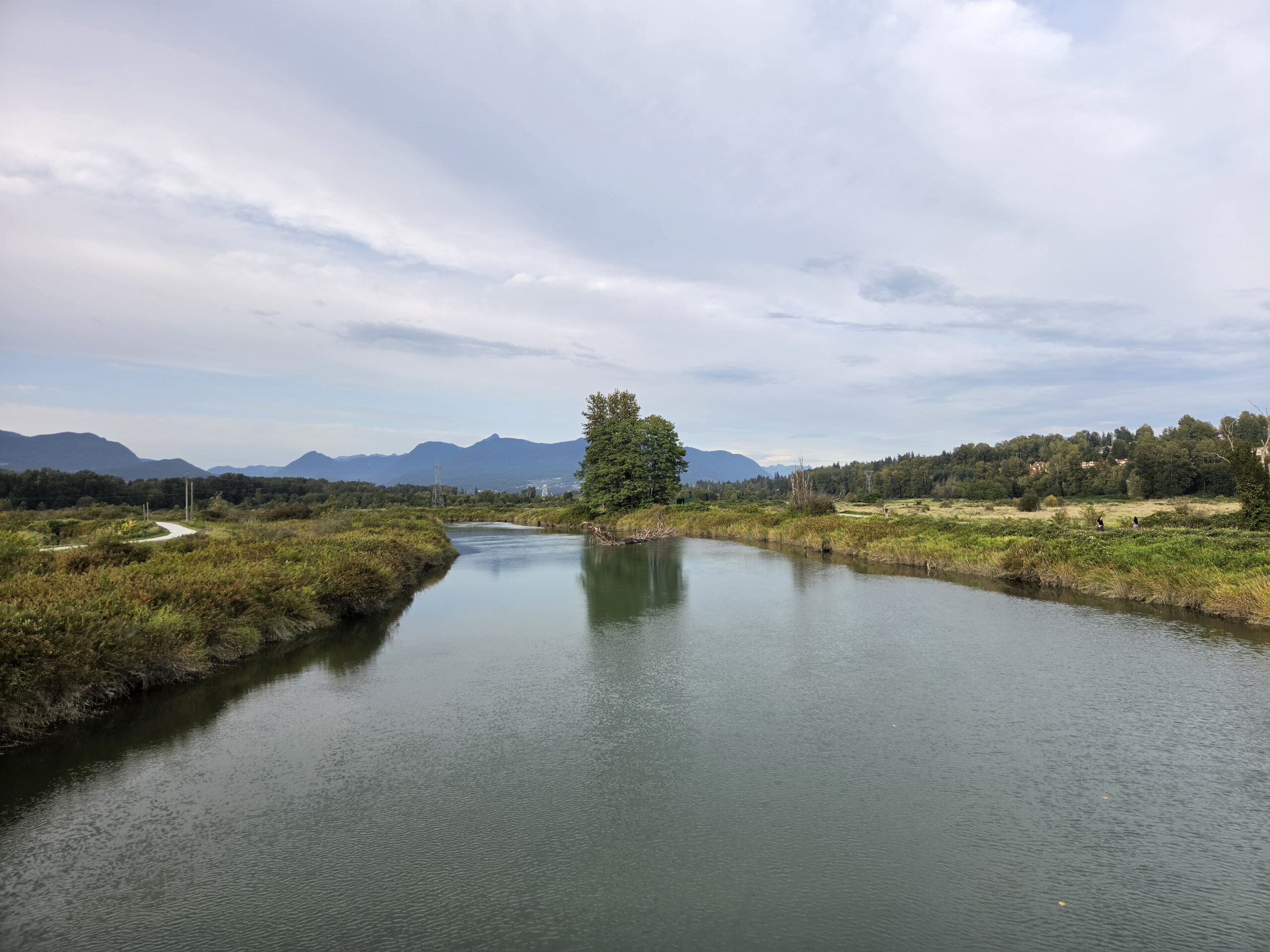
The classic view of the Coquitlam River from the Millennium Bridge.

We wrapped up with a trip to the community garden because the number of sparrows and sparrow-adjacent birds we’d seen up to this point was a bit low and Nic wanted MOAR.

However, the garden proved nearly bird-free. We did see a few fleeting Golden-crowned Sparrows, confirming they’re back, as well as a White-crowed Sparrow or two, but that was it.

I got some nice shots of flowers and the river.

In the end, a busy and pretty good day of birding. We didn’t see any coots, but the fall migration has definitely begun, so coot time is coming.

The Shots

All photos shot with a Canon EOS R7 with 18–150 mm kit lens and 100–400 mm telephoto. Some landscape shots captured with a Samsung Galaxy S26.

Gallery soon™.

The Birds (and other critters)

Sparrows and sparrow-adjacent:

  • Black-capped Chickadee
  • Golden-crowned sparrow
  • House Finch
  • Northern Flicker
  • Song Sparrow
  • Spotted Towhee
  • White-crowned Sparrow
  • Yellow-rumped Warbler

Waterfowl and shorebirds:

  • Belted Kingfisher
  • Caspian Tern
  • Common Merganser
  • Great Blue Heron
  • Greater Yellowlegs
  • Green-winged Teal
  • Killdeer
  • Lesser Yellowlegs
  • Long-billed Dowitcher
  • Mallard
  • Northern Pintail
  • Northern Shoveller
  • Pectoral Sandpiper (a lifer, I think?)
  • Wood Duck

Common:

  • American Crow
  • European Starling
  • Various seagulls

Raptors:

  • Northern Harrier

Non-birds:

  • Assorted pollinators
  • Several ladybugs
  • Spiders spinning webs and noshing on grasshoppers
  • A squirrel with an acorn

Birding, May 16, 2026: FEED ME, written and performed by Young Song Sparrow

Where: Brydon Lagoon, Blackie Spit (Surrey), Piper Spit, Burnaby Lake (Burnaby)
Weather: Cloudy with some sun, 11-16°C

Unlike recent outings, the weather was unseasonably cool today. I still wore shorts.

Brydon Lagoon

Brydon Lagoon, under a brooding sky.

The last time we were at Brydon, we saw a bounty of birds or BOB. Today, the bounty mostly came in the form of every kind of swallow, gulls and Mallards. Except for a few Ring-necked Ducks still noodling around, the winter migrants are gone. We are cootless again.

The wind was quite brisk and it started out only around 11C. This may not sound cold, but we’ve had summer-like weather just long enough to get used to it.

That same wind provided a benefit in trying to shoot swallows, though, as they slowed noticeably when pushing against the wind. Nic took about a billion shots, adjusted his camera’s settings and regularly cleaned stuff from the sensor, which is apparently cursed by black magic to always mysteriously attract stuff to it. But this all paid off, as he got several very spiffy shots.

I only tried a few times, my camera mostly refused to lock on, but I did grab a few where you could look at the photos and say, “That’s a swallow.”

The highlight here, though, was the normally unassuming Song sparrow, as a young and fuzzy one was sitting in a bush, demanding to be fed, and a parent was obliging, stuffing seed and whatnot down its gullet. We both got very nice shots of the feedings. Once sated, it flew off.

As did we. Well, we didn’t fly, we had to drive.

Blackie Spit

Another Xtreme low tide at Blackie Spit.

Here I added a light hoodie to my other light hoodie, as Blackie Spit is on the ocean and even though there was another extreme low tide, the wind was still kicking up high enough to threaten sweeping the cap off my head.

We saw an Anna’s Hummingbird sitting atop a small tree, looking even more like it was ready to kill than usual, but it was likely just leaning forward into the wind to avoid being blown off the tree.

Blackbirds were out and about, some festooned with crumbs and seed all over their bills, as is their way. And we saw our first ducklings, though they were in the south creek, which is mostly obscured by bushes. Nic got one so-so shot, I did not get any, sadly. The ducks seem to be lagging behind the geese in making babbies. This does not bode well in saving us from goose domination.

Although I didn’t get shots, Nic managed to capture some Hudsonian Whimbrels, which are shorebirds with long bills that hook down. Maybe we’ll see them again when the tide is not a kilometre away.

Piper Spit, Burnaby Lake

Sun and clouds, with a grooming Sandhill Crane.

This was our first visit with the Nature House open for the season. We did not go in, but I took a photo of the sign. We observed no Bird Police on the pier, but also didn’t see anyone feeding the birds. There was a pile of seed on the ground, though. To be fair, it looked like healthy seed, not like half a loaf of stale Wonder Bread.

It was still windy as all heck, but had finally warmed up to 16C. With winter migrants gone, I focused mainly on cowbirds, wood ducks and the Sandhill Crane, which was back and very into grooming itself.

There was word of a Red-necked Phalarope at Piper Spit and lo, there she was! We got plenty of photos, but the phalarope stayed conspicuously away from the pier, so they were not great. The phalarope did not drive a monster truck or shout “Yeehaw.”

The one goose nest near the pier now looks empty and we did see a group of rapidly growing goslings by Eagle Creek, with a protective parent going ape on every other bird in the vicinity. The other birds seemed nonplussed.

Nic also took another billion shots of swallows. I took a few. I’ll be more motivated when it’s warmer (and harder to shoot them).

In all, a decent outing, with the weather actually being a tad better than expected.

The Shots

Shot with a Canon EOS R7 with 18-150 mm kit lens and 100-400 mm telephoto. Some scenery captured on a Samsung Galaxy S26.

NOTE: Normally I present the photos in the same order as they were taken, but for this gallery I opted to end with the young Song Sparrow sequence because it’s adorable.

The Birds (and other critters)

Sparrows and sparrow-adjacent:

  • American Robin
  • Anna’s Hummingbird
  • Barn Swallow
  • Brown-headed Cowbird
  • Cliff Swallow
  • Common Yellowthroat (heard, not seen)
  • House Sparrow
  • Northern Flicker
  • Northern Rough-winged Swallow
  • Purple Martin
  • Red-winged Blackbird
  • Song Sparrow
  • Tree Swallow
  • Violet-green Swallow
  • White-crowned Sparrow

Waterfowl and shorebirds:

  • Canada Goose
  • Double-crested Cormorant
  • Great Blue Heron
  • Hudsonian Whimbrel
  • Mallard
  • Red-necked Phalarope
  • Ring-necked Duck
  • Sandhill Crane
  • Wood Duck

Common:

  • American Crow
  • European Starling
  • Plenty of gulls
  • Rock Pigeon

Raptors:

  • Bald Eagle

Non-birds:

  • Assorted pollinators, mainly bumblebees
  • A bunny