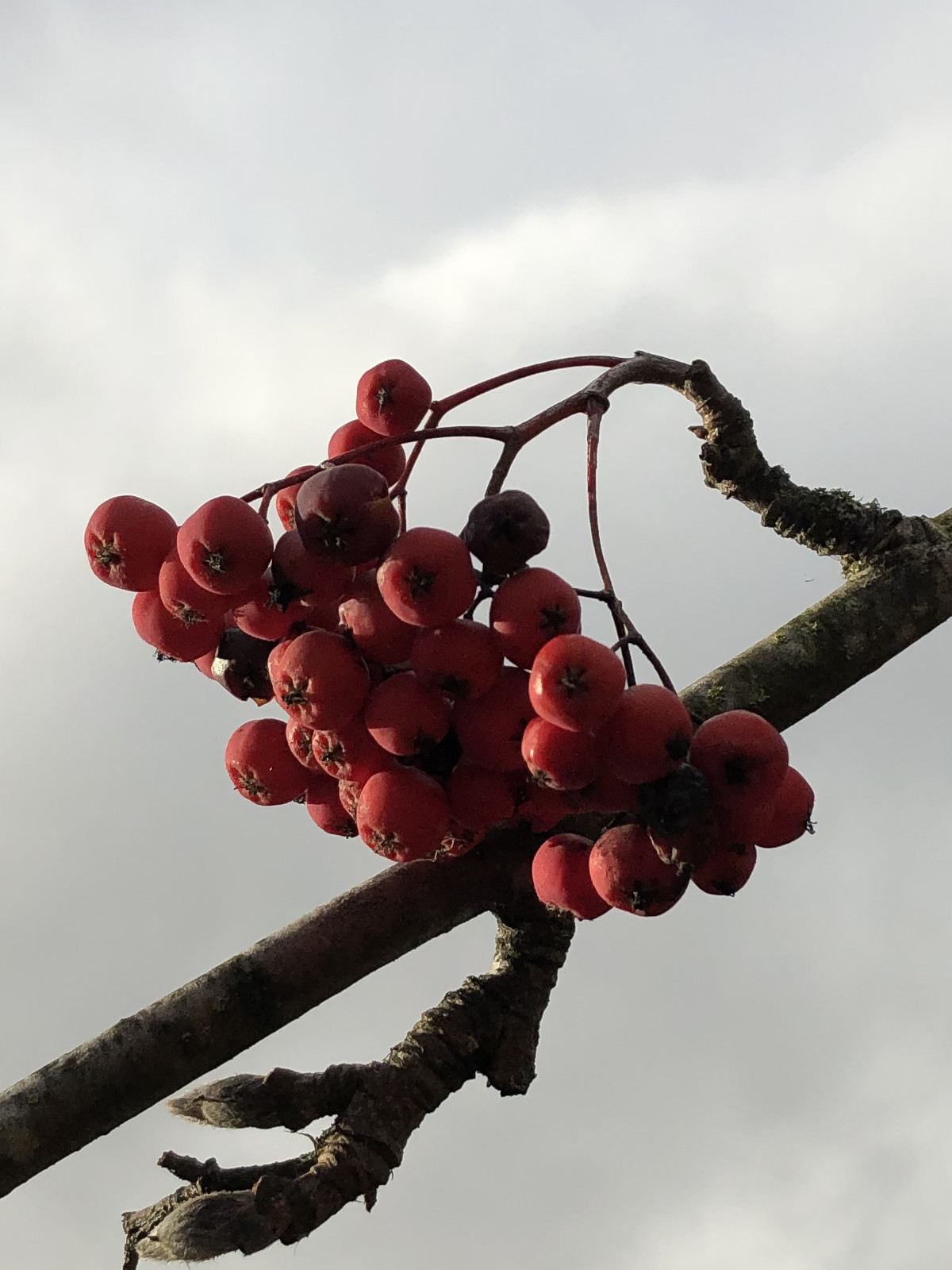
Winter berries by the river.


Winter berries by the river.
The winter solstice was actually yesterday but I was busy entertaining myself troubleshooting browser issues and realizing how little I enjoy spending my time troubleshooting things anymore. Which is not a great thing, since it’s also my living. Oops.
Anyway, yesterday was the shortest day of the year, meaning that today and every other day this year (all nine of ’em) will keep getting delightfully longer. Or to be technical, the sun will set later, giving us a smidgen more daylight.
So although December 21st marks the official start of winter, for me it signals the official countdown to Daylight Saving Time (I advocate switching to this year-round–make it so, government people in charge of clocks or whatever) and the beginning of summer, the best season of all.
I’m already thinking about my first sunburn.

Kiss My Asterisk: A Feisty Guide to Punctuation and Grammar by Jenny Baranick
My rating: 3 of 5 stars
A short, sassy and innuendo-filled collection of tips on grammar and spelling that stays PG despite references to Richard Gere and gerbils. The book is derived from the blog Missed Periods and Other Grammar Scares, a title that pretty clearly sets the tone for the book.
I think my favorite thing in Kiss My Asterisk were the examples of the creative spelling used by some of Baranick’s students:
whorable (“I am having a whorable day.”)
thoughs (“I love old black and white comedies. Thoughs are the best.”)
celeberde (“Have you ever met a famous celeberde?”)
While the book on the whole covered familiar territory for me, it did help me to better understand my abuse and misuse of commas, so I consider the purchase as money well-spent. If there are any misplaced commas in this review, don’t blame the author. I am not always a fast learner.
My only serious complaint is how abruptly the book ends. I mean, it just stops and you’re looking at an answer key for the exercises. It was a bit disappointing. The tone, though consistently cheeky, sometimes misses the mark, but I did find myself chuckling more than a few times. There aren’t a lot of books on punctuation out there that can do that.
Overall, recommended, though you might want to read a sample before committing, because if the tone doesn’t work for you, the whole book will be fingers-on-a-chalkboard annoying.
View all my reviews
Berries ready for the start of winter.
And it wasn’t as bad as I thought.
Back around the start of November I had the flu and ended up being the poster boy for Why You Should Get a Flu Shot. This not only put a crimp in my NaNoWriMo novel, it meant running was right out. I barely had enough energy to sit in a chair, let alone do actual exercise. Then I became wrapped up in writing for a bit, then the weather turned cold and wet and by this point I was making excuses not to run because I had become soft, flabby and lazy.
The longer I held off, the more I dreaded the return, not only because I was getting increasingly out of shape, but also due to this year’s special bonus of sore knees.
On Friday after work we went to the Canada Games Pool and instead of going on the elliptical, I strangely climbed on a treadmill, opting for an interval-style run for half an hour where I’d jog at a good pace, then ramp down to a fast walk for a few minutes, then back to jogging and so on. Intervals are supposed to be a great way to train/exercise and it was easier, which particularly appealed after more than a month off.
And it really wasn’t that bad. I pushed a little at times, but I kept up and burned some 300 or so calories. The knees were a bit sore the next day, but the soreness didn’t persist much longer than that, and I actually kind of want to go back. I’m supposed to hate the treadmill and in a way I still do, but it’s warm inside the pool building and I had my water bottle and music and it was all right.
I may even try running outside again this weekend. The forecast for Saturday is rain showers with a high of only 4°C. This is not especially inviting weather. In fact, it’s yucky. But I will change into my running clothes and convince myself to go instead of sitting on the couch eating shortbread cookies.
I’m pretty sure, anyway.
The important thing is I miss my incredibly sexy legs, which are looking positively ordinary right now. This will not do.
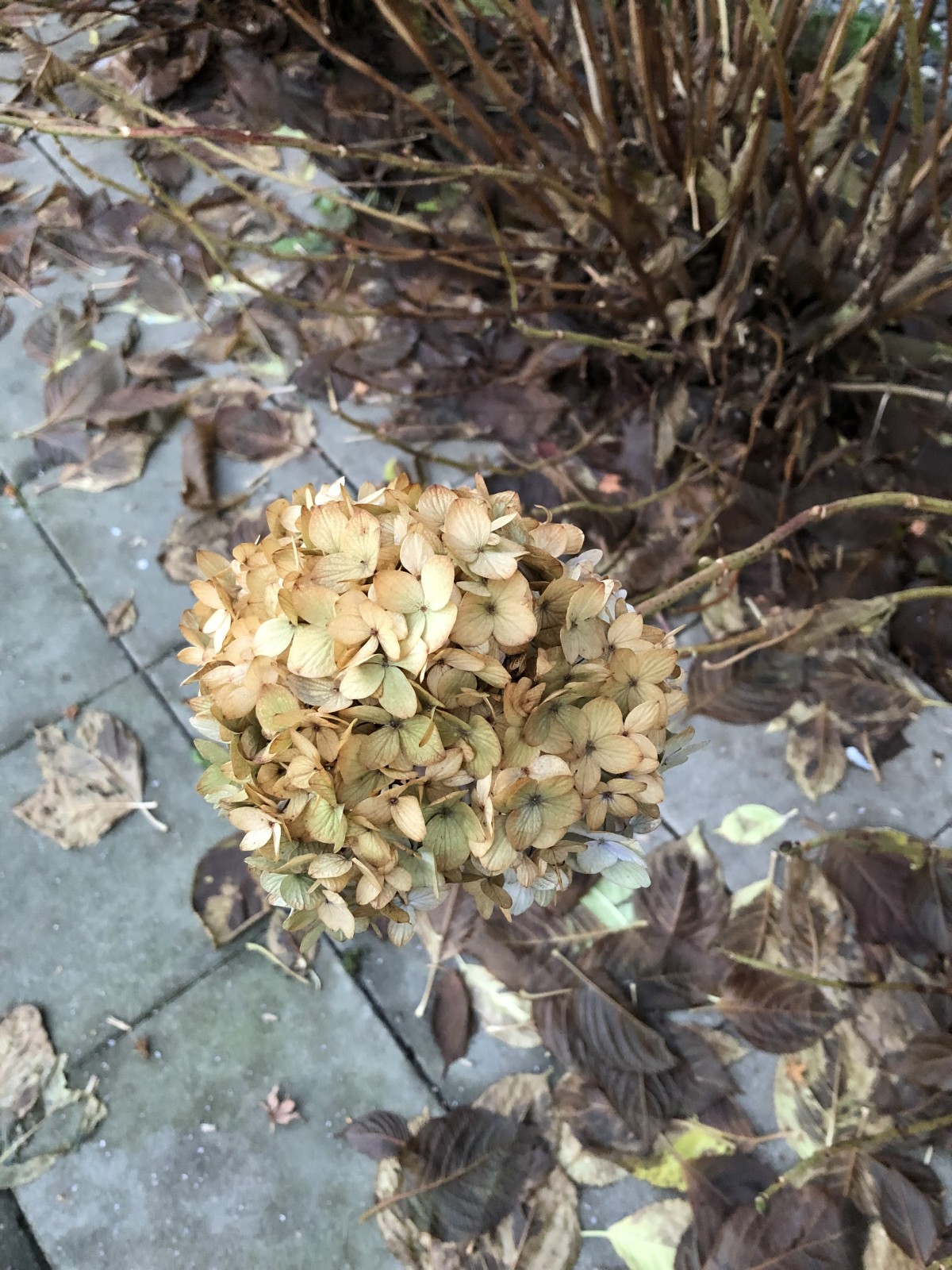
Two months later, the bloom is off…
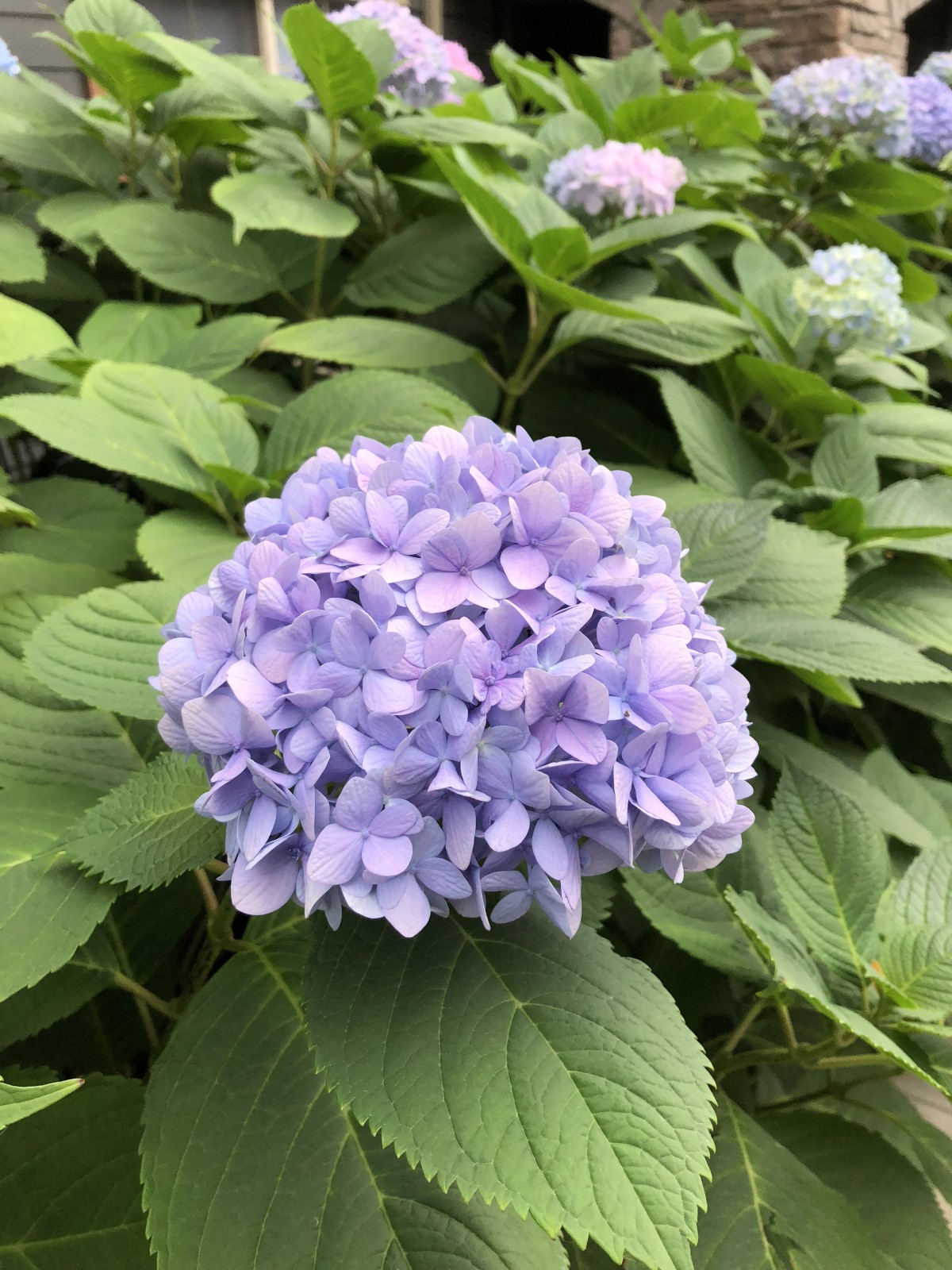
Two months prior:
I love Scrivener, or rather, the platonic ideal that Scrivener can represent.
The actual program inspires something less than love in me. I long ago adapted to its complicated, cumbersome interface and learned to ignore the long list of features I would never use. I write simple stories, I don’t need a lot of sophisticated tools for that.
I came to appreciate the Scrivener features I did use–easily dividing chapters into discrete blocks that could be moved around or removed, being able to set goals and see my progress (especially handy for NaNoWriMo), the corkboard for keeping track of scenes, and being able to set up my editing environment and have it complete separate from the compiling of the document. I realized I did not need the WYSIWYG approach of Microsoft Word and it was nice.
I’ve been thinking of doing a proper outline of Road Closed, then going back and properly finishing the first draft. I’d written the novel using WriteMonkey and earlier this year I took the time to convert it over to Scrivener. This is a somewhat time-consuming process as Scrivener would import the novel’s entire text and place it into a single scene, from which I would then copy and paste the different chapters into their own Scrivener folders.
Now, my first mistake was using the Scrivener for Windows 3.0 beta. In November 2017 Scrivener 3.0 for the Mac was released, and at the same time the first beta of Scrivener 3.0 for Windows was made available. A final release date was never offered beyond “2018” and that, too, ended up not coming to pass, though it seems a release in early 2019 is possible.
All the caveats of using a beta apply, of course. And I already had the novel safely backed up and ready to go in WriteMonkey in the case of disaster striking.
Last night I updated to the latest Scrivener 3.0 beta,. with the intention of loading Road Closed so I could export it to the older Scrivener 1.9 format, allowing me to keep writing in a safer, more stable environment.
Except when I loaded Road Closed, all of the text was gone. The chapter and scene structure was preserved in the binder, but the actual story had vanished. I thought about why this might have happened for a minute or two. It’s quite possible–even likely–I had done something wrong. I considered my options.
And then I did nothing. Because I had a current version of the story intact and ready in WriteMonkey. I am not going to spend any time playing my own personal technical support. I’ll just wait until version 3.0 comes out of beta, then consider then if I want to invest in the upgrade.
This is not the first time Scrivener has gone sideways on me, losing or corrupting data, and if I keep using it, I would fully expect it would eventually happen again. And I emphasize once more, this may be my fault entirely. Maybe I just don’t get it.
But in the end, it doesn’t matter. I can’t trust Scrivener, or perhaps I can’t trust myself to use it, so I won’t. For now, anyway.
This irks me in another way, too, because last year I had what was close to the perfect setup, using Ulysses on my MacBook Pro. There were a few problems, though:
But there is really nothing else like Ulysses out there. There are dozens of markdown and minimalist writing apps available on every platform and I’ve tried a bunch of them, but they all fall short in some way. The biggest issue for me is failing to support indents, something I consider crucial for writing fiction.
FocusWriter is lean and generally nice to use, but it’s almost a little too basic and its organizational structure is pretty bare.
The WriteMonkey 3.0 beta looks promising, but indents are still only a “might include” feature and the beta is moving so slowly I may be 110 by the time it hits official release. It’s a one-man project, so I’m not knocking the dev, just saying.
iA Writer has a wonderful minimalist interface, but it lacks indents and the Windows version lags behind the Mac version of features (even though the Mac version itself is not exactly feature-rich).
And on it goes, with other programs either getting abandoned, lacking features, not working well with cloud-saving (like Atomic Scribbler–though really, how can you develop and launch a writing app in 2018 and not plan for people wanting to save their work to cloud-based storage?) or just somehow not being the right fit.
It’s also possible I may be too fussy. Very possible.
For now I’m sticking to WriteMonkey 2.7. It’s getting old, but it still works and it’s pretty solid. It only saves text files, so the possibly of data corruption is pretty low (insert GIF of Jeff Goldblum saying, “Nature finds a way” here).
Now I just need to get back to the actual writing. One of my resolutions for the new year. Let’s hope it pans out better than my attempts to get my weight down.
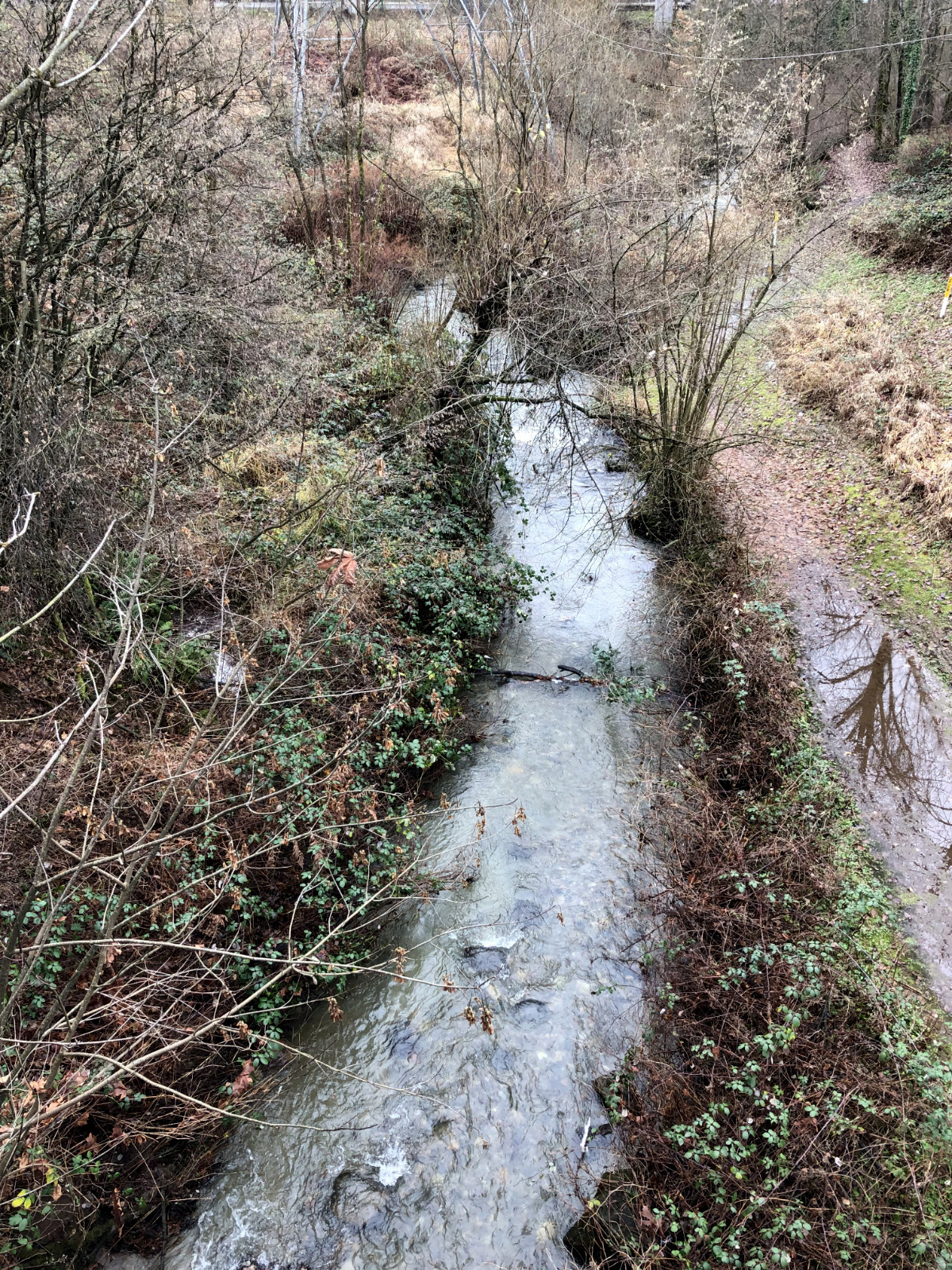
Looking down on Stoney Creek.
 BFF by K.C. Wells
My rating: 2 of 5 stars
(Note: For some reason I missed reviewing this book, so here is my review, six months late.)
I bought this the way I’ve bought most books the past year–it was cheap and I found the description interesting enough to give it a chance.
BFF is a story about two guys who become best friends at an early age, then pal around and hang out together as they edge ever-closer to adulthood. Neither is especially unhappy and their friendship is so adorable it’s enough to make you think there might be more there–which is the hook of the story. David (the narrator who tells the story) comes to realize he might have romantic feelings for Matt, and grows afraid of confessing them, fearing it could destroy their friendship.
It’s a romance novel, so you can probably guess what happens.
And although it’s a fixture of romance novels, the sex scenes near the end felt weirdly out of place, given how utterly sweet and cute the story is up to that point. I ain’t no prude, but in terms of tone, I think the story would have been more consistent if the sex had not been so explicitly depicted.
The bigger issue is the framing device used. The story is told as a long series of flashbacks, with it already established in the present that David and Matt are a happy couple. I mean, not that there is any doubt that would be the outcome, but it would be nice to at least pretend there might be a different ending. As it is, the story is robbed of any tension or suspense. The flashbacks also usually end with David offering this odd, blog-style commentary on what he’s just written about. It pulled me out of the story every time. I’m not sure what the intent was.
If you are expecting a story about how two seemingly straight friends evolve their relationship into a romantic one, you will be disappointed, as there is only a small bit of this near the end, as the flashbacks get closer to the present. If you like the idea of seeing a pair of best friends go through the travails of growing up together, then having their bond eventually turn into love, this might be your thing.
Overall, I found BFF to be a light read hampered by tonally weird sex scenes and framed in a way that makes it read more like a diary than a narrative. Thumbs sideways.
 A Bridge of Years by Robert Charles Wilson
My rating: 4 of 5 stars
(I would actually rate this a strong 3.5 stars if possible.)
Wilson loves to play around with time travel and time paradoxes and A Bridge of Years is one of his earliest efforts, originally published in 1991.
In a few superficial ways it is reminiscent in structure to King’s 11/22/63 (though it’s important to note King’s novel came out 20 years later) in that a young man travels back to the early 60s and then pretty much falls in love with the era (and a woman) and wants to stay there. The specifics of Wilson’s story have a much stronger science fiction flavor than King’s, though Wilson doesn’t go into great detail on how the time travel and other future tech works.
Because it’s time travel there are complications.
I found the protagonist Tom Winter, a 30 year old man coming out of a failed relationship and lost job as rather curious–there is a setup for the inevitable character arc of him finding himself, but that never exactly happens. He learns things about himself, but by the end he has only a vague plan for moving forward (without spoilers–I won’t say where he is at story’s end). In a way it’s anticlimactic, but at the same time I rather liked that it bucked convention, even if it is less viscerally satisfying overall.
The realtor character of Doug “I want to believe in weird shit but have never really seen anything” Archer is entertaining, and serves as a reliable foil to the more conservative Tom.
The purported villain of the piece is another young man named Billy, a soldier thrust from the future into the past and equipped with golden armor that makes him virtually indestructible and fills him with an insatiable appetite to kill. This is easily the most chilling aspect of the story, taking the common concept of fusing a person to machinery not just to augment and enhance their abilities, but to chemically change them to absolutely need to kill. I have no difficulty imagining future governments creating these kinds of soldiers if the technology existed.
Less impressive is how quickly everyone jumps into bed together. I guess causal sex is timeless. 😛
Also, unlike King’s million-page behemoth, A Bridge of Years feels a bit too short, leaving the whole 1962 part of the story feeling a bit underdeveloped. We are shown (and told) how Tom comes to want to stay in the past, but it never feels overly convincing. His erstwhile 1962 girlfriend Joyce offers a more nuanced take on the era (obviously having a better feel for living in it), but even she never gets more than sketches.
Still, the sketches are effective and while the ride is short, I did enjoy it. Wilson doesn’t bog down the story with a lot of explanations about how the time travel works, and this is for the best. He lays down a few rules early on, then uses them to buttress the rest of the story.
If you like a good time travel yarn and don’t want to get bogged down in an epic-length adventure, A Bridge of Years is a solid entry in the crowded field of time travel novels.
I am a sucker for time travel stories. Every time I’ve sworn off writing them, I write another. It’s almost to the point where stating I won’t write any is the actual trigger for writing one.
I’m definitely not writing any more time travel stories.
With that out of the way, why am I such a sucker for them? A list!
The last point leads me to the time travel story I’ve been mulling over. I have the skeleton, but no real details yet. The skeleton is:
I’m not sure what the rules of this particular universe would be, but I wanted to explore the chance to have a re-do on life decisions, while also examining how your life would feel when you already have knowledge of what’s ahead that spans entire decades. It’s fun to imagine you’d buy up Apple stock in the 80s when it was cheap and be a millionaire in 2015, but would you really do that when you had to live through those 30 years the same as anyone else? Would you grow tired of trying to take advantage of your “insider” knowledge? Would it backfire? How bendable is time?
Actually, I fibbed when I said I only had a skeleton, because one of the unused ideas for this year’s NaNo was based on this exact concept, but the hook was the person being able to travel through time has terminal cancer and tries to use the time travel to rid themselves of it. I never got further than that, idea-wise, and I’m unsure on whether having such a specific hook is a bad or good thing.
But I do want to tackle this particular flavor of time travel sometime. Then future me can read over the story and say, “Why’d you write that?” and I would wittily respond, “It was time.”
