I have a piddly little newsletter on Substack and after four issues, have been mulling over what to do for Issue #5 and all others going forward. In the end I decided I needed to offer more than funny/random links, I needed to offer stuff that was uniquely me, because you can’t get that stuff anywhere else unless someone clones me in my sleep.
And while it’s been challenging to get together all-original stuff™ for future newsletters, Substack keep making it harder for me to think of having a future on the platform, because I continue to question their motives and their competence.
I found their editorial on “censorship” to be a facile and weak defense of being hands-off in moderating content on their platform. It just means they are allowing hate and disinformation to find a home on Substack. They seem to be blind to where this may ultimately lead–but with more writers abandoning Substack, they might figure it out eventually.
Here’s a recent story on writers leaving on Mashable: Why Substack writers are leaving the platform, again
But while this is an ongoing (and serious) concern, it’s not even what I’m going to discuss here. It’s the release of their new iOS app and the rollout of it, and how it feels like a calculated move to benefit Substack, possibly at the expense of the writers it offers a home to.
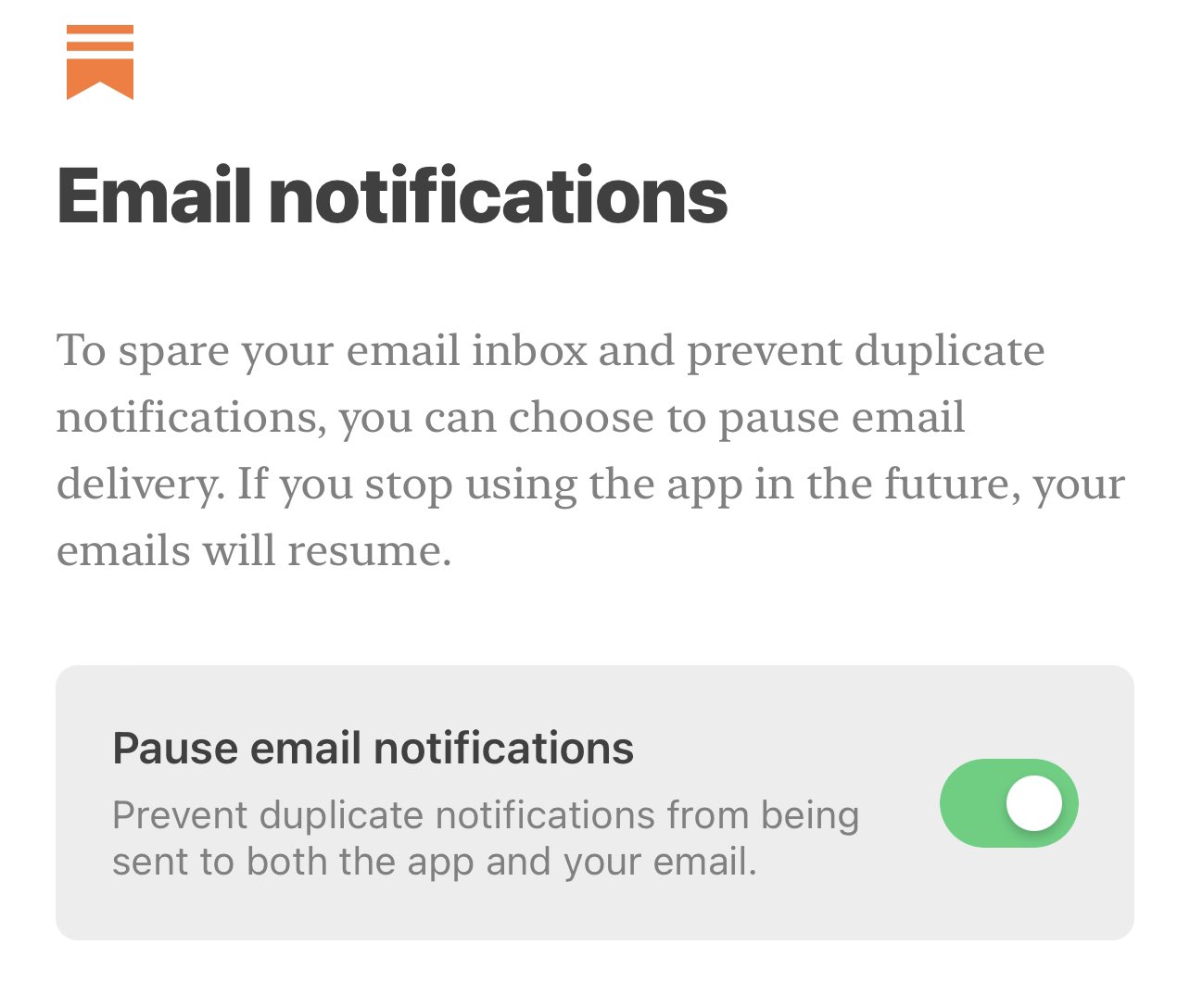
In its initial release (which they will be changing–more on this in a bit), anyone installing the app on an iPhone or iPad would see an option to “pause email notifications” as shown in the tweet below. This option was enabled by default.
(I’ve also included a redundant image of the screenshot in the event the tweet goes away.)
From Casey Newton’s Platformer (hosted on Substack):
(Substack co-founder and CEO Chris) Best told me there were practical considerations for this design choice. Many people enable notifications for both Substack and email, and receiving duplicate notifications might be frustrating.
But the company also believes in the superiority of the app as a place to read. “Email is great for all of the reasons it has always been great,” Best said. “It’s low friction. It’s this direct connection where you can reach out, unmediated by the algorithm. But it’s obviously not the best version of that reading experience.”
Let’s step back and examine what Substack, at its base level is, and how it works:
- Substack hosts newsletters from a variety of writers on a variety of topics
- In exchange for 10% of revenue (if the writer offers paid subscriptions) Substack handles almost all of the business/technical stuff. The writer uses the provided editor/tools to put together a newsletter, hits the Publish button, and is done.
- The newsletter then makes its way to the email inbox of anyone who has subscribed (and is also available for viewing on the Substack website)
It’s pretty simple and works as expected.
What that “Pause email notifications” does is not pause notifications. The wording is either deliberately or ineptly misleading. What it does is prevent newsletters from being sent to a subscriber’s email address. That meant that if you installed the app and didn’t change the defaults when setting it up, you would never again get any newsletters from Substack in your inbox, which is, you know, the entire point of Substack. That the CEO apparently thought this was fine because email is “not the best version of that reading experience” is telling. I find it hard to believe the ambiguous wording of this option was anything but deliberate, in order to get people to shut off newsletter emails entirely and make the app the only handy way to view newsletters (I suspect few people search for them on the Substack website, but do not have any definitive info on this one way or the other).
They have since changed this toggle to default to off after getting a great big ol’ backlash over it (no surprise there–perhaps they thought it would be smaller and they’d be able to ride it out) and have said a future update will remove the option from the onboarding process of the app and will just be something that can be toggled on under settings, should the user wish to do so.
I toggled this option off when I installed the app on my iPhone after realizing what it would do. This morning, I noticed several of my newsletters did not arrive in my inbox as they should have. I opened the app and the option was toggled back on. Great.
What I have since done:
- Removed the app from both my iPhone and iPad
- Begun setting up a trial on Ghost to see how easily I can move my piddly little newsletter over
- Mulled cancelling the subs I have paid subscriptions for. I am very good at mulling.
At this point, I have little confidence that the people behind Substack care about the effects of spreading disinformation and hate (they will continue to rail against “censorship” all day long, I suppose, while their platform continues to grow ever more toxic). I have no confidence in their vision for the platform, as the way they initially set up the onboarding experience of the iOS app suggests an attempt to corral writers’ work into an app over which they will have no control. I am no longer comfortable providing them money through the subs I have.
I love the idea of Substack. But I am rapidly souring on the people behind it and the decisions they are making. It sucks.