I started late, so this is a fairly quick sketch, using a mix of studio and brush pens in Procreate. It is a RODENT, specifically a rat. Sorry, no Gum Gum People this time.
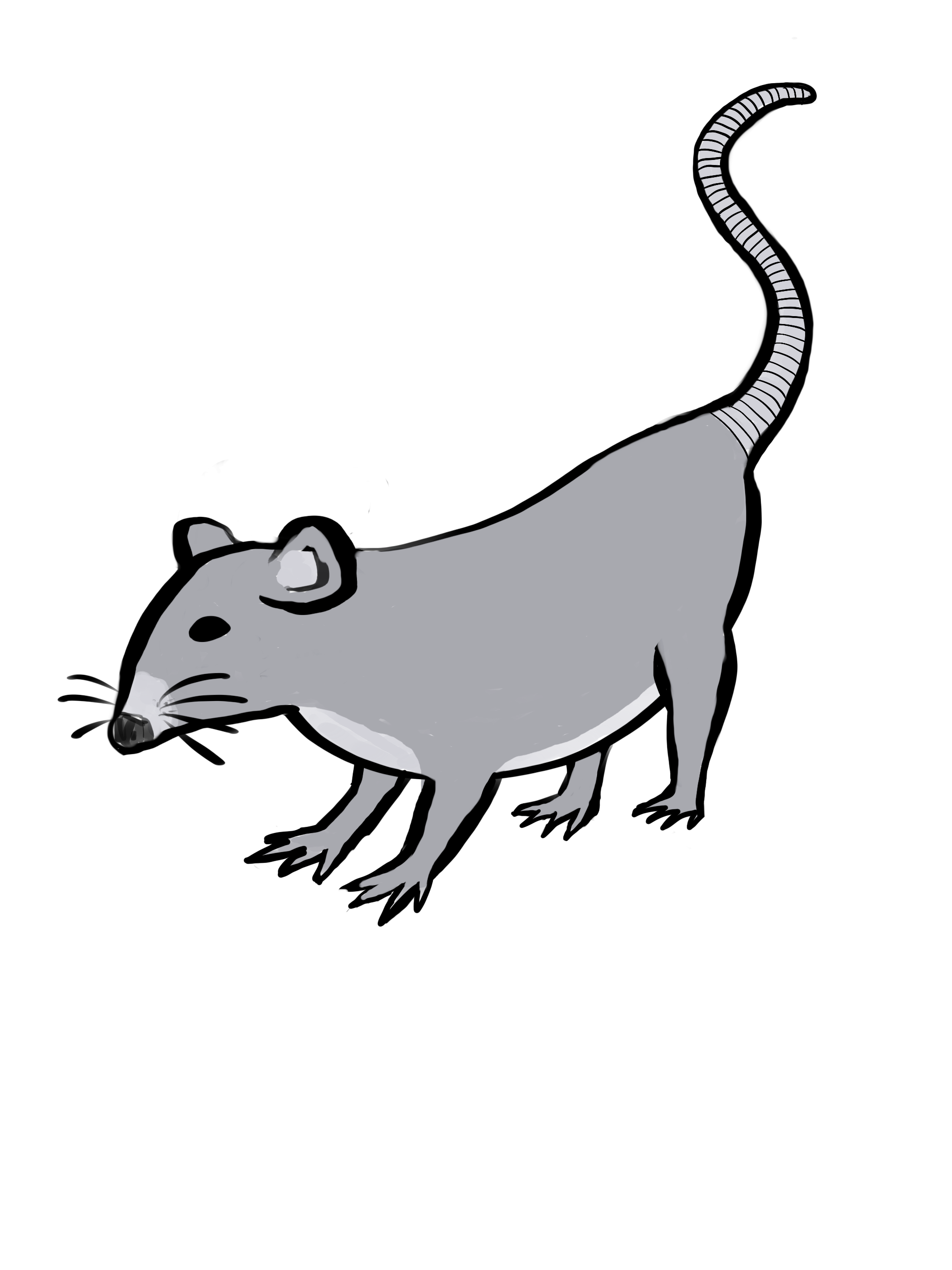

I started late, so this is a fairly quick sketch, using a mix of studio and brush pens in Procreate. It is a RODENT, specifically a rat. Sorry, no Gum Gum People this time.
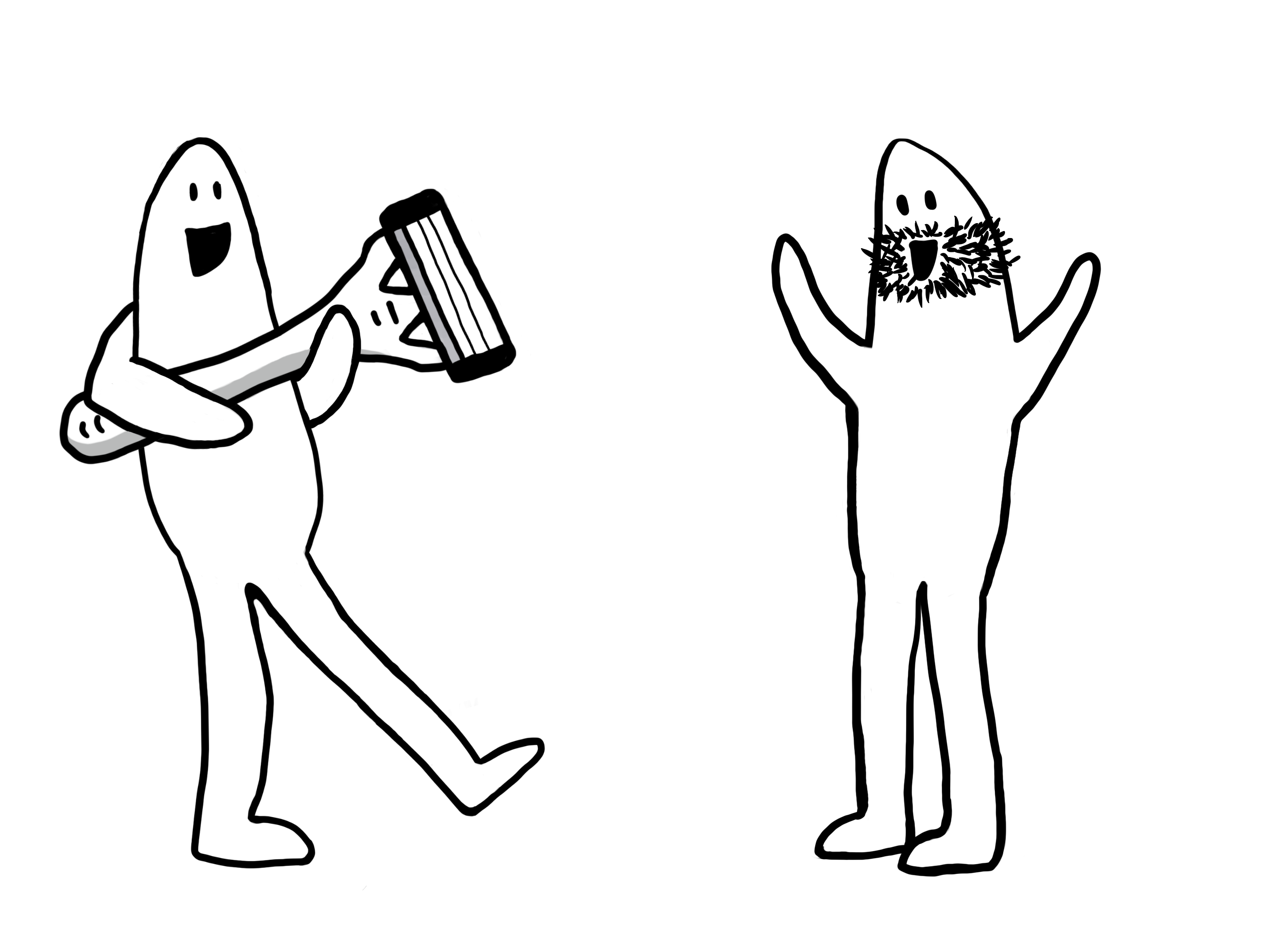
A razor blade, to be exact. I am now three four four on Gum Gum People (hee hee).
I have been pretty good on the snacking so far this month, with only a few crackers here and there, no giant sacks of donuts or triple layer cakes or anything.
We still have brownie mix in the pantry, though. Dun dun dun.
But the best news is that for four of five days so far in October I have been below 170 pounds. Yay. I am now reasonably confident I can end the month below 170 and keep pushing to my next intermediate goal of 160 pounds. Go lighter me!
Even though it was 18 degrees, it felt a lot cooler, with a bit of a breeze blowing and almost all of the river trail now in the shade. It wasn’t uncomfortable by any means, but the bite of fall air is definitely there.
Perhaps because I was feeling a bit cooler heading out (but not in the Fonzie way), my pace was slower on the walk segment and a tad slower on the running part, but still not bad overall. I’d call this workout pretty average, with BPM and other stats reflecting that. Not bad, just…fine.
Stats:
Walk 21
Average pace: 7:44/km
Location: Brunette River trail
Distance: 7.65 km
Time: 59:07
Weather: Sunny
Temp: 18ºC
Humidity: 67%
Wind: light to moderate
BPM: 122
Weight: 169.6 pounds
Total distance to date: 161.43 km
Devices: Apple Watch Series 5, iPhone 8
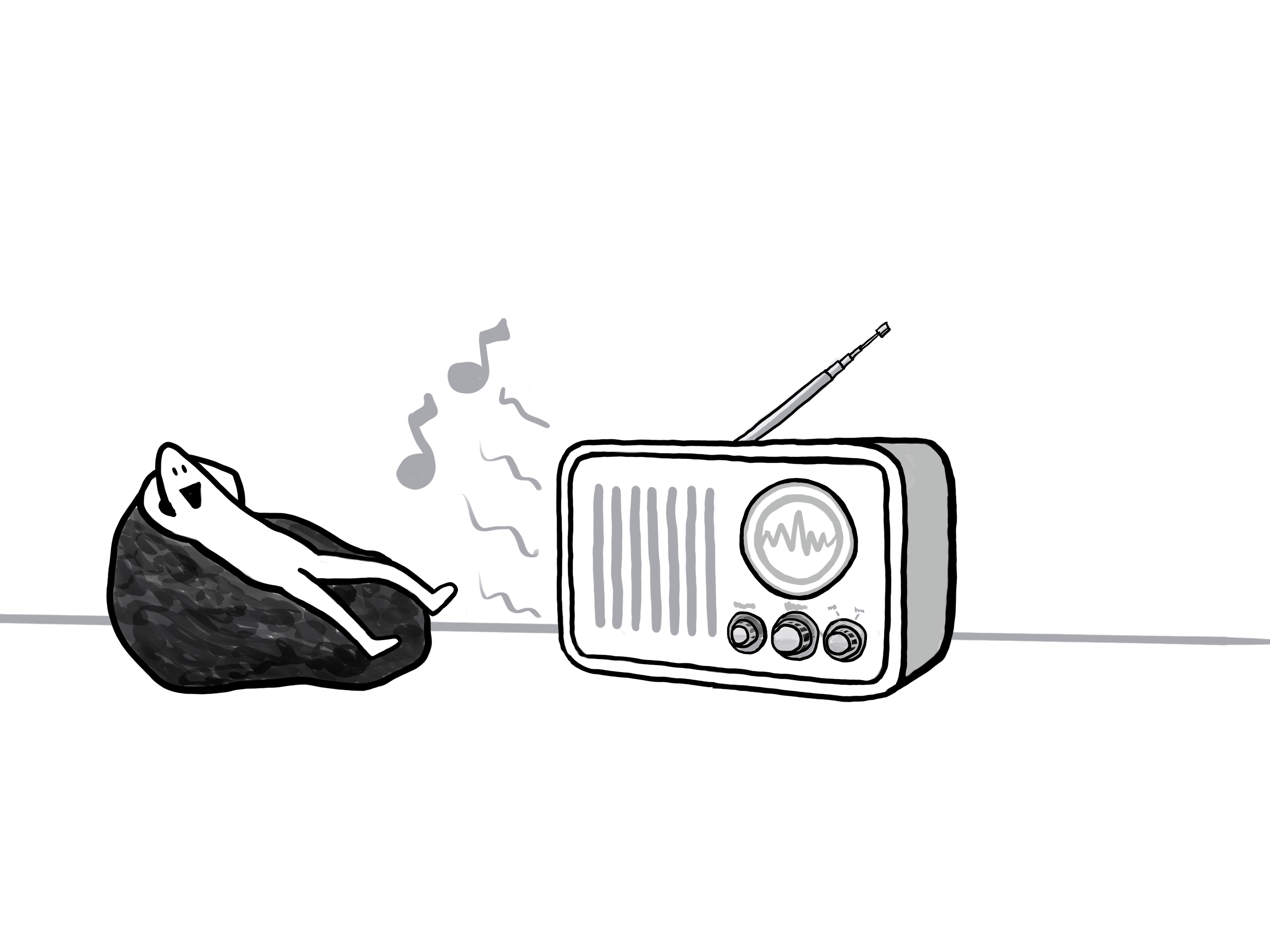
I used reference for the radio, which took a long time to get looking “right” because I didn’t want to cheat with real straight lines. I now understand why the Draw a Box tutorials have you start by drawing pages of lines. Drawing lines is hard!
I also had trouble with the gum gum person’s legs, of all things. He’s sitting on a beanbag chair, for which I used no reference. The shading makes it look like it might be a lump of coal instead. I can live with that.
And yes, Prompt #3 is currently missing. I hope to get it done tomorrow(ish).
Well, as far as Burnaby Lake, at least.
Today the temperature was a bit cooler, but it was still higher than normal and sunny and warm, so it was nice for walking and running. I also started out in the morning to try to beat the crowds, which didn’t exactly work, but there were no dog incidents or crazed cyclists or anything.
My tiny bladder didn’t set off the alarm bells at the usual point, so I opted to do an extra leg into Burnaby Lake and use the Jiffy John there. I finished in a jiffy because those things are gross, stopped to take a few pics of the lake, then headed back, covering a little over 9 km. My running pace was not as blistering today, but that’s okay, it was still fine. It’s funny how quickly I get used to the improvements in pace and then shrug them off as no big thing when they are actually quite nice to see.
Anyway, Nic and I went bird watching at the lake later and I ended up covering over 26 km today, so I am possibly re-thinking my plan to do a full run tomorrow. We shall see.
Stats:
Walk 20
Average pace: 7:35/km
Location: Brunette River trail
Distance: 9.13 km
Time: 1:09:15
Weather: Sunny
Temp: 17ºC
Humidity: 77%
Wind: light
BPM: 127
Weight: 170.4 pounds
Total distance to date: 153.78 km
Devices: Apple Watch Series 5, iPhone 8
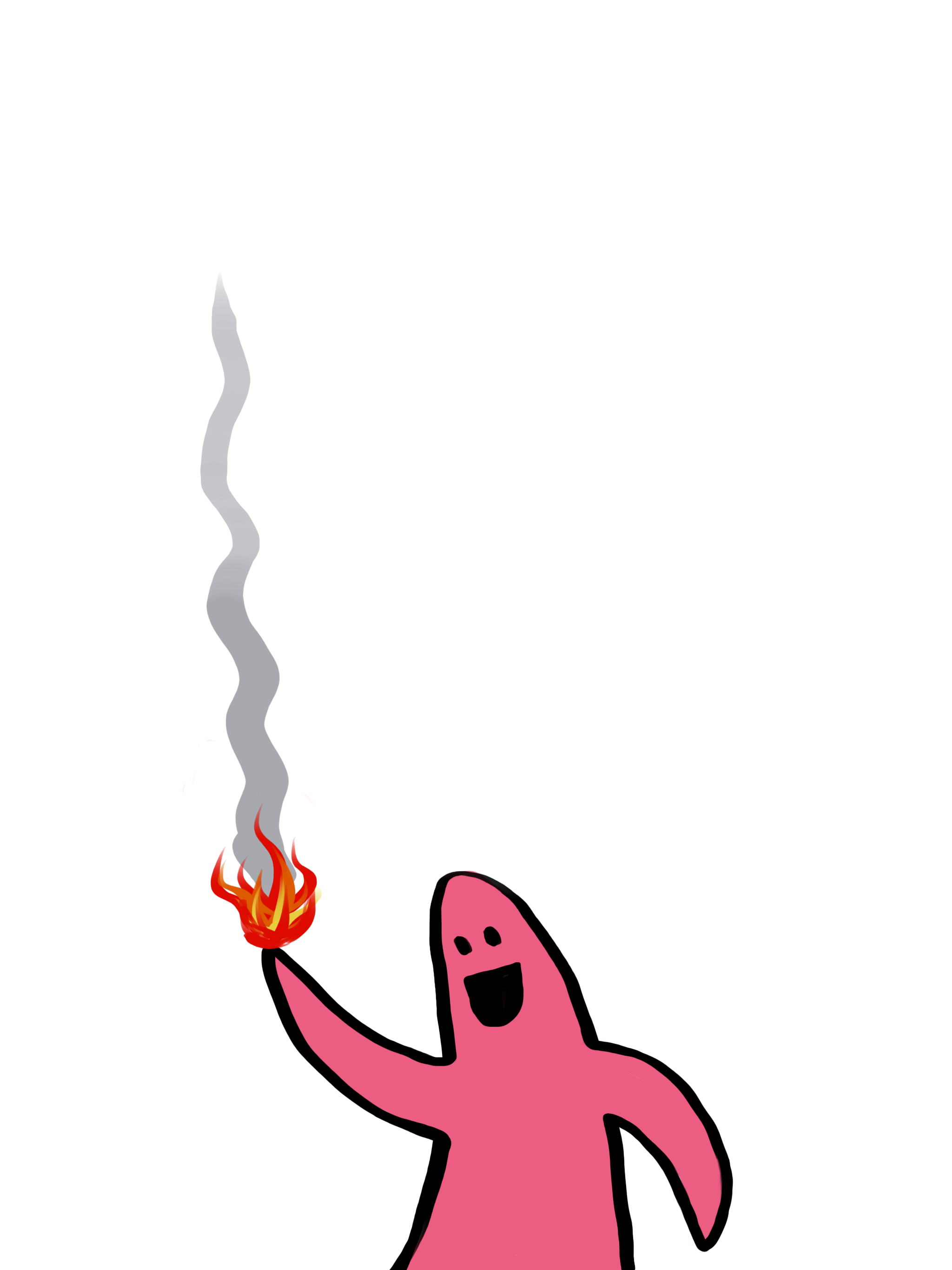
I tried a few things here, the first being a campfire with a wisp of smoke floating up from it. It wasn’t very good. I tried a cigarette on the ground, with smoke wisping up from it. This was even worse. I started to think I might have to come back to the prompt late. This isn’t what I wanted for the second day, so I began thinking about how I could somehow incorporate a gum gum person and that’s how I ended up with a gum gum person conjuring fire. Kind of weird, but sometimes you just roll with these things.
The weather is being weird right now, with fall working in reverse, each day being warmer than the previous. It felt more like mid-July when I headed out. I mean, it was nice, but weird. There is a bit of smoke haze back, but not nearly as bad as for–you can still see the sky, for one. It was also quite humid again.
All that said, I felt peppy heading out and was somewhat saddened when my first km of running showed a pace of 5:37/km (which would have been awesome a few days ago). I pushed slightly for the second km and my pace dropped to 5:16/km. I can confidently say this is the fastest I have moved in a single km in quite awhile. I ended with an overall pace of 7:26/km, which is also a new high (or low, depending on your perspective).
The only real down note were a couple of dog owners. One couple had a toy dog of some sort. It looked a bit like a Greyhound that had been zapped with a shrink ray and for some reason they kept it on leash (good), but then let the dog drag the leash behind it (weird and bad, because the leash was probably four meters long. I was able–while still walking–to catch up to the trailing leash and easily could have stepped or tripped on it). This wasn’t too bad, though. The other dog owner had three dogs, in small, medium and large sizes, all of them off-leash for the triple bad strikeout. The small dog was trailing behind and nearly got caught underfoot as I passed it. The owner was oblivious to it.
The medium dog was the bets-behaved, sticking close to the owner. The large dog, which looked like a husky or a husky cross, was well ahead of the owner. As I moved over and began to pass, the large dog took interest in me. It was friendly, but having a large dog approach me while running is never a good thing, because dogs are dumb and unpredictable. This is why they need to be leashed when in public (sorry, dog owners, dogs are dumb. So are cats. And rabbits. Plus rabbits will pee on you. But I digress.) As the dog approached, I turned my head back to the owner and uttered my favorite phrase to all dog owners:
Leash your dog(s).
That was it. I kept running and I gave my free advice with no malice in my voice, just a simple request. I don’t think the owner had a leash, let alone three of them. But now she knows at least one person is not impressed with her free-stylin’ dog walking.
Back to the walk, though–I was quite pleased by it. I’ll do another walk/run tomorrow and then probably do a full 5K on Sunday. Current forecast is calling for 17C and light rain, which is a lot more typical for early October and is fine by me, as rain means fewer people.
Stats:
Walk 19
Average pace: 7:26/km
Location: Brunette River trail
Distance: 7.54 km
Time: 56:06
Weather: Sunny
Temp: 24ºC
Humidity: 54%
Wind: light
BPM: 130
Weight: 169.9 pounds
Total distance to date: 144.65 km
Devices: Apple Watch Series 5, iPhone 8
I was feeling slightly lazy at the end of my work shift and toyed with the idea of not going out, of indulging in some good old-fashioned laziness. Then I considered the consequences of starting off a new month this way. What next? Scarfing entire bags of donuts?
I went out, half an hour later than usual, but out all the same.
Weather-wise it was cloudy, but still warm and rather muggy. I sweated a fair bit.
But my pace was good on the way down the trail and I was confident that I’d maintain that level of energy after almost not going out at all.
Given my tiny bladder, I diverted briefly onto the usual side trail to take my usual bio break. I paused both the music and the workout while I did my business, as I always do. I then resumed the music and the workout, refreshed and ever-so-slightly lighter.
Except I didn’t actually un-pause the workout, only the music. When I went to check my distance a short time later I immediately realized I had done this. The stats below reflect this, in that it shows me running about 300 meters less than I normally would.
Undeterred, I still managed to get a full 2 km stretch of uninterrupted running in by extending the running part into Lower Hume Park. I even caught a break on traffic on East Columbia, allowing me to exit the trail and cross without having to stop. Better still, my pace for both was a zippy 5:25/km. I also matched this pace again in the final two-block stretch before getting back to the condo.
Overall, it was a good workout, where everything–except remembering to un-pause–seemed to click. I was a bit concerned about the shoes after yesterday’s lace fiasco, but both shoes stayed tied for the entire hour. I am probably ready to tackle another full 5K soon–perhaps this weekend.
Walk 18
Average pace: 7:30/km
Location: Brunette River trail
Distance: 7.24 km
Time: 54:19
Weather: Cloudy
Temp: 21ºC
Humidity: 68%
Wind: light
BPM: 125
Weight: 169.5 pounds
Total distance to date: 137.11 km
Devices: Apple Watch Series 5, iPhone 8
It’s time for Inktober again, woo.
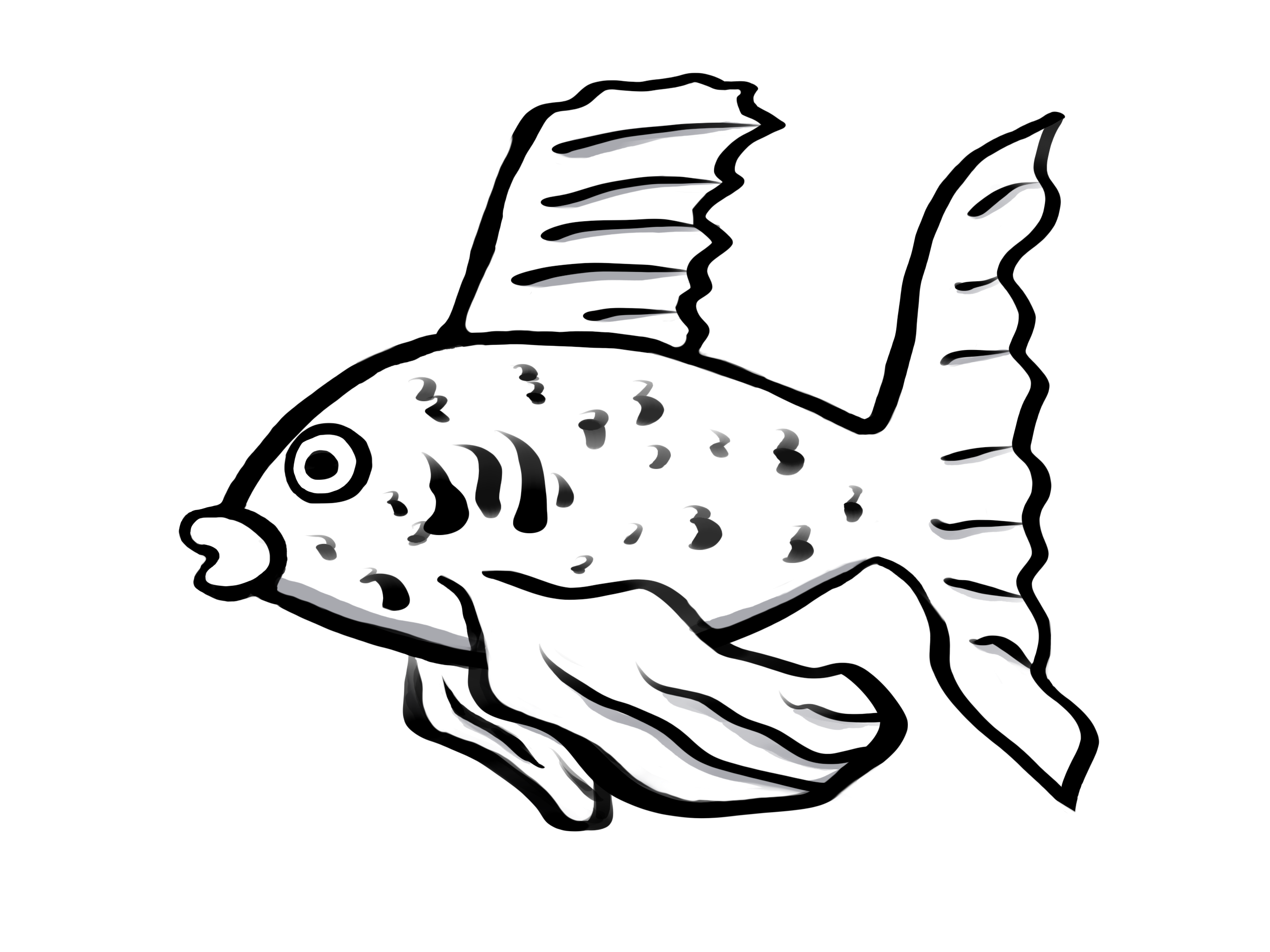
The first prompt is FISH and I cleverly drew a fish:
This year I am using:
Today’s prompt was done using the brush pen and eraser. A lot of eraser. The brush pen allows for great control of stroke thickness and opacity, which are two things I am good at bumbling around with, hence the eraser. The drawing is a combination of careful construction and winging it. A flying fish, if you will.
I had breakfast, lunch and dinner, with no snacking (lunch included a Clif Bar, which I now always regret later . Sorry, Clif Bar people, it’s me, not you!)
As expected, I was up again, slightly, to 170.4 pounds. We’ll see if I balloon again in weight overnight and set myself with an easier challenge to lose weight for October.
As mentioned in the September 2020 weight loss report, I’ll be switching the frequency of these updates to weekly, monthly or never. I haven’t decided yet. The important part is the snack-free-ing will continue regardless.
While this month’s weight loss was more modest than August (1.4 pounds vs. 2.0 pounds), it marks a couple of important milestones:
The last one is especially noteworthy. After switching up my weight loss plan about six weeks ago, I have for the first time ended a month at a weight lower than I started at this year. This bodes well for the future.
I remained donut-free.
Going forward, I may ease up on the official snack-free reports. On the one hand, it keeps me honest. On the other, it’s not exciting stuff to read, even for me. I can’t imagine another person or some scraping bot suffering through these every day. I’ll either do the updates elsewhere (“Dear Diary…”) or switch to a lower frequency for updates like once a week.
I am encouraged by these efforts and shall continue to work on getting closer to the thinner (but not Stephen King Thinner) version of me.
The stats:
September 1: 171.8 pounds
September 30: 170.4 pounds (down 1.4 pounds)
Year to date: From 171.8 to 170.4 pounds (down 1.4 pounds)
And the body fat:
September 1: 22.6% (38.9 pounds of fat)
September 30: 22.4% (38.1 pounds of fat) down 0.7 pounds)