Imperfect and red.
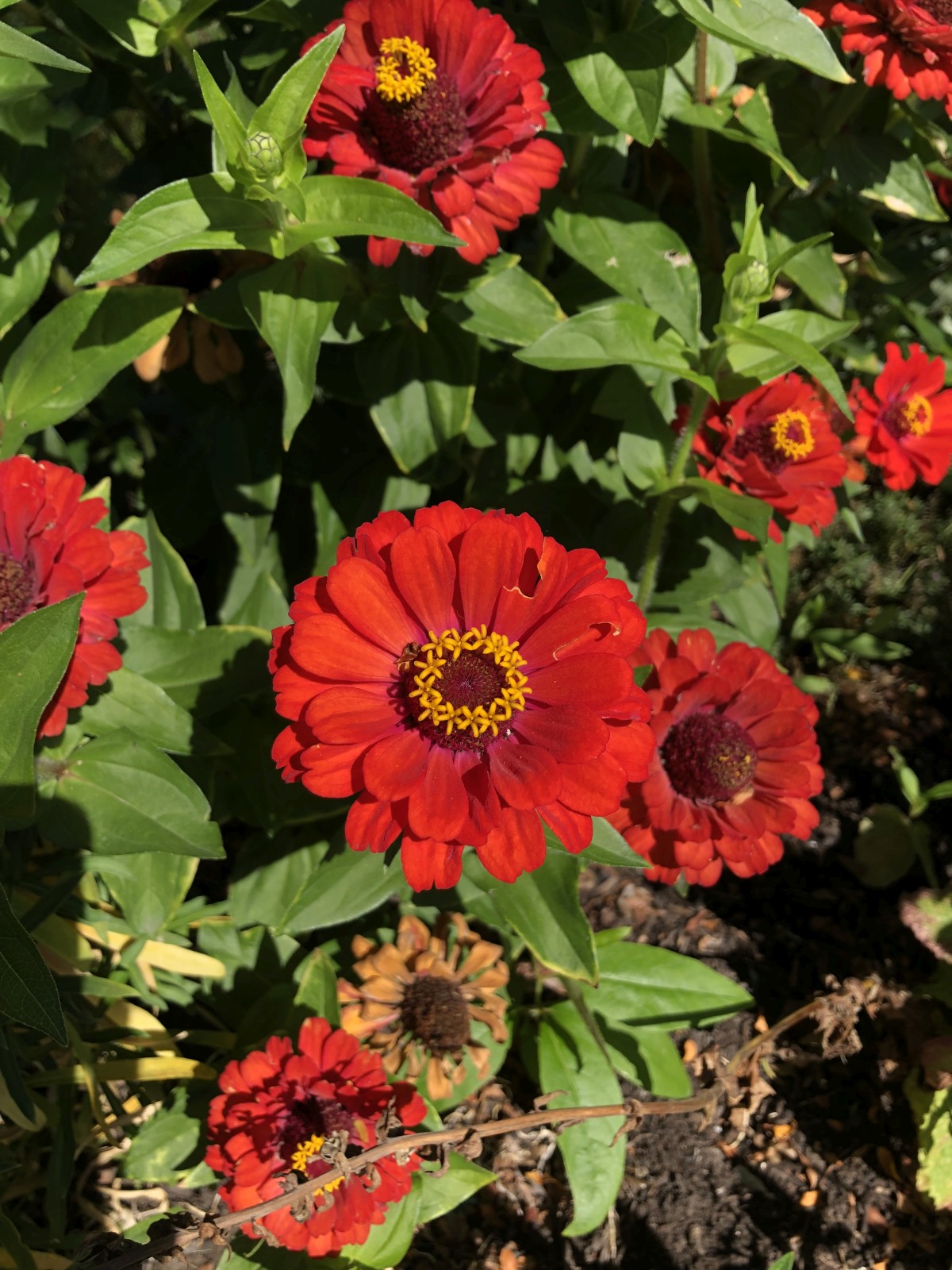

Imperfect and red.

The Despot’s Apprentice: Donald Trump’s Attack on Democracy by Brian Klaas
My rating: 4 of 5 stars
Oof.
For historical reference, this review was posted in August 2019. The book in question came out in late 2017, a little less than a year into Trump’s term as president of the United States. That means there’s been more than a year and a half of further events and actions to either bolster the case Klaas makes on how Trump is undermining democracy in America, or to provide evidence that Trump has “become” presidential and changed course.
Anyone who knows anything about Trump will know, of course, that the latter was never and is not a realistic scenario. Trump has no experience in government and in the time he has been president has shown little inclination to learn or improve, unless you count improvements on being a terrible person and a terrible leader.
This book is exhausting. Reading it is like getting punched lightly but continuously. It hurts but you go on, because the punching is bound to stop. But it never does.
In the short time span covered, Klaas documents all the horrible things Trump has said and done, underlining how just a few things have essentially kept America’s democracy intact for now–mainly by the grace of Trump’s incompetence and inexperience, and the still relatively strong (but weakening) bedrock that forms the democratic government the U.S. has had since 1776.
The problem, as Klaas points out, is that much of what holds U.S. democracy together, takes the form of political norms and traditions. Presidential candidates always release their tax returns. Presidents don’t profit from their presidency. Presidents don’t mollify dictators while attacking allies. But Trump doesn’t care about norms–he bulldozes through them, showing how fragile democracy is when it relies on people being innately good, or at least respectful of what government should be.
Klaas makes it clear that Trump is not the first president to engage in lies and work at tearing down important government structures, citing Nixon as the obvious modern go-to equivalent, but in comprehensive detail, he lays out how Trump is so much worse–and therefore, more dangerous.
All of this is compounded by America’s troubled history, something Trump has taken advantage of, choosing to divide and turn Americans against each other and the rest of the world. Klaas repeatedly shows how Trump is emulating despots both old and current, by assaulting the free press, by perpetuating damaging lies, by undermining trust in government institutions. The list–and examples–go on and on. As I said, it’s an exhausting read.
The book ends with four possible scenarios (remembering that this came out before the 2018 midterms in which a glimmer of hope was raised when the Democrats won back the House of Representatives), three of which result in things getting worse. The first suggests a slow decay of democracy, as people grow numb and then indifferent to Trump’s actions. The second offers the chilling scenario of a Trump 2.0 coming along and picking up from where Trump left off–but imagines the successor being much more intelligent, savvy, and able to appeal to a broad audience in a way Trump simply can’t, making this person far more dangerous. The third scenario offers Trump the opportunity to use some kind of large scale disaster or terrorist attack to provide cover for further draconian actions under the pretext of national security. George W. Bush’s popularity soared into the 90s following the 9/11 attacks. Trump’s popularity could hit the lofty heights of fifty percent! More seriously, a country under attack or ailing is more vulnerable, and a person like Trump could easily take advantage of that to peel away rights and freedoms.
The fourth scenario offers Trump as a virus, with people banding together to make a vaccine to fight back. This did come to pass in the 2018 midterms, and there is some evidence that it is still a process that is advancing and not retreating. Trump, through it all, has not changed.
In the end this book didn’t really offer me any new insights, but it did lay bare and in explicit detail just how thoroughly, through malice and incompetence, Donald Trump has carried on the work of chipping away democracy in America. Even if he does not get re-elected in 2020, the U.S. is looking at years or even decades to undo the damage already done.
It’s hard to recommend a book like this, but Klaas makes his points clearly. The only fault I can offer is the idea he has of working alongside your political adversaries to keep government functioning and healthy. Klaas states what seems obvious–the Democrats and Republicans can disagree on specific policies, but must work together to keep the institutions of government strong and healthy. In an ideal world this could happen, but the current incarnation of the Republican party has been taken over by extremists who are of much the same mind as Trump. Those who oppose Trump’s actions ineffectively offer criticism from the sidelines or say (and do) nothing at all, making them complicit and helping to enable Trump’s behavior.
If you still hanker for a primer on how Trump’s first year in power emulates the worst sort of authoritarian leader, The Despot’s Apprentice will provide everything you might need. You might want to start by choosing a palette cleanser to read after, though.
Think about it. Every night you lay down on a bed and through no other action render yourself unconscious. In this unconscious state your brain manufactures elaborate scenarios that are at turns amusing, baffling or terrifying. When you wake up you usually remember little to nothing of what these scenarios–dreams or nightmares–were.
And if you don’t make yourself fall unconscious every night your body will malfunction in ways that are subtle to start and end with you putting pants on your head and thinking that’s completely okay (not counting places where it is completely okay).
This pattern of falling unconscious/your mind inventing little dramas repeats for your entire life.
Sleep is weird.
Also, I probably don’t get enough sleep.
Run 629
Average pace: 5:30/km
Location: Brunette River trail
Start: 6:11 am
Distance: 5.02 km
Time: 27:38
Weather: Sunny, clear
Temp: 26ºC
Humidity: 44%
Wind: light
BPM: 153
Weight: 164.5 pounds
Total distance to date: 4725 km
Devices: Apple Watch Series 2, iPhone 8
Shoes: Saucony Switchback ISO (80 km)
I was not expecting much more than a standard sort of run tonight, as it was quite a bit warmer than the last few runs, but lo and behold, despite the mugginess, I was somehow still moving along and finished with a pace of 5:30/km and a surprisingly low BPM of 153.
My left foot was a tiny bit sore at the start, but it smoothed out quickly, and a stitch in my gut threatened, but never materialized, so other than it feeling kind of sticky, the run was fine.
In fact, I can’t really think of anything to add. Thursday looks to be about the same weather-wise, so we’ll see if the run follows. My prediction is I will be slower as the week wears on, but maybe not.
Also, that raccoon was not at the river today, which makes me happy, both for myself and the raccoon, because raccoons kind of scare me, really.

Perihelion Summer by Greg Egan
My rating: 3 of 5 stars
Greg Egan’s Perihelion Summer does a mostly good job of taking a high concept science fiction premise–a black hole comes through our galaxy, possibly imperiling Earth–and marrying it to how it affects a relatively small group of people.
In this case, the people are a team on a custom-built ocean-going aquaculture vessel called the Mandjet. Early on, marine biologist Matt tries to convince his family to come aboard the Mandjet, as initial predictions expect the black hole to cause mega-tsunamis across the globe, wiping out populated coastal areas planet-wide. His family, in Australia, refuses, with his sister insisting they will move inland if the need arises.
Eventually, the trajectory of the black hole is worked out more precisely and in a way, it is even worse, as the black hole will come close enough to pull Earth out of its orbit enough to drastically alter seasons, making them far more extreme, with parts of the planet becoming uninhabitable depending on the time of year.
When this happens, the story shifts gears, becoming more a tale of survival, as the crew of the Mandjet plots a course to Antarctica, now newly habitable compared to the burning hellscape that Australia has become. There is some drama involving Matt trying to rescue his family, and pirates of a sort threatening to disrupt the Mandjet’s journey, along with the flotilla of other ships it is leading south.
Egan does a good job of evoking the horror of a dramatically changed climate, and how people adapt–some better than others. In a way, the short novel is affirming, because most of the people are depicted as willing to help others, to barter and trade for mutual benefit, to take risks for the safety of others, facing adversary with (some) humor and courage.
There are a few aspects that don’t hold up as well, though. I never felt I had a good handle on what type of person Matt is, who comes across as decent and caring, but also nondescript and weirdly flippant. The story also ends on an abrupt, odd note between Matt and his mother. I’m not sure what (if anything) Egan was going for with this, but it left me shrugging.
The overall story, though, is well-constructed, offering a fascinating “What if?” scenario that Roland Emmerich would probably love to turn into a terrible disaster movie. Recommended for anyone into hard science fiction featuring big concepts with some old-fashioned human drama mixed in.
View all my reviews
Run 628
Average pace: 5:42/km
Location: Burnaby Lake (CW)
Start: 10:43 am
Distance: 5.03 km
Time: 28:39
Weather: Cloudy, some sun
Temp: 18-20ºC
Humidity: 70%
Wind: light to moderate
BPM: 161
Weight: 163.3 pounds
Total distance to date: 4720 km
Devices: Apple Watch Series 2, iPhone 8
Shoes: Saucony Switchback ISO (75 km)
I was expecting to slow back down at the lake and I did, but I am still weirdly consistent, as my pace was 5:42/km, and the majority of runs at the lake (and some at the river) have been hovering right around this pace for some weeks now. I’ve peaked before but never so…precisely.
My tentative plan is to run counter-clockwise next time, even though it appears the side trail resurfacing still won’t be done (it is taking them a curiously long time). Speaking of, yesterday I scouted out the progress and took this photo where the Conifer and Spruce Loops intersect:

You may be thinking, “Why does a closed trail have so many footprints on it?” Given the erratic pattern, I’m assuming they’re from the workers actually spreading the gravel and not from trail rebels not letting little signs tell them where they can and can’t go.
Technically, one of the footprints is mine, as I tested to see how soft the surface is. It is very soft. I would not want to run on it.
But it looks like a lot of the Conifer Loop is done, with just some rolling remaining, while the Spruce Loop still needs some more top gravel placed and then rolled. Given the current pace of the work, I expect the side trails to re-open sometime next year. 😛
Okay, maybe next month.
And speaking of pace, back to today’s run, in which I nearly stepped on a snake (good thing they move so fast without having legs). I felt perfectly fine, though I did notice the knees a bit early on. They weren’t hurting, I just noticed them, but my mind wandered off soon enough. Unlike the river, I did not have a fourth km blitz today–my fastest km was the first, as is traditional (next was the final km. I want to say I pushed a little, but I’m not sure I did). I treated the whole run fairly casually, not looking for a great pace, just a steady one.
After the run, I walked/jogged a recovery km, then ran the next with a pace of 5:30, which was actually faster than all but the first km of the actual 5K, so I was clearly keeping things bottled up.
It was humid, so I sweated a bit, but clouds moved in mostly just for the run itself, then parted on the walk back, which suited me fine.
Overall, this run was more of the same. I’m curious to see if my times actually start shifting more in one direction or the other soon.
Oh, and the raccoon. I was walking along the river trail toward the lake, about halfway there, when a raccoon came out of the brush on the left, which is the river side. It saw me and froze. I mean, it did not move at all. It became a raccoon statue. I also chose to stop, though with a less statue-like aspect. I paused my run, as I was not sure how long it would take the raccoon to come out of its trance-like state. Finally I got tired of waiting and made a grand sweeping gesture to the right, telling the raccoon it was free to go.
And then it did, hurrying off into the brush on the other side of the trail. It was a little weird. Also, I accidentally ended my run instead of pausing it, so I had to start a new one. This made me think the Done button at the end of the stats of the workout should have another button that says something like Continue Workout, because the End and Pause buttons are next to each other and hitting End doesn’t offer any confirmation, the workout just stops. This would let people have an Oops button and keep the workout going. (The current UI is actually better than it used to be. Originally there were two buttons, Save and Cancel. Yes, you could finish a workout, then accidentally tap the Cancel button and nuke everything you had just done. Brilliant! You now have to go into the Activity app on the phone to delete specific workouts.)
Based on the results from 2018, I set an ambitious goal for this year’s Goodreads reading challenge—52 books or one per week.
At this point, the third week of August, I would need to have read 33 books to be on track. I have read 19. I’m actually lagging behind last year’s pace, when I managed to read 40 (with a goal of 32). To hit 40 I’d need to read 21 books in about 17 weeks.
That ain’t gonna happen unless I cheat and read a bunch of 50,000 word NaNoWriMo novels.
Why am I reading so much less this year?
Before answering that, I’ll note that my writing has stalled out, too. I’ve been keeping up on the blog, but the fiction writing has sputtered like a campfire in a rain shower. In the last few months, even the blog writing has suffered.
So here it is, the latter half of August and I’m not reading much and I’m not writing much.
Why?
The answer is: It’s not any specific thing, it’s a series of things. Mostly it’s me.
As ridership continues to increase, it is increasingly rare that I get a seat at the start of my morning commute (which begins with a 30+ minute train ride), so I don’t start reading until I get a seat, as I am not comfortable reading while standing up. I could read while standing, so this is kind of on me. But it still means I don’t read as much.
But there are days where I could read and don’t, I just put on my headphones and try to blot out the sound (and world).
I sometimes read at home, but it’s rare.
For the writing, I enjoy the irony of The Journal, my unfinished novel, in which the protagonist struggles with writing, knowing all the ways to get going, knows that you don’t wait for the muse to arrive, that you make time to write, that you sacrifice and force yourself to do it.
And then still struggles. As I do. Why? Ennui? Laziness? I’m not really sure, anymore.
Also, I’ve been playing a lot of City of Heroes again and until the shine of that wears off, it will continue to occupy a chunk of my free time (I had a seven year gap where I didn’t play after the game was shut down).
There are other things I intend to do—draw, look into meditation, stretching and more—and I dabble, but ultimately don’t follow through.
Maybe I just suck at time management.
I’ve looked at time management apps and have yet to find one I really like and click with. Maybe I’ll look again. I’ll just pencil the search into my current non-existent time management/to-do app, ho ho.
Anyway, I’m writing this on my lunch break and running out of time, so I need to wrap up in some clever way or come back to this later. Or both.
Or neither.
More later tonight. For real. (Probably.)
Run 627
Average pace: 5:26/km
Location: Brunette River
Start: 6:07 pm
Distance: 5.03 km
Time: 27:22
Weather: Sunny
Temp: 22ºC
Humidity: 47%
Wind: light
BPM: 155
Weight: 164.5 pounds
Total distance to date: 4715 km
Devices: Apple Watch Series 2, iPhone 8
Shoes: Saucony Switchback ISO (70 km)
On the way to the start of tonight’s run I was thinking about how sometimes I’ll feel tired before a run and then go on to turn in a good performance, and other times the run will reflect that same sluggish level of energy. The latter actually doesn’t happen that often and I kept that in mind as I got ready, as I was not feeling super-invigorated.
It turned out I was secretly super-invigorated because I ended up turning out my fastest run of the year, finishing with a pace of 5:26/km. A large part of this came about due to a burst of speed in the fourth km, something I’ve noticed happening in several other runs recently, as if I’m catching my second wind or finding the perfect stride right around that 20 minute mark. In this case my fourth km was a blazing 5:04/km, the closest I’ve come to breaking the five-minute mark this year. And I emphasize that I was not trying to do this, I just felt good and kept the pace up (or increasing it, as it turned out).
I didn’t really push at all until the last stretch and by then I was slowing, with my pace dropping to 5:22/km. But it was the only time I felt even a little burn–and it was little. The rest of the run there were times where I felt genuinely light on my feet, as if I’d found that perfect rhythm or zone. My mind bounced over a succession of topics and in this case, a wandering mind is a sign of a good run.
My BPM was also low at 155. The conditions helped, too, as it was warm but far from hot after yesterday’s rain, and the sun was low, so I only got a few minutes of it. Humidity was reasonable, so sweating wasn’t excessive and I never felt dehydrated.
I’m surprised and kind of delighted by how well the run felt. The next one will be at the lake and I suspect it will not feel as effortless as this one, but I’ll bask in the glow for a few more days, at least.
It is raining today.
That’s fine. It’s dry enough that a little rain is good. It makes the grass grow and all that.
Summer rain is kind of weird, though. While it is cooler than normal, it’s not actually cool—it’s 17C right now, which is t-shirt weather. But if you go outside wearing a t-shirt you will come out looking like an entrant in a wet t-shirt contest. Which is handy if you are actually on your way to a wet t-shirt contest. It’s otherwise less desirable.
However, if you wear a jacket…well, it’s too warm to wear a jacket. So you can keep dry, but get all sweaty and gross instead.
Basically, summer and rain don’t really fit together well. Science has obviously failed us here, as there’s no super-light fabric that can deflect raindrops. This is also why I don’t wear a jacket when I run in the rain, even in the winter when it’s actually cold.
The solution, then, is to stay inside and play video games or watch something on one of the five thousand streaming services now available. Hold on, I’ve just received an update—make that 6,000.
Run 626
Average pace: 5:41/km
Location: Burnaby Lake (CW)
Start: 12:16 pm
Distance: 5.02 km
Time: 28:33
Weather: Cloudy
Temp: 19ºC
Humidity: 67%
Wind: light
BPM: 160
Weight: 163.4 pounds
Total distance to date: 4710 km
Devices: Apple Watch Series 2, iPhone 8
Shoes: Saucony Switchback ISO (65 km)
First, the strange news: Today’s run took me 28:33 minutes. The previous 5K run, which I did on the river trail, took me 28:34 minutes, a difference of one second. How I can manage such precision while running in two different locations is baffling and a bit unnerving. But yay for consistency when the result is good!
Now, the good news: It was much cooler and cloudy for today’s run, which made for a refreshing change of pace. Sweating was minimal and my energy felt strong throughout. I was actually a tad disappointed that I came in at the same overall pace as the previous run at 5:41/km. I was hoping I’d be faster–though the lake is a more technical run than the river, so there’s that.
After some contemplation, I chose to go clockwise yet again, as work continues on the side trails. There is more progress, though, as I could see the Conifer Loop has been resurfaced, complete with the top layer being smoothed into place. Hopefully they’ll wrap it up by next weekend.
I did not get off to a zany fast start this time, and the pace from one km to the next was a little more consistent–in line with how I felt. I thought of running more than 5K, but in the end wanted one more direct comparison, especially after missing a run. Post-run, I walked the first km, then ran the entire second km, with a pace of 5:41/km, matching my overall pace for the run. This is encouraging. I actually ran a lot on the way out, with no issues at all.
Overall, this was a nice effort. I felt good, had lots of energy, had no issues and it was not busy on the trail, likely thanks to the cloud cover.
The cause of, and solution to, the world’s problems.
You think you're so smart
A phone that can do so much
Hate in people's hands
