It’s BC Day, the statutory holiday where we take time to celebrate the province while acknowledging our terrible colonial past, horrible treatment of indigenous peoples and more. So maybe just pretend you know someone with the initials BC and celebrate them instead.
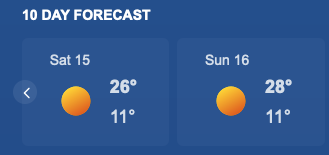
Bad news: The heat warning is still in effect today.
Better news: The expected high of 28C will still feel a lot nicer than the 33-35C we’ve had for the past week.
Good news: Going out birding today, including Burnaby Lake. This time my camera is in the camera bag. Woo.
Looking through my “treasure trove” of unpublished/incomplete blog posts, I found one from January 2019 in which I imagined invoking Godwin’s Law on reader comments made on CBC New stories. A few things before getting to the re-imagined quote:
I no longer actively read the news. I do not regret this at all and, in fact, do not feel I am less informed on what is happening in the world, or locally, as a result. My inspiration to go news-free came from this post on Experimental History.
The world would have to endure two more years of Trump as president, and he continues to make headlines as ex-president in all the wrong ways, but thankfully, he is making them as ex-president.
As always, never read the comments remains stellar advice.
And now the original post:
CBC News headline for an opinion piece that is way too easy to Godwin:
No matter the politics, Trump's wall could provide jobs, stimulus if recession strikes
Godwin version:
No matter the politics, Hitler's concentration camps could provide jobs, stimulus if recession strikes
I imagine you could probably apply this to a lot of things Trump has said, or will continue to say. I, however, am not going to pursue this any further, because I value my brain.
(Apparently the newsletter arrived during that awkward window where a drawing just happened, and the new jackpot is TBA. Still, I love stuff like this. I’d also love to win whatever the next jackpot will be, I’m not fussy.)
Pretty much every tech site yesterday and today is filled with “stories” about deals for Amazon’s Prime Day, which is actually two days. Why do I not like this? Let me list the ways:
The sheer amount of space devoted to the “deals”. Engadget, not exactly a hardcore tech site admittedly, is almost nothing but a feed of Amazon deals today (check the image below). Want to read actual tech news? It’s there, you just have to find it sandwiched between Amazon deals now.
Every single one of these sites is posting deals that are exclusively for Amazon.com (the U.S. site), so the deals aren’t even relevant to most of the planet. America is not the world, but you’d never know it by checking Ars Technica, say.
It all feels a bit unseemly, this two-day mini-orgy of tech consumerism, with nothing to counter-balance it, and really, a lot of the deals are not even that good (as expected).
Motivated self-interest (see the second screenshot below) means this ain’t gonna get better any time soon.
Unedited list of stories from today’s Engadget main page, with the Prime Day deals highlighted. This is just what I could easily capture without scrolling:
Why this is unlikely to go away at any point in the immediate, near or long term future:
I will give Ars Technica’s Jeff Dunn credit here–he’s compiled a single story for most of the deals, which is a) convenient for readers b) makes the rest of the site much more readable until this nonsense is over and c) the second paragraph links to 15 (!) previous stories Ars Technica have run that cast a critical eye at Amazon and its practices.
Not really. Groove was terrible, and I’m sure the new Media Player almost has to be better by default. But when I go to my Music Library and sort by Artist, this is the image it presents for ABBA (ABBA is the first artist in the list):
Yes, it’s the Bee Gees’ late younger brother, ABBA Gibb.
Right next to that is a photograph of Alan Parsons, or possibly some stand-up comic who had a sitcom in the 90s called The British Pop:
“Yo, dig my project.”
I will say this: After sampling a few songs, they actually do sound better than in the fossilized software known as iTunes. So there’s that. But I also checked The Magnetic Fields’ album 69 Love Songs and yes, it has all three virtual discs smooshed together like so:
1, 1, 1, 2, 2, 2, 3, 3, 3
Which I suppose is an interesting way to experience the album, a pseudo-shuffle play without actual shuffling required.
Unsurprisingly, our glorious future of streaming music means that even downloaded songs from Apple Music are nowhere to be found in Media Player, as Apple has them DRM’d and hidden away, playable only through iTunes or an app like Cider that uses Apple’s specific APIs (and then it streams the songs anyway, instead of playing the local version on the computer).
Maybe I should go full hipster and start buying vinyl again.
While I dearly love the Firefox browser and think everyone should use it instead of helping Google dominate and bend the web to its will by using Chrome, I did find its built-in spelling checker to be just erratic enough in reliability that I began searching for alternatives. One of the weird things the built-in spelling checker would randomly do is start flagging every word as wrong, so you’d get paragraphs of words with squiggly red underlines beneath them. For someone who likes to keep things (relatively) tidy, it drove me batty.
In recent years, grammar/style checkers have come into vogue, with all of them pretty much following the same model:
Plugins for all major browsers
Basic features like spelling checker free to use
Premium features like style checking requiring a subscription
Subscription prices being on the edge of “lol no” territory
I tried Grammarly, which is easily the best-promoted of the bunch, and ProWritingAid. Both were fine but not quite right for various niggling reasons that I’ve since forgotten. Maybe they nagged too often to upgrade to the subscription or something.
Another one I tried is the plain-named LanguageTool, which sounds more like a description of the software before it gets a spicy, memorable name. All I needed was a good spelling checker and it works very well at this part. Better yet for me, it works with a single left-click on the word and presents a very nice-looking pop-up with the correct spelling ready to be clicked on pretty much every time. Yay. Now, LT (as I call it, now that we’ve established a relationship), also offers basic grammar checking for free, so I’ve left it on, figuring it couldn’t hurt, could it? Depending on who you ask, it can, actually! See the video Grammarly is Garbage, and Here’s Why as just one example (I’m not picking on Grammarly specifically, this is just the most recent video of its type that I’ve seen).
What I have discovered about LT’s grammar checker is this: It is madly in love with commas, as seen in the screenshot below.
Its comma rule can be summed up as:
If you use the word 'and' it must be preceded by a comma OR THE WORLD AS WE KNOW IT MAY END
In some cases it’s right, in others it’s weird and in a few, it’s flat-out wrong, like this one, which demands a comma be added after ‘pretty’:
Adding a comma after ‘pretty’ would seem to make sense, because ‘it’s pretty’ is a complete, if short, thought. But in the context of the sentence it’s a silly suggestion because the sentence is so short, no one is going to get confused by not having a pause after ‘pretty’ and wonder what the heck is going on.
Now, I do have the option to Turn off rule everywhere (see screenshot below), which would presumably eliminate it flagging missing commas even when sentences are crying out desperately for them. And part of me really wants to do that. But commas are also kind of my bane, and I do often leave them out when they should be in–or sprinkle them too liberally. Basically, commas make me crazy. So the rule stays. For now.
In conclusion, is Esperanto better than English? Should we all be switching to it? Practice our telepathy for better, clearer communication? Lobby the grammar authorities to just eliminate the comma entirely? So many options.
Also, apologies for my whimsical use/misuse of double and single quotation marks. LanguageTool doesn’t flag those.
Note: I have nothing against German newspapers. Photo by Pixabay on Pexels.com
A short while back I wrote about how I’ve found a new way to check out the news (tl,dr; I check later in the day now, not first thing in the morning, and I’ve unsubscribed to some news-focused newsletters–imagine that, a newsletter focused on news!). Then I received the latest from Adam Mastroianni’s Experimental History, in which he talks about this very thing!
A pretty good rule of thumb is “don’t do things that make you feel terrible unless you have a very good reason.” I feel terrible when I read the news, because all the headlines are things like “Republicans Vote to Reclassify Plastic as a Vegetable“ or “Birder Murderer Murders Thirty-Third Birder” or “Bradley Cooper Calls Holocaust ‘Big Misunderstanding’”. Sure enough: studies show that reading the news makespeoplefeelbad.
While I have multiple reasons for putting more distance between me and the news, the above quote really nails the main point–reading the news just plain makes me feel bad. Good news stories (as in good news, not the quality of the news story itself) are fairly uncommon, so it’s mostly outrage or things gone wrong or people being mean, dumb or evil. Reading these things doesn’t improve my quality of life, and it takes away time I could spend looking at cats, like these:
And so I’ve decided to join Adam and purge news completely from my daily or weekly routines. I am certain I will still hear about stuff, both good and bad, and I am even more certain I won’t spend any time during the day balling my fist and shaking it at the monitor over something I’ve read. We’ll see.
In the meantime, I can heartily recommend Experimental History, which is presented with wit, intelligence and heart or WIH. Hmm, may need to work on that…
Global warming continues apace and not a whole lot is being down by governments to slow it down sufficiently to give us time to adapt
Related to the above, there is a growing sense among some in the public of, “Well, it’s gonna happen, anyway, why sacrifice or make changes now? It’s too late!”
Russia invaded Ukraine in February and the conflict has been bloody and filled with atrocities and war crimes on the Russian side. This has had ripple effects on the global economy
Speaking of the global economy, the combination of the pandemic and mysterious other things which economic experts often never seem to fully explain, has lead to, among other things:
Shortages of various products, everything from certain types of food to electronics
Inflation. It’s back, baby!
Profiteering thanks to unfettered capitalism allowing companies to raise prices under the cover of “inflation” to make even more profits off of everyone else
The pandemic continues, with cases rising in some places and the sixth wave (or second Omicron wave, as some call it) subsiding. The “good” news here is most pandemic restrictions are gone, so people are basically left to fend for themselves in most settings. Also, most people think either the pandemic is over or the worst is behind us, so yay?
The slide away from democracy continuing in the U.S., along with what will undoubtedly be fun side effects for Canada
TikTok. Yes, just TikTok.
There is good news, too, of course, even if you sometimes have to look for it. Here’s one I found on the CBC News site (from yesterday) about Angela Lansbury receiving a special Tony Award. Lansbury is an absolute delight and still active at 96.
But generally, it is bad. And the bad stuff always gets promoted over the good, for various reasons.
I subscribed to the Next Draft newsletter by Dave Pell. He’s a good writer, covers the stuff you’d expect to be covered, and does it with both observations both witty and cogent. But today as I was reading about the brutal Chinese treatment of the Uyghur minority, 61% (that’s over 42 million people) of Trump voters apparently believing the “great replacement” conspiracy theory, and other maladies of the world, I scrolled down to the bottom of the newsletter and hit the unsubscribe link.
I’m not going to avoid the news, but I am going to keep a tighter control on how and where I view it. Part of that I’ve already started: Checking the news is no longer part of my morning routine. I do it later in the afternoon. I figure if the world suddenly starts to end, I’ll probably find out, anyway.
Good ol’ clickbait! Here’s how the above headline was presented in my Medium Weekly Digest newsletter:
Want to know what the amazing productivity hack is?
“Send everything to the trash first, then pull out from the trash what’s important.”
Yes, the author literally advocates deleting all your email from the inbox, then going to the trash/deleted items folder and pulling out what you really want to keep.
Or, you know, don’t subscribe to a bunch of crap you never read in the first place? Then there’s no need for any kind of multistep process, because all the junk email you don’t want or need never arrives! That’s my amazing productivity hack.
The author alleges that “By the end of the day, there were more than 50 emails chillaxing in my new digital Zen space. How dare they! And they were nearly early all spam — including stuff I thought I’d unsubscribed from, blocked, or banned.” This sounds rather fishy. First, she uses the huge caveat of “I thought I’d…” which probably means “I never did”, or she has catastrophically bad filtering on her email account. Or both. Also, how do you “ban” email?
Here’s another amazing productivity hack: Don’t waste your time reading stories like this, or even blog posts like this one deconstructing them. Go play with a puppy or kitten instead. Hug a tree. Talk to a plant. East a cookie. Or one of the other billion trillion quadrillion things that would be a better use of your time.